


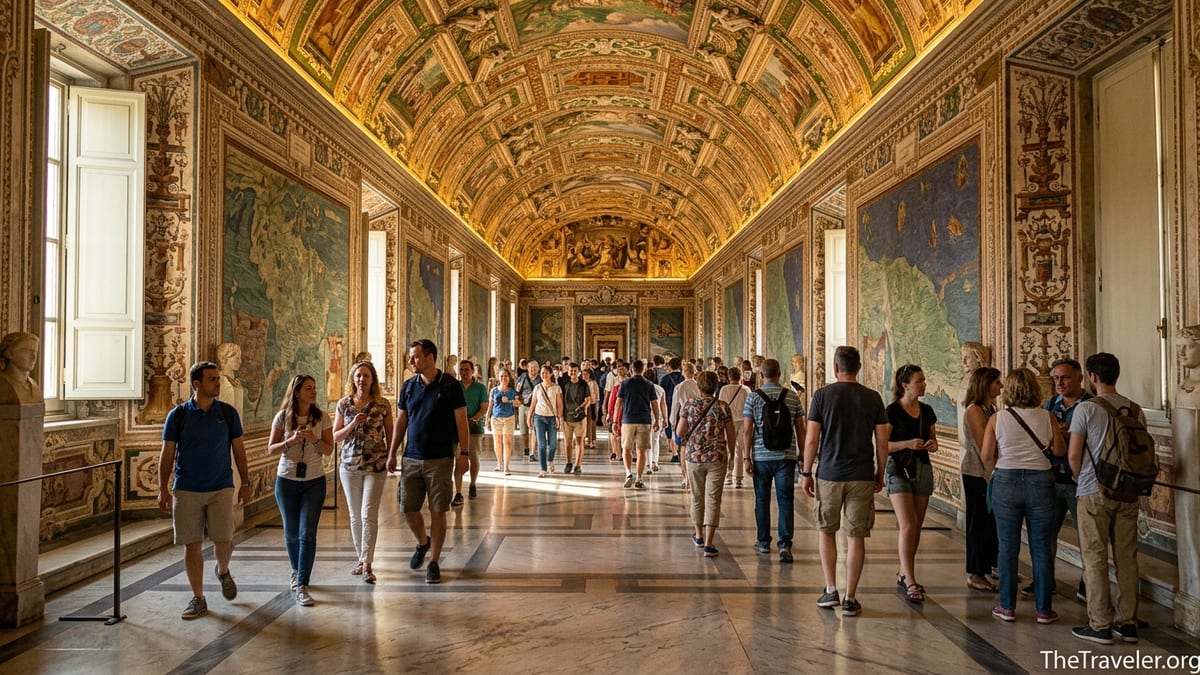
The Vatican Museums are one of the world’s great art collections and also one of its busiest. In peak months, more than twenty thousand people may pass through the galleries in a single day, and the difference between a rushed, crowded shuffle and a memorable, moving visit often comes down to how you match your time and budget to the right kind of ticket. From basic timed entry to premium early access, this guide breaks down the smartest ways to experience the Vatican Museums now, based on how much you can spend and how long you have in Rome.
Get the latest updates straight to your inbox!
Understanding Tickets, Lines and What “Skip the Line” Really Means
Before choosing how to visit, it helps to understand what you are actually buying. Standard Vatican Museums entry is sold as a timed ticket, bought in advance through the official Vatican Museums booking system or on-site subject to availability. In 2026, official online tickets cost roughly the low-20s in euros for adults, including the booking fee, with reduced prices for children and some concessions. That basic ticket gives you access to the Vatican Museums and the Sistine Chapel, but no guide and no special shortcut through security.
Most visitors encounter two separate lines: one outside along the Vatican walls for people who need to purchase or validate tickets, and another, inside the entrance, for mandatory airport-style security. When you buy official timed tickets online, you usually enter through a dedicated door at your booked time and bypass the longest part of the external ticket line. However, you still queue for security with everyone else. This is why many commercial products describe themselves as “skip the line”: in practice, they skip the on-site ticket purchase line, not the security check.
Guided tours and third-party “skip the line” tickets are built on top of that same system. They often use a group entrance and a reserved time slot, which can be extremely efficient on crowded days, but they do not exempt you from metal detectors or bag screening. Understanding that helps you evaluate whether paying two or three times the base ticket price makes sense for your schedule. On a busy Friday in May at 10:00, it may save you an hour or more; on a rainy January afternoon, a simple timed ticket might be enough.
Finally, note that Vatican terminology can be confusing. Products labeled “priority,” “fast-track,” or “VIP” almost always mean a faster route through ticket control and the turnstiles rather than a private museum. Security remains the great equalizer. No matter what you book, plan on your bag being scanned and your clothing checked against the modest dress code before you are allowed inside.
If You Have Limited Time: Best Options for 2–3 Hours
If you only have half a day in Rome, your goal should be to see a curated selection of highlights efficiently. A standard timed-entry ticket booked for early morning, around 8:30 or 9:00 when doors open, is the most budget-friendly option. You can head straight to the Sistine Chapel by following the shorter, direct route used by many group tours, then loop back to key galleries such as the Raphael Rooms and the Gallery of Maps. In two to three hours, you can experience the frescoes of Michelangelo, the Stanze of Raphael, and the most photogenic halls without lingering in every wing.
Travelers who prefer structure might consider a small-group guided tour that lasts roughly two and a half to three hours. In 2026, mainstream operators typically charge from about 50 to 70 euros per adult for an English-language group tour of the Vatican Museums and Sistine Chapel, including admission. These groups usually enter via a group entrance at a set time and follow a proven route through the highlights. For a first visit, especially if you are not an art history enthusiast, that guiding can be the difference between feeling lost and coming away with a clear story of what you saw.
When your time is short, timing matters even more than budget. Late-morning slots between about 10:00 and 12:00 tend to be the most congested, especially from April through October, when cruise excursions and bus tours flood in. If your schedule is flexible, consider an early afternoon entry around 13:30 to 14:00. Many group tours are finishing then, and while the museums are still busy, you will feel a noticeable easing of the crowd compared with mid-morning. On certain Fridays in warmer months, the museums offer extended evening hours, and a late entry around 16:00 can feel calmer again as day-trippers leave.
With only a few hours, avoid add-ons that fragment your day. It is usually wiser to skip the Vatican Gardens bus tour or separate audio guide if you are on the clock. Instead, focus on a single, coherent route: start with the Sistine Chapel early, then work back through two or three galleries that appeal to you, leaving time for a quick pause in one of the courtyards before you exit toward St Peter’s Square.
If You Can Spend a Day: Slow‑Paced Routes, Gardens and Dome
Travelers with a full day to dedicate to the Vatican can design a much richer experience, and here a modestly higher budget yields big returns. With a standard timed ticket in the morning, you can spend three to four unrushed hours in the museums themselves. Take the longer route that wanders through less visited collections, such as the Pio-Clementino Museum with its classical statues, or the Pinacoteca, the Vatican’s painting gallery where works by Raphael, Caravaggio and Leonardo hang in relatively peaceful rooms that many tour groups skip.
After a break for lunch outside the museums in the surrounding Prati neighborhood, you can continue your day with St Peter’s Basilica and, if you are fit and not claustrophobic, the dome climb. Entry to the basilica is free, but you must pass through a separate security line in St Peter’s Square and respect the strict dress code: shoulders and knees covered, no low-cut or transparent clothing. The dome climb carries an extra fee, with options to take an elevator part-way or climb all the steps. From the top, you see Rome’s terracotta roofs and the Vatican Gardens spread below.
A full-day visitor might also consider the official Vatican Gardens bus tour, which combines a guided circuit of the landscaped grounds with museum entry. These tours are usually more expensive than a basic ticket, but they provide a quieter, greener counterpoint to the crowded galleries. Because the Vatican Gardens are only accessible on an authorized visit, many repeat travelers consider this a worthwhile indulgence, especially in spring and early autumn when the weather in Rome is mild.
To make the most of a long day, think carefully about energy levels. The Vatican Museums stretch over several kilometers of corridors and staircases on polished stone floors. Comfortable shoes, light layers and regular breaks will matter more over eight hours than saving a small amount on tickets. If your budget allows, a guided tour in the morning followed by independent wandering in the afternoon can give the best of both worlds: context when you are freshest, and freedom when you want to explore at your own pace.
Budget Strategies: Seeing the Vatican Museums for Less
For cost-conscious travelers, there are still good ways to experience the Vatican Museums without overspending. The simplest saving is booking directly via the official Vatican Museums website, which offers the lowest face-value price for basic timed-entry tickets. Third-party tickets and tours often add a significant markup for the same underlying entry. If you are comfortable planning ahead, buying from the official channel a month or more in advance for popular dates can secure your place without the premium.
Another budget-friendly tactic is visiting outside peak season. From November to early March, excluding Christmas and New Year, you will often find more availability and less aggressive pricing on tours. Even then, advance booking is wise, but you may have more choice of time slots at standard prices. Shoulder-season afternoons in months like March or late October can also be kinder to both your wallet and your patience.
Some travelers consider the last Sunday of the month, when the Vatican Museums traditionally offer free entry in the morning. While the zero ticket cost is attractive, the trade-off is intense crowds and very early queues. For many visitors with limited days in Rome, the value of saving the ticket price is outweighed by the time spent lining up and the packed conditions once inside. If your budget is truly tight and you have multiple days to play with, this free Sunday can work, but be prepared to arrive early and accept a less relaxed experience.
Finally, resist spending on extras that you will not really use. Many bundled products include hop-on hop-off buses, audio guides, or combinations of attractions at a higher total price than you need. If your main goal is simply to see the Vatican Museums and Sistine Chapel once, a basic timed entry and perhaps a modestly priced audio guide from the official desk may be all you require. Keeping your focus narrow helps keep your costs under control.
Smart Splurges: Early Access, Small Groups and Special Experiences
When your budget is more flexible, investing in a premium experience can dramatically change how you perceive the Vatican Museums. Early-access tours, offered by authorized operators, allow groups to enter the museums before regular opening, sometimes as early as 7:30 in the morning. Prices vary, but you can expect to pay significantly more than a standard ticket, often well into the high double digits in euros per person. In return, you walk into galleries and even the Sistine Chapel with far fewer people, a luxury that can feel priceless if you dislike crowds.
Small-group or semi-private tours are another worthwhile splurge. Instead of groups of twenty-five or more, these capped tours might limit numbers to ten or twelve guests. That means it is easier to hear the guide, ask questions and navigate without constantly losing sight of your group. Some boutique operators specialize in art-historian-led experiences that dive deeper into particular parts of the collection, such as the Raphael Rooms or the ancient sculpture courts. For returning visitors or serious art lovers, that focused approach can make a second or third visit feel fresh.
There are also occasional special openings, such as Friday evening hours in certain seasons, which lend the museums a different atmosphere. Lighting is softer, the sun slants into the courtyards, and the crowds thin compared with the mid-day rush. You may find premium evening tours that combine art with an aperitivo or a stroll through St Peter’s Square. These experiences are designed more as a memorable event than a budget-conscious visit, but they can be ideal for a honeymoon or anniversary trip.
When considering these higher-priced options, read inclusions carefully. Some tours add breakfast in a Vatican cafeteria before entry, photo stops in St Peter’s Square after, or a walk through the passageways that connect the museums to the basilica. Decide whether those extras justify the price for you personally. If your main priority is simply the quietest possible Sistine Chapel, an early-entry tour that moves promptly to that chapel and allows you to linger may offer the best value among the premium choices.
City Passes and Combination Tickets: When They Make Sense
Rome offers several city passes that bundle the Vatican Museums with key attractions like the Colosseum, Castel Sant’Angelo and major art museums. Products branded as Vatican and Rome cards or similar often include timed entry to the Vatican Museums and Sistine Chapel, entry to St Peter’s Basilica or its audio guide, and a separate pass that covers municipal museums and public transport for a set number of days. In 2026, headline prices for a 72-hour pass of this kind can sit in the mid-hundreds of euros for two adults, depending on current promotions.
These passes work best for travelers who plan a dense program of sightseeing and are comfortable booking time slots in advance. For example, a visitor staying three days who intends to see the Vatican Museums, the Colosseum and Roman Forum, Castel Sant’Angelo, and at least one major art gallery can sometimes save money compared with purchasing each ticket individually. The convenience of using fast-track lanes at certain sites and having public transport included adds further value, especially in warm weather when hopping on the metro instead of walking can be a relief.
On the other hand, city passes are often a poor fit for slow travelers who prefer to wander without a rigid schedule. Many key attractions still require reservations, and time-specific entries can quickly fill your calendar. If you only plan to see the Vatican Museums and perhaps one or two additional sites, the upfront cost of the pass may outweigh any savings. Carefully add up the individual ticket prices for the attractions you truly intend to visit, taking into account any reduced or free entries you qualify for, before committing to a pass.
Another consideration is flexibility. If plans change because of heat, rain or fatigue, individual tickets are generally simpler to reschedule or absorb as a loss than a multi-day pass whose value is tied to using many components. Unless you are confident you will use the pass intensively, a mix of standalone tickets and occasional small-group tours may be a more comfortable middle ground.
Practical Tips: Timing, Dress Code and Avoiding Common Pitfalls
Regardless of which ticket you buy, a few practical decisions can make or break your Vatican day. Aim to arrive at least 20 to 30 minutes before your entry time for the museums, especially in high season, to allow for security and the walk from the nearest metro station at Ottaviano or Cipro. Keep your bag light and compact; large backpacks, tripods, and sharp objects risk delays at security or being turned away entirely. Inside, photography without flash is generally allowed in many areas but strictly banned in the Sistine Chapel, where guards regularly remind visitors to put phones away.
The dress code is non-negotiable. Both the museums and St Peter’s Basilica expect visitors to dress with modesty: shoulders covered, no shorts or skirts above the knee, and no see-through or offensive clothing. Carrying a light scarf or shawl in summer can be a simple fix. Remember that enforcement often takes place before you even enter security; if you are asked to adjust your clothing, you may have to step aside and lose your place in line.
Food and drink are limited inside the museums. There are cafeterias and coffee bars in the complex where prices are higher than in the rest of Rome but still reasonable for a captive audience. Bringing a refillable water bottle is sensible, and there are some fountains where you can top up. Eating is generally restricted to designated areas, so plan to have a proper meal before or after your visit and treat any on-site purchases as snacks rather than your main dining experience that day.
Finally, build in room for the unexpected. Ticket systems can change, strikes or special events can alter opening hours, and security measures can tighten without much notice. Checking the official Vatican Museums calendar shortly before your visit for any extraordinary closures is a wise habit. A flexible attitude, decent walking shoes and a realistic assessment of how much art you can absorb in one day will do as much for your experience as any particular ticket product.
The Takeaway
There is no single “best” way to see the Vatican Museums. The ideal strategy depends on your time, budget and tolerance for crowds. Travelers on a tight budget can still enjoy the core experience by booking official timed-entry tickets in advance, choosing off-peak hours and focusing on a handful of highlights. Those with more to spend might opt for early-access or small-group tours that provide quieter rooms and richer context, particularly in the Sistine Chapel and the Raphael Rooms.
City passes and combination tickets can be worthwhile for intensive itineraries that include the Vatican and multiple major Roman attractions, but they demand careful planning to realize their value. Whatever you choose, remember that practical details like arriving early, dressing appropriately and traveling light will shape your day as much as the type of ticket in your hand. With a little forethought, it is entirely possible to experience the Vatican Museums as a journey through masterpieces rather than a battle with the crowds.
FAQ
Q1. Do I really need to buy Vatican Museums tickets in advance?
Yes, advance purchase is strongly recommended, especially from spring through autumn, when same-day tickets often sell out or involve long queues outside.
Q2. What is the difference between a standard ticket and a “skip the line” ticket?
A standard timed ticket bought online already lets you bypass the on-site ticket purchase line. “Skip the line” products usually add a guided tour or group entrance but still go through security.
Q3. How much time should I plan for the Vatican Museums and Sistine Chapel?
Most visitors are comfortable with about three hours inside. Art lovers or those exploring the quieter galleries may want four to five hours to avoid feeling rushed.
Q4. Is an early-access tour worth the extra cost?
For many travelers who dislike crowds, yes. Entering before regular opening often means a far less crowded Sistine Chapel, which many consider worth the premium.
Q5. Can I visit St Peter’s Basilica with my Vatican Museums ticket?
The museum ticket does not automatically include the basilica, which is free to enter. However, you use a separate security line in St Peter’s Square and must respect the dress code.
Q6. Are city passes like Vatican and Rome cards good value?
They can be if you plan to visit several included attractions in a short period. If you only want the Vatican Museums and a couple of other sites, individual tickets are often cheaper.
Q7. What should I wear to comply with the Vatican dress code?
Wear clothing that covers shoulders and knees, avoid low-cut or transparent fabrics, and choose comfortable shoes. A light scarf can help quickly adapt summer outfits.
Q8. Is visiting on the free last Sunday of the month a good idea?
It saves the ticket cost but is extremely crowded, with very early lines. For limited trips, many visitors find paid timed entry on another day a better overall experience.
Q9. Can children visit the Vatican Museums for free or at a discount?
Yes, reduced prices generally apply for children and some students, though exact age ranges and conditions can change, so check current details when you book.
Q10. Are there good options for people with limited mobility?
The Vatican Museums provide step-free routes and elevators in many areas, and some tours are designed with accessibility in mind. It is best to confirm arrangements ahead of time.