


More news on this day
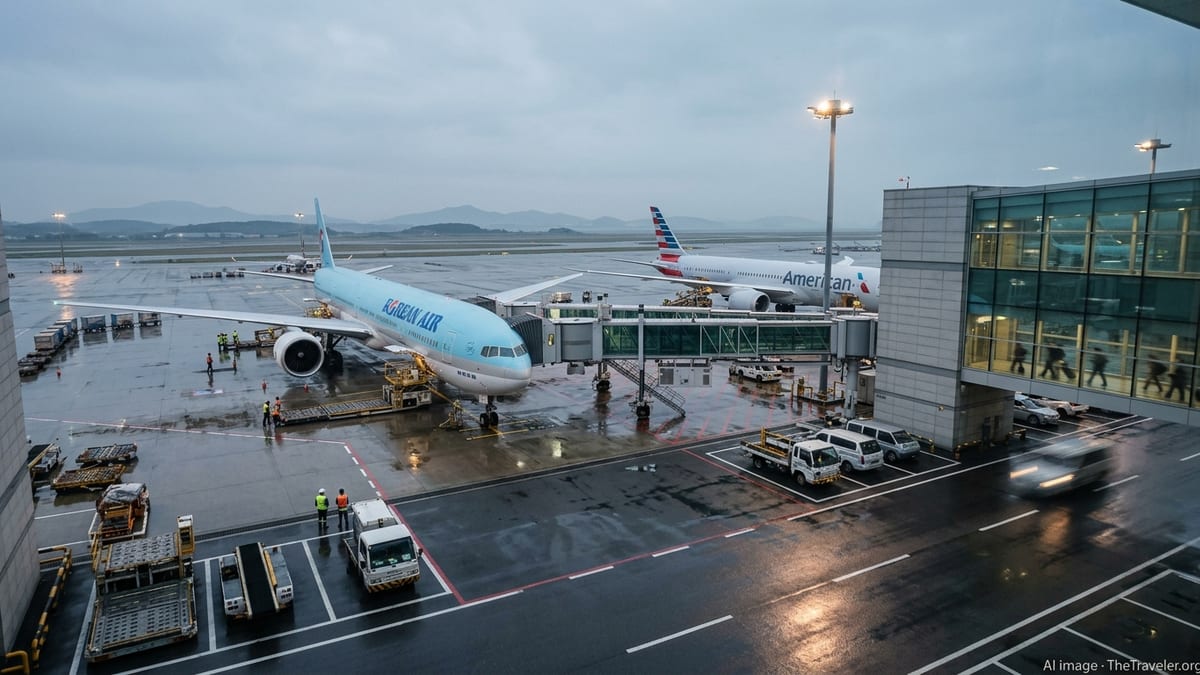
Korean Air’s decision to restore daily flights between Seoul Incheon and Jakarta is poised to tighten air links from the United States to Southeast Asia, as travelers gain more one-stop options to Indonesia and neighboring markets including Japan, Singapore, South Korea, Vietnam and Thailand.
Get the latest news straight to your inbox!
Daily Seoul–Jakarta Service Returns Amid Intensifying Competition
Publicly available schedule data indicates that Korean Air will operate the Seoul Incheon to Jakarta Soekarno-Hatta route on a daily basis from June 2026, restoring a full-frequency pattern that aligns the carrier more closely with rivals on one of Southeast Asia’s key business and leisure corridors. The move follows a period of more limited operations and reflects growing demand on links between Northeast Asia and Indonesia’s capital.
Tracking services show Korean Air flight KE627 as a core component of the schedule, providing an afternoon departure from Incheon and evening arrival into Jakarta, with the return sector timed to support onward morning connections in Seoul. This timing is significant for global itineraries, as it allows passengers arriving from North America and Europe to connect to Indonesia with minimal layover.
The decision comes as several airlines contest the Seoul–Jakarta market, including both full-service and low-cost competitors. Industry observers note that a restored daily presence gives Korean Air a stronger platform to defend market share, particularly in premium cabins and connecting traffic driven by alliance and codeshare partners.
The expanded schedule also underlines Jakarta’s importance relative to other Indonesian destinations. While Bali remains a dominant leisure draw, the mix of corporate, government, and migrant-worker traffic into Jakarta, combined with growing tourism flows, offers Korean Air a more balanced demand profile across the week.
One-Stop US Access to Indonesia and the Wider Southeast Asia Region
For travelers departing the United States, Incheon International Airport has increasingly emerged as a competitive one-stop gateway into Southeast Asia. Transpacific flights from cities such as Los Angeles, San Francisco, Seattle, New York, Atlanta, Chicago and other hubs feed into Korean Air’s network, allowing connections to Jakarta with a single plane change in Seoul.
Industry reports highlight that this pattern is especially attractive for itineraries where nonstop options do not exist, including most US–Indonesia city pairs. By pairing a long-haul transpacific flight with the restored daily Jakarta leg, Korean Air can offer consistent schedules and through-ticketing, which are important to corporate travel buyers and tour operators.
The renewed Jakarta frequency also interacts with a wider matrix of regional connections out of Incheon. Passengers from the United States can route through Seoul to reach Japan, Singapore, Vietnam, Thailand and other destinations, with Jakarta positioned as one of several Southeast Asian anchors alongside cities like Bangkok and Ho Chi Minh City. As carriers in the region adjust capacity following the pandemic and as demand for intra-Asian travel rises, the reliability of daily operations becomes a key differentiator.
Travel analysts point out that US-based airlines have a limited footprint in deep Southeast Asia, often relying on partnerships to access secondary markets. Korean Air’s strategy of using Incheon as a super-connector airport enables it to capture flows that might otherwise route via Tokyo, Hong Kong, Taipei or Singapore, particularly for Indonesian-bound journeys that benefit from a geographically direct track across the North Pacific.
Strengthening Southeast Asia Connectivity Through Strategic Hubs
The restoration of daily Seoul–Jakarta flights comes at a time when Southeast Asian air networks are being rebuilt and expanded. Public information on flight schedules shows rising capacity on routes from Incheon to Singapore, Ho Chi Minh City, Hanoi, Bangkok and Manila, positioning Korean Air as a key player in linking Northeast Asia with the broader Association of Southeast Asian Nations region.
Jakarta’s role in that network is both symbolic and practical. As Indonesia’s political and economic center, the city anchors a market of more than 270 million people and serves as a gateway to emerging industrial zones on Java and beyond. Additional connectivity via Incheon facilitates not only tourism but also trade, investment and labor mobility between Indonesia and North Asian economies.
At the same time, other regional hubs such as Singapore and Bangkok remain important waypoints for Korean Air’s Southeast Asia strategy. By maintaining robust schedules into these cities alongside Jakarta, the airline can offer multi-stop itineraries for travelers who combine business in one market with leisure in another, or for corporate customers managing regional operations across multiple ASEAN capitals.
Competitive pressure in the region is rising as low-cost and full-service carriers alike increase frequencies and launch new routes. Korean Air’s decision to reinforce Jakarta with daily service suggests confidence that demand will continue to grow, supported by factors such as expanding Korean investment in Indonesia, rising outbound tourism from both countries, and broader interest in Southeast Asia among US and European travelers.
Implications for Tourism, Trade and Aviation Partnerships
Tourism boards across Southeast Asia have highlighted steady growth in arrivals from the United States and South Korea, helped by relaxed entry requirements, currency dynamics and promotional campaigns centered on cultural and culinary experiences. Korean Air’s daily link into Jakarta adds another reliable option for tour operators building multi-country itineraries that include Indonesia alongside neighboring destinations such as Vietnam, Thailand and Singapore.
On the trade side, more frequent air services typically correlate with increased business travel and faster movement of high-value goods. While cargo patterns often differ from passenger schedules, airlines commonly leverage belly-hold capacity on passenger aircraft to transport electronics, automotive components, pharmaceuticals and perishables. A sustained daily service between Seoul and Jakarta therefore has potential to support just-in-time supply chains between Korean manufacturers and Indonesian partners.
The network effect is amplified by codeshare and interline arrangements that Korean Air maintains with carriers in North America, Europe and Asia. These partnerships allow itineraries to be ticketed and marketed under multiple brands while sharing capacity across flights. The reinstatement of daily Jakarta service gives partners greater scheduling flexibility, which can be used to time US-originating flights to connect smoothly into Indonesian-bound services.
For travelers, the practical impacts include a wider choice of departure days, more consistent seat availability and, in some cases, the possibility of shorter connections through Incheon. For the airline, the additional frequency deepens its role as a bridge between the United States and Southeast Asia, supporting broader strategic ambitions in the region as the industry adjusts to a new post-pandemic demand landscape.
Jakarta’s Growing Role as a Regional Gateway
The focus on Jakarta in Korean Air’s Southeast Asia network reflects broader shifts in regional aviation. Indonesia is investing in airport and tourism infrastructure, while Jakarta competes with other hubs in the region to attract international carriers and long-haul services. More daily connections to major Asian hubs like Seoul strengthen its appeal as a transfer point for travel deeper into the archipelago and onward to neighboring countries.
As Jakarta’s connectivity improves, secondary Indonesian cities can also benefit. Domestic airlines and feeder services link the capital to destinations such as Surabaya, Medan, Makassar and emerging tourism hotspots across the islands. International passengers arriving on Korean Air from the United States or other long-haul markets can take advantage of these onward links, expanding the impact of the restored daily Seoul–Jakarta service beyond the route itself.
For Korean Air, the route is a strategic piece of a larger puzzle. By aligning its Jakarta service with growing demand patterns from the United States, Japan, Singapore, South Korea, Vietnam, Thailand and other markets, the airline is positioning Incheon as a preferred transfer point on the North Pacific–Southeast Asia axis. The resumption of daily flights signals a bet that Jakarta’s prominence as both a destination and a gateway will continue to rise in the years ahead.