


Italy’s bureaucracy is widely perceived as complex, especially by newcomers who must navigate public offices, documentation, and digital systems for the first time. Understanding how and why Italian administrative procedures feel demanding is essential for anyone evaluating a move, whether for work, retirement, or long-term residence. This briefing explains Italy’s "bureaucracy complexity" in practical, decision-focused terms, highlighting both structural challenges and the impact of recent reforms.
Defining the Italy Bureaucracy Complexity Score
For relocation planning purposes, a "bureaucracy complexity score" describes how difficult it is in practice to deal with a country’s public administration as a resident. It captures the time, effort, and uncertainty involved in handling daily-life procedures such as registering an address, accessing public services, obtaining documents, or resolving disputes with authorities. In the Italian context, this complexity is shaped by both national rules and strong local autonomy at the municipal and regional levels.
International governance and competitiveness indicators consistently show that Italy’s public administration is less efficient than that of many other advanced economies. Recent OECD analysis notes that the efficiency of Italy’s public administration remains lower than in most other OECD countries, and that regulatory complexity continues to weigh on the implementation of reforms and investments.([oecd.org](https://www.oecd.org/en/publications/oecd-economic-surveys-italy-2024_78add673-en/full-report/component-4.html?utm_source=openai)) This points to a system where navigating rules often requires more time and persistence than in Northern European benchmarks.
The bureaucracy complexity score for Italy can therefore be considered medium to high by European standards. Processes are usually rules-based and predictable in law, but the number of steps, the involvement of multiple agencies, and uneven implementation between cities can make outcomes feel uncertain for new arrivals. Digital tools are reducing friction, yet coexist with legacy paper-based habits that keep overall complexity elevated, particularly in the first years of residence.
From a relocation risk perspective, Italian bureaucracy rarely presents outright legal or administrative impossibility. Instead, the main impact is cumulative delay and transaction cost: appointments booked far in advance, repeated document submissions, and the need to follow up actively to ensure files move forward.
Structural Drivers of Administrative Complexity
Several structural factors explain why bureaucracy in Italy is perceived as complex. The administrative state is fragmented: national ministries, regional authorities, provinces, metropolitan areas, and more than 7,000 municipalities all share competencies. This fragmentation leads to varying interpretations of national rules and different local procedures for similar tasks, such as residence registration or local tax administration.
Regulation itself is dense. OECD assessments describe Italy’s regulatory environment, especially for professional services and some network sectors, as among the more restrictive in the OECD, which indirectly raises the complexity of interactions between individuals, businesses, and authorities.([oecd.org](https://www.oecd.org/en/publications/oecd-economic-surveys-italy-2024_78add673-en/full-report/component-4.html?utm_source=openai)) Rules are frequently amended, and transitional regimes can remain in place for years, creating layers of overlapping requirements that frontline offices must interpret and apply.
Legacy paper processes remain influential even where digital channels exist. Many offices still request original paper certificates or signed declarations, sometimes in addition to digital uploads. Where digital signatures or certified email are accepted, officials may nonetheless ask for printed copies for internal archiving. This dual system increases the number of steps associated with even simple procedures.
Finally, judicial and administrative dispute resolution is slow. Italy ranks poorly in international comparisons on contract enforcement times, with court cases and some administrative appeals taking years to conclude.([archive.doingbusiness.org](https://archive.doingbusiness.org/en/rankings/italy?utm_source=openai)) For relocating individuals this does not usually block standard procedures, but it does mean that resolving errors, fines, or contested decisions can be protracted, reinforcing perceptions of high bureaucratic complexity.
Quantitative Indicators and Business-facing Evidence
Although many global indices focus on business rather than private individuals, they offer useful benchmarks for the underlying quality of administration. Historic World Bank Doing Business data showed Italy in the mid-range of OECD economies on overall ease of doing business, but with weak positions on specific bureaucracy-intensive areas such as enforcing contracts and paying taxes.([archive.doingbusiness.org](https://archive.doingbusiness.org/en/rankings/italy?utm_source=openai)) While this dataset is now discontinued, it remains indicative of structural patterns that also affect residents.
Complementary analyses have highlighted the cost of bureaucracy for Italian firms. Employer associations have previously estimated annual compliance costs for small businesses in the tens of billions of euros, reflecting time spent on permits, reporting, and interactions with multiple agencies.([ansa.it](https://www.ansa.it/english/news/2017/12/13/bureaucracy-costs-33bn-a-year-rete-imprese-italia-2_5b6eb9ac-7564-47f6-9505-bc9db677f2cb.html?utm_source=openai)) For relocating professionals who plan to freelance, operate small companies, or interact with authorities as employers, these same systems translate into additional steps, forms, and waiting times.
OECD governance indicators, including government effectiveness and regulatory quality, position Italy below the OECD average, confirming that citizens and firms face more red tape and weaker administrative responsiveness than in many peer economies.([oecd.org](https://www.oecd.org/en/publications/government-at-a-glance-2025-country-notes_da3361e1-en/italy_42049b4b-en.html?utm_source=openai)) While these indices do not provide a single "complexity score," they collectively support an assessment of elevated bureaucracy intensity by advanced-economy standards.
In relocation planning, these quantitative signals can be interpreted as a need to allocate additional time and contingency for any process that involves a public office, from registering utilities for a home-based business to formalizing local professional registrations.
Resident-facing Pain Points in Everyday Bureaucracy
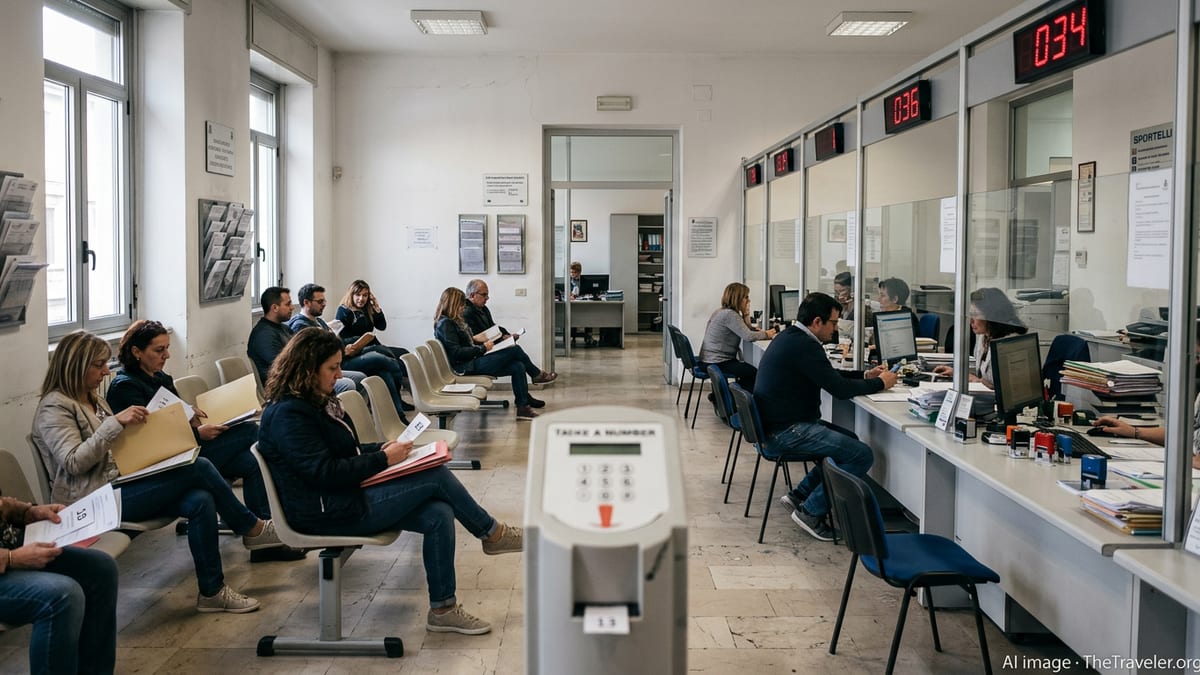
For individuals and families, bureaucratic complexity becomes visible in everyday interactions rather than aggregate scores. Common friction points reported by residents and expats include registration of residence, issuance and renewal of identity documents, and access to municipal services. Procedures often require in-person appointments at specific offices, with slots booked days or weeks in advance and limited flexibility for rescheduling.
Documentation requirements can be extensive. It is common for offices to request multiple supporting documents, such as certificates issued by other branches of the public administration, which may have to be obtained in separate steps. Where foreign documents are involved, translation and legalization requirements add further layers. The need to synchronize data between national registries and municipal systems can introduce delays even when all paperwork is technically in order.
Communication channels can also be a source of complexity. Different offices use a mix of email, certified email, online portals, and in-person visits. Telephone lines may be difficult to reach, and response times to email queries vary significantly. Residents often find that following up in person or via multiple channels is necessary to move a file forward or clarify missing information.
Language is another practical dimension of complexity. While many central and large-city offices offer information in multiple languages, smaller municipalities may operate almost entirely in Italian. The more complex the procedure, the more likely it is that guidance, forms, and online portals will be Italian-only, requiring either functional language skills or local support to avoid misunderstandings and repeated submissions.
Digital Identity and E-Government: Complexity Reducer or New Barrier
Italy has invested heavily in digital public services with the explicit goal of simplifying interactions between citizens and the administration. The two flagship tools are the SPID public digital identity system and the electronic identity card (Carta d’Identità Elettronica, CIE), both of which allow users to authenticate online and access hundreds of national and local services.([spid.gov.it](https://www.spid.gov.it/en/?utm_source=openai))
Usage of these tools is now extensive. By mid-2024, external analyses reported that tens of millions of Italians had activated SPID or used CIE for e-government access, with Eurostat data indicating that approximately 40 to 50 percent of individuals had used an e-ID to access public services in recent years.([scribd.com](https://www.scribd.com/document/872165203/Italy-Digital-Decade-Country-Report-2024-AYwkh8UsP6KwrcWRTUMfnlUsmE-106709?utm_source=openai)) The Italian government has also reported a rapid increase in the number of public bodies offering online services and in the volume of transactions carried out digitally.
From a bureaucracy complexity perspective, these tools significantly reduce administrative burden once they are fully set up. Residents can submit applications, download certificates, and communicate with authorities through unified portals, often without physical visits. Projects such as "Italia Login" and the national IO app consolidate multiple services in a single interface, while a national registry platform connects municipal population data to national systems.([agid.gov.it](https://www.agid.gov.it/en/agenzia/stampa-e-comunicazione/notizie/2023/10/03/public-administration-digitalization-more-30-interventions-implemented-agid-part?utm_source=openai))
However, the onboarding process into this digital ecosystem can itself be complex, particularly for new arrivals. Activating SPID or CIE usually requires prior identity verification, sometimes at local post offices or municipal offices, and may depend on having a tax code and residence data correctly recorded in national registries. Technical issues, phone-number verification challenges, and variations between identity providers can create entry barriers that temporarily increase perceived bureaucracy before later reducing it.
Regional Disparities and Local Administrative Culture
Italy’s bureaucracy complexity score is not uniform nationwide. Studies focusing on different cities show that no single location consistently performs best on all administrative dimensions such as starting a business, obtaining permits, registering property, or enforcing contracts.([archive.doingbusiness.org](https://archive.doingbusiness.org/en/rankings/italy?utm_source=openai)) One city might be efficient in business registration but slow for construction permits; another might excel in contract enforcement but lag in property registration.
These disparities are driven by differences in administrative capacity, staffing levels, digitalization, and management practices at the municipal and regional levels. Large metropolitan areas and regional capitals often offer more advanced digital portals and clearer guidance, while smaller municipalities may rely more heavily on person-to-person interaction, handwritten forms, and limited office hours.
Local administrative culture further shapes the lived experience of bureaucracy. In some jurisdictions, officials are accustomed to dealing with international residents and are more proactive in offering explanations and checklists. In others, staff may assume a high level of prior knowledge about Italian procedures and legal terminology, which can make processes feel opaque to newcomers.
For relocation planning, this means that bureaucracy complexity should be evaluated at both the national and local level. Choosing a municipality with stronger digitalization and clearer procedures can materially reduce the administrative burden over the first years of residence, even under the same national laws.
Ongoing Reforms and Trajectory of Complexity
Several reform waves are currently underway that directly target Italy’s administrative complexity. Under recent national recovery and resilience plans, the government has committed to simplifying hundreds of regulatory procedures in areas such as labor, taxation, energy, and social policy by the mid-2020s. OECD monitoring notes that implementation of these simplification measures is ongoing and specifically designed to make the public administration more efficient.([oecd.org](https://www.oecd.org/en/publications/oecd-economic-surveys-italy-2024_78add673-en/full-report/component-4.html?utm_source=openai))
Digital transformation remains a central pillar of this strategy. Government agencies report dozens of digitalization projects, including interoperability platforms, standardized access channels, and training for Digital Transition Managers within public bodies.([agid.gov.it](https://www.agid.gov.it/en/agenzia/stampa-e-comunicazione/notizie/2023/10/03/public-administration-digitalization-more-30-interventions-implemented-agid-part?utm_source=openai)) The goal is to replace paper-based, office-specific processes with unified, online workflows accessible through national identity tools.
Recent developments also include the strengthening of the national IO app and the expansion of digital wallets that allow citizens to store and access documents offline, synchronized with the National Registry of the Resident Population.([biometricupdate.com](https://www.biometricupdate.com/202507/italy-gets-offline-digital-wallet-access-as-country-advances-digitalization?utm_source=openai)) These tools are intended to reduce the need for citizens to repeatedly provide the same data to different offices, a major historical source of bureaucratic friction.
The trajectory, therefore, points toward gradual reduction in bureaucracy complexity for digitally literate residents willing to adopt new tools. However, during the transition phase, coexistence of old and new systems, uneven uptake across municipalities, and learning curves for both citizens and officials mean that new arrivals should still expect a medium to high complexity environment over the next few years.
The Takeaway
Italy’s bureaucracy complexity score can be summarized as structurally high by advanced-economy standards, though steadily improving for those who integrate into the country’s digital identity and e-government ecosystem. Administrative processes are rules-based and ultimately predictable, but fragmentation of competences, dense regulation, and legacy paper practices increase the time and effort required to navigate everyday procedures.
Quantitative indicators from international organizations confirm below-average government effectiveness and regulatory simplicity compared with many OECD peers, while business-facing analyses highlight high compliance costs and slow dispute resolution. For relocating individuals, this translates into the need for patience, careful documentation management, and proactive follow-up with offices, especially during the first year of residence.
At the same time, rapid expansion of SPID, CIE, and integrated digital platforms is meaningfully reducing administrative friction for residents who complete the onboarding process. Regional and municipal variation remains significant, making local administrative capacity a relevant criterion when choosing where to settle.
For relocation decision-making, Italy’s bureaucratic environment should be viewed as manageable but non-trivial. With realistic expectations, time buffers for key procedures, and early investment in digital access tools, the complexity is unlikely to be a deal-breaker, but it will remain a defining feature of day-to-day life in the medium term.
FAQ
Q1. Is Italy’s bureaucracy significantly more complex than in other EU countries?
Italy’s bureaucracy is generally more complex than in many Northern European countries, with lower scores on government effectiveness and more restrictive regulation, though roughly comparable with some Southern and Eastern EU peers.
Q2. How much time should new residents expect to spend on bureaucratic processes in the first year?
New residents should plan for multiple half-days or full days over the first year to handle residence registration, identity documents, tax codes, and setting up digital access, with additional time if dealing with multiple municipalities.
Q3. Does using SPID or CIE really reduce bureaucratic complexity?
Once activated, SPID and CIE can substantially reduce complexity by allowing online applications, certificate downloads, and secure messaging, although activation itself may require several steps and at least one in-person verification.
Q4. Are some Italian regions or cities known for being administratively easier?
Comparative studies show notable variation between cities, with some performing better on permits or contract enforcement than others; large metropolitan areas and regional capitals often offer more mature digital services and clearer procedures.
Q5. How does Italy’s slow court system affect everyday bureaucracy for residents?
While most routine procedures do not involve courts, the slow pace of contract enforcement and administrative litigation means that resolving disputes, fines, or contested decisions can take a long time, which adds perceived risk and complexity.
Q6. Is language a major factor in experiencing Italian bureaucracy as complex?
Yes. Many detailed instructions, forms, and portals are available only in Italian, especially at the municipal level, so limited Italian proficiency can translate directly into higher perceived complexity and greater reliance on intermediaries.
Q7. Are reforms likely to make Italy’s bureaucracy much simpler in the near term?
Ongoing reforms and digitalization are improving processes, but change is gradual and uneven across offices; newcomers over the next few years should still anticipate a medium to high level of bureaucratic complexity.
Q8. How important is local municipal capacity compared with national rules?
National rules set the framework, but municipal capacity, staffing, and digitalization largely determine how smooth procedures feel in practice, so local variation can significantly affect a resident’s everyday experience.
Q9. Can non-digital residents manage Italian bureaucracy effectively?
It is still possible to manage processes without heavy digital use, but it typically requires more in-person visits, longer queues, and greater reliance on paper documents, which increases the overall time and effort involved.
Q10. Should bureaucracy alone deter relocation to Italy?
For most people, bureaucracy is a notable inconvenience rather than a prohibitive barrier; with realistic expectations, time buffers, and early adoption of digital tools, it can be managed as a recurring but contained cost of living in Italy.