


Italy remains one of Europe’s major destinations for migrants and internationally mobile professionals, yet integration outcomes for foreign residents are mixed and often challenging. This briefing explains Italy’s integration difficulty score for expats by examining structural barriers and enabling factors across language acquisition, bureaucratic systems, social inclusion, and civic participation. It is designed to give relocation decision-makers a clear, data-informed view of how hard it is for newcomers to become effectively integrated members of Italian society.
How Integration Difficulty Is Measured in Italy
Integration difficulty in Italy can be understood through composite indicators that assess how policies and real-life conditions affect migrants’ ability to participate in society. The best known is the Migrant Integration Policy Index (MIPEX), which benchmarks countries on a 0 to 100 scale across dimensions such as access to rights, family reunion, education, political participation, and anti-discrimination. Italy’s most recent reported score is around 58 out of 100, which places it in the “slightly favorable” group and above the European average, but still far from best performers such as Sweden or Portugal.
This headline score can be misleading for individual expats. MIPEX and similar indices measure the quality of policies on paper, while foreign residents frequently encounter very different realities on the ground, particularly around administrative processes, service access, and social attitudes. Italy’s formal framework is relatively comprehensive, yet implementation is fragmented and often slow. For relocation planning, the practical difficulty of navigating everyday systems is usually more relevant than the statutory rights that exist in legislation.
For globally mobile professionals and long-term migrants, Italy’s integration difficulty can be summarized as “medium to high.” The country offers a legal framework that recognises migrant rights and provides paths to long-term settlement and citizenship, but the pathway is encumbered by language demands, a complex and locally variable bureaucracy, and relatively limited channels for newcomers to influence local decision-making.
Understanding how this translates into concrete integration challenges requires focusing on four clusters: language and communication, bureaucratic and institutional navigation, social and cultural inclusion, and civic and long-term attachment outcomes.
Language and Communication Barriers for Newcomers
Language is a primary driver of integration difficulty in Italy. Italian is the essential medium for most interactions with public authorities, healthcare providers, schools, and many employers. English proficiency is uneven and generally lower in public-facing administration than in private-sector urban workplaces. While front-line staff in large cities and service sectors may speak some English, expats frequently report that municipal offices, police stations, and social services operate almost exclusively in Italian.
Research on linguistic integration of adult migrants in Italy highlights a structural gap between language requirements and learning opportunities. Academic analyses describe Italy’s approach as relatively demanding in expectations, but fragmented in support provision, particularly for adults outside formal education systems. For example, language courses for migrants are often delivered by regional adult education centres or NGOs with limited capacity and inconsistent quality, and waiting lists in high-demand areas can be long. Italian proficiency at level A2 is a prerequisite for long-term EU residence status, and B1 is required for naturalisation, which raises the stakes for those aiming at durable integration.
Recent policy developments have focused more on younger migrants. In 2024 Italy introduced new measures to strengthen Italian L2 provision for migrant pupils in schools, including additional teacher training and targeted language support. While positive, these reforms primarily benefit school-age children and do not resolve the broader challenge facing adult expats who must build functional Italian while working or managing family responsibilities. For many professionals, this creates a medium-term integration hurdle: day-to-day life may be manageable with limited Italian, but access to more complex services and full participation in local networks remains constrained until higher language proficiency is achieved.
As a result, linguistic integration difficulty in Italy can be rated as moderately high, particularly for non-EU migrants and for expats settling outside the largest metropolitan cores. Those who arrive with no Italian and limited time for formal study should expect a prolonged period of partial dependence on intermediaries, colleagues, or family members to navigate institutional interactions.
Bureaucratic Complexity and Administrative Integration
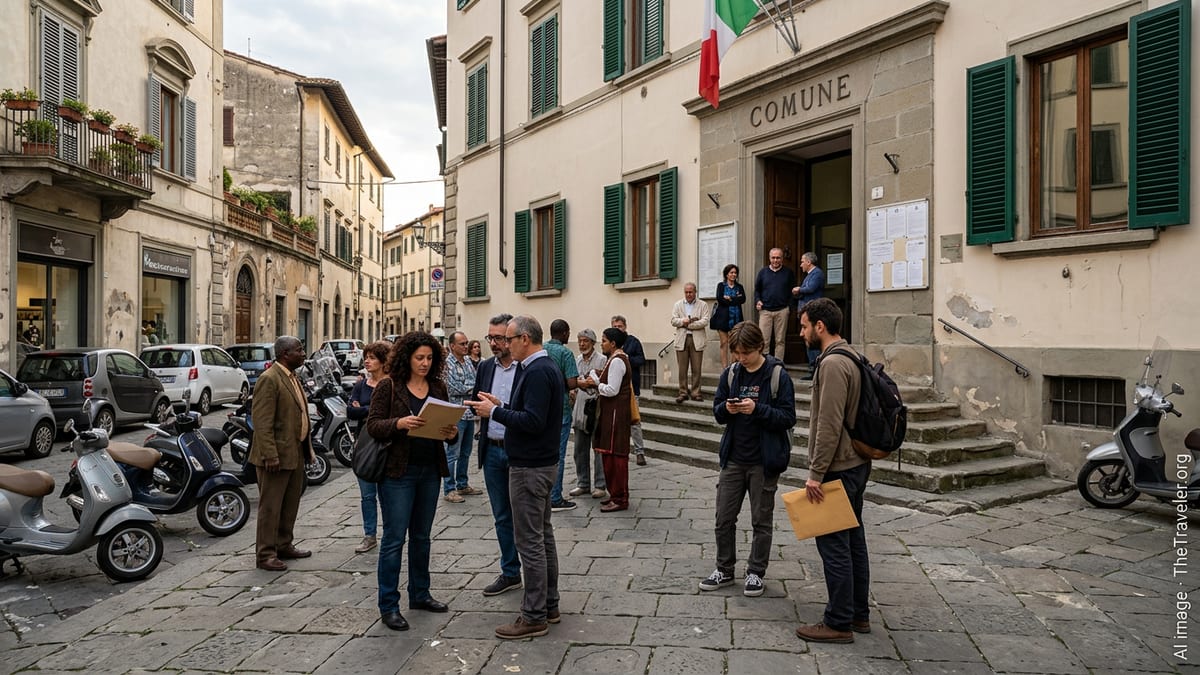
Administrative integration in Italy is shaped by a dense and often fragmented bureaucracy. Even for EU nationals, core steps such as registering residence with the municipal registry (anagrafe), obtaining a tax code, and aligning records with local health services and schools can involve multiple in-person visits, paper documentation, and inspections. For non-EU nationals, these steps are layered on top of residence permit processes and, in some cases, integration agreements that require language and civics commitments.
Qualitative evidence from expat communities and legal practitioners consistently identifies Italian bureaucracy as a major integration friction. Common themes include difficulty locating authoritative information, inconsistent interpretations of rules between municipalities, and long processing times for residence permits and status changes. Accounts from foreign residents frequently describe residence permits taking several months to be issued or renewed, with knock-on effects for employment, travel, and access to services while documents are pending.
Residence registration is a critical administrative milestone because it unlocks access to many local rights and services. Municipal police may carry out physical checks to verify that applicants genuinely live at the declared address. If the verification fails, residence registration can be refused, which then affects health coverage, school enrolment, and even tax status. For expats in temporary or informal housing arrangements, this linkage between residency recognition and service access can create a structural vulnerability and delay integration.
Overall, bureaucratic integration difficulty in Italy can be assessed as high relative to many Northern and Western European systems. The legal framework is clear enough on paper, but the procedural burden and local discretion make it unpredictable for newcomers. From a relocation risk perspective, companies and individuals should plan for administrative steps to take longer than in many peer destinations and factor in the need for local legal or accounting support to navigate key milestones.
Social Inclusion, Local Attitudes, and Everyday Integration
Social integration in Italy is influenced by the combination of long-established local communities and more recent, sometimes rapid, migration inflows. Foreign-born residents and their descendants represent roughly one tenth of the total population, with higher concentrations in major cities and industrial regions. Despite this, surveys and qualitative studies suggest that many Italians retain relatively localised social networks, and that foreigners are often perceived primarily as temporary workers or tourists rather than as prospective long-term neighbours.
Evidence from intercultural dialogue indices and European attitude surveys portrays Italy as a country with formal recognition of diversity but lingering ambivalence about multiculturalism. While overt discrimination is legally prohibited and many municipalities have established intercultural councils or consultative bodies, negative media and political narratives around migration persist. These narratives can shape local attitudes, especially toward visibly different or lower-income migrant groups. For highly skilled expats, the lived experience may vary sharply depending on location and socio-economic status: integration is generally easier in cosmopolitan neighbourhoods of Milan, Rome, Bologna, or Turin, and more complex in smaller towns with limited prior exposure to foreigners.
Informal social life in Italy is strongly anchored in family and long-standing friendship circles. This can make it more difficult for newcomers to break into local networks compared with societies where socialising is more institutionally mediated. Expats often report that their primary social ties remain within international communities or co-national groups, with slower progress in building deep relationships with Italian peers. This pattern contributes to a form of partial integration, where individuals function effectively in professional or academic settings but remain socially peripheral.
From an integration difficulty standpoint, social inclusion in Italy can be rated medium. The country is not structurally closed to foreigners, and many expats report warm individual interactions and long-term friendships. However, there is limited institutional scaffolding to actively foster intercultural contact compared to some Northern European states, and the default mode of social organisation is not optimised for rapid integration of newcomers.
Civic Participation, Long-Term Status, and Attachment
Civic integration examines how easily foreign residents can transition from temporary stay to full membership, including political voice and secure status. Italy’s legal framework grants non-EU long-term residents a pathway to EU long-term residence status after five years of legal stay, subject to income and language requirements. Naturalisation is possible for many migrants after ten years of residence, with shorter periods for those with Italian spouses or for second-generation residents.
Recent research indicates that Italy’s annual naturalisation rate, at around 2.5 to 3 percent of the foreign resident population, is close to the EU average and higher than some neighbouring countries. Over time, nearly half of long-term immigrants have acquired citizenship. This suggests that, while procedures are lengthy and sometimes bureaucratically demanding, the system does eventually convert a significant proportion of long-term migrants into citizens. For expats targeting permanent settlement, this moderates the long-term integration difficulty.
At the same time, civic participation by non-citizens remains relatively limited. Studies on immigrant political involvement in Western Europe consistently highlight Italy as one of the countries where electoral participation and union membership among immigrants are especially low. Foreign residents without Italian citizenship cannot vote in national or local elections, and only a modest share participate in political parties or civic associations. This combination of restricted formal rights and low engagement reduces newcomers’ capacity to influence the policies and local decisions that shape their integration environment.
Overall, civic and long-term integration difficulty in Italy can be characterised as mixed. Access to stable status and eventual citizenship is achievable but slow, while avenues for meaningful political voice before naturalisation are constrained. For expats who plan to stay long term, this requires a realistic time horizon for acquiring full rights and an understanding that civic influence during the first decade is likely to remain limited.
Comparative Integration Difficulty: Italy versus Other Destinations
In comparative perspective, Italy’s integration difficulty score positions it around the middle of the EU spectrum. MIPEX and related analyses classify Italy as slightly more favourable than the EU average in terms of formal integration policies, with particular strengths in anti-discrimination law and long-term residence provisions. However, countries like Sweden, Portugal, and some Benelux states generally perform better on both policy design and implementation, leading to lower everyday integration difficulty for newcomers.
Conversely, Italy compares relatively favourably with some Central and Eastern European countries where both public attitudes and policy frameworks can be significantly less welcoming. For expats choosing between Southern European destinations, Italy’s integration conditions are broadly similar to Spain and France in aggregate, though specific experiences differ by sector and city. Spain currently scores slightly higher than Italy on some integration indices, reflecting a more proactive approach to political participation and inclusive local policies in certain regions.
Relocation decision-makers should therefore view Italy as a moderate-difficulty integration environment: more open and structured than restrictive destinations, but materially more complex to navigate than the leading integration performers. The main differentiating factor is not the absence of rights, but the administrative and linguistic effort required to translate those rights into practical, day-to-day security and participation.
From a corporate mobility standpoint, Italy’s medium-high integration difficulty implies that expat support packages focused on administrative assistance, language training, and local mentoring can have a disproportionate impact on integration outcomes, particularly in the first three to five years of residence.
The Takeaway
Italy’s integration difficulty score for expats reflects a dual reality. On one side, the country has a reasonably developed legal framework on migrant rights, access to long-term residence, and anti-discrimination, with composite indices placing it slightly above the European average. On the other, newcomers routinely encounter significant friction in navigating Italian-language-only bureaucracies, variable municipal practices, and social environments rooted deeply in long-standing local networks.
For individuals and organisations evaluating relocation to Italy, the practical consequence is a need to plan for integration as an active, multi-year project rather than an automatic result of arrival. Success typically hinges on early investment in Italian language acquisition, methodical engagement with administrative requirements at municipal and regional levels, and deliberate strategies to build cross-cultural social ties beyond expat circles.
Italy can offer strong long-term integration outcomes, including access to EU long-term residence and citizenship at rates comparable to other major European destinations. However, reaching this point generally involves more procedural complexity and personal initiative than in the top-performing integration countries. Decision-makers should factor this medium-high integration difficulty into relocation timelines, resource allocation, and expectations for how quickly foreign employees and their families will feel fully embedded in Italian society.
FAQ
Q1. How difficult is it for expats to integrate in Italy overall?
Italy can be classified as a medium to high difficulty environment for expat integration. Formal policies are relatively inclusive, but everyday implementation is hindered by language barriers, complex bureaucracy, and locally variable practices, so integration usually requires sustained effort over several years.
Q2. Is the Italian language absolutely necessary for integration?
Yes, Italian is effectively essential for full integration. While some professional and social settings in major cities function partly in English, most interactions with public offices, healthcare providers, schools, and local services require Italian. Limited proficiency restricts access to information and slows down administrative and social integration.
Q3. How big a problem is Italian bureaucracy for newcomers?
Italian bureaucracy is one of the main sources of integration difficulty. Residence registration, permit renewals, and status changes often involve multiple offices, in-person appointments, and long processing times. Requirements and interpretations can differ between municipalities, so expats frequently need local guidance to navigate procedures successfully.
Q4. Are integration conditions better in some Italian cities than others?
Yes. Large metropolitan areas such as Milan, Rome, Bologna, and Turin generally offer denser support ecosystems, more international workplaces, and a higher presence of NGOs and language providers. Smaller towns and rural areas tend to have fewer services, lower English proficiency, and limited experience with foreign residents, which can make integration more challenging.
Q5. How welcoming are Italians socially to foreign residents?
Social experiences are mixed. Many expats report warm personal interactions, but also find it difficult to move beyond surface-level contact into deeper local networks that are often family-based and long established. Integration tends to be easier for those who speak Italian well and who engage proactively in local community, school, or professional activities.
Q6. How long does it typically take to feel integrated in Italy?
For many expats, a realistic timeframe to achieve solid functional integration is three to five years. This allows time to reach intermediate Italian, complete key administrative steps, understand local systems, and build a stable social and professional network. Full civic integration through naturalisation usually takes significantly longer.
Q7. Do expats have meaningful opportunities for civic participation before citizenship?
Opportunities exist but are limited. Foreign residents without Italian citizenship cannot vote in national elections and typically lack voting rights in local elections. They may participate in unions, associations, and consultative bodies, but overall levels of immigrant political participation are relatively low compared with some other Western European countries.
Q8. How do Italy’s integration conditions compare to other European countries?
Italy sits around the EU average. It scores better than some Central and Eastern European states on formal integration policies, but generally offers a more complex administrative and social environment than leading integration performers such as Sweden or Portugal. Compared with Spain and France, overall integration conditions are broadly similar, with country-specific differences by region and sector.
Q9. What are the main factors that can reduce integration difficulty for expats in Italy?
Key mitigating factors include early and sustained investment in Italian language learning, access to reliable local administrative support, employer-provided relocation assistance, and active engagement with local schools, professional networks, or community organisations. These elements can significantly shorten the time needed to navigate systems and build local ties.
Q10. Is long-term integration, including citizenship, realistically achievable for expats?
Yes. Long-term residence and citizenship are realistically achievable for expats who meet residence, income, and language requirements. Italy’s naturalisation rate is close to the European average, and a substantial share of long-term immigrants eventually become citizens. The main challenge is not the absence of a legal path, but the time, documentation, and administrative persistence required to reach that stage.