


More news on this day
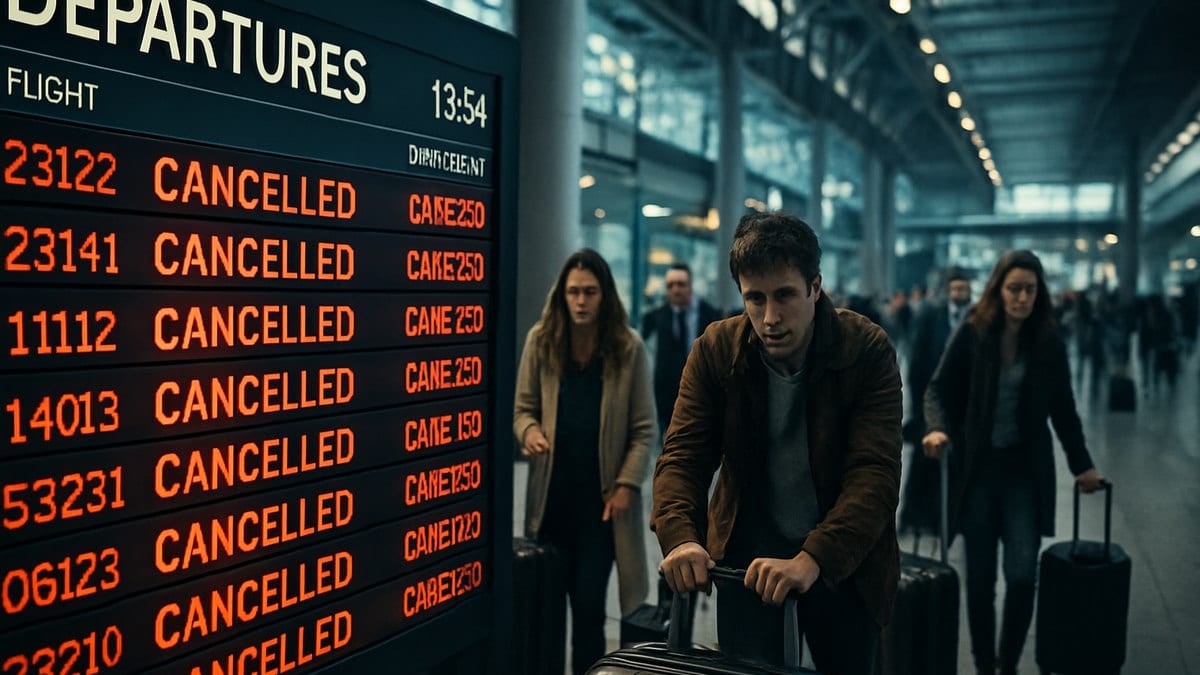
Hundreds of air travellers faced long queues, overnight waits and missed connections on April 27 as a wave of flight cancellations and delays disrupted operations at several major UK airports, including London Heathrow, London Gatwick and Manchester.
Get the latest news straight to your inbox!
Disruption Spreads Across Key British Airports
Flight tracking data and domestic media coverage on April 27 indicated a significant number of cancellations and delays at the United Kingdom’s busiest hubs. Aggregated departure and arrival boards showed clusters of grounded services at Heathrow and Gatwick, with additional disruption reported at Manchester and Edinburgh as schedules came under strain.
At Heathrow, Britain’s primary long haul gateway, a series of short haul and European services were removed from the schedule through the morning and early afternoon, leaving departure boards heavily marked with cancellations. Similar patterns appeared at Gatwick, where a mix of leisure and low cost carriers cut rotations, forcing passengers to seek alternative routings or await later departures.
Manchester and Edinburgh experienced knock on effects as airlines adjusted networks to cope with aircraft and crew out of position. Some flights were consolidated, with passengers from multiple departures rebooked onto single services, while others were held on the ground awaiting new slots into the congested London airspace.
The combined impact at these airports left terminal concourses crowded, with long lines forming at airline service desks as travellers sought rebooking options, refunds or hotel accommodation while they waited for clarity on revised itineraries.
Operational Pressures and Fuel Concerns Behind Cancellations
Publicly available airline and aviation industry commentary in recent days has highlighted a combination of operational and economic pressures building across European networks. These include tight crew availability, aircraft maintenance backlogs and growing concerns over aviation fuel costs. On April 27, those pressures appeared to converge at several UK hubs, prompting carriers to trim same day schedules.
Industry analysis has pointed to fuel supply uncertainty and higher prices as a particular concern for the summer 2026 season, with some airlines already scaling back planned flying or consolidating lower demand services. At UK airports, this has translated into targeted cancellations on shorter routes and regional sectors, while higher yielding long haul services are generally being prioritised.
Airlines have also been operating close to capacity at peak times, leaving limited resilience when early rotations run late or aircraft go out of service unexpectedly. When this occurs at slot constrained airports such as Heathrow and Gatwick, timetable recovery can require the removal of multiple later flights, which then strands large numbers of passengers at once.
Recent adjustments to seasonal schedules, including pre planned cuts by some European and transatlantic carriers, may have helped reduce the overall number of same day cancellations. However, the events of April 27 demonstrated that even after advance pruning, relatively modest additional disruption can still quickly cascade through tightly packed timetables.
Passengers Face Missed Holidays, Business Disruption and Overnight Stays
The immediate impact of April 27’s cancellations fell on leisure travellers heading out for spring breaks and early summer holidays, as well as business passengers relying on day trips and short notice meetings. Domestic news coverage and social media posts described families sleeping on terminal floors, travellers attempting to rebook via alternative European hubs, and queues stretching across check in halls at peak times.
Passengers on point to point low cost services often faced the toughest choices when flights were removed from the schedule. In some cases, the next available departure on the same route was several days away, forcing travellers to decide between accepting a refund and abandoning plans, or paying out of pocket for replacement flights via other cities.
Those booked on network carriers sometimes had more rerouting options, but still encountered lengthy waits for available seats. With airlines increasingly using remaining capacity to accommodate disrupted customers rather than sell last minute bargains, many flights leaving the UK on April 27 were reported to be fully booked, limiting flexibility for stranded passengers.
For inbound travellers, cancellations and missed connections created further difficulties with ground transport and accommodation. Some arrivals into regional airports late in the evening no longer matched train and coach schedules, leaving travellers reliant on taxis or airport hotels that quickly filled as disruption mounted.
Rights, Compensation and What Travellers Can Do
Consumer advice sites and travel rights organisations emphasised on April 27 that passengers affected by cancellations to or from UK airports remain protected by UK and EU air passenger regulations. These rules typically require airlines to offer a choice between a refund and rerouting at the earliest opportunity when a flight is cancelled, regardless of the reason.
Where disruption is assessed as being within the airline’s control, such as certain operational or staffing issues, travellers may also be entitled to fixed sum compensation, depending on flight distance and length of delay. When cancellations are caused by extraordinary circumstances, including some types of air traffic control restrictions or severe weather, the carrier must still provide care and assistance, but may not be obliged to pay compensation.
Travel specialists routinely recommend that passengers keep records of boarding passes, booking confirmations and any receipts for meals, transport or hotels incurred during disruption. These documents can support later claims to airlines or, where available, alternative dispute resolution bodies if initial responses prove unsatisfactory.
For upcoming trips, practical steps include booking longer connection times where feasible, favouring direct flights over complex routings, and monitoring airline apps and departure boards frequently in the 24 hours before travel. On days like April 27, when cancellations begin to appear across multiple UK hubs, early awareness can give passengers more options to adjust plans before airports become severely congested.
Outlook for UK Air Travel as Summer Approaches
The disruption seen on April 27 fits into a wider pattern of strain on UK and European aviation networks in early 2026. In recent weeks, several carriers have announced schedule adjustments, citing fuel concerns, aircraft delivery delays and the need to build greater resilience into operations ahead of the busy summer peak.
Analysts note that major hubs such as Heathrow and Gatwick are likely to continue concentrating scarce resources on core routes, with some thinner regional and secondary city services at higher risk of consolidation or periodic cancellation. This trend could mean more passengers funnelling through a smaller number of daily departures, increasing the impact when those flights are disrupted.
Travel industry briefings suggest that while a repeat of the most severe historic air traffic control outages is not currently anticipated, the system remains vulnerable to localised technical issues, weather events and industrial disputes. Each of these has the potential to trigger fresh rounds of cancellations and delays, especially at highly utilised airports with limited spare capacity.
For now, travellers planning to fly to or from the UK in the coming weeks are being encouraged by consumer advocates to build flexibility into itineraries where possible, keep documentation organised, and remain alert to schedule changes. The events of April 27 have underlined how quickly conditions at the country’s main hubs can shift, and how vital it is for passengers to be prepared when flights suddenly stop running as planned.