


Italy’s residential property market has entered a new expansion phase after a decade of stagnation, with moderate nationwide price increases and pockets of intense demand in major cities. For prospective relocators, the central question is not only whether housing is affordable today, but also whether current conditions point to an unsustainable price bubble that could expose buyers to correction risk in the coming years.
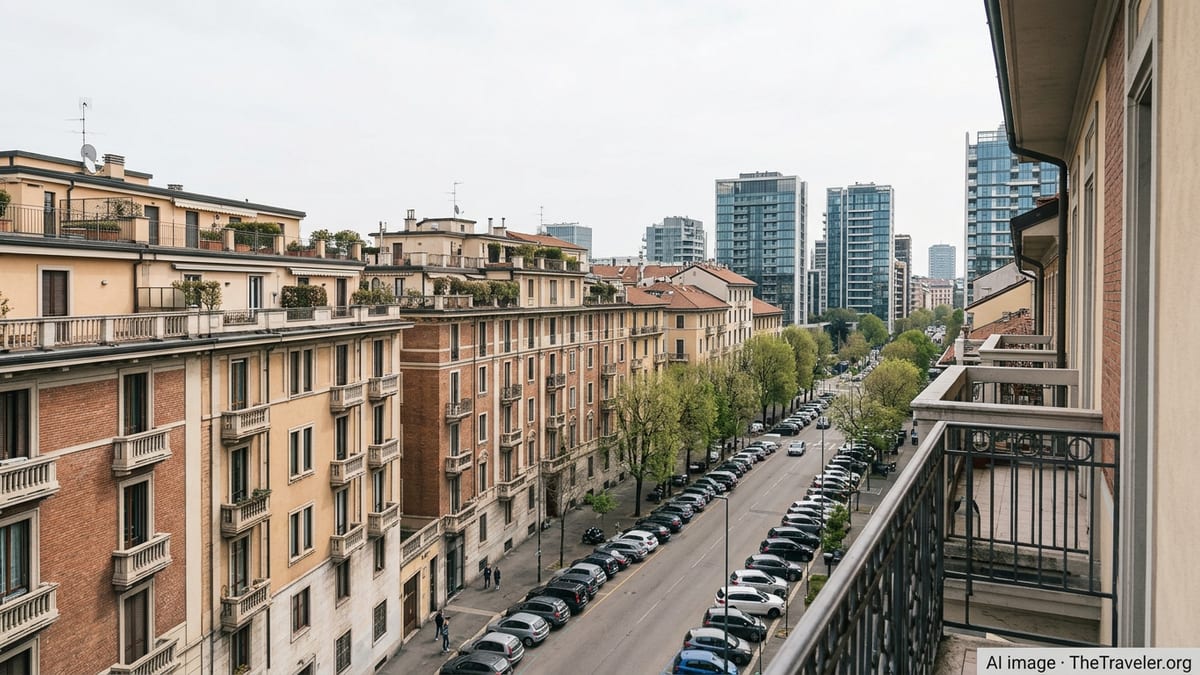
Current Level of House Prices in Italy
National-level data indicate that Italian house prices have been rising, but at a measured pace that contrasts with the double-digit annual increases seen in several other European markets earlier in the decade. The official House Price Index compiled by Istat shows year-on-year growth of roughly 1.5 to 2 percent in early 2024, following similar gains in 2023. This is consistent with longer-run figures that place the national average around 2,000 to 2,100 euro per square metre in 2025, up a few percentage points from 2023 but still below the peaks reached before the global financial crisis.
The modest aggregate growth reflects a market that spent much of the 2010s in a slow recovery phase. Inflation-adjusted prices in many secondary areas remain close to or below levels seen fifteen years ago. In this respect, Italy differs from countries where prices have doubled in a decade, which is a typical warning sign of a bubble. Instead, the current increase appears to be a late-cycle catch-up from previously depressed valuations, shaped by gradually improving economic conditions and somewhat lower mortgage rates after their 2024 peak.
From a relocation standpoint, this means that while property is no longer as cheap as immediately after the eurozone crisis, Italy does not present the classic profile of a market that has already overshot fundamentals nationwide. The aggregate trend is moderate rather than explosive, with annual gains closer to general inflation than to speculative surges.
Regional Divergences: Milan, Rome and the Rest of the Country
Beneath the national averages, there are pronounced regional differences that are highly relevant to bubble risk. Large metropolitan areas, especially Milan and to a lesser extent Rome, have seen much stronger appreciation than smaller cities and rural regions. Recent market reports place average transaction prices in Milan approaching 4,800 to 5,000 euro per square metre, compared with approximately 3,200 euro per square metre in Rome. By contrast, many southern and provincial markets still trade significantly below 2,000 euro per square metre, with only modest recent gains.
Milan, in particular, has exhibited characteristics of a high-pressure market. It concentrates corporate employment, international finance, university demand and infrastructure investments linked to major events. These factors have attracted both domestic and foreign buyers, supporting robust prices even as transactions fell in some recent quarters. Rome’s performance has been more mixed, with solid activity in central and tourist-frequented districts, but softer conditions in peripheral areas where oversupply and lower incomes weigh on values.
For relocators, this divergence means that bubble risk, if it exists, is likely to be localised in specific urban submarkets rather than a countrywide phenomenon. Prime districts in Milan and central Rome, along with select prestige locations in Tuscany, the Lakes and certain coastal zones, sit at much higher price levels relative to local incomes than typical Italian towns. At the same time, wide swathes of the country still offer relatively low purchase prices, suggesting more room for further gradual adjustment rather than imminent correction.
Demand Drivers and Transaction Volumes
Recent transaction data show that sales volumes have been recovering after the slowdown linked to the initial spike in interest rates. Official statistics for 2024 and early 2025 indicate a small but positive increase in the number of residential transactions nationwide, in the range of 1 to 2 percent year on year, with some sources reporting double-digit growth in the first half of 2025 compared with the same period of the previous year. This suggests that higher borrowing costs have not pushed the market into contraction, though they have tempered speculative behaviour.
Demand is supported by several structural factors. Italy has high rates of homeownership and a tradition of viewing property as a store of wealth, which generates a steady base of local buyers. Demographic trends are more complex: overall population growth is very low, but there are internal migration flows from smaller towns to major cities, intensifying demand in selected urban areas even as some rural and peripheral markets experience weak or declining demand.
International demand adds another layer. Foreign buyers remain active in prime city-centre areas and in certain lifestyle regions such as Tuscany, Puglia and the northern lakes. However, the scale of foreign purchasing is still relatively small compared with domestic demand and does not appear, based on available market surveys, to be the primary driver of national price movements. This keeps the overall demand profile more balanced than in markets heavily reliant on external capital flows.
Rental Market Pressures and Yield Signals
Rental market dynamics are a crucial indicator of sustainability, since rapidly rising purchase prices unsupported by equivalent rental growth can signal speculative overvaluation. In Italy, rent levels have moved up more quickly than sale prices in recent years, particularly in major employment and university hubs. Nationwide, various data providers report average residential rents rising by around 7 to 8 percent in 2025 compared with the previous year, while sale prices increased by a smaller margin.
In Milan and Rome, rent per square metre substantially exceeds the national average, with central districts in Milan often quoting 24 to 26 euro per square metre per month and prime areas in Rome only slightly lower. Strong demand from students, young professionals and relocating workers has collided with tight supply, especially where new development is constrained. This has compressed vacancy rates and strengthened gross rental yields compared with the period of weak demand during the early 2010s.
However, there are recent indications of demand fatigue in certain segments. Reports on short term and temporary rentals show that after a sharp increase in asking rents through 2024, demand for temporary leases in cities like Milan, Rome, Florence and Bologna fell significantly in 2025, in some cases by more than 20 percent year on year. In these segments, prices rose faster than what many tenants could afford, and some supply shifted between long term and short term uses. For a relocator planning to purchase as a landlord, this underscores the need for careful micro level analysis of yields and occupancy rather than assuming permanently rising rents.
Interest Rates, Credit Conditions and Leverage
Bubble risk often increases when low interest rates enable households to take on very high leverage, pushing prices far beyond income-based fundamentals. In Italy, mortgage trends have been more restrained than in some other euro area countries. The share of variable-rate mortgages has historically been high, which tends to make households and lenders more cautious during periods of rising rates. After the European Central Bank’s rate hikes peaked around late 2024, fixed-rate mortgage costs in Italy began to edge lower, settling in 2025 at levels somewhat below their recent highs but still well above the ultra-low rates of the late 2010s.
Regulatory oversight and conservative banking practices have also limited speculative lending. Italian banks typically apply relatively strict loan-to-value and affordability criteria, reflecting their experience in the previous crisis period of non-performing loans. As a result, rapid credit expansion, a hallmark of housing bubbles, has not been a dominant feature of the recent cycle. Residential investment has grown, but it remains moderate relative to the size of the economy and well below levels recorded during classic bubble episodes in other countries.
For relocation-minded buyers, this means that while access to credit can still be a constraint, particularly for younger households or those with limited savings, the broader market is less exposed to a sudden shock from overleveraged borrowers. A moderate interest rate environment combined with controlled credit growth generally points to lower systemic bubble risk, even if affordability challenges persist for certain groups.
Fundamental Valuation and Bubble Risk Assessment
Assessing bubble risk involves comparing house prices with fundamental drivers such as incomes, rents and macroeconomic conditions. International institutions have highlighted significant overvaluation in some European housing markets, with estimates of 15 to 20 percent above fundamentals on average across the region at various points in the last few years. In this comparative context, Italy typically appears as a lower risk case. Its long period of subdued growth and earlier price declines mean that starting valuations were more conservative than in many peer countries.
Price-to-income and price-to-rent ratios remain elevated in top-tier Italian cities, but they are closer to historical norms in mid-sized and smaller markets. Rental yields in many non-prime areas are competitive by European standards, which suggests that investor purchases are still supported by actual income returns rather than purely by expectations of capital gains. Moreover, transaction data and building permits do not show the type of exuberant construction boom that usually accompanies speculative bubbles.
Nonetheless, risks are not negligible. Localised overheating in central districts of Milan, Rome and a handful of international hotspots could expose late-cycle buyers to price corrections if economic growth disappoints, interest rates move unexpectedly higher or regulatory changes affect short term rentals. Additionally, Italy’s broader economic performance remains moderate, which can cap sustainable long-run growth in housing values.
On balance, the available evidence points to Italy being in an expansionary but not clearly bubble-like phase at the national level. The risk profile is better described as moderate and concentrated, rather than systemic. For most prospective residents, the main concern is not a dramatic nationwide crash but the possibility of local price softening in overheated neighbourhoods or segments.
The Takeaway
For individuals and families evaluating relocation to Italy, the current residential property landscape offers a mix of relative stability and targeted pressure points. National price growth remains moderate, transaction volumes are recovering without signs of runaway speculation, and credit conditions are constrained enough to limit systemic leverage. These factors collectively reduce the probability of a severe countrywide housing bust in the near term.
At the same time, strong demand and limited supply in major urban centres, along with surging rents in certain segments, have pushed valuations in parts of Milan, Rome and other prime areas to levels that warrant caution. Prospective buyers looking at these markets should stress test their budgets against potential interest rate increases and allow for the possibility of modest price corrections or rental demand shifts, particularly in short term and student-oriented segments.
Relocators considering smaller cities or secondary regions will generally find more balanced price-to-income ratios and less evidence of overheating, albeit often with lower liquidity and slower resale timelines. In these markets, the risk profile is shaped more by local economic strength and demographic trends than by speculative cycles.
Ultimately, Italy’s property market does not currently resemble the classic pre-crisis bubbles observed elsewhere, but it is also not uniform. Decision-grade relocation planning should therefore be grounded in granular city and neighbourhood level analysis of price trends, rental demand and yields, rather than relying solely on national averages.
FAQ
Q1. Is Italy currently experiencing a nationwide housing bubble?
Available data suggest that Italy is in a moderate expansion phase rather than a classic nationwide bubble. Prices are rising slowly at the national level, with more pronounced pressure limited to specific cities and prime districts.
Q2. Which Italian cities show the highest property bubble risk for relocators?
Bubble risk appears most concentrated in Milan and central Rome, along with a few premium coastal and countryside locations where prices have risen faster than local incomes and rental fundamentals.
Q3. How fast are residential property prices rising in Italy overall?
Recent official indices point to annual national house price growth of around 1.5 to 2 percent, which is moderate by European standards and not typical of speculative surges.
Q4. Are rental market trends in Italy supporting current price levels?
In many urban markets, rents have been rising faster than sale prices, especially in Milan and Rome, which supports current valuations. However, some short term and temporary rental segments are showing signs of demand fatigue after sharp rent increases.
Q5. How do Italian mortgage and credit conditions affect bubble risk?
Italian banks generally apply conservative lending standards, and mortgage rates, while lower than their peak, remain high enough to discourage excessive leverage. This helps contain systemic bubble risk compared with more credit-driven markets.
Q6. What should relocation buyers consider when evaluating property in Milan or Rome?
Buyers should assess neighbourhood level price trends, realistic rental yields and sensitivity to interest rate changes. In some central districts, prices already reflect strong future growth expectations, which may increase correction risk if conditions change.
Q7. Are smaller Italian cities and rural areas exposed to the same bubble concerns?
Most smaller cities and rural markets have seen only modest price growth and remain relatively affordable. In these areas, risks are linked more to local economic performance and population trends than to speculative overheating.
Q8. How does Italy’s recent price performance compare with other European countries?
Italy’s house price growth has generally been slower than that of many northern European countries over the past decade. This slower trajectory reduces the likelihood that national prices are significantly detached from fundamentals.
Q9. Could regulatory changes to short term rentals impact property values?
Yes. In neighbourhoods heavily reliant on income from short term lettings, tighter regulations or shifts in tourism patterns could reduce achievable rents and weigh on prices, particularly for small centrally located units.
Q10. What is a prudent strategy for relocators concerned about bubble risk in Italy?
A prudent approach is to focus on properties with sustainable price-to-income and price-to-rent ratios, stress test affordability under less favourable scenarios, and favour locations with diversified local economies and resilient long term housing demand.