


More news on this day
International visitors planning to travel by train in Italy in early September face potential disruption, as a 24 hour national rail strike affecting much of the network is scheduled to go ahead unless it is called off or modified.
Get the latest news straight to your inbox!
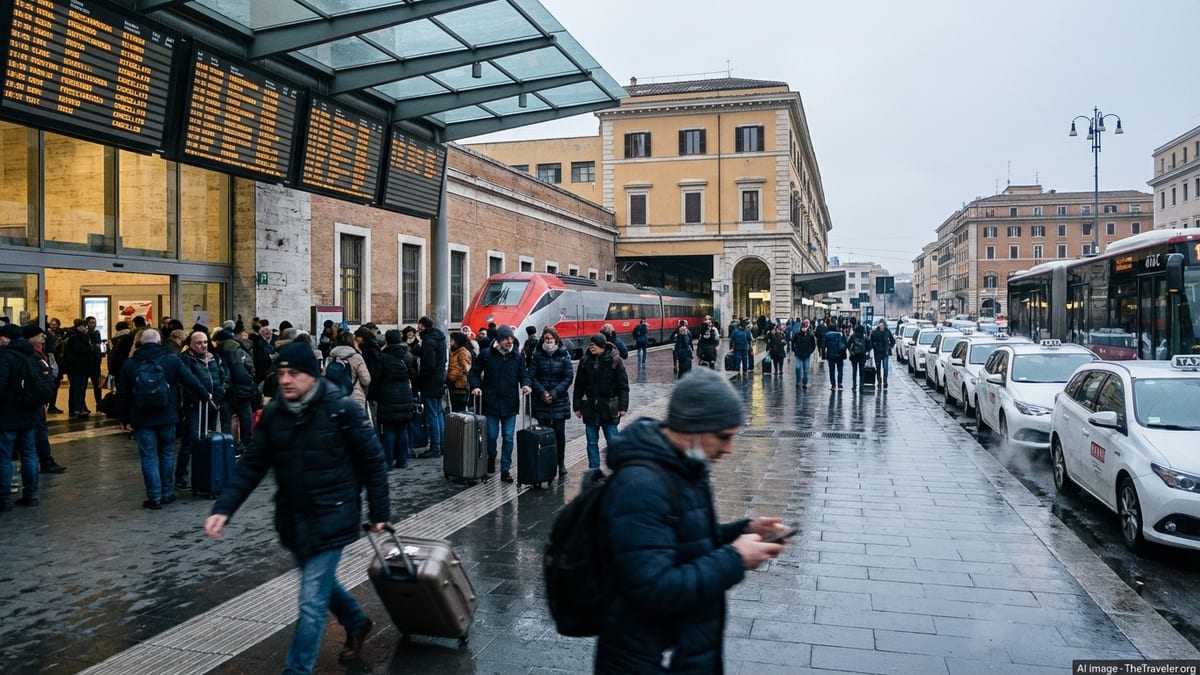
When the Italy rail strike is scheduled and who is involved
According to the Italian Ministry of Transport’s official strike register and multiple strike monitoring services, a national rail strike affecting companies that operate rail transport is scheduled from 21:18 on Monday 7 September 2026 to 21:17 on Tuesday 8 September 2026. The action is categorized as a 24 hour strike covering the railway sector, including freight operators, with a separate national entry specifying train crew and on board staff of the Italian State Railways Group.
The Italian State Railways Group includes Trenitalia, the country’s main operator for high speed Frecce services, Intercity and most regional trains. Strike calendars also reference a broader protest involving personnel of rail companies active across Italy in the same 24 hour period, indicating that disruption is expected to extend beyond a single brand to the wider rail system.
Privately owned high speed operator Italo has not been listed in the same strike proclamation, but past Italian strikes have sometimes affected multiple operators through shared infrastructure issues, staff membership in different unions, or indirect operational constraints. Travelers using either Trenitalia or Italo services should therefore expect possible timetable changes, cancellations or extended journey times around the strike window.
The September stoppage follows a series of rail strikes in Italy in 2026, including a national action affecting Group FS and Trenitalia services in June and further disruption on selected dates in July. Publicly available calendars suggest that late September will also see broader multi sector protests that include the rail system, underlining that industrial action remains a recurring feature of the Italian transport landscape this year.
How passenger services are expected to be affected
The strike window technically runs from the evening of 7 September through the evening of 8 September, which means that some long distance trains scheduled to depart before 21:18 on 7 September but arriving after that time could also be impacted. Published information on previous rail strikes in 2026 indicates that Trenitalia services have faced cancellations, partial routes, altered stopping patterns and delays that in some instances extended travel times by up to three hours.
Regional and commuter services are usually the most affected during Italian rail strikes, with many departures removed from the timetable. Long distance and high speed trains may see a smaller proportion of total services canceled, but travelers should still expect a significantly reduced offer compared with a normal day. Where services do operate, they can be crowded, particularly on key leisure and business routes such as Rome to Florence, Rome to Naples, Milan to Venice and the main north south high speed corridor.
Italo and Trenitalia sometimes adjust their commercial offer around periods of disruption, for example by altering frequencies on specific routes or combining passenger flows on fewer departures. When strikes coincide with major infrastructure works, such as summer and early autumn track maintenance, the combined effect can lead to structural timetable changes, bus replacements or altered origin and destination stations for certain trains.
Travelers should also factor in the knock on effect that a 24 hour strike can have on services immediately after the official end time. Crews and trains may not be in their usual positions when operations resume, and this can mean further delays and cancellations into the evening of 8 September and, on some routes, the morning of 9 September.
Guaranteed trains and passenger rights
Italian law provides for a minimum level of rail services to be guaranteed during strikes, particularly in commuter time bands. Trenitalia maintains a dedicated section on its website listing trains that are expected to run in the event of industrial action, including a separate table for long distance and regional services. The list is route specific and is updated for each strike, allowing passengers to check whether their planned departure is among those that should operate.
Even when a train is designated as guaranteed, experience from recent strikes suggests that passengers may still face delays or changes to rolling stock, especially where infrastructure constraints or wider multi sector protests are involved. However, the existence of a guaranteed list gives travelers a practical tool to reduce risk by booking on those departures where possible or by adjusting itineraries to fit the protected windows.
When trains are canceled due to a strike, publicly available information on Trenitalia’s customer pages indicates that passengers can generally request a full refund or, in some cases, rebook for another date without additional cost. Separate rules apply to delays that reach certain thresholds, with compensation usually calculated as a percentage of the ticket price once delays pass a defined number of minutes. Conditions may differ between flexible and non refundable fares, and between domestic high speed, Intercity and regional tickets.
Italo publishes its own conditions of carriage and performance commitments, including provisions for refunds and assistance in the event of serious disruption. While the September strike is focused on staff at the State Railways Group rather than on Italo personnel, rail users should still check the operator’s latest travel information pages for any strike related advisories and for precise instructions on compensation procedures.
Practical strategies to avoid or limit delays
For visitors who have not yet finalized their plans, the simplest strategy is to avoid scheduling long rail journeys within the core strike window from the evening of 7 September to the evening of 8 September. Where flexibility exists, adjusting itineraries so that key intercity moves fall on 6 or 9 September can substantially reduce the risk of disruption. Travelers already holding non flexible tickets for the affected dates should monitor operator announcements to see whether rebooking options become available as the strike approaches.
Those who must travel on the affected days can lower their exposure by aiming for guaranteed trains where possible, traveling earlier in the day, and allowing generous buffers when connecting to flights, cruise departures or time sensitive events. Travelers can also consider alternative modes such as long distance coaches, domestic flights on busy corridors, or rental cars, although availability may tighten as awareness of the strike spreads.
In major cities such as Rome, Milan, Florence and Naples, urban public transport operators are separate from the national rail companies and may or may not be affected by the same industrial action. City metro and bus systems can sometimes provide workable alternatives for shorter regional trips, particularly where suburban rail services are disrupted but road links remain available. However, travelers should be aware that some local operators also face their own strike calendars, which are listed separately from the national rail actions.
International travelers should also build in extra time for navigating stations and platform changes, as crowds and short notice timetable alterations can make large hubs more complex than usual. Using digital tools, such as operator apps and independent strike aggregators that offer real time updates on cancellations and delays, can help visitors react quickly if services change on the day of travel.
Staying informed in the run up to departure
Because rail strikes in Italy are sometimes scaled back, postponed or reshaped closer to the date, monitoring developments during the weeks before travel is essential. The Ministry of Transport’s online strike calendar provides the legal reference for national and regional actions and notes any changes, while independent portals consolidate this information in a more user friendly format that highlights the impact on passengers.
As the September strike date approaches, Trenitalia and other operators are expected to publish specific travel advisories, including details of any modified timetables, replacement services and refund policies. These communications are usually released several days in advance of a strike, though timings can vary. Travelers who have booked via third party agencies or rail pass providers should also watch for messages from those intermediaries, which may offer additional instructions or rebooking options.
Online travel communities have become a useful real time resource for visitors, with contributors frequently sharing personal experiences from recent strikes, practical tips on navigating busy stations, and links to official reference pages such as the guaranteed trains list. While these forums do not replace official channels, they can alert travelers to emerging issues and workarounds that may not yet be reflected in formal announcements.
Given the potential for change, the most effective approach for international visitors is to combine regular checks of official strike calendars with operator specific updates and crowd sourced reports. This layered strategy helps ensure that travelers have the latest picture before setting out, improving the chances of keeping Italian rail journeys on track despite the planned September industrial action.
Italian Ministry of Transport national strike calendar
ScioperiItalia national transport strike overview