


You have your flights, your hotel, and maybe even a restaurant list. Then you hit the one task everyone dreads: the visa application. A quick search pulls up the official government portal for your destination, but also third-party services like iVisa promising faster, easier applications for a fee. So which route should you actually use, and when is that extra fee genuinely worth paying?
Get the latest updates straight to your inbox!
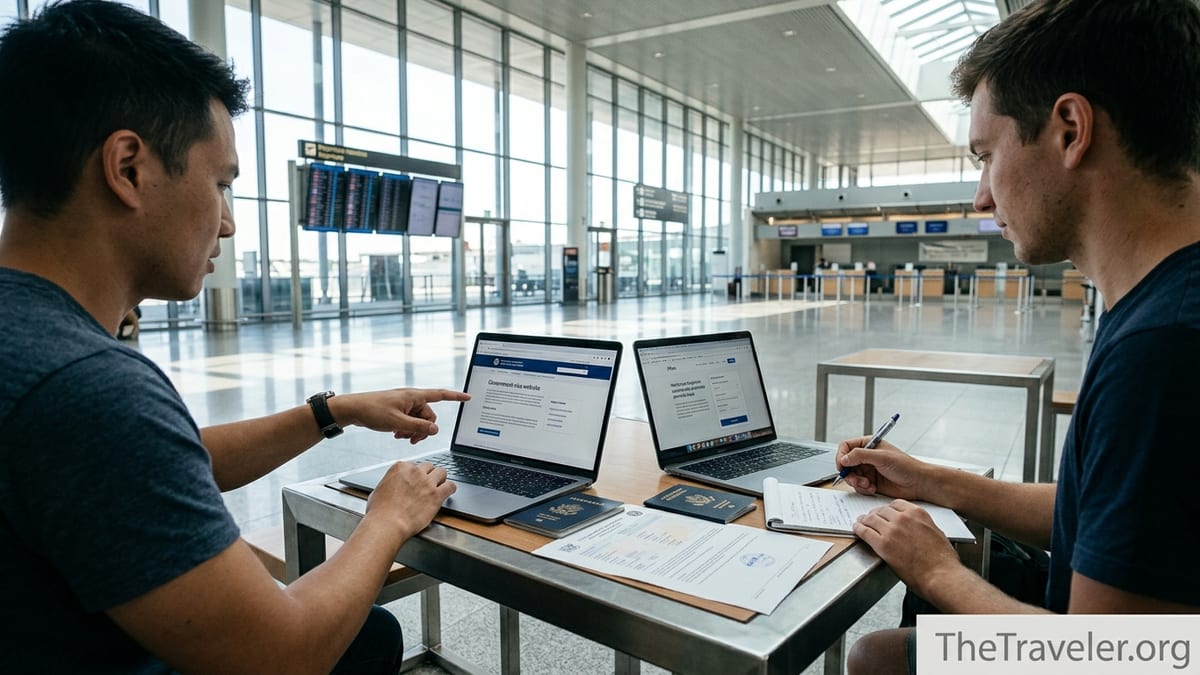
What iVisa Actually Does vs Government Portals
iVisa is a commercial visa assistance platform that sits between you and the official government system. It does not issue visas and cannot override a consulate decision. Instead, you fill out your details on iVisa’s website, upload documents, pay both the government fee and iVisa’s service fee, and then the company submits your application to the relevant government portal on your behalf. In many cases, your final visa or travel authorization is exactly the same PDF or approval letter you would have received if you had applied yourself, because it is generated by the government’s system.
Government portals, by contrast, are the official channels run by immigration or foreign ministries. If you apply for a Vietnam e-visa, for example, you apply directly on the Vietnamese government’s site, pay the official fee, and wait for approval that usually arrives within a few days. The same logic applies to popular electronic systems such as Turkey’s e‑Visa, the US ESTA, or the Canada eTA. The government sets the questions, processing times, and final decision; an intermediary like iVisa can help you navigate the forms, but it cannot speed up official processing beyond what the government already allows.
Practically, that means both paths lead into the same tunnel. If you apply for a Japan e‑visa at the embassy’s online portal or through iVisa, your details ultimately end up in the same government database. The key question is whether you want to pay extra for somebody to guide you into that tunnel, double-check your documents, and keep you updated, or whether you are comfortable going directly to the official source yourself.
This distinction matters because some travelers assume services like iVisa have special access or influence. In reality, their main product is convenience and error reduction. If you are expecting a back door to an otherwise long or uncertain process, you are likely to be disappointed.
Fees and Hidden Costs: A Real-World Price Comparison
The biggest visible difference between iVisa and government portals is cost. Government sites charge only the official visa fee, which might be as low as the equivalent of 25 to 50 US dollars for common tourist e‑visas in many countries. Third-party services add their own service charge on top. According to iVisa’s own explanations, the company separates the “government fee” from its “service fee,” with the latter covering document checks, customer support, and platform costs. In practice, the total you pay on iVisa can be two to four times higher than the underlying government charge for simple visas.
Take an Australia ETA or similar short-stay e‑visa as an example. Travelers report official government costs of roughly 75 Australian dollars for two applications, while the same approvals processed through iVisa can exceed 290 Australian dollars for the pair once service fees are added. In this scenario, you are effectively paying more than 200 Australian dollars extra to have a private company manage what is, on the government site, a relatively short online form. For a family of four, those surcharges can easily rise to several hundred dollars, which is enough to cover a night in a mid-range hotel or a substantial share of a regional flight.
The fee gap looks similar on other routes. For a Turkey e‑Visa, the official cost for many nationalities is usually under 100 US dollars. An intermediary may charge an additional 40 to 100 dollars per traveler in service fees, depending on how close to departure you apply and whether you choose a higher-tier support option. On a Dubai tourist visa, agencies in the UAE often bundle government fees of around 90 to 120 dollars with service charges that can double the total. If you are traveling with a group, those margins add up quickly.
By contrast, there are cases where the fee spread is narrower, particularly when governments themselves work with accredited private partners, such as some outsourced visa centers used by European Schengen states or the United Kingdom. In those situations, you might pay a modest service fee of 30 to 40 dollars on top of the visa cost whether you use iVisa or a different agent, simply because in-person submissions are no longer handled directly at the consulate. Even then, applying purely online through the government’s own e‑visa system, where available, remains the cheapest option.
Ease of Use and Support: Where iVisa Often Wins
Many travelers gravitate to iVisa not because they enjoy paying extra, but because government sites can be confusing, buggy, or poorly translated. It is common to encounter official portals that time out mid-application, reject certain credit cards, or require exact formatting for dates, addresses, and file uploads with little guidance. When you are planning a multi-country trip after work hours, the thought of wrestling with such a system on your own can be discouraging.
iVisa’s main selling point is that it simplifies this experience. Instead of deciphering a long list of consular instructions, you answer a guided questionnaire in reasonably clear English and upload your documents once. The service then formats your application, crops your photo to the correct dimensions, and prompts you when a passport scan is blurry or a birth date appears inconsistent. For a US citizen navigating India’s detailed e‑visa questions or a first-time traveler applying for a China tourist visa, this structured approach can reduce anxiety and the risk of basic errors.
Customer support is another differentiator. Government visa offices rarely provide real-time help to individual tourists beyond written FAQs. In many countries, there is no helpline you can call for a quick clarification, and email responses may take days or never arrive. iVisa, on the other hand, advertises around-the-clock chat and email support. Travelers describe being able to ask whether a minor name mismatch matters, how to format a hotel booking, or whether a child’s passport photo is acceptable, and receiving a human answer within minutes. When your flight to Dubai is ten days away and you realize your passport will expire soon, that reassurance can be worth something.
Of course, this smoother experience is not universal. Some travelers report that iVisa’s timelines are still bound by government backlogs, and in rare cases, questions that consulates alone can answer remain unresolved. But if you compare filling out the Thai e‑Visa form on a busy evening, guessing at each field, with spending an hour on iVisa’s more polished interface, it is understandable why many time-pressed professionals and nervous first-time travelers pay the premium.
Speed, Processing Times, and Last-Minute Trips
A common misconception is that iVisa can somehow make the government approve your visa faster. In reality, the processing clock only starts when the government receives your application, whether it came directly from you or via a service. For popular e‑visa programs like those for Saudi Arabia or Turkey, approvals can arrive within minutes once submitted, while countries such as Vietnam or Kenya often take several working days. Specialized data from visa agencies confirms that the government’s own systems, not the intermediary, dictate this window.
Where iVisa can help on timing is at the front and back ends of the process. At the front end, its staff and systems can review your documents quickly and submit them correctly on the same day, which may matter if you are applying very close to departure. Travelers applying for India’s e‑visa, for example, have recently reported that unofficial delays can stretch beyond the typical “72 hours” stated online, with some waiting more than a week when applying directly. Using a service that keeps a close eye on current processing trends can prompt you to apply earlier than you might have otherwise, reducing the likelihood of last-minute panic.
At the back end, services like iVisa can monitor your application status and notify you as soon as a decision arrives. Instead of refreshing a government status page every few hours, you receive an email or app notification when your visa is issued or if additional documents are required. For trips involving multiple visas, such as a Europe–Middle East–Asia itinerary, that central tracking can be a major convenience.
However, no intermediary can guarantee approval in a specific number of days if the consulate is experiencing a surge, a public holiday, or additional security checks. For instance, community reports indicate that e‑visas for some destinations lengthen unexpectedly during peak seasons, with travelers who applied one week out missing their flights when approvals did not arrive in time. Companies like iVisa often include disclaimers explicitly stating that final processing times are decided by governments and that their own timeframe estimates are based on averages, not guarantees.
For truly last-minute travel, such as a same-week departure for a business meeting in Riyadh or a spontaneous holiday in Bangkok, your main question should be whether a visa is realistically obtainable at all. If the government requires five working days and you have only three, no service can fix that. In contrast, if a country offers instant e‑visas or visas on arrival to your nationality, iVisa may simply not be necessary, and focusing on the official rules is the smarter move.
When a Government Portal Is the Better Choice
There are many scenarios where going straight to the official government site is the most sensible option. The first is when the application is truly straightforward. If you are a European traveler applying for a US ESTA, a Canadian submitting an electronic travel authorization for New Zealand, or a US citizen using a well-designed e‑visa portal in a country like Saudi Arabia, the online forms are typically short and available in English, with clear payment flows. In these cases, taking 20 to 30 minutes to apply directly can save you 50 to 100 dollars per person.
Another clear case for the government route is when you need full control over your information and communications. On many systems, such as the official US visa or ESTA platforms, the account you create and the confirmation emails you receive are tied directly to your passport and travel record. If you use an intermediary, your initial receipts and login details might be stored in that company’s system instead, meaning you rely on their continued cooperation to retrieve them. For cautious travelers or those with complex histories, dealing only with the issuing government can feel safer and more transparent.
Security and privacy are also considerations. Government portals are not perfect, but they are at least accountable to public regulations and oversight. Some third-party sites, especially those that mimic official logos or domain names, are designed to confuse users into overpaying or disclosing sensitive data. Official resources in the United States explicitly warn travelers that many sites appear affiliated with government agencies when they are not and stress that passports and visas should only be processed through recognized channels. If you are not absolutely certain a company is legitimate, applying directly on the official site is the safer default.
Finally, in-person applications for consular visas, such as long-term study, work, or residency permits, almost always require direct interaction with an embassy or consulate, even if you use a preparatory service. For these more serious visa categories, the value of a third-party platform shrinks, because you still must attend an interview, collect biometrics, and respond to consular questions yourself. In that context, government instructions and official appointment systems should guide your planning, with any commercial service playing only a supporting role at most.
When iVisa or a Similar Service Can Be Worth the Money
Despite the higher cost, there are situations where paying for iVisa makes practical sense. One common example is the busy professional planning multi-country travel with a tight schedule. Imagine a US-based consultant flying first to a conference in Dubai, then to client meetings in India, and finally taking a side trip to Vietnam. Each country has its own visa or e‑visa rules, supporting documents, and timing quirks. Outsourcing the paperwork to a service that keeps track of what is due when, chases you for missing documents, and standardizes everything in one dashboard can free hours of your time at a period when your attention is needed elsewhere.
Language barriers are another factor. Not every government portal is fully translated or clearly written. A Brazilian traveler applying for a visa to a smaller European country, or a non‑English speaker navigating an English-only Asian e‑visa site, might appreciate an intermediary that presents questions in their own language and explains terms in plain, conversational wording. Having staff who can answer questions in multiple languages can turn a stressful night of guessing into a relatively smooth application process.
You might also find value in iVisa if you have previously made errors that cost you money. Some e‑visa systems charge the full fee every time you submit, even if your first attempt is rejected for something as minor as a mis-typed passport number or an incorrect photo background. For travelers who have already lost 100 or 200 dollars to such mistakes, paying an additional service fee to have an expert catch obvious problems before submission can feel like an insurance policy against repeating the same expensive error.
Finally, nervous or first-time travelers often appreciate the psychological comfort of having a support channel that feels “on their side.” Someone heading abroad for their first international trip, or parents sending a teenager to a summer program, may be willing to pay for email reminders, clear status updates, and the ability to talk to a real person if something looks odd. While this added peace of mind does not change the underlying government process, it can make the journey to departure day far less stressful.
Red Flags, Scams, and How to Stay Safe
Choosing between iVisa and a government portal is not just about convenience and cost. It is also about avoiding outright scams. Visa and passport fraud are common enough that official agencies regularly issue warnings about third-party sites. One of the biggest risks is confusing a commercial site with an official one. Scammers often use web addresses and logos that closely resemble government pages to lure travelers into overpaying or handing over sensitive personal data.
A legitimate service typically makes several things clear. First, it explicitly states that it is a private company, not affiliated with any government, and that it does not make the final decision on your visa. Second, it separates the government fee from its own service fee in an itemized way, so you can see exactly what you are paying for. Third, it provides verifiable contact details and terms of service, rather than only a contact form. Reputable platforms like iVisa emphasize these points on their own sites and explain that they work by submitting your application to official portals, not by issuing visas themselves.
Red flags include websites that guarantee approvals, promise special connections inside embassies, or offer to “fix” past visa denials for a large fee. Government authorities consistently stress that no private agent can influence a visa officer’s decision. Other warning signs are pressure tactics such as countdown timers, refusal to provide clear receipts, or surprise surcharges that only appear after you have entered all of your personal information.
The most secure habit is to start from an official government source when researching visa requirements, such as a foreign ministry’s travel information page. Once you understand the baseline process and cost, you can then decide whether to bring in a third-party service like iVisa for help. That way, you are less likely to be misled by an imitator, and more likely to recognize when a convenience fee seems disproportionate to the work involved.
The Takeaway
In the end, choosing between iVisa and a government visa application comes down to a trade-off between money and convenience. Government portals are always the authority on requirements, processing times, and final decisions, and they are almost always the cheapest path. If your destination’s online system is clear, your case is straightforward, and you have the time to read instructions carefully, applying directly saves significant cash that you can spend on your trip instead.
iVisa, on the other hand, sells structure, support, and time savings. For travelers juggling multiple destinations, facing language barriers, or scarred by past application mistakes, the extra cost can be justified. The service can help you avoid common errors, keep track of deadlines, and answer basic questions that government offices are unlikely to address individually.
Whichever route you choose, two principles will protect you: always verify visa rules on the official government site first, and treat any third-party service as a facilitator, not a shortcut to guaranteed approval or faster processing. If you know the real government fee, the typical processing window, and the documents you need, you can decide whether paying a company like iVisa to sit between you and the consulate is a smart investment or an unnecessary luxury.
Think of iVisa as you would a trusted travel agent: helpful when you are busy or out of your depth, but not essential for every trip. Used deliberately and with clear expectations, it can be a useful tool. Used blindly, it can become an avoidable extra line on your travel budget.
FAQ
Q1. Is iVisa a legitimate company or a scam?
iVisa is a legitimate private visa assistance service that submits applications to official government portals on your behalf, but it does not issue visas or influence consular decisions.
Q2. Why is iVisa more expensive than applying on a government site?
When you apply on iVisa you pay both the official government fee and an additional service fee, which covers convenience features like a guided form, document checks, and customer support.
Q3. Can iVisa get my visa approved faster than if I apply myself?
iVisa can often submit your application quickly and notify you as soon as a decision is made, but actual processing times are controlled by the government and cannot be shortened by any private company.
Q4. Should I ever avoid using iVisa and apply only on the official site?
You should prefer the official government site when the application is simple, clearly explained in a language you understand, and you are comfortable following the instructions without extra help.
Q5. Is my personal data safer with a government portal than with a private service?
Government portals are subject to public regulations and oversight, while private services add another layer that must be trusted, so cautious travelers often choose to share sensitive data only with official sites.
Q6. What are typical service fees for iVisa or similar companies?
Service fees vary by country and visa type, but it is common for total costs on iVisa to be two to four times the base government fee for straightforward tourist e‑visas.
Q7. How can I tell if a visa website is official?
An official site clearly identifies the responsible government ministry or consulate, usually appears in multiple languages, lists fees transparently, and does not describe itself as a private company or service provider.
Q8. Does using iVisa improve my chances of approval?
Using iVisa may reduce errors in your application, which can help avoid avoidable rejections, but it does not change the underlying eligibility rules or guarantee a positive decision from the consulate.
Q9. When is paying for iVisa genuinely worth it?
It can be worthwhile if you face language barriers, complex multi-country itineraries, tight schedules, or a history of mistakes and want expert help to prepare and track your applications.
Q10. What is the safest way to decide between iVisa and a government application?
First check the process and price on the official government site, then compare that to iVisa’s total cost and support features to decide if the added convenience justifies the extra money for your situation.