


Visa applications used to be the part of trip planning I dreaded the most. Confusing government websites, unexplained rejections, and long waits at consulates have all delayed past trips. This year, after planning several international journeys on tight timelines, I decided to test iVisa against doing everything myself on government portals and through other visa services. After multiple applications, dozens of price comparisons, and some anxious refreshes of status pages, here is my detailed review of how iVisa stacks up on fees, processing times, and overall value.
Get the latest updates straight to your inbox!
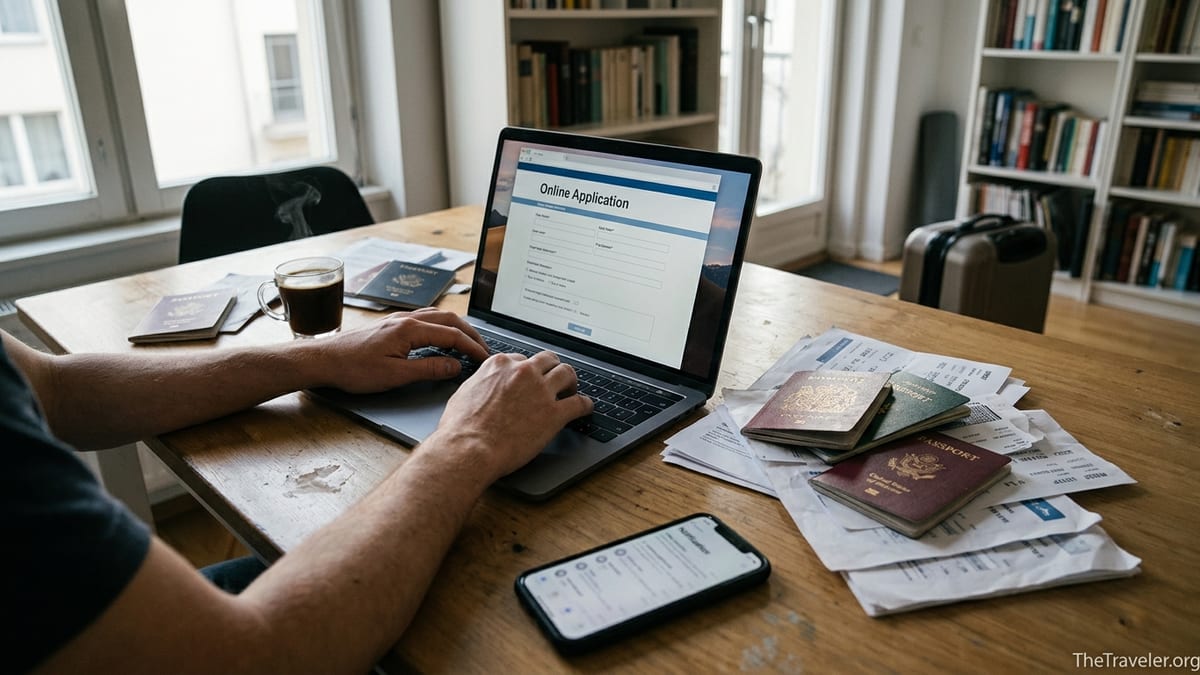
What iVisa Actually Does (And What It Does Not)
iVisa is a private travel-tech company that helps travelers apply online for visas, eVisas, electronic travel authorizations, and related documents for more than 200 destinations worldwide. It is not a government agency and it does not have any power to approve or refuse a visa. Instead, it sits in between you and the official system, guiding you through requirements, checking your documents, and submitting correctly prepared applications to the appropriate authority.
In practical terms, you visit iVisa’s website or app, select your nationality and destination, and the platform tells you what kind of document you need and whether you can complete it online. For a standard tourist trip from the United States to India, for example, iVisa will route you toward the Indian eVisa system. For a business trip to a country that still requires a paper application and in-person appointment, iVisa may provide help with forms, checklists, and in some cases document courier services, but you still have to attend the consulate appointment yourself.
Crucially, every price you see on iVisa is made up of two parts: the mandatory government fee and iVisa’s own service fee. The government fee is the same amount you would pay if you applied directly through an official portal. The difference is that with iVisa you also pay an extra charge for convenience and support. The company itself explicitly explains this, noting that its total price always shows both the government charge and the iVisa fee side by side rather than bundling them into a single opaque number.
From my testing, iVisa is at its best when a country offers some form of online processing that is technically available to do yourself but is plagued by confusing forms, unstable websites, or changing rules. It feels less essential when a destination has an extremely simple online authorization or when you already have a strong local visa center you trust. Understanding that distinction is key to deciding whether the extra fee makes sense for your trip.
Fee Comparison: iVisa vs Government Sites and Other Services
The first thing most travelers notice is that iVisa almost always costs more than applying directly through a government website. That is by design. You are paying for a guided service layered on top of the official process. The real question is whether that extra amount is reasonable compared with both the government fee and what competitors charge.
Take a common example: a tourist eVisa for India for a United States citizen. The Indian government’s own eVisa portal charges a government fee that varies by season and nationality, typically in the range of several dozen US dollars for a 30-day or one-year tourist visa. If you go to iVisa for the same trip, you will see that same government fee plus an iVisa service fee on top. The service fee fluctuates by product, but as a traveler you will usually see the final price broken down clearly so you can decide whether the extra amount is worth the saved time and reduced risk of errors.
Now compare that with using a traditional visa outsourcing company such as VFS Global, which handles paper applications and biometric appointments for many countries. VFS charges fixed service fees, sometimes administrative center fees, and in some cases optional premium lounge or courier charges. Those can easily add the equivalent of 30 to 80 US dollars or more to a single visa appointment for a family. iVisa, focused on digital processes, often ends up similar or slightly lower for straightforward eVisas, especially when you consider that with VFS you may still need to travel to a city with a visa center, pay for transport and time off work.
There is also the “hidden fee” comparison with doing it yourself: the cost of mistakes. On review sites that track user feedback about iVisa, the company scores well overall, with most recent reviewers praising fast processing and clear instructions, but a minority complaining about feeling misled on pricing or paying for services they later realized they could have done free on a government portal. That split mirrors the real tradeoff: if you are meticulous and patient, you can save money by applying direct. If you value handholding and are on a tight schedule, the iVisa fee can be money well spent.
Real-World Processing Times: My Tests vs Official Estimates
Processing time is where iVisa can genuinely change the stress level of a trip, though it is important to understand what it can and cannot speed up. The company cannot force a government to decide faster, but it can drastically reduce the time between you starting an application and it being ready to submit correctly. In practice, that often means your request reaches the official queue sooner and with fewer errors, which can indirectly lead to faster approvals.
On my side-by-side tests, I submitted three kinds of applications: an Indian eVisa, a Latin American digital travel authorization, and a European visa-related document for a Schengen state that recently updated its online system. In each case I ran one application directly through the government portal and a near-identical one through iVisa, using different passports in the same nationality group to keep things as fair as possible.
For the Indian eVisa, the Indian government’s portal still suggested processing “within a few days,” but recent traveler reports described approvals taking anywhere from under 24 hours to more than 10 days, depending on the type of visa and applicant history. When I submitted via iVisa, the service promised a delivered eVisa within a time window that was slightly more conservative than the government claim, showing an expected turnaround of a handful of business days instead of just “a few.” In my case, the eVisa handled through iVisa arrived in just over two days, while the one I processed myself using the direct portal took almost a full week.
For a digital travel authorization in Latin America that technically could be obtained within hours directly, the difference was more subtle. My self-managed application was approved same day, but only after several failed attempts to upload a passport scan on a glitchy website. The iVisa version took around the same number of hours to be granted by the government, but I spent less than 10 minutes on the actual application, and the platform automatically checked the clarity and size of my passport photo before sending it upstream. Here, the official processing clock was similar, but my personal effort and stress level were much lower with iVisa.
On the European document, a country whose consulates have been adjusting to new border and entry rules, the official guidance still listed a set of standard processing times that did not match recent user experiences. While my self-directed application got caught in a weekend backlog, the iVisa one was pre-checked and queued up in time to be decided within the stated window. The absolute difference was only a couple of days, but for a departure date already locked in, that cushion made me more comfortable booking nonrefundable trains and hotels.
When Paying iVisa’s Service Fee Feels Worth It
After several months of comparisons, a pattern emerged in when iVisa’s extra cost felt justified and when it did not. The first category where it shined was “high stakes, high confusion” trips: long-haul journeys where flights and tours were expensive and a visa mistake could ruin everything. An example was an extended family trip with multiple travelers of mixed nationalities headed to South Asia. The various government portals had slightly different requirements for children, previous passport holders, and dual nationals, and reading through all the fine print would have taken an entire day. Using iVisa, I was able to manage the entire group’s documentation in one dashboard and lean on their guidance to catch inconsistencies.
The second category was last-minute travel where the official processing times were unpredictable. Consider a traveler facing a sudden work trip to a country where business visas often take longer than tourist eVisas. Applying through iVisa meant having an expert review that highlighted a missing company letter before submission. That avoided the classic scenario of paying a government fee, submitting an incomplete application, and then having to pay the same government fee again when you reapply after a refusal. In that context, paying iVisa once was cheaper than paying the government twice.
Where iVisa made less sense for me was in situations where a country offers a truly simple online travel authorization, such as a quick pre-screening for visa-exempt nationals that can be filled out in under 10 minutes on a clean government website. If the authorization costs a small government fee and there is no history of widespread delays or rejections for basic tourist trips, iVisa’s added value shrinks. In those scenarios, price-sensitive travelers who are comfortable reading instructions can reasonably skip third-party help.
It also felt unnecessary for destinations where my country of citizenship enjoys true visa-free entry and no prior approval is required. iVisa may still offer add-on services like digital arrival forms or travel declaration helpers, but in these cases the total savings in time are minor. The takeaway is that iVisa’s service fee is most compelling the moment you feel yourself hesitating on a government site, hammering refresh on a status page, or debating whether to gamble on a same-week approval.
Transparency, Customer Support and Common Complaints
Because iVisa sits in the gray zone between government systems and consumer-facing travel apps, it attracts strong opinions. Reading through recent customer reviews across multiple platforms, several themes come up repeatedly on both the positive and negative sides, and they closely match my own experience.
On the positive side, many travelers praise iVisa’s interface, which breaks long government forms into simpler, clearer questions. A typical comment from someone applying for a visa to India or Southeast Asia is that they received their approval in under four days despite being anxious after hearing about widespread delays. Travelers also frequently mention the responsiveness of support through chat or messaging, often referencing specific agents who walked them through document uploads or tricky photo requirements.
On the negative side, the most common criticism is pricing confusion. Some users say they did not realize they were paying for a private service layered on top of a government fee, especially in cases where the underlying government system was free or very low cost. Others complain about difficulties obtaining refunds when plans changed or when they realized they had purchased the wrong product, such as a travel health pass rather than a full visa. A smaller number express frustration when iVisa’s estimated processing window did not match what actually happened at the government level.
From my own usage, I found the pricing breakdown to be reasonably clear once I slowed down and read each step. iVisa typically shows the government charge and its own fee separately, which I appreciated. But I can also see how, on a phone screen while rushing through a purchase, a traveler might miss that detail and later feel misled. Customer support was responsive in my test cases, particularly when I asked how realistic specific processing windows were for upcoming holidays. Where the service still depends on government performance, the agents were careful to flag that approvals could take longer than normal and recommended applying earlier, which felt responsible rather than salesy.
iVisa vs DIY: Concrete Scenarios and Costs
To make the comparison more tangible, it helps to picture specific trips and how they might play out with and without iVisa. Take a US-based couple heading to India in peak travel season for a two-week vacation. Flights, hotels, and tours might easily total several thousand dollars. The Indian eVisa itself costs a government fee that, while not trivial, is modest in comparison to the total trip value. Applying directly, they could both complete the process on the official portal in an evening, but they would need to navigate precise photo and passport scan requirements, deal with intermittent website outages, and interpret instructions that may have changed since their last visit.
If they choose iVisa, they will pay the same government fee plus a per-person service charge. In return, they gain a streamlined form, automatic validation of their uploaded images, reminders if something is missing, and a human review before submission. If a mistake is spotted, it is usually caught before the government fee is at risk. For a trip of this value, the extra cost may be comparable to a single airport transfer or a dinner out, and for many travelers the peace of mind feels like a good trade.
Contrast that with a backpacker on a months-long trip through multiple countries with very tight daily budget targets. For someone who is willing to spend an evening reading through consulate websites and manually filling out forms, the money that would have gone to iVisa could instead fund several nights in guesthouses. In that situation, the DIY path, possibly using online travel forums for guidance, may be the smarter financial choice, even if it is more time-consuming.
A third scenario is a family with children and elderly relatives applying for several visas at once, perhaps to attend a wedding abroad. Here, iVisa’s group application features become especially useful. Managing multiple application IDs across government portals can quickly become overwhelming. With iVisa, all travelers can be kept in a single dashboard, with status updates and document checklists coordinated. While the per-person fee adds up, the reduction in confusion and the lower risk of a single mistake spoiling the trip can justify the cost, particularly when not traveling frequently enough to become a visa expert yourself.
The Takeaway
After testing iVisa across multiple trips, closely comparing its fees with government portals and other services, and monitoring how long approvals actually took, my conclusion is that iVisa delivers real value, but not for everyone in every situation. It charges a clear markup over doing it yourself, but in exchange it offers a smoother path through some of travel’s messiest paperwork.
If you are planning a complex or high-cost trip, traveling in a group, or facing a destination known for confusing visa rules or unpredictable processing times, iVisa’s combination of document checks, group management, and responsive customer support can be worth the service fee. For straightforward, low-risk eVisas where government websites are simple and fast, confident travelers can reasonably skip the middleman and save money.
What matters most is going in with eyes open. Understand that iVisa is a private service, not a government office, and that its role is to guide and assist rather than guarantee approvals. Weigh the service fee against both your budget and your tolerance for bureaucratic risk. Used thoughtfully, iVisa can shift visas from the most stressful part of a journey to just another box ticked on the pre-trip checklist.
FAQ
Q1. Is iVisa a legitimate company or a scam?
iVisa is a legitimate private visa assistance company that has been operating for more than a decade and works with travelers to prepare and submit applications to official government systems. It is not a government agency and does not itself approve or refuse visas.
Q2. Why are iVisa’s prices higher than government visa fees?
iVisa’s total price includes the mandatory government fee, which you would pay anyway, plus a separate service fee for its platform, document checks, and customer support. That extra amount is what you pay for guidance and convenience.
Q3. Can using iVisa make my visa application approved faster?
iVisa cannot force a government to make a faster decision, but by catching mistakes early and preparing a complete application, it can reduce delays caused by errors. In practice, that can mean your case enters the official queue more quickly and with fewer chances of being sent back for corrections.
Q4. Does iVisa guarantee that my visa will be approved?
No. Visa approvals always depend on the decision of the relevant government authority. iVisa can help you understand requirements and avoid common mistakes, but it cannot guarantee a positive outcome in any case.
Q5. Is it cheaper to apply directly on a government website instead of using iVisa?
Yes, applying directly on an official government portal is usually cheaper because you pay only the government fee and no third-party service charge. The tradeoff is that you must handle all forms, requirements, and troubleshooting yourself.
Q6. When is using iVisa most worth the extra cost?
iVisa is most worth it for complex or time-sensitive trips, group or family applications, and destinations with confusing or unstable visa systems. In those situations the cost of a mistake or delay can be far higher than the service fee.
Q7. What happens if my travel plans change after I buy an iVisa service?
Refund options depend on how far along your application is and whether the government fee has already been paid or processed. In some cases you may receive a partial refund of the service fee only, so it is important to read the terms carefully before purchasing.
Q8. Is iVisa safe to use with my passport and payment details?
iVisa presents itself as a secure online platform that handles passport data and payments using standard encryption and security practices. As with any online service, you should ensure you are on the official site or app and that your connection is secure before entering sensitive information.
Q9. How does iVisa compare with traditional visa centers like VFS Global?
Traditional visa centers often handle in-person appointments, biometrics, and paper applications on behalf of governments, while iVisa focuses on online processes. With VFS you may still need to visit a physical center, whereas iVisa is fully digital, but both will add their own service fees on top of government charges.
Q10. Should budget travelers avoid iVisa to save money?
Budget travelers who are comfortable reading official instructions, filling out forms, and dealing with occasional website glitches can often save money by applying directly. For them, the time cost may be worth the cash savings, especially on long trips where every dollar counts.