


Third party visa services like iVisa promise to turn stressful paperwork into a smooth, click and pay experience. For many travelers, they deliver exactly that: a fast, mostly painless way to secure the approvals needed to board a plane. Yet behind the polished branding and thousands of positive reviews, a quieter story is emerging in complaints boards and traveler forums. The real cost of outsourcing your visa or travel authorization is not just the headline fee on the checkout page, but a mix of markups, subscription upsells, and refund limitations that can easily double or triple what you would have paid by applying directly with a government.
Get the latest updates straight to your inbox!
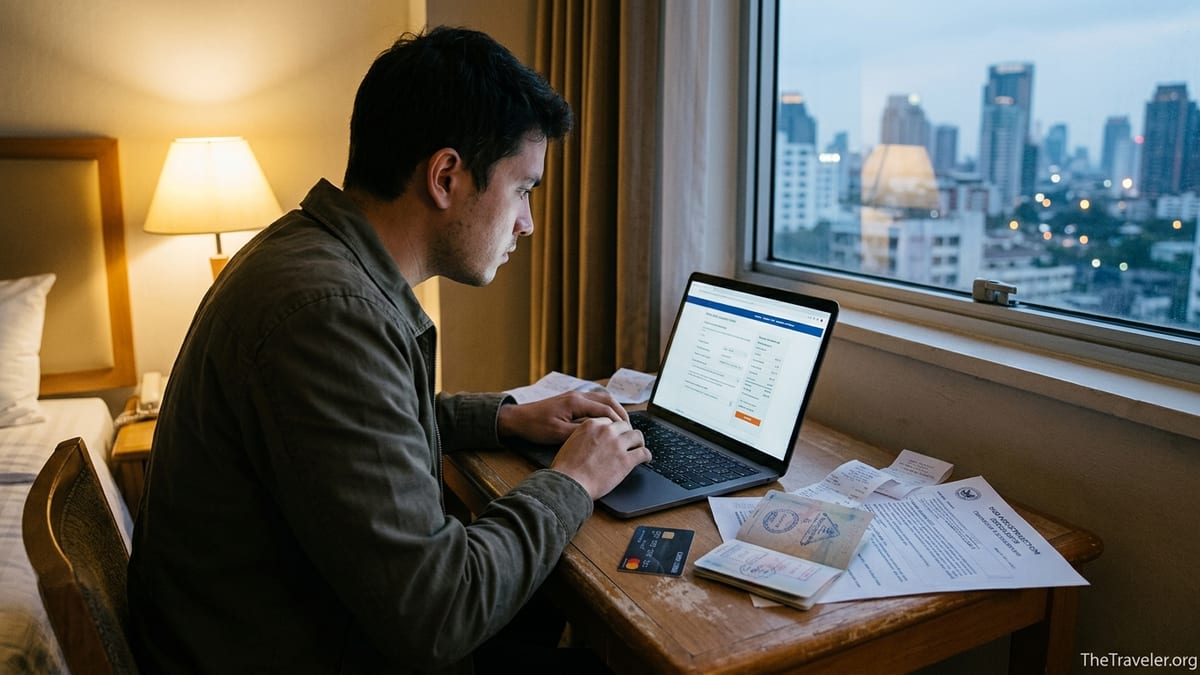
What iVisa Actually Is (and What It Is Not)
iVisa is a private company that helps travelers complete applications for visas, electronic travel authorizations, health declarations, and similar documents. It is not a government agency, and it does not issue visas itself. In its own explanations and marketing materials, the company frames its role as checking your documents, submitting applications on your behalf where possible, and guiding you through government forms where direct submission is required. The key point for travelers is that iVisa always sits in the middle between you and the official portal.
On review sites such as Trustpilot, iVisa consistently highlights that it charges a separate service or processing fee on top of any government charge. This is confirmed in their own descriptions of how pricing works, where they state that government fees are distinct from what you pay them for support and handling. Many customers accept this trade off and praise the platform for easy forms, quick responses, and approvals that arrive in hours rather than days.
At the same time, a different picture is visible in consumer complaints and forum posts. On the Better Business Bureau, iVisa has drawn more than a hundred complaints in recent years, with billing and advertising issues among the most frequent themes. Travelers often say they did not clearly understand that iVisa was a private intermediary rather than an official site, or that they were paying for what turned out to be a relatively simple application that could have been done directly on a government website for a fraction of the price, or in some cases, free.
This gap between what iVisa says it is, and what some customers believe they are buying, is where many hidden costs begin. The service itself may function as advertised, but confusion about the nature of the company and its role in the process can make travelers vulnerable to overpaying.
Service Fees and Markups That Add Up Fast
The most immediate hidden cost of using iVisa is the markup over the underlying government fee. For many popular destinations, official e visas and travel authorizations cost modest amounts when purchased directly, often under 50 dollars and sometimes nothing at all. By the time a traveler reaches the iVisa checkout, that original charge is bundled with a separate processing fee that can easily match or exceed the underlying government price.
Real world reviews show how stark the difference can be. One traveler who applied for an electronic visa for Kenya observed that the official government website listed a charge slightly above 50 US dollars plus a small service fee, while their iVisa invoice showed more than 60 dollars labeled as the government fee and an additional service charge above 100 dollars. In another case shared on a consumer review platform, an Australian traveler reported paying nearly 300 Australian dollars in iVisa service fees for two electronic visas that would have cost around 75 Australian dollars if obtained directly.
Some customers express frustration after discovering that a visa was in fact free or available at a much lower cost through official channels. In Reddit discussions, travelers describe paying over 200 dollars to iVisa for a travel authorization to the Dominican Republic that turned out to be free when requested directly from the country’s government portal. Others recount paying substantial fees for visas that, on arrival, could have been issued at the airport without any extra service charge beyond the standard entry fee.
These examples do not mean the company is inventing fees. iVisa typically does display a breakdown between its own processing charge and what it claims is the government portion. The issue is that, from a traveler’s perspective, the combined total often feels disproportionate to the complexity or cost of the underlying document, especially when the same approval could have been obtained by following official instructions with a basic level of care and patience.
Confusing Pricing and Perceived “Hidden” Charges
Beyond the sheer size of the markup, many travelers say the way prices are presented contributes to a sense of hidden costs. On iVisa’s own blog, the company stresses that it shows two separate numbers at checkout: the government fee and a service fee. In practice, users often arrive at the payment page after several steps of entering personal data, choosing processing speeds, and accepting terms, only to realize at the end that the total is much higher than expected.
Numerous complaints on the Better Business Bureau site and in recent independent review summaries point to this dynamic. Some customers believed they were paying the full cost of a visa when they entered their card details, only to discover later that the government fee itself still needed to be paid separately, or that what they had purchased was an application assistance package rather than the visa approval. Others report that rush or super rush options were preselected or strongly highlighted, steering them toward higher tiers without a clear explanation of what, if any, advantage those options would provide compared with standard processing.
In traveler forums, a recurring theme is that iVisa’s branding and design can feel almost official to a hurried user. People report finding iVisa among the top search results for phrases like “UK ETA application” or “Egypt e visa” and assuming they were on a government site. Only when a confirmation email arrives, or after comparing with a friend’s experience, do they realize that they have paid a third party intermediary rather than an embassy or immigration department.
To be clear, many customers knowingly choose this trade off and write positive reviews praising the clarity of the fee breakdown. But the volume of posts describing surprise at the final cost suggests that the way information is ordered and presented still leaves a significant number of travelers misunderstanding what they are buying and why it costs so much.
Subscriptions, Upsells, and Paying for Speed
Another layer of hidden cost comes from subscriptions and speed based upsells. iVisa promotes a paid membership called iVisa Plus, which offers “unlimited” standard speed processing for eligible documents over a 12 month period. On paper, this can look attractive to frequent travelers who expect to apply for multiple visas or health forms in a single year. In reality, it introduces a recurring expense that only pays off if you repeatedly use the service instead of simply applying via official channels.
Consider a traveler who subscribes to a plan to prepare for a Southeast Asia trip that includes Thailand, Vietnam, and Cambodia. If they use iVisa for all their documents, membership might offset several standard processing fees. But if they later discover that Thailand’s e visa on arrival is free or significantly cheaper when obtained directly and that another country allows a simple embassy walk in or airline assisted form, the value of that subscription quickly erodes. The sunk cost effect can then push them to keep using iVisa for documents where it is not objectively necessary, just to justify the annual fee.
Speed based upsells work in a similar way. For many visas, official government processing times are now measured in hours or a few business days, particularly for electronic travel authorizations. However, iVisa often offers tiers such as standard, rush, and super rush, with each jump adding a substantial premium. Travelers have reported paying several hundred dollars for rush service on the promise of two hour processing, only to see the same or similar turnaround time available through the official portal at the baseline government fee.
In some complaint narratives, customers say that even the rush or super rush timelines were not met, leaving them scrambling for their trip while having paid significantly more. When delays are caused by government backlogs or system outages, iVisa typically explains that it cannot control official processing times. This is technically correct, but it also underscores one of the core risks of paying extra for speed via an intermediary: you are still at the mercy of the same government queue, with little recourse if the promised timeline slips.
Refunds, Rejections, and Responsibility Gaps
Hidden costs are not only about what you pay, but also about what you lose when things go wrong. iVisa’s published refund policy makes clear that once an application has been submitted to a government, its service fees are generally nonrefundable. If a visa is rejected, you may receive a refund only if the government itself returns the fee, which is rare. From the company’s perspective, this reflects the fact that its work checking, processing, and submitting your information has already been done.
From a traveler’s perspective, however, the experience can feel very different. In complaints to the Better Business Bureau and on review aggregators, users tell stories of visas that were rejected or questioned at the border, leaving them unable to travel despite having paid substantial sums to iVisa. When they sought refunds, many were reminded that the company cannot guarantee approval and that decisions rest entirely with governments.
For example, one customer reported paying iVisa to secure a travel document that airline agents later refused to recognize as valid. When the traveler asked for their money back, iVisa replied that the fee covered document processing and support, not guaranteed entry. In another widely shared anecdote, a traveler who had used iVisa to apply for an electronic travel authorization discovered at the airport that the airline did not see the authorization in its system, leading to missed flights and additional rebooking costs that no party reimbursed.
These stories highlight a subtle but important gap in responsibility. iVisa can correctly argue that it is not accountable for government systems or airline policies, while travelers reasonably feel that the entire point of paying a specialist is to avoid exactly these kinds of surprises. The financial fallout can be significant: missed flights, last minute ticket changes, and nonrefundable hotel nights often dwarf the original service fee, turning an already expensive intermediary into the most costly line item of the entire trip.
When Using iVisa Might Make Sense
Despite the risks and markups, there are situations where paying a company like iVisa can be a rational decision. Travelers with complex itineraries or limited time sometimes decide that delegating paperwork is worth the extra money. For instance, a business traveler based in the United States with back to back trips to Brazil, India, and several African countries may calculate that spending a few hundred dollars on a third party service is preferable to navigating multiple government portals, each with its own requirements and quirks.
Similarly, people who are uncomfortable with online forms, who have limited language skills, or who need extra reassurance may value live chat support and step by step guidance. Some recent Reddit discussions include comments from users who say they knew iVisa would be more expensive but chose it anyway because an employer was paying or because they were anxious about making a mistake that would lead to rejection and a second government fee. For these travelers, the hidden cost is less about money than about giving up control over their own application process.
There are also country specific scenarios where authorized intermediaries are common. In parts of Latin America and Asia, local agents who help applicants prepare visa paperwork have long been part of the landscape. iVisa and similar firms are, in effect, global, digital versions of those agents, scaled up and marketed primarily to travelers from North America and Europe. Some customers report genuinely positive experiences, with approvals arriving faster than expected and helpful reminders about supporting documents.
The key is that in all these cases, the traveler must go in with clear eyes about what the company does and what it cannot do. iVisa cannot change official eligibility rules, skip security checks, or guarantee a particular outcome. Its value is limited to convenience, formatting expertise, and sometimes faster coordination. Whether that value justifies the premium depends on your personal risk tolerance, schedule pressure, and willingness to invest time in learning how to use government systems directly.
How to Avoid Overpaying for Simple Travel Documents
For most leisure travelers, especially those applying for straightforward tourist visas or electronic travel authorizations, the best way to avoid hidden costs is to start from official sources. Before you search for “Turkey e visa” or “UK ETA,” visit the website of the country’s ministry of foreign affairs or immigration authority, or check guidance from your own government’s travel advisory page. These pages typically link directly to the correct portals and provide current fee information. If an intermediary site appears in search results with words like “simplified,” “assistance,” or “fast track,” treat it as a paid service, not the default option.
Once you have the official fee in mind, compare it with what iVisa is offering. If the government charges 20 dollars for an application and iVisa quotes 120 dollars, you are effectively paying 100 dollars for someone else to type your data into a form. Some travelers will accept that trade, but it should be a conscious choice, not a surprise discovered after your credit card has been charged.
Take a moment to check whether the visa or authorization is needed at all. Several recent Reddit posts describe situations where travelers paid iVisa for documents that turned out to be unnecessary, such as visas that could be obtained free at the airport or entry forms that airlines handled automatically. Official embassy pages usually state clearly whether a visa is required for your nationality and whether it must be obtained in advance.
If you decide to use iVisa, keep screenshots of each step, especially any promises about processing times, refund terms, and the exact nature of what you are buying. Pay with a credit card rather than debit to preserve the option of disputing charges if the service is not provided as described. Finally, avoid signing up for subscriptions or add ons unless you are confident you will use them enough to justify the cost over a full year.
The Takeaway
iVisa occupies a gray zone between helpful facilitator and expensive middleman. On one side, tens of thousands of positive reviews testify to its usefulness for travelers who value convenience and support, especially under time pressure or in complex situations. On the other, an expanding trail of complaints, critical blog posts, and cautionary forum threads show how easily rushed or inexperienced users can mistake it for an official channel and pay far more than necessary.
The hidden cost of using iVisa is less about secret surcharges and more about the opportunity cost of not going directly to the source. Every dollar spent on markups, memberships, and speed tiers is a dollar not available for a better hotel, a memorable meal, or an extra day on the road. For routine tourist trips, most travelers can avoid these premiums entirely by taking a little extra time to learn how their destination’s official visa systems work.
None of this means you should never use a third party visa service. It means that if you choose to, you should do so deliberately, with a clear understanding of the fees, refund restrictions, and limits of what any intermediary can guarantee. The more informed you are, the more likely you are to reserve paid help for the complex edge cases where it genuinely adds value, rather than handing over your passport details and your credit card simply because it was the first search result that looked official.
FAQ
Q1. Is iVisa a government website?
iVisa is not a government website. It is a private company that helps you complete and submit visa and travel document applications, but all approvals are issued by the relevant governments.
Q2. Why is iVisa so much more expensive than applying directly?
The higher price reflects iVisa’s service or processing fee, which sits on top of the official government charge. You are paying for convenience and assistance, not a different or faster type of visa.
Q3. Are iVisa’s fees considered hidden charges?
iVisa does show a breakdown between government and service fees at checkout, but many travelers only notice the full markup late in the process, which can feel like a hidden cost if they assumed they were on an official site.
Q4. Can iVisa guarantee that my visa will be approved?
No. iVisa can help you fill out forms correctly and submit documents, but only governments decide whether to approve a visa. Even a perfect application can be refused for reasons outside the company’s control.
Q5. Will iVisa refund me if my visa is rejected?
In most cases, iVisa’s service fees are nonrefundable once your application has been submitted. Government fees are usually only refunded if the government itself returns the money, which is uncommon.
Q6. When might it make sense to use iVisa?
Using iVisa can be reasonable if you face tight deadlines, have a particularly complex itinerary, struggle with online forms or language, or if your employer is paying and you need extra support.
Q7. How can I find the official visa application website for a country?
Start by checking the immigration or foreign affairs section of the destination country’s official government site, or consult your own government’s travel advisory pages, which usually link to the correct portals.
Q8. Are rush and super rush processing options worth the extra money?
Often they are not. Many government e visas are processed within hours or a few days at standard rates. Paying iVisa premiums for rush service does not guarantee faster government approval and may provide little real advantage.
Q9. What should I do if I feel I was misled by iVisa’s pricing?
First contact iVisa’s support with a clear written explanation and any screenshots. If you are not satisfied, you can file a complaint with consumer bodies such as the Better Business Bureau and consider disputing the charge with your credit card issuer.
Q10. How can I avoid overpaying for simple travel documents in the future?
Always confirm whether a visa is required, what it costs, and how to apply using official government sources before using any intermediary. Compare the official fee with any third party quote, and only pay extra if you knowingly value the added convenience.