


More news on this day
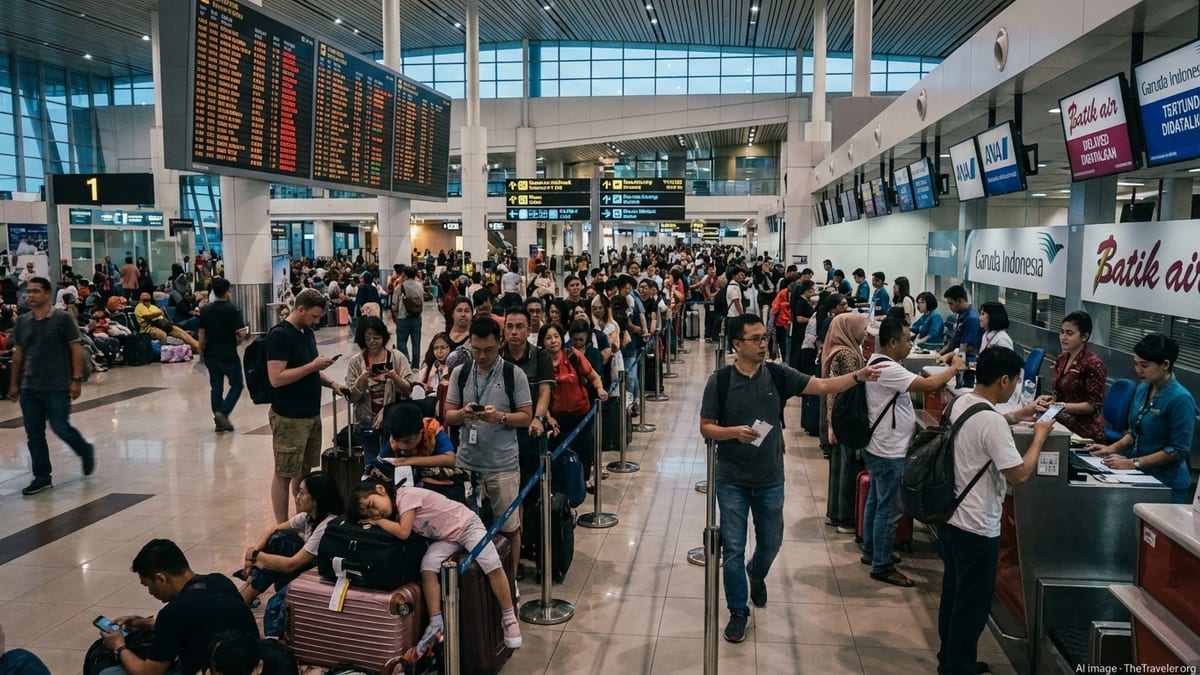
Jakarta’s Soekarno Hatta International Airport is grappling with severe disruption after a wave of cancellations and delays involving Garuda Indonesia and Batik Air triggered hours of congestion, stranded passengers, and mounting pressure on Indonesia’s already stretched aviation system.
Get the latest news straight to your inbox!
Flight Cancellations Ripple Across Indonesia’s Busiest Hub
Publicly available operational data compiled from flight tracking platforms for June 11 and 12 indicates that Indonesian airports recorded hundreds of delayed services and several dozen cancellations, with Jakarta’s Soekarno Hatta International Airport bearing a significant share of the disruption. Reports focused on the countrywide picture describe more than 400 delayed flights and at least a dozen outright cancellations over this period, with Garuda Indonesia and Batik Air among the hardest hit on domestic routes.
Separate coverage centered specifically on Soekarno Hatta three weeks earlier already highlighted the airport’s vulnerability, noting more than 100 delays and over 20 cancellations in a single operational window as Garuda Indonesia, Batik Air, and Citilink trimmed or rescheduled services. The latest wave of disruption appears to have pushed the network back toward similar levels of stress at the start of the June travel period.
Indonesia’s flag carrier Garuda Indonesia and Lion Group subsidiary Batik Air both use Soekarno Hatta as a core hub, meaning schedule changes in Jakarta quickly ripple to secondary airports such as Makassar, Medan, Surabaya, and Denpasar. The combination of repeated delays and targeted cancellations across these trunk routes has amplified the sense of paralysis for travelers trying to move through the capital.
While the precise cause of each individual cancellation varies by flight and route, aviation observers point to a mix of operational constraints, tight aircraft utilization, and weather related disruption as key contributors to the sudden spike in irregular operations at Jakarta.
Terminal Crowding, Missed Connections and Passenger Frustration
The immediate impact for travelers transiting Jakarta has been a sharp rise in missed connections, extended terminal waits, and overcrowded check in and security zones. With Garuda and Batik Air both operating dense domestic and regional schedules out of Soekarno Hatta, even a modest percentage of cancelled services can leave large numbers of passengers competing for scarce rebooking options.
Travel focused coverage describes scenes of long queues forming around airline service desks as passengers seek alternative routings to Makassar, Medan, Denpasar, Lombok, and other key destinations. Delays of several hours on surviving services have compounded the problem, with rolling knock on effects continuing well beyond the initial cancellation windows.
Jakarta’s main airport has historically operated near or above its designed capacity, and previous analyses of Indonesia’s aviation sector have flagged infrastructure bottlenecks at Soekarno Hatta. In that context, a sudden spike in schedule disruption can quickly translate into visible congestion on the ground, from aircraft waiting for stands to baggage delays and overcrowded departure halls.
Travelers have turned to third party flight tracking tools and unofficial airport dashboards to monitor changing departure times, reflecting both the intensity of the current disruption and the importance of real time information when formal channels are under heavy strain.
Garuda and Batik Air Under Scrutiny as Reliability Concerns Grow
The latest cancellations come at a sensitive moment for both Garuda Indonesia and Batik Air. Garuda, long regarded as the country’s premium carrier, has been trying to rebuild its network and brand after restructuring and a more competitive domestic marketplace. Recent commentary on the airline’s performance has already highlighted pressures on service quality and product investment at its Jakarta base.
Batik Air, part of the Lion Air Group, has in recent years expanded aggressively on domestic and regional routes, including dense shuttle style operations through Soekarno Hatta. That growth has brought cost advantages and more choice for travelers, but it has also been accompanied by persistent concerns about punctuality and customer experience, especially during peak holiday and long weekend periods.
Consumer oriented forums and trip reports in 2025 and 2026 describe a pattern of extended Batik Air delays, missed baggage, and late night schedule changes, with some passengers advising extra buffer time when connecting from Batik services to international flights. Similar anecdotal accounts have praised Garuda for comparatively better onboard service while still noting that irregular operations in Jakarta can affect even the flagship carrier when the wider system is under stress.
The convergence of these reputational trends with the current cluster of cancellations is likely to sharpen public debate about reliability standards at Indonesia’s two most visible full service brands, particularly on heavily trafficked routes that underpin domestic tourism and business travel.
Wider Regional Context and Potential Contributing Factors
The disruption in Jakarta is unfolding against a broader regional backdrop of cost pressure and capacity adjustments across Asian aviation. Recent reporting from neighboring markets has documented airlines trimming frequencies or temporarily withdrawing flights in response to fuel costs, seasonal demand shifts, and ongoing fleet renewal programs.
In Indonesia, government discussions around ticket pricing and capacity during the recent Lebaran travel surge underscored how quickly the balance between supply and demand can become strained. When direct flights sell out or are reduced, passengers are often pushed onto more complex itineraries that rely on transits through major hubs such as Jakarta, increasing the system wide impact of any subsequent irregular operations.
Aviation sector analyses also continue to point to structural constraints in airport infrastructure and air traffic management, especially at Soekarno Hatta, which has grown into one of the region’s busiest hubs while grappling with modernization challenges. In such an environment, modest operational hiccups can escalate into broader disruption when spare capacity on the ground and in the air is limited.
While a detailed incident by incident breakdown of the latest cancellations is still emerging, the alignment of these structural factors with the current operational data helps explain why the disruption has spread so quickly across multiple carriers, routes, and time periods.
What Travelers Through Jakarta Should Expect Now
For travelers scheduled to pass through Jakarta in the near term, the current pattern of disruption suggests a continued risk of late changes, particularly on busy domestic sectors served by Garuda Indonesia and Batik Air. Travel industry commentary recommends that passengers leave additional time for connections, especially when linking domestic services in Jakarta with separate tickets on international flights.
Flexible itineraries, travel insurance with disruption coverage, and a willingness to consider alternative routings via other Indonesian gateways may provide a hedge against further cancellations while carriers work to stabilize their schedules. Observers also emphasize the importance of closely monitoring departure boards and airline communications on the day of travel, given the rapid pace at which schedules have shifted during the current disruption.
As Indonesia enters a new phase of post pandemic growth in air travel, the latest paralysis at Soekarno Hatta will likely intensify calls for more resilient scheduling, clearer passenger communication, and continued investment in airport capacity. For now, however, passengers of Garuda Indonesia and Batik Air moving through Jakarta are being reminded of just how quickly a hub can seize up when multiple strands of operational risk converge.