


More news on this day
Major airlines across the United States and beyond are racing to thicken their route maps for 2026, deploying new city pairs and added frequencies in a bid to insulate travelers from the schedule shocks and cascading delays that have defined the post‑pandemic era.
Get the latest news straight to your inbox!
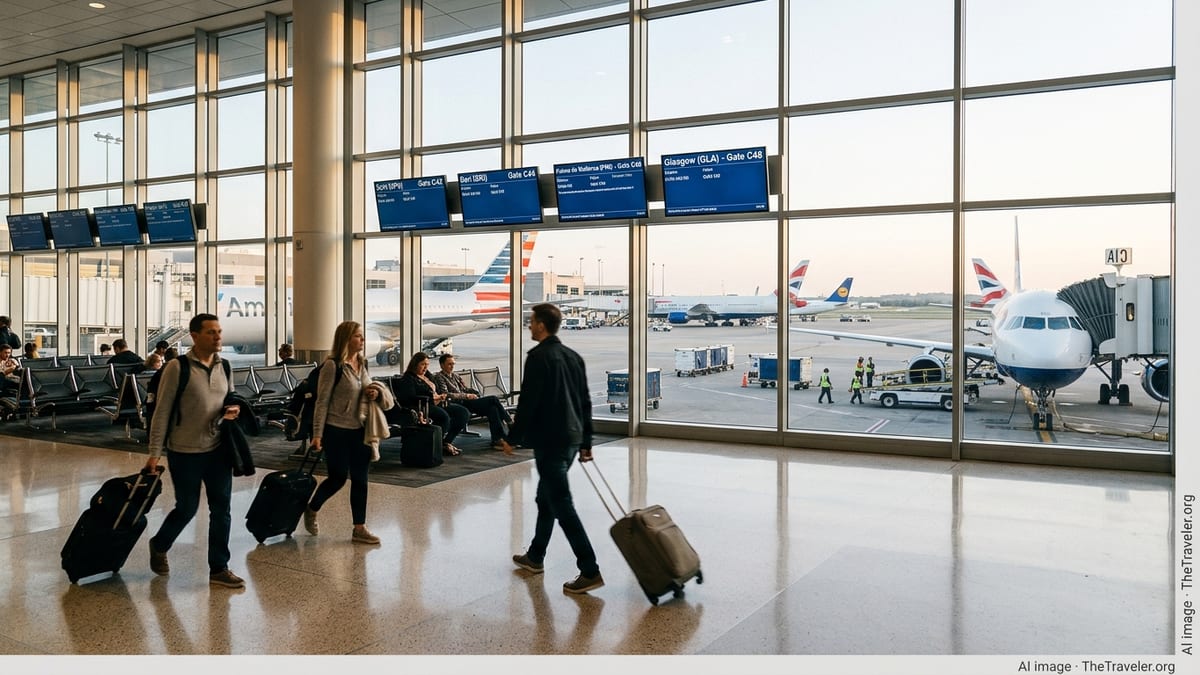
Carriers Turn to Capacity After Years of Turbulence
After repeated seasons of weather disruptions, staffing shortfalls and creaking airport infrastructure, airlines appear to be leaning on one of the few levers they still control: where and how often they fly. Published coverage of recent schedule filings and corporate updates shows that several large carriers are adding routes and boosting departures at key hubs, framing the changes as part of a broader effort to smooth travel and reduce the fragility of their networks.
The approach marks a shift from the immediate post‑pandemic period, when airlines focused heavily on trimming complexity, shoring up operational reliability and restoring balance sheets. Now, with demand proving resilient and regulators scrutinizing performance, network planners are looking to redundancy, alternative routings and more granular connectivity as tools to keep disruptions from spiraling across entire systems.
Industry analysts note that added capacity does not eliminate the risk of disruption, particularly during peak summer storms or air‑traffic control constraints. However, more options from more hubs can offer travelers additional ways around bottlenecks, while also allowing airlines to re‑route aircraft and crews with greater flexibility when problems arise.
The trend is visible in both domestic and international markets, from large U.S. network airlines growing at their traditional strongholds to smaller and leisure‑focused carriers probing new secondary cities. The common thread is an attempt to spread demand and operational risk over a wider geographic base.
American Airlines Bets on Hub Density and Mid‑Size Cities
American Airlines is among the most visible examples of this strategy. According to its recent announcements, the carrier plans more than a dozen new routes and significant frequency growth in 2026, with a particular emphasis on Chicago and Phoenix. Independent analysis of the schedule published this month indicates American aims to offer roughly 30 percent more departures out of Chicago O’Hare next summer compared with 2025, crossing the threshold of 500 daily flights at peak periods.
The airline is also building out point‑to‑point links that bypass some of the most congested coastal corridors. New and upcoming routes connecting mid‑size destinations, including additional service from hubs such as Dallas Fort Worth and Charlotte to interior and Sun Belt cities, are designed to give travelers alternatives to traditional choke points like New York and certain transcontinental gateways.
Network coverage from aviation outlets highlights a wave of American’s 2026 expansions that includes both new domestic spokes and fresh transatlantic links, such as planned nonstop service from the United States to Central and Eastern European capitals. These moves widen the range of one‑stop itineraries that can avoid overburdened hubs while still keeping passengers within the airline’s alliance network.
By densifying its hubs and layering in more spokes, American appears to be pursuing a two‑track goal: strengthening its competitive position in key markets while also creating enough routing options to recover more quickly when storms, mechanical issues or crew shortages threaten parts of the system.
United Deepens Newark and Broadens Transatlantic Choices
United Airlines is similarly using targeted growth to reinforce its network. Earlier announcements detailed multiple new European routes for summer 2026 from Newark Liberty International Airport, extending what has already been a record international push from the hub. Publicly available information shows Newark now ranked among United’s most internationally focused bases, with thousands more Europe departures than in the late 2010s and a double‑digit increase in destinations compared with pre‑pandemic schedules.
United has also committed to maintaining the full slate of new destinations it launched during its large 2025 expansion, instead of trimming weaker performers to make way for additional experiments. Travel industry reporting interprets that choice as a signal that the airline sees value in sustaining more options, even if some individual routes are still maturing, in order to offer passengers greater resilience when familiar gateways become snarled.
Beyond Europe, United has been steadily growing service to leisure and emerging markets, tapping hubs such as Denver, Houston and San Francisco as alternative connection points. More direct long‑haul links from these airports give travelers the potential to bypass the northeastern corridor, where congestion and weather disruptions have frequently knocked operations off balance.
The carrier’s network strategy, as reflected in recent filings and commentary, suggests a long‑term bet that a larger, more diversified route map will make it easier to reroute aircraft and customers during irregular operations, while still fueling revenue growth from high‑yield international demand.
Leisure and Low‑Cost Airlines Spread Out the Pressure
It is not only the largest network carriers that are expanding. Allegiant, Breeze, Frontier and other low‑cost and leisure airlines have continued rolling out new domestic links and seasonal routes into 2026, particularly between secondary cities and popular vacation destinations. A recent release from Allegiant, for example, outlined several new nonstop services connecting mid‑sized communities to Florida and other leisure markets, alongside an extended booking window into mid‑2026.
These additions widen the menu of nonstop options for travelers who previously had to connect through major hubs, reducing reliance on a handful of high‑traffic airports for holiday and family travel. Industry observers note that dispersing leisure demand across more point‑to‑point routes can lessen peaks at primary hubs during school breaks and long weekends, when limited capacity has often collided with surging crowds.
New entrants and boutique operators are also experimenting with targeted premium routes that bypass traditional choke points. Smaller carriers have launched or announced services linking affluent resort destinations directly with major metropolitan areas, betting that travelers will pay for convenience and fewer connection risks after several chaotic summers.
Collectively, the low‑cost and leisure expansions are nudging more of the U.S. network away from an exclusive focus on a few megahubs. While these schedules are often highly seasonal and sensitive to demand shifts, they nonetheless provide additional routing options that can absorb some passengers when disruptions ripple through larger systems.
Global Examples Underscore a System‑Wide Recalibration
Beyond the United States, international airlines are making similar moves to adjust capacity and routes in response to recent operational turmoil. Gulf carriers, European network airlines and Asia‑Pacific operators have continued to restore or add routes that were absent during the pandemic, often emphasizing connectivity to secondary cities and more balanced schedules across their hubs.
Some of this activity reflects straightforward demand recovery and aircraft deliveries coming online. However, network changes following high‑profile operational crises underline the systemic nature of the challenge. In India, for example, the scheduling breakdown at IndiGo in late 2025, triggered by stricter crew duty rules and inadequate planning, led to thousands of cancellations and exposed how quickly a tightly wound network can unravel when regulations or staffing change abruptly.
Since then, public documentation of regulatory responses and airline schedule adjustments in that market indicate a greater focus on realistic crew rostering and buffered operations. Other carriers in the region have also adjusted timetables and capacity, suggesting that network resilience is becoming a more explicit consideration alongside growth.
Elsewhere, airlines such as Qatar Airways and other long‑haul specialists have resumed or upgraded services on key trunk routes, often increasing frequencies rather than deploying only larger aircraft. That shift toward more flights with similar capacity can provide operational flexibility, allowing carriers to swap equipment or consolidate services when disruptions occur without stranding as many passengers on any single flight.
Travelers Gain Choices, but Chaos Risks Remain
For travelers, the wave of route announcements translates into more choice in 2026 and beyond. New nonstops from mid‑sized cities, additional transatlantic gateways and fresh combinations of hubs and spokes can make itineraries shorter and, in theory, less vulnerable to a single weak link. Booking patterns already suggest strong interest in alternative routings that avoid historically congested airports when reasonable options exist.
At the same time, experts caution that capacity alone cannot solve the deeper causes of travel chaos, which include weather volatility, aging infrastructure, tight labor markets and air‑traffic control bottlenecks in both the United States and overseas. Expanded networks can absorb some pressure and give airlines more tools to respond, but they also add complexity that must be managed carefully to avoid recreating the same vulnerabilities on a larger scale.
Published analysis of recent schedule data suggests that the carriers committing to both growth and operational buffers, such as realistic connection times and reserve staffing, are likely to deliver the greatest benefits to travelers. Where those elements are missing, new routes may simply shift bottlenecks from one part of the system to another.
As the 2026 summer season approaches, the question for passengers is whether this new wave of network building will translate into noticeably smoother trips. The answer will depend not only on how many new routes are available, but also on how effectively airlines use them when the next round of storms, staffing surprises or regulatory shocks hits the global aviation system.