

More news on this day
Jazeera Airways is drawing new attention to regional connectivity with the launch of daily flights between Saudi Arabia and the United Arab Emirates, a move expected to reshape travel patterns and bolster hotel demand across the Gulf’s busiest corridors.
Get the latest news straight to your inbox!
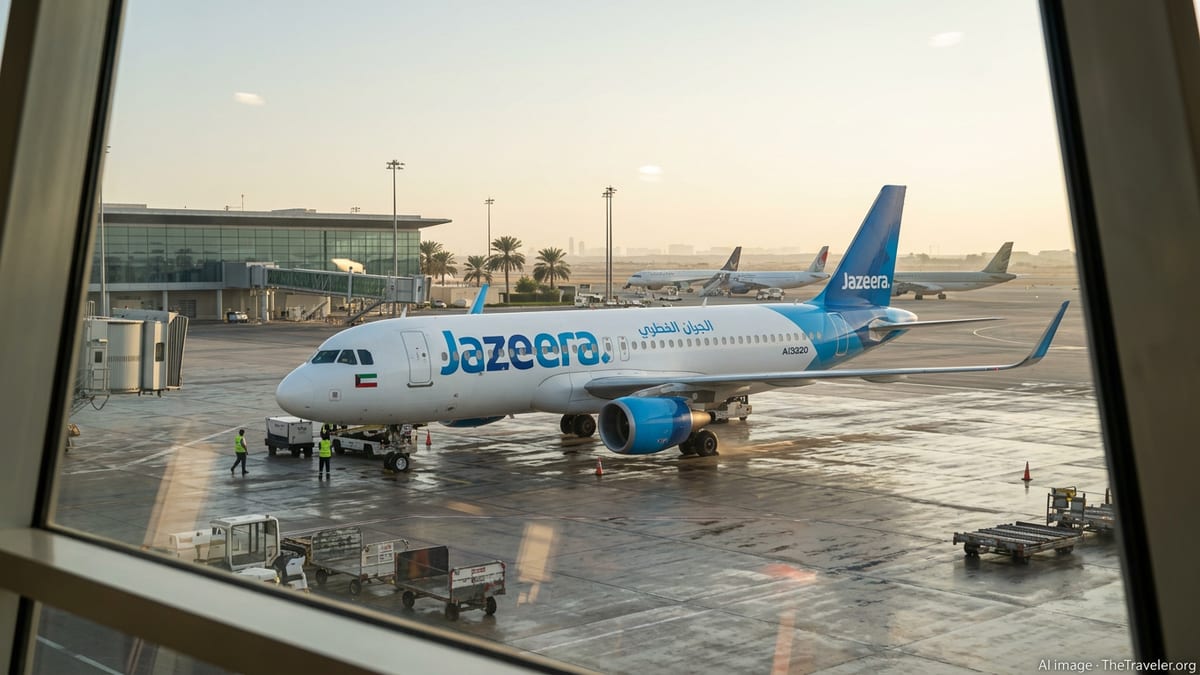
New Daily Link Strengthens Gulf Air Corridor
According to published coverage and schedule data, Jazeera Airways has expanded its Saudi network in recent seasons while reinforcing its presence in the United Arab Emirates, and is now adding a daily Saudi–UAE service to that growing web of routes. The low-cost carrier, based in Kuwait, has been steadily rebuilding and widening its Gulf footprint with flights linking Kuwait to Saudi cities such as Abha and new or resumed services to Abu Dhabi, Al Ain and Dubai. The new daily operation between Saudi Arabia and the UAE aligns with this broader strategy of stitching together high-frequency, short-haul links within the region.
The added capacity comes at a moment when airlines across the Middle East are ramping up frequencies to meet strong demand for intra-Gulf travel, both for business and for short leisure trips. Publicly available information shows that carriers such as flynas, Air Arabia and flydubai have all increased Saudi–UAE frequencies in recent years, and Jazeera’s move into a daily pattern reflects competitive pressure to offer more choice and better timings on these popular routes.
While the precise schedule details can vary by season, the daily nature of the service gives travelers a more predictable timetable and better connectivity onto onward flights in both Saudi Arabia and the UAE. Travel analysts note that higher frequencies typically translate into greater flexibility for passengers, enabling shorter trips and more efficient use of time for corporate travelers, weekend visitors and religious pilgrims using the Gulf as a gateway.
The new daily flights also come against a complex backdrop for regional airspace in early 2026, with some routes periodically adjusted or rerouted due to security considerations. Even in this environment, airlines have continued to prioritize key Saudi–UAE city pairs, underscoring the strategic value of this corridor. Jazeera’s decision to invest in daily services between the two countries signals confidence that demand will remain resilient.
What the Route Means for Everyday Travelers
For passengers, an additional daily low-cost option between Saudi Arabia and the UAE is likely to translate into more competitive fares and greater schedule choice. Historically, high-frequency routes in the Gulf have seen yields pressured as airlines jostle for market share, especially when low-cost carriers compete directly with full-service rivals. Jazeera Airways’ product sits in the budget segment, and its daily operation is expected to appeal to price-sensitive travelers who value frequency over onboard frills.
Greater frequency can also shorten total journey times by reducing long layovers, particularly for Saudi travelers connecting onward through Dubai or Abu Dhabi to South Asia, Europe or East Asia. Travel planners note that daily operations allow for tighter connections and more same-day return options, which can be especially attractive for expatriate workers, small business owners and religious visitors who may be traveling on limited budgets and tight schedules.
The new flights are also likely to support family and leisure travel between Saudi cities and popular UAE destinations such as Dubai, Abu Dhabi and Al Ain. Reports on regional hotel occupancy show that weekend breaks, shopping trips and entertainment tourism are key drivers of cross-border travel within the Gulf. With daily options available, travelers can more easily time their trips around festivals, school holidays or major events in the Emirates.
Importantly, the expanded connectivity may help stabilize travel plans during periods of disruption. When airspace restrictions or weather events affect certain routes, having an additional low-cost carrier operating daily between Saudi Arabia and the UAE can widen rebooking options, offering travelers alternative departure times or airports within the same day.
Impact on Hotels and Tourism Hubs in the Middle East
For hotels, particularly in Dubai and Abu Dhabi, an incremental daily flow of passengers from Saudi Arabia can make a noticeable contribution to demand. Saudi travelers are among the top source markets for the UAE, and tourism statistics in recent years have highlighted their role in sustaining occupancy across city hotels, beachfront resorts and serviced apartments. An additional daily low-cost connection is expected to support both midscale city properties and high-end resorts that rely on repeat weekend visitors.
Industry analysts point out that short-haul Gulf traffic often converts into high-spend stays, as visitors arrive for shopping, dining and entertainment rather than purely transit. By lowering the cost and increasing the convenience of travel, Jazeera Airways’ daily service may encourage more frequent, shorter trips instead of a single long holiday. This pattern can smooth seasonal peaks, providing a steadier base of demand for hotels outside major holiday periods.
Secondary UAE destinations such as Al Ain may also benefit from the broader expansion of Jazeera’s network. With the airline already operating flights into both Abu Dhabi and Al Ain from Kuwait, the addition of daily Saudi–UAE services can create more complex itineraries that funnel visitors through multiple Gulf cities. Travel agencies in the region are increasingly packaging multi-city stays, and an additional daily flight widens the options for routing travelers through Saudi Arabia and onward to the Emirates’ cultural and desert destinations.
In Saudi Arabia, cities connected directly to the UAE by daily low-cost flights could see complementary growth in their own hospitality sectors. Business travelers and event delegates arriving from the UAE may choose to stay longer, especially as Saudi Arabia continues to diversify its tourism offerings beyond religious travel. New hotels in emerging leisure destinations such as Abha and other secondary cities stand to gain from smoother links to the UAE’s major aviation hubs.
Competitive Pressures and Pricing Across the Gulf
The addition of a daily Jazeera Airways link between Saudi Arabia and the UAE adds another layer to an already competitive aviation market. Other Gulf-based low-cost carriers have broadened their Saudi networks in recent years, serving routes such as Riyadh to Dubai, Jeddah to Abu Dhabi and multiple connections from Dammam. Industry reports indicate that seat capacity on Saudi–UAE routes has risen steadily, driven by rising demand and aggressive expansion by budget airlines.
This competition is likely to keep fares in check, particularly outside peak seasons such as school holidays, Ramadan and the Hajj period. Travel booking data typically show spikes in pricing around major religious and national holidays, but higher baseline capacity can help moderate those peaks. For travelers who book early or remain flexible on dates and airports, the presence of an extra low-cost daily flight should increase the chances of finding lower fares.
At the same time, airlines are carefully managing yields as operating costs remain sensitive to fuel prices and currency movements. Jazeera Airways operates a single-aisle Airbus fleet, which allows it to adjust capacity and deploy aircraft efficiently across high-demand routes such as Saudi–UAE city pairs. Maintaining a daily schedule gives the carrier a platform to shift capacity between cities in response to booking trends, without ceding frequency advantages to competitors.
Travel experts caution that while more capacity usually benefits consumers, travelers should watch for dynamic pricing around major events and weekends in both Saudi Arabia and the UAE. As demand surges for business conferences, sports tournaments or entertainment festivals, fares can still rise quickly even on routes served by multiple daily flights.
What to Watch Next for Regional Travelers
The launch of Jazeera Airways’ daily Saudi–UAE flights fits into a broader regional pattern in which Gulf carriers are tying together secondary and primary cities with short, frequent routes. Observers are watching closely to see whether more Saudi airports will gain regular low-cost links to Dubai, Abu Dhabi and other UAE gateways as aircraft deliveries and fleet renewals progress.
For travelers, the key developments to monitor include schedule adjustments as airspace conditions evolve, the addition of new Saudi departure points and any changes in visa or entry policies that could further ease cross-border movement. Publicly available information suggests that governments in both Saudi Arabia and the UAE are keen to boost two-way tourism and business travel, and airlines are likely to respond with more capacity where demand is proven.
Hotels and tourism boards across the Middle East will also be tracking booking patterns tied to the new daily services. If Jazeera Airways’ expanded schedule succeeds in generating more frequent, shorter trips, the ripple effects could extend well beyond the main hubs, supporting growth in secondary cities and emerging leisure destinations on both sides of the border.
For now, the message to travelers is that Saudi–UAE connectivity is deepening, with Jazeera Airways’ daily service adding another affordable and frequent option on one of the region’s most important air corridors. As capacity builds and networks become more interlinked, the Gulf’s cities may feel closer than ever for both residents and international visitors using the region as a jumping-off point.