


More news on this day
Air New Zealand has warned of its heaviest loss in four years as the spiraling cost of jet fuel linked to the Middle East conflict ripples through the global airline industry, adding its name to a growing list of carriers reporting steep 2026 losses and cutting service to survive the fuel shock.
Get the latest news straight to your inbox!
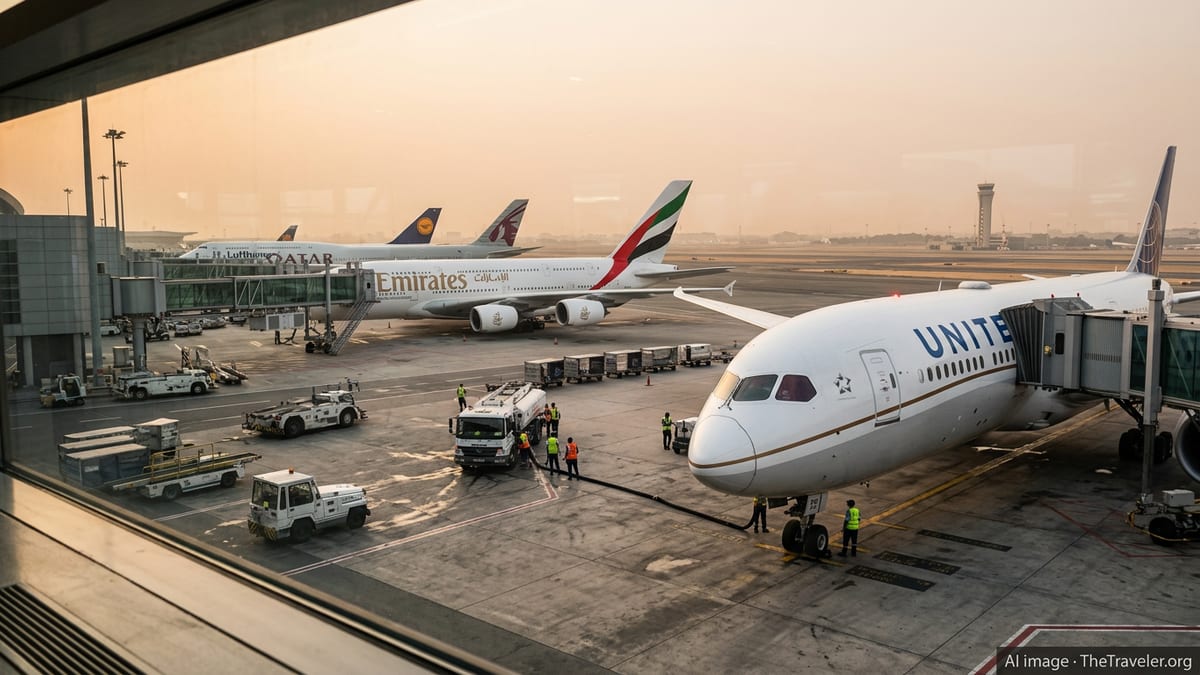
Middle East Conflict Sparks Historic Jet Fuel Spike
Global energy markets have been roiled since the escalation of conflict involving Iran in late February 2026, with disruptions to crude flows through the Strait of Hormuz triggering what analysts describe as one of the most severe jet fuel shocks in decades. Industry research and multilateral assessments indicate that the war has cut off a significant share of global crude and kerosene supply, pushing aviation fuel prices to levels many carriers last saw only in historical case studies.
International aviation bodies and economic observers report that jet fuel prices have more than doubled compared with pre-conflict levels earlier in the year, with spot prices in some trading hubs briefly reaching the equivalent of 150 to 200 dollars per barrel. For airlines, which typically spend around a quarter of their operating budgets on fuel in normal times, the surge has rapidly pushed fuel to as much as 40 to 45 percent of total costs in some markets.
Analyst notes from major consultancies and credit rating agencies suggest that the sudden spike has collided with thin post-pandemic balance sheets, leaving many carriers unable to absorb the increase through existing hedging positions or incremental fare hikes. The result is a broad industry pattern of downgraded earnings guidance, widened quarterly losses and urgent network reviews as the northern summer peak season approaches.
Europe-based monitoring of the aviation market shows that, while some low cost and network airlines entered 2026 with extensive fuel hedges, a large number of carriers in North America and the Asia Pacific region were far more exposed to spot prices. This uneven protection has created sharp divergences between airlines that can maintain capacity and those now resorting to aggressive cuts.
Air New Zealand Joins the Red-Ink Ranks
Against this backdrop, Air New Zealand has emerged as one of the highest-profile victims in the Asia Pacific region. According to specialist aviation data providers and financial news outlets, the flag carrier has suspended its previous 2026 earnings guidance and now expects its deepest loss in roughly four years, after reporting a first half loss of 59 million New Zealand dollars and warning that second half performance will be at least as weak.
Industry coverage notes that Air New Zealand’s regional network is particularly exposed to the fuel shock. The airline operates dozens of thinner domestic and short-haul routes using turboprops and smaller jets, where fuel expense per seat climbs faster than on larger aircraft. Publicly available commentary from airline-focused analysts suggests that these routes, many of which serve smaller communities, are now at greater risk of reduced frequency or temporary suspension as the carrier pivots limited capacity to higher-yield sectors.
Reports from aviation intelligence services indicate that Air New Zealand has already begun revising its schedule and reviewing fleet utilization for the 2026–27 financial year. That process includes reassessing marginal long haul services as well as regional spokes, with particular attention to flights that require longer routings to avoid conflict-affected airspace and therefore consume more fuel.
While detailed final figures have yet to be published, regional transport analysts widely characterize Air New Zealand’s situation as emblematic of the pressures facing mid-sized network airlines that lack the financial buffers of the largest global groups but carry extensive obligations to maintain connectivity within their home markets.
Record-Breaking Losses for U.S. and Global Carriers
Major airlines in the United States and other key markets are confronting similar strains. American Airlines recently reported a first quarter 2026 net loss running into hundreds of millions of dollars, and the carrier’s updated guidance points to a full year shaped by a fuel bill projected to rise by more than four billion dollars compared with 2025, even as revenue is expected to remain broadly flat.
Financial and equity research coverage of United Airlines, Delta Air Lines and other large U.S. network carriers shows a clear pattern of compressed margins, with higher fuel and insurance costs eroding the benefits of solid demand and still-elevated fares. Analysts tracking the sector have raised their 2026 fuel cost estimates by close to 10 percent on average for many North American airlines, citing both higher crude prices and ongoing uncertainty surrounding the conflict’s duration.
Low cost and ultra low cost carriers, including JetBlue and Spirit in the United States and Wizz Air and airBaltic in Europe, appear particularly exposed. Publicly available data and commentary indicate that JetBlue is on track for a substantial full year loss in 2026 as fuel and financing costs outpace unit revenue gains. Spirit’s challenges have been even more acute, with the company’s financial restructuring efforts colliding with surging fuel prices that undermined its already fragile outlook.
Outside the United States, airlines such as Lufthansa, easyJet and several Asia Pacific carriers have reported or guided to deeper first half losses in 2026, often highlighting the war-driven jump in jet fuel as a central factor. Some groups, however, have partly cushioned the blow through extensive hedging and capacity discipline, underscoring how pre-crisis risk management has become a critical differentiator in this environment.
Service Cuts, Fare Hikes and Route Retrenchment
The financial pain is translating rapidly into changes in the sky. Industry trackers estimate that airlines worldwide have already canceled or removed from sale roughly 13,000 flights scheduled for the May to August 2026 period, as carriers trim frequencies, consolidate weaker rotations and withdraw from some markets entirely to contain fuel burn.
Reports from airline networks and schedule databases show that United, Air India, Lufthansa and several Asia-based groups have implemented targeted capacity reductions, with particular focus on long haul and ultra long haul routes that are disproportionately fuel-intensive. Some transcontinental and transoceanic services now require extended routings to avoid closed airspace over Iran and neighboring states, adding flight time and further increasing fuel use.
At the same time, publicly accessible fare data and travel agency commentary point to widespread ticket price increases. Long haul economy and premium fares on many routes touching North America, Europe and Asia have climbed by 10 to 20 percent in recent weeks, as airlines attempt to pass part of the fuel shock on to passengers. Flexible and last-minute tickets show even sharper rises, reflecting both higher operating costs and constrained seat supply.
Domestic and regional markets are not immune. In the United States, route analysts are tracking reduced frequencies on selected secondary city pairs for American, Delta and United, while in the Pacific and parts of Europe, smaller regional jets and turboprops are being redeployed or temporarily grounded where demand cannot support higher fuel-related costs. In some cases, governments and local business groups have expressed concern about the loss of connectivity, particularly to island and remote communities that rely heavily on air links.
Uncertain Outlook as Airlines Seek Lifelines
Looking ahead, aviation and energy analysts caution that much depends on the trajectory of the conflict and the speed at which alternative fuel supply routes can be expanded. Jet fuel prices remain volatile despite limited production increases announced by some oil producers, and industry forecasts suggest that elevated costs could persist well into 2027 even if hostilities ease.
Research from financial rating agencies and aviation consultancies highlights rising concerns over liquidity for weaker airlines. Higher fuel outlays, combined with increased insurance premiums and the lingering debt legacy of the pandemic period, have sharply reduced cushions at many carriers. Some assessment notes warn that if fuel prices stay near current levels through the peak travel season, additional restructurings or market exits cannot be ruled out.
Industry associations representing airlines have begun to call for regulatory flexibility and, in some jurisdictions, potential targeted support or tax relief to help preserve essential connectivity. Policy discussions range from temporary reductions in fuel duties and airport charges to relaxed slot usage rules that would allow airlines to maintain takeoff and landing rights despite operating fewer flights.
For now, the crisis has underscored the vulnerability of the global air transport system to geopolitical shocks in key energy-producing regions. Air New Zealand’s warning of its biggest loss in years, alongside mounting red ink at United, American, Delta, JetBlue, Air India and other large players, signals that 2026 is shaping up as one of the most financially challenging years for airlines since the depths of the pandemic, with millions of travelers already feeling the effects through higher fares, thinner schedules and increasingly crowded remaining flights.