


More news on this day
A fresh wave of disruption at New York’s John F. Kennedy International Airport on June 8 triggered at least 18 flight cancellations and more than 100 delays, snarling travel plans across the United States, the United Kingdom, Canada and key Middle Eastern hubs at the height of the early summer rush.
Get the latest news straight to your inbox!
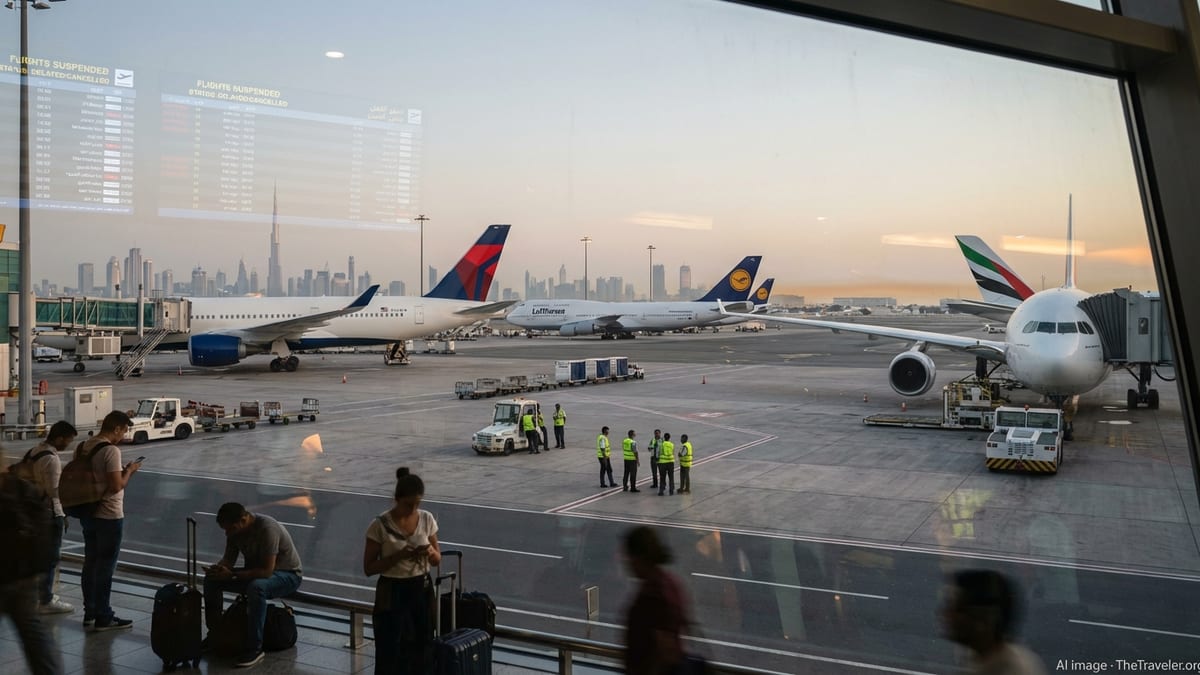
Congested schedules meet early summer storms
Published flight-tracking data and airline status pages for June 8 indicate that a combination of weather constraints and tightly packed schedules pushed JFK’s already busy operations to a breaking point. The airport is running under a formal Federal Aviation Administration slot regime for the summer 2026 season, which limits scheduled arrivals and departures during peak hours but still leaves little room to absorb disruption once it begins.
Airlines serving JFK entered the day with full transatlantic and long haul loads typical of early June. High demand, constrained slot availability and a shortage of spare aircraft and crew all contributed to a situation in which even modest weather or airspace restrictions translated quickly into cancellations and rolling delays. Several carriers adjusted schedules preemptively, while others scrubbed flights only after departure times slipped repeatedly.
By late afternoon, the tally at JFK had climbed to at least 18 cancellations and well over 100 delayed departures and arrivals, according to live airport and airline status boards. The majority of affected flights were mainline and long haul services, amplifying the knock-on impact across continental networks.
The disruption unfolded as other major US hubs faced their own weather and capacity challenges in early June, reducing options for rerouting and leaving many passengers with longer waits for available seats.
Transatlantic links to the UK and Canada hit hard
The heaviest pressure was felt on JFK’s transatlantic corridors, particularly services to London and other UK gateways and to major Canadian cities. These routes typically operate with limited slack capacity in early summer, leaving airlines little flexibility when a single rotation is lost.
On June 8, several JFK departures to London and other UK airports showed extended delays, some of them exceeding three hours. A smaller number were removed from the schedule altogether, forcing carriers to consolidate passengers onto later flights or reroute them via secondary hubs. The backlog fed into already tight overnight schedules on the North Atlantic, where aircraft and crews are often programmed for multiple legs in quick succession.
Canada bound services also faced severe disruption. Delays on New York departures rippled through evening and overnight flights into Toronto, Montreal and other key Canadian gateways, affecting both point to point travelers and those connecting onward to domestic and transpacific routes. Some passengers booked on June 8 JFK departures were redirected to flights from Newark or other US airports where capacity could be found.
Because many of these flights cross regulatory jurisdictions, some passengers may be covered by different compensation and rebooking rules, particularly for itineraries beginning or ending in the UK or Canada. Travel advocates note that travelers on affected transatlantic services often have stronger rights than those on purely domestic US routes, but that relief still depends on the precise carrier, routing and cause of disruption.
Middle East connections feel the ripple effect
The June 8 problems at JFK also extended to long haul routes linking North America to the Middle East. That region’s aviation networks are already operating under pressure in 2026 due to security sensitivities, airspace restrictions and prior route adjustments affecting some Gulf and Levant destinations.
Publicly available schedules show that several JFK flights connecting to Middle Eastern hubs, either nonstop or via European gateways, departed late or were cancelled outright. When a key transatlantic sector from New York fails to operate, the missed arrival window can break onward connections from European or North American transfer points to destinations such as Tel Aviv, Dubai, Doha or Riyadh.
In practice, a single cancelled JFK flight can strand travelers mid itinerary or force airlines to rebook passengers onto next day services from alternative US or European cities. With long haul aircraft utilization already high and some Middle Eastern routes operating at or near capacity, reaccommodation options on June 8 and the following days were limited, particularly for larger groups and premium cabin travelers.
Airline advisories in recent months have also highlighted that some routes to and from the Middle East remain vulnerable to short notice changes based on regional developments. The June 8 disruption at JFK therefore landed on top of an already fragile long haul network, compounding delays and missed connections for passengers traveling between North America and the region.
System strain exposes structural vulnerabilities
The events of June 8 at JFK underline how tightly coupled modern airline schedules have become across continents. When an airport operating under strict slot controls experiences even a brief capacity constraint, late arriving aircraft and crews can quickly fall out of sequence, creating a cascade of missed rotations at downline airports in the US, Europe, Canada and the Middle East.
Capacity planning documents for the 2026 summer season highlight that major US hubs, including JFK, are running at or near their declared limits for large portions of the day. At the same time, several carriers are still rebuilding staffing and aircraft availability following the pandemic era, leaving thinner buffers for last minute substitutions when something goes wrong. Industry analysts point out that while operational metrics have improved since the worst disruptions of 2022 and 2023, the margin for error remains narrow.
Travel forums and passenger reports from recent months describe a pattern in which early morning or mid day weather and air traffic restrictions at one hub lead to widespread evening delays at another, often hundreds or thousands of miles away. The June 8 JFK episode fits that pattern, with a concentrated set of cancellations and schedule changes producing outsized consequences on long haul routes precisely because the network is so interconnected.
Observers note that upcoming infrastructure projects and regulatory reviews at New York area airports, along with ongoing FAA considerations around slot usage and scheduling flexibility, could influence how resilient JFK becomes to similar shocks in future summers. For now, the June 8 disruption stands as another example of how a localized operational crunch can immobilize a much larger swath of the global air travel system.
What travelers can do on high risk days
For travelers, the June 8 JFK disruption offers several practical lessons for navigating peak season travel through slot constrained hubs. Airline and airport guidance consistently emphasizes the importance of monitoring flight status closely in the 24 hours before departure and again on the day of travel, particularly during summer and early autumn when convective storms and air traffic restrictions are common.
Experienced flyers recommend allowing generous connection times when itineraries pass through New York area airports or other heavily congested hubs, especially on transatlantic and Middle Eastern routes that operate with limited daily frequencies. Booking slightly earlier departures, even by a few hours, can provide more rebooking options if a flight is cancelled or heavily delayed.
Travel planners also stress the value of understanding passenger rights on journeys that touch multiple regulatory regimes. Routes involving the UK, the European Union or Canada may provide access to specific compensation and care standards when disruptions arise, while many US domestic itineraries rely more heavily on individual airline policies. Knowing which framework applies can shape whether travelers seek refunds, alternative transport or additional support.
As June progresses and schedules remain tightly packed, aviation observers expect further days of concentrated disruption at major hubs. For those passing through JFK and its transatlantic and Middle Eastern gateways, the events of June 8 serve as a reminder that a seemingly isolated cluster of cancellations and delays in New York can reverberate across four regions within hours.