


More news on this day
Dublin International Airport is facing fresh travel turmoil after 117 flights were delayed and four services cancelled in a single day, disrupting links to major hubs including London, Paris, New York, Frankfurt and key regional airports across Ireland.
Get the latest news straight to your inbox!
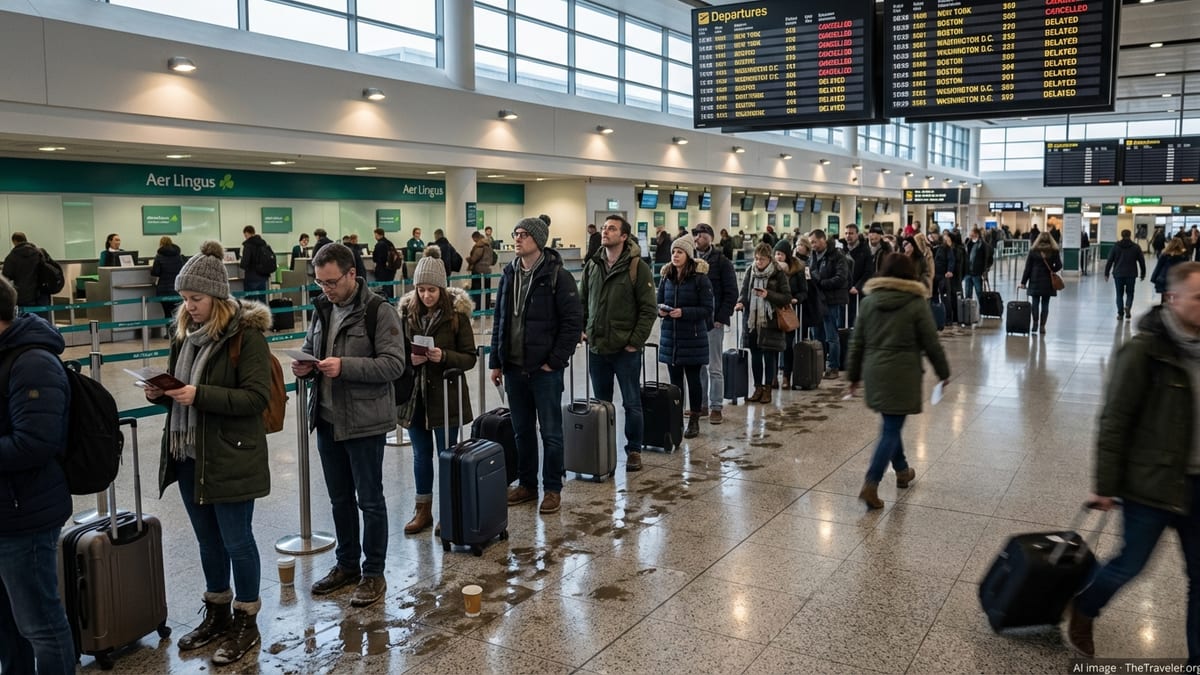
Delays Ripple Across European and Transatlantic Networks
Data compiled from live flight tracking boards and independent aviation monitoring platforms shows that delays at Dublin Airport have affected a broad mix of short haul and long haul operations, including services operated by or on behalf of BA CityFlyer, United Airlines, Aer Lingus and Lufthansa. The disruption has rippled through key corridors linking Dublin with London City, Heathrow and other London airports, as well as Paris Charles de Gaulle, Frankfurt and major US gateways such as New York.
Publicly available information indicates that the worst of the disruption is concentrated in departures and arrivals clustered around peak morning and late afternoon waves, when tight aircraft rotations and high passenger volumes leave limited room to recover from knock-on delays. In several cases, extended turnaround times in Dublin have led to late-running aircraft arriving into hubs like London and Paris, where slot constraints then further limit rescheduling options.
According to real-time route and punctuality snapshots reviewed by TheTraveler.org, the majority of affected flights are experiencing delays of 30 to 90 minutes, though some transatlantic services have recorded longer slippages as ground handling and air traffic management resources are stretched. A small number of rotations have been cancelled outright, forcing passengers to rebook onto later services or reroute via alternative European hubs.
The disruption has immediate consequences not only for point to point travelers but also for connecting passengers using Dublin as a transit gateway. With Aer Lingus, United and Lufthansa linking the Irish capital to network hubs in North America and continental Europe, even modest delays can cause missed onward connections and require airlines to re-accommodate travelers on already busy summer-season flights.
Airlines Under Pressure as Schedules Strain
Aer Lingus, the main carrier at Dublin, is once again at the center of operational scrutiny as it works within a tightly packed summer schedule that has already attracted attention for previous waves of disruption. Reports in recent weeks have pointed to a mix of capacity pressures, aircraft availability and staffing challenges across parts of the European aviation sector, and the latest spike in delays has intensified debate about how robust the current schedules really are.
United Airlines and Lufthansa, which both operate multiple daily connections between Dublin and key hubs such as Newark, New York JFK and Frankfurt, have also seen their Dublin rotations pushed back. Flight status pages show several services operating behind schedule, with turnaround and air traffic flow restrictions cited among the recurring factors. While most of these flights are still departing, their late operation increases the risk of onward misconnects once they reach their hubs.
BA CityFlyer, which serves London City Airport under the British Airways brand, has been affected through the highly time-sensitive Dublin to London City corridor. Punctuality statistics released by regulators already highlight how services on this route operate in a compressed operating window with limited resilience. When primary airports such as Dublin experience widespread delays, smaller slot-constrained airports like London City can quickly become bottlenecks, compounding the knock-on impact for regional business travelers.
Across all four carriers, airline customer support channels and social media posts monitored on Sunday show passengers reporting extended waits, gate changes and concerns over missing long-planned trips. Travel advocates note that while airlines generally prioritize getting aircraft and crews back into position, individual passengers often face complex rebooking choices, particularly if they are connecting on separate tickets or involving multiple alliances.
Operational Strains at Dublin Highlight Wider Capacity Debate
The latest disruption has reignited discussion about Dublin Airport’s operating environment and the broader question of capacity and resilience in Ireland’s main aviation gateway. Regulatory papers and planning documents published this year have already underlined how high traffic volumes, night movement limits and infrastructure constraints leave the airport vulnerable to systemic delays once something goes wrong, whether due to weather, air traffic control bottlenecks or technical issues in ground systems.
Analysis from aviation compensation specialists and travel rights organisations points out that Dublin has seen repeated clusters of major delay days in recent months, including instances where more than 200 flights in a day were reported as delayed and multiple services cancelled. While the specific causes can vary from one event to another, the pattern has fed concerns that the system is running too close to its limits during peak seasons.
Industry observers also note that the airport’s role as a transatlantic bridge amplifies the effect of any operational problems. With Dublin hosting United States border preclearance facilities and serving as a strategic stop for Aer Lingus and partner airlines, disruption in Ireland can quickly stretch across the Atlantic, affecting schedules in North America as aircraft and crews arrive late or miss their planned slots.
Debate continues within Ireland about whether lifting or modifying passenger caps and movement limits would ease or worsen the situation. Some commentators argue that additional capacity, including more flexible use of runways and terminals, is needed to create buffer space and reduce the likelihood of cascading delays. Others warn that increasing throughput without parallel investments in staffing and air traffic management could deepen the very problems now confronting travelers.
Impact on Passengers and Passenger Rights
For passengers caught in Sunday’s disruption, the most immediate concerns center on practical issues such as making connections, rearranging ground transport and accommodation, and understanding their rights to care and compensation. Under European passenger protection rules, travelers on flights leaving from Dublin or operated by European carriers may be entitled to assistance such as meals, hotel stays and reimbursement of reasonable out of pocket expenses, depending on the length of the delay and the specific cause.
Travel rights platforms that track performance at Dublin report increased traffic from passengers checking whether their delayed or cancelled flights qualify for compensation. These services advise travelers to keep boarding passes, booking confirmations and any written notifications from airlines that describe the nature and length of the disruption, as such evidence can support later claims.
Consumer advocates caution that not every delay will lead to compensation, particularly when airlines can demonstrate that the primary cause was outside their control, such as sudden air traffic control restrictions or severe weather elsewhere in the network. However, they emphasise that large-scale operational meltdowns, where scheduling and resource planning are central factors, may fall within the scope of passenger protection rules.
With 117 delayed flights and four cancellations tied to a single disruptive event, analysts expect a significant volume of claims and complaints in the coming days. How carriers including Aer Lingus, United, Lufthansa and BA CityFlyer handle these cases is likely to shape public perception as the busy summer holiday season gathers pace.
What Travelers Should Do Now
For those scheduled to pass through Dublin in the next 24 to 48 hours, travel advisers recommend closely monitoring flight status pages and airline apps, checking in online as early as possible and allowing extra time at the airport in case of long queues at security and check in. Passengers with critical same day connections through London, Paris, Frankfurt or New York are being urged to consider earlier departures or more generous layover times where changes can still be made without penalty.
Experts also suggest that travelers keep all receipts for meals, transport and accommodation incurred as a direct result of delays or cancellations, as these may later form part of a reimbursement or compensation claim. Those whose flights have been cancelled outright should be offered a choice between a refund and rerouting, although availability during peak periods may be limited.
While Sunday’s disruption underlines the fragility of tightly tuned airline schedules, it also offers a reminder that large hub airports are complex systems in which issues at one node can quickly cascade across continents. With Dublin acting as a key junction for Ireland, the United Kingdom, continental Europe and North America, the effects of a single day’s travel chaos are likely to be felt well beyond Ireland’s borders.