


More news on this day
As the United States moves toward its 250th anniversary in 2026, national and state America 250 initiatives are turning renewed attention to the first transcontinental railroad, framing the 19th century engineering feat as a powerful symbol of rail innovation, cross-country travel and national unity.
Get the latest news straight to your inbox!
Rail Heritage Rides a New Wave of National Attention
Publicly available information on America 250 planning shows that transportation history is emerging as a central theme of the semiquincentennial, with railroads highlighted alongside ships, highways and aviation. The 1869 completion of the first transcontinental railroad, marked by the driving of the Golden Spike in Utah, is increasingly referenced in program outlines as a defining moment in binding the continent together.
Golden Spike National Historical Park continues to mark the anniversary of the line’s completion each May, and recent commemorations have been framed within the broader build-up to the 250th anniversary of independence. Event descriptions emphasize how the new rail link shortened coast-to-coast journeys from months to days and fostered a new sense of shared national space, themes that resonate strongly with today’s unity-focused messaging.
Professional guidance prepared for museums and historical organizations around the semiquincentennial encourages institutions to revisit landmark infrastructure stories such as the transcontinental railroad. The goal, those materials indicate, is to connect past investments in connectivity with contemporary debates about mobility, sustainable travel and the economic geography of the United States.
For many destinations along the historic route, from California and Nevada to Wyoming and Nebraska, the heightened interest offers an opportunity to promote rail heritage tourism. Visitor bureaus and state commissions are beginning to package rail history sites, excursions and museums as part of wider America 250 travel itineraries.
Steam Giants and Modern High-Speed Trains Share the Stage
Freight and passenger rail operators are also using the 250th to spotlight how train travel has evolved since the age of the transcontinental line. Union Pacific announced a coast-to-coast tour for its restored Big Boy No. 4014 steam locomotive in 2026, explicitly tying the journey to America’s 250th anniversary and to the historic role of railroads in uniting regions and markets.
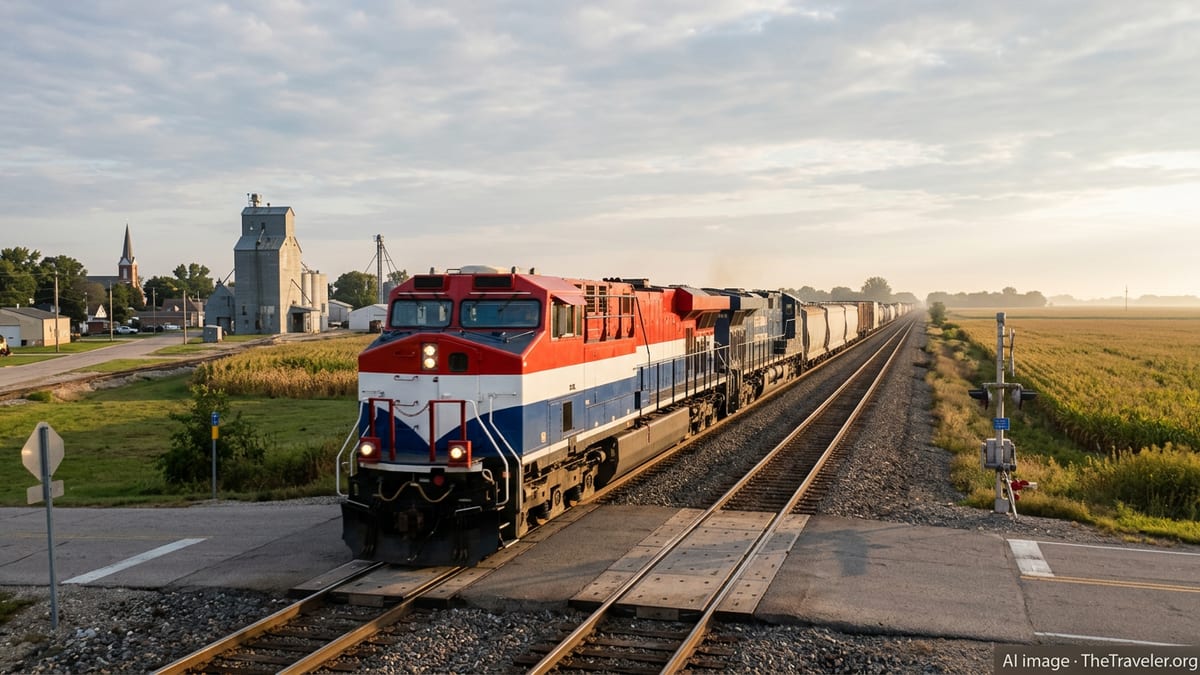
At the same time, Amtrak has introduced a high-speed Freedom 250-branded Acela set wrapped in red, white and blue, running in the busy Northeast Corridor. Company statements describe the train as part of a broader America 250 celebration intended to showcase both the legacy and future of passenger rail, with additional locomotives across the country receiving commemorative graphics.
Rail industry groups have released materials for the semiquincentennial that draw a direct line from the transcontinental railroad to present-day freight corridors and intercity routes. Fact sheets highlight how the original coast-to-coast line paved the way for the dense, interconnected rail network that continues to carry goods and passengers between regions today.
For travelers, the convergence of heritage steam tours and special liveries on contemporary trains is creating a rare moment when the romance of 19th century rail travel and the speed of 21st century services can be experienced within a single anniversary season. It is a narrative that aligns closely with America 250’s emphasis on continuity between past and present.
State America 250 Commissions Turn to the Tracks
Across the country, state-level America 250 commissions are weaving rail stories into their own celebration plans, often with direct nods to the first transcontinental route and its successors. Ohio’s commission has announced a Buckeye train and transportation celebration, using an excursion train and associated festival to tell the story of how rail, canals and roads shaped the state’s development.
Other states with strong ties to the original transcontinental corridor, including western and plains states, have circulated planning documents that encourage local partners to highlight depots, rail museums and historic rights-of-way. These materials stress that railroads did not simply move freight and passengers, but also shaped immigration, settlement patterns and regional identities.
Some commissions are pairing rail narratives with programs that acknowledge the varied communities affected by the transcontinental project, including railroad workers and Indigenous nations whose lands were crossed or disrupted. Interpretive frameworks promoted for the semiquincentennial suggest that telling a fuller story of the railroad’s impacts can deepen public understanding of national unity as an ongoing and sometimes contested process.
The shared focus on tracks and trains is also leading to new collaborations between public history institutions and operating railroads. Exhibitions, temporary displays at stations and themed rides are being designed to reach both dedicated rail enthusiasts and general visitors drawn in by the America 250 brand.
Media, Museums and Tour Operators Reframe Rail Narratives
Media coverage of America 250 preparations increasingly highlights rail stories as part of a broader look at how Americans have moved across their country over 250 years. Recent reporting on Amtrak’s history, for example, has situated the national passenger carrier as an heir to the long-distance connectivity first made possible by the transcontinental railroad.
Museums and historical societies are developing new exhibits and programs that use the 1869 link-up at Promontory Summit as an anchor point for exploring migration, tourism and economic change. Field guides circulated within the museum sector recommend emphasizing how cross-country travel evolved from arduous wagon journeys to the relative comfort of Pullman cars, and later to streamliners and high-speed services.
Tour operators and travel publishers are responding with suggested itineraries that connect America 250 events to major rail heritage sites. These recommendations often point travelers toward living history railroads, interpretive centers and scenic corridors that once formed part of the transcontinental system or its competing routes.
By placing rail travel at the center of these narratives, the anniversary coverage is nudging domestic and international visitors to experience the United States at rail pace, tracing historic lines that once defined the frontier and now link vibrant urban hubs with small towns and national parks.
National Unity Framed Through the Lens of the Rails
Planning documents for the semiquincentennial repeatedly reference unity and connection as core themes, making the first transcontinental railroad a natural touchstone. The line’s completion provided a tangible expression of a country physically stitched together from Atlantic to Pacific, even as it grappled with the aftermath of civil war and the displacement of Native communities.
Today’s anniversary programming tends to present the railroad as both achievement and starting point, inviting visitors to reflect on who benefited from that new mobility and who bore its costs. Publicly available interpretive materials suggest that framing the story in this way can help audiences think more critically about inclusion, opportunity and shared prosperity in the 21st century.
For America 250 organizers, rail travel also offers an accessible, experiential way to participate in the commemoration. From riding a short heritage segment of the original route to boarding a modern high-speed service with America 250 branding, travelers can literally move through the landscapes transformed by the first transcontinental railroad and its successors.
As the 250th anniversary approaches, these overlapping efforts are ensuring that the golden spike moment and the vast rail system it helped unleash are once again central to how the nation tells its own story of connection, movement and unity from coast to coast.