


More news on this day
Millions of UK holidaymakers are being urged to brace for potential queues of up to six hours at European airports this summer, as new EU border rules collide with peak demand for flights and package breaks.
Get the latest news straight to your inbox!
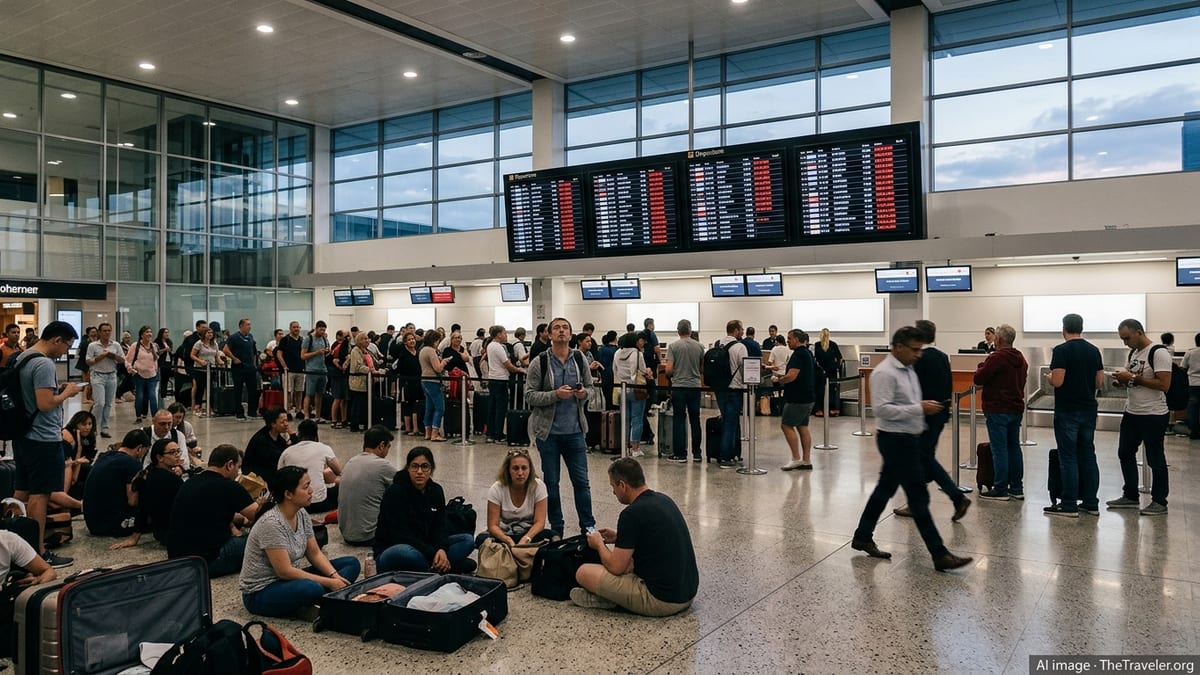
New border system collides with record holiday demand
Industry assessments highlight that the European Union’s new Entry/Exit System, introduced in April for non-EU nationals, is already lengthening border processing times at several popular destinations. Reports indicate that the biometric checks, which capture fingerprints and facial images and replace manual passport stamping, have in some cases doubled or tripled the time needed to clear controls for passengers from countries such as the UK.
The warning comes just as airports and tour operators forecast one of the busiest summer seasons since before the pandemic. Civil aviation data and airport updates suggest that outbound leisure traffic from Britain is surging, with regional hubs from Newcastle to Birmingham reporting record or near-record half term volumes and strong forward bookings into July and August. With school holidays concentrating departures into a few peak weekends, analysts caution that even modest delays at border posts can rapidly build into multi-hour queues.
Airline and airport briefings emphasise that the risk is greatest at big Mediterranean gateways and transfer hubs where several UK-bound flights depart within narrow time windows. If kiosks fail, staff shortages bite or large numbers of first-time EES users need assistance, the flow can quickly slow to a crawl, leaving passengers in snaking lines at passport control and at risk of missing flights home.
Some travel commentators note that while the new checks apply to all non-EU visitors, the UK’s position outside the bloc means millions of British tourists are now subject to procedures that previously did not apply to them. That shift, combined with the sheer volume of summer traffic from the UK to European beach and city destinations, is magnifying the impact at particular airports.
Six-hour queues flagged at key European hubs
Recent forecasts from airline trade bodies and travel industry monitoring sites indicate that queues of “three, four, five, six hours” are considered a realistic worst-case scenario at certain European airports if current bottlenecks are not resolved before the busiest weeks. Coverage in national and specialist travel media points to Spanish, Portuguese, Italian and some French airports as particular pressure points, especially at the height of school holidays when charter and low-cost flights tend to land and depart in waves.
Reports from the first full weeks of EES operation describe sharply contrasting experiences across the continent. At some hubs the rollout has been relatively smooth, with new kiosks and staffing plans keeping waits close to pre-change norms. At others, technical glitches and inadequate staffing have already led to extended lines and accounts of passengers standing for several hours, particularly at departure passport control when multiple UK flights leave within a short period.
Individual airports have drawn attention for especially challenging days. Accounts from travellers returning from popular Spanish islands and Greek resorts during recent half term peaks describe queues stretching across departure halls as manual workarounds replaced malfunctioning biometric systems. According to published coverage, several services reportedly departed with large numbers of booked passengers still in border queues, while others required last-minute gate changes and delays as ground teams tried to process backlogs.
Industry analysis also notes that large “origin and destination” hubs are not the only concern. Smaller regional airports that cater heavily to package holidays can become quickly overwhelmed if three or four flights from the UK land close together, particularly where terminal space for queueing is limited and local police units responsible for border checks have not expanded at the same pace as tourist traffic.
Millions of Britons heading abroad this summer
Official tourism statistics for recent years underline the scale of potential disruption. Pre-pandemic figures show tens of millions of trips from the UK to Europe annually, with more recent datasets indicating that outbound leisure travel has rebounded strongly as restrictions eased. Commentators examining government travel data note that Europe continues to account for the vast majority of overseas holidays by UK residents, from short city breaks to extended beach stays.
The timing of this summer’s pressures is particularly sensitive. The first full school holiday period since the EES became operational coincides with pent-up demand from families who delayed big trips during the cost-of-living squeeze. Package operators and airlines report brisk sales to Spanish costas, the Greek islands, Portugal and Italy, with UK routes feeding into medium-sized regional airports as well as major hubs.
As a result, travel planners warn that even if only a minority of airports experience severe problems, the absolute number of Britons exposed to long waits could still be high. A single Saturday at the start or end of a holiday window can see tens of thousands of UK passengers pass through a single European airport, magnifying the impact of any IT failure, staff shortage or local policy change on queues at passport control.
In the UK itself, many airports state in public updates that security and check-in performance has improved compared with the post-pandemic recovery years, with the focus of concern now shifting to overseas border posts. However, transport analysts emphasise that knock-on effects, such as delayed inbound aircraft or missed connections, may still be felt by passengers departing from British terminals.
Airlines adjust guidance as delays mount
Against this backdrop, several carriers with large UK customer bases have updated their public advice to encourage earlier arrival at European airports for return flights to Britain. According to coverage from broadcasters and travel outlets, at least one major low-cost airline is now routinely telling UK-bound passengers to be in the terminal three hours before departure, highlighting the risk that prolonged border queues could lead to missed flights with limited or no compensation.
Other airlines are reported to be adjusting their schedules, ground handling contracts and staffing plans to cope with the new reality of longer processing times. Some have added extra turnaround time for aircraft at known bottleneck airports, while others are reconfiguring check-in opening hours so that passengers can clear security and reach border control earlier in the day, smoothing the peaks that currently see thousands converging on a small number of gates.
Travel insurance specialists note that many standard policies do not cover missed flights caused by slow-moving queues once passengers are already inside the airport, unless there is a clearly defined extraordinary event. Consumer advocates therefore suggest that travellers pay close attention to the guidance issued by airlines and airports, since arriving significantly earlier than before may be one of the few practical levers individuals can pull to protect themselves.
The evolving picture has also prompted calls from industry groups for greater coordination between national governments, border agencies, airports and carriers. Trade bodies argue in public submissions and interviews that without joint planning on staffing, infrastructure and contingency protocols, the new border rules risk undermining hard-won gains in punctuality and customer confidence achieved since the turbulence of earlier post-pandemic summers.
What UK travellers can expect in the coming weeks
Looking ahead to the core summer holiday period, forecasters suggest that queues will remain highly variable by country, airport and even time of day. Early morning and late-evening peaks when multiple package and low-cost flights cluster remain the highest-risk windows for long waits, particularly at airports whose EES infrastructure has struggled in initial testing. Conversely, midweek and mid-afternoon departures at larger, well-resourced hubs may see delays little different from previous years.
Publicly available guidance from airports and tourism bodies typically urges passengers to check their terminal’s specific advice before travelling, as local rules on liquids, cabin baggage and arrival times can differ widely. While some UK hubs have relaxed security rules thanks to new scanners, others continue to apply older limits, and inconsistent preparation by travellers continues to contribute to bottlenecks at screening points.
For millions of Britons, the prospect of standing for several hours in crowded, often poorly ventilated departure halls is emerging as an unwelcome feature of the 2026 summer getaway narrative. Travel commentators warn that those with young children, reduced mobility or tight onward connections are likely to feel the strain most acutely, especially where shaded or seated waiting areas are scarce.
Despite the warnings, analysts stress that the worst-case six-hour queues are not expected to be universal. Many passengers will still pass through in under an hour, particularly away from the busiest weekends. Yet with the first full EES summer coinciding with a powerful rebound in European holiday demand from the UK, the risk of extreme delays is significant enough that travellers are being advised to plan cautiously and build in far more time at the airport than in previous years.