

More news on this day
Corporate travelers crisscrossing the United States are quietly rewriting their flight playbooks as New York’s John F. Kennedy International Airport is singled out in fresh research as the nation’s most stressful major hub, a designation that coincides with a bruising season of mass cancellations, hours-long security queues and terminal gridlock across the East Coast.
Get the latest news straight to your inbox!
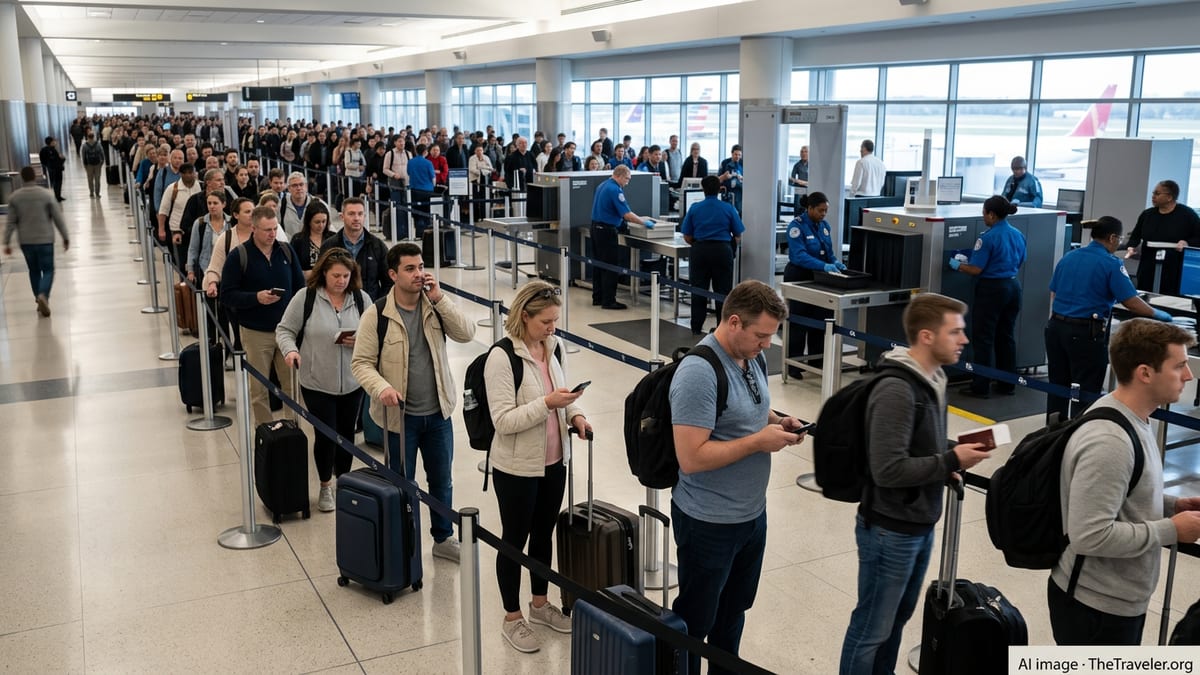
New Index Puts JFK at the Top of the Stress League Table
A newly published airport stress index drawing on federal on-time performance data, schedule filings and passenger experience indicators ranks John F. Kennedy International Airport as the most stressful airport in the United States among large hubs. The composite score factors in flight delays and cancellations, congestion on access roads, terminal crowding and the time needed to move from curb to gate during peak periods. Analysts note that JFK’s high volume of international traffic and heavy dependence on complex, long-haul operations amplify the impact when anything goes wrong.
Publicly available data show that JFK handled tens of millions of passengers last year, with traffic continuing to rebound toward pre-pandemic levels. That growth has outpaced many infrastructure improvements still under construction, leaving choke points in security screening, curbside drop-off and taxiways at peak times. Industry summaries point to a pattern of missed departure slots and rolling delays when weather or airspace constraints intersect with already tight schedules.
Comparative studies of U.S. hubs indicate that while airports such as Chicago O’Hare and Newark also feature prominently in disruption rankings, JFK performs worse on a combination of reliability and passenger-experience measures that matter most to frequent flyers. Surveys released in early 2026 highlight restroom conditions, distance from curb to gate, and the availability of power outlets and seating as core satisfaction drivers, all areas where JFK scores unevenly across its aging and newly built terminals.
Travel commentary and passenger reports further underscore the perception gap between flagship branding and on-the-ground reality. Social media posts and traveler forums from June describe hours-long waits in Terminal 4, overcrowded lounges and difficulty securing basic amenities during extended delays, reinforcing the view that the airport functions near or beyond design capacity on many busy days.
Wave of Cancellations Fuels East Coast Travel Chaos
JFK’s unwelcome title coincides with a turbulent operational backdrop across the national air system. Weather-driven ground stops and thunderstorms in major hubs such as Chicago O’Hare in mid-June triggered more than a thousand delays and cancellations across the United States in a single day, according to aviation incident summaries. Each disruption sent shock waves through connecting banks of flights, leaving aircraft and crews out of position for subsequent services into and out of New York.
Airline schedule trackers and industry news coverage document repeated clusters of mass cancellations since the start of 2026, driven by a mix of severe winter storms, airspace restrictions related to geopolitical events, and technology upgrades at major carriers. When those events intersect with already congested coastal hubs such as JFK, LaGuardia and Newark, the result for travelers has been multi-hour tarmac waits, missed international connections and last-minute rebookings on already full alternative flights.
The federal government’s partial shutdown and associated staffing challenges inside aviation and border agencies have added another layer of friction. Public reporting shows that reduced staffing at security checkpoints and immigration facilities has lengthened processing times at major gateways, with New York particularly exposed because of its concentration of international arrivals. Travelers arriving during peak evening banks at JFK report security and passport-control lines that can stretch well beyond forecast processing times.
Operational stress has also been compounded by airline restructuring. Budget carriers with thinner staffing and older fleets have announced schedule cuts and consolidation at secondary airports, while legacy airlines continue to adjust networks and aircraft utilization models. In this environment, any localized outage or weather event can cascade rapidly into widespread cancellations, hitting high-traffic airports such as JFK hardest.
Corporate Travelers Reroute Around the New York Bottleneck
Corporate travel managers are increasingly responding to this volatility by redesigning route strategies to bypass the most disruption-prone hubs. Documents and guidance circulated through corporate booking portals in 2026 emphasize resiliency metrics such as historic completion factor, recovery time after major storms and average delay length, placing greater weight on reliability than on marginal fare savings.
Travel policy updates at large firms described in industry publications show a tilt away from automatic routings through JFK when viable alternatives exist. Many corporate programs now steer employees toward less congested airports in the New York region or via inland hubs with more stable performance, even when doing so adds a short additional leg. For trips between major business centers, routings via airports cited as having lower rates of long delays and cancellations are gaining favor.
Corporate travelers themselves are also making more conservative choices. Anecdotal reports from frequent flyer communities suggest a shift toward first-bank morning departures, longer connection windows and greater use of smaller regional airports that offer shorter security lines and easier ground access. Some road warriors report routing transatlantic trips through mid-continent hubs to avoid the risk of misconnecting in New York during the evening rush.
The result is a subtle but significant rebalancing of demand. While JFK remains a critical global gateway and continues to attract high-yield premium traffic, some high-frequency corporate travelers are reallocating loyalty to carriers and hubs perceived as more predictable. Over time, analysts suggest, that shift could influence how airlines schedule flights, position aircraft and allocate lounge and gate investments across the Northeast corridor.
Ground Access, Terminals and Security Lines Drive Stress Levels
Beyond raw cancellation statistics, the new stress index highlights how airport design and landside access contribute to traveler anxiety. New York’s crowded road network, limited rail capacity at peak hours and frequent construction projects on approaches to JFK all add substantial uncertainty to door-to-door journey times. Publicly available congestion data for the Van Wyck Expressway and surrounding connectors consistently place the corridor among the most traffic-clogged in the region.
Inside the terminals, a patchwork of new and legacy facilities produces an uneven experience. While certain renovated concourses showcase upgraded security checkpoints, modern concessions and expanded seating, others continue to struggle with cramped gate areas, limited food options at off-peak hours and scarce charging points. When irregular operations strand planeloads of passengers for long stretches, these shortcomings become front and center.
Security wait times have emerged as a particular pain point during the 2026 travel season. Government staffing pressures and heightened security protocols, combined with surging passenger volumes, have produced frequent early-morning and late-afternoon peaks where queues at JFK extend well beyond typical screening targets. Carriers have responded by urging passengers to arrive earlier, which in turn further saturates curbside areas and check-in halls.
Surveys released this year by airline trade groups show that concise curb-to-gate transfer times, clean facilities and reliable connectivity are now among the top criteria travelers use to rate airports. In that context, JFK’s blend of intense demand, aging infrastructure in certain terminals and external road congestion creates a challenging environment, especially for time-sensitive corporate passengers on tight itineraries.
Carriers Adjust Networks to Contain Disruption
Airlines are not standing still in the face of mounting traveler frustration. Several carriers have announced schedule trims, hub consolidations and ground-time adjustments intended to improve resilience and reduce the probability of cascading cancellations. Industry analyses of schedule filings for the summer 2026 season indicate that some airlines have modestly reduced peak-hour movements at their busiest hubs and added slack to turn times for aircraft operating through constraint-prone airports.
Policy changes are also reshaping how carriers respond when flights do fail to operate. Updated customer-rights guidance circulated this month by major U.S. airlines outlines clearer rules for meal vouchers, hotel accommodations and ground transportation when cancellations are within airline control. Corporate travel departments are incorporating those updates into training materials, helping employees understand when they are entitled to rebooking assistance or refunds and when weather or air traffic constraints limit compensation.
Low-cost and ultra-low-cost carriers, some of which have experienced acute operational strains, are reevaluating their exposure to congested airports. Several have shifted capacity to secondary cities or terminated service at particularly delay-prone hubs in an effort to stabilize operations and cut costs associated with disruption recovery. Industry commentary notes that these moves can ease some pressure on the most crowded terminals while giving travelers more point-to-point options away from the largest airports.
At JFK, airlines and airport operators are pressing ahead with multi-year terminal redevelopment projects intended to consolidate operations, expand gate capacity and modernize passenger facilities. While those works have contributed to short-term construction-related headaches, stakeholders argue that the upgrades are essential to address the structural causes of travel stress. Until they are completed, however, many business travelers appear determined to reduce their exposure by rerouting through airports where the risks of cancellations and gridlock appear lower.