


More news on this day
Air travel across the trans-Tasman corridor and Australia’s busiest east coast trunk routes was significantly disrupted on June 9, with operational data and published coverage pointing to 249 delayed flights and three cancellations affecting passengers in Melbourne, Sydney and Auckland.
Get the latest news straight to your inbox!
Where the Disruptions Hit Hardest
Operational tracking for June 9 shows that delays were concentrated on the high-frequency Melbourne–Sydney corridor and on key Auckland links to both Australian hubs. Publicly available flight-status boards for Qantas, Jetstar, Virgin Australia and other carriers listed rolling departure and arrival hold-ups across the day, with many services operating well behind schedule.
Melbourne Airport, Australia’s second-busiest gateway, recorded a series of late-running domestic departures to Sydney, Brisbane and Adelaide, along with knock-on delays to international services leaving later in the evening. Sydney experienced similar bottlenecks, with crowded mid-morning and late-afternoon banks of flights pushing turnaround times beyond their scheduled slots.
On the New Zealand side, Auckland services into and out of Australia were affected by the wider regional disruption. While most flights ultimately operated, a cluster of services to Melbourne and Sydney departed later than scheduled, contributing to the overall total of 249 delayed movements.
Despite the scale of the disruption, only three flights were recorded as outright cancellations across the three airports, according to aggregated schedule and tracking data. The low cancellation count indicates that airlines generally opted to delay and consolidate services rather than remove them entirely from the schedule.
Weather and Network Pressures Behind the June 9 Disruption
Australian aviation performance reports for 2026 highlight weather volatility at Melbourne and Sydney as a persistent operational challenge, and June 9 followed that pattern. Industry analyses released this year point to adverse conditions and tight runway capacity at both airports as recurring drivers of ground delay programs and airborne holding.
In parallel, trans-Tasman schedules remain dense, particularly in the morning and late afternoon peaks, leaving limited space for recovery when operations start to slip. Network overviews for the Australian aviation sector describe short-term volatility as a defining feature of recent months, with weather at Melbourne and Sydney frequently cited among the main causes of delays.
Auckland’s role as New Zealand’s primary long-haul and regional hub means it is highly exposed to knock-on effects from Australian congestion. If departures from Melbourne or Sydney push back late, aircraft and crews often arrive behind schedule in Auckland, narrowing the turnaround window and increasing the likelihood of downstream disruption.
While June 9 did not see the widespread ground stops sometimes imposed during severe storms, the interplay of local weather, peak-period congestion and already strained schedules contributed to a day of sustained, smaller delays that added up across the network.
How Travelers Were Affected on Key Routes
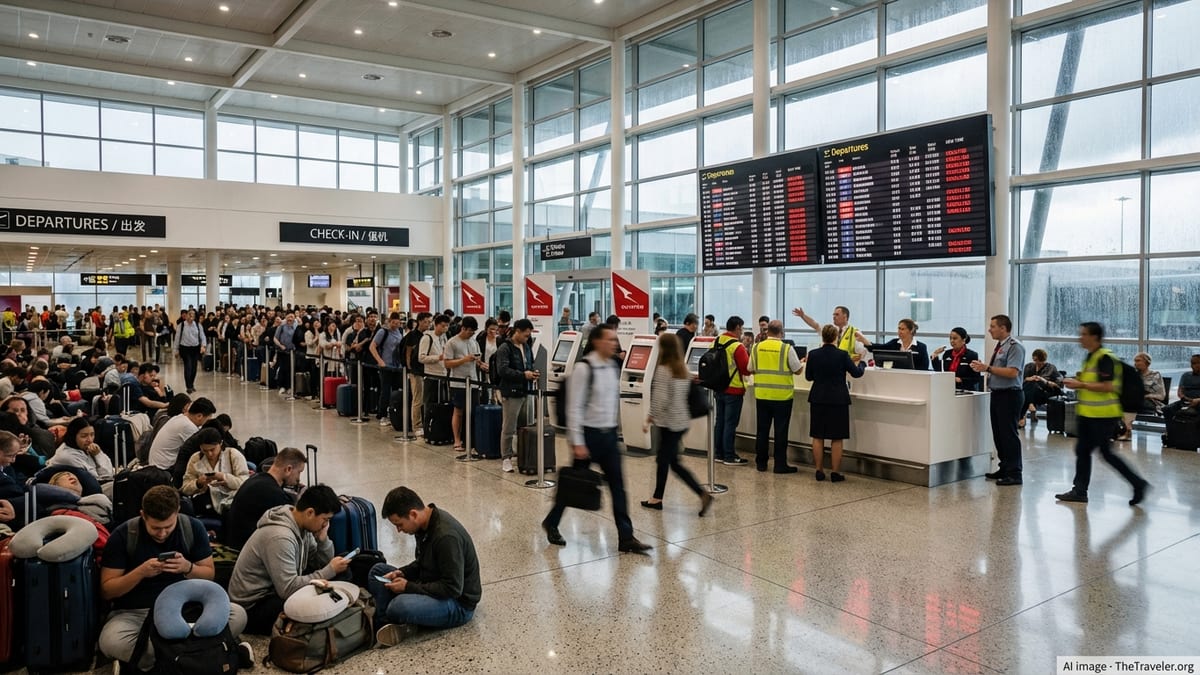
On the heavily used Melbourne–Sydney route, one of the busiest city pairs in the region, passengers encountered queues at check-in and security as banks of delayed departures stacked up. Many services left 30 to 90 minutes behind schedule, based on live-tracking archives, with late arrivals in Sydney in turn affecting aircraft allocated to onward sectors.
Trans-Tasman travelers between Sydney, Melbourne and Auckland saw similar patterns. Some morning and evening services departed well after planned off-block times, while others were turned around quickly to help airlines restore their timetables. For many passengers, the disruption manifested as missed ground connections, shortened layovers and late-night arrivals rather than outright trip cancellations.
With only three recorded cancellations, most ticket-holders were eventually moved on the same day, often via alternative services or re-timed flights. However, the volume of delayed operations placed pressure on customer-service desks and digital rebooking channels, and travelers reported longer waits for assistance and updated information.
Frequent flyers in online forums noted that June 9 followed a familiar pattern seen during other recent weather-affected days: early minor delays that compound through the afternoon, pushing the final wave of departures closer to curfew times in Sydney and increasing the risk of last-minute schedule changes.
What Passengers Need to Do Now
Travel experts and aviation guidance consistently emphasize preparation on days when disruption levels spike. For those with upcoming trips through Melbourne, Sydney or Auckland, the June 9 experience underlines the importance of monitoring flight status closely via airline apps and airport information boards, particularly from the evening before travel.
Published airline policies indicate that same-day rebooking options are often available when flights are significantly delayed or rescheduled, especially on trunk routes with multiple daily frequencies. Passengers may be able to move to earlier or later flights at no additional cost when disruption is clearly linked to operational or weather-related issues.
Travel insurance documents commonly list severe delays and cancellations as potential triggers for claims, though coverage and thresholds vary. Passengers affected by prolonged waits on June 9 are being advised by consumer advocates to retain boarding passes, receipts and any written notifications from carriers in case they choose to pursue compensation or reimbursement under local regulations or policy terms.
For future travel in this corridor, allowing extra connection time at hubs, avoiding the tightest possible layovers and scheduling critical long-haul departures earlier in the day can reduce the risk that short-haul delays cascade into missed international flights.
How Melbourne, Sydney and Auckland Are Responding
Airport and aviation planning documents released in 2026 show that all three hubs are working on longer-term measures to handle days like June 9 more effectively. In Australia, national aviation network overviews describe a continued focus on better coordination between air traffic control, airports and airlines, with collaborative decision-making tools designed to smooth peaks and improve recovery after disruption.
Melbourne and Sydney are both investing in terminal and airfield upgrades intended to unlock additional capacity and reduce bottlenecks at key pinch points such as taxiways, gates and security lanes. These infrastructure projects are framed as essential to maintaining reliability as passenger numbers grow.
In Auckland, airport planning materials emphasize resilience, including improvements to runway and apron layouts and expanded terminal facilities to cope with weather-related surges and delayed banks of flights. The goal is to minimize turnaround times even when aircraft arrive late, helping airlines keep the rest of their schedules closer to plan.
The June 9 disruption, while moderate compared with some past storm-related shutdowns, adds to growing evidence that the trans-Tasman and domestic east coast networks remain vulnerable to relatively small shocks. For passengers, it is another reminder that even on seemingly routine travel days, conditions can change quickly and preparation remains essential.