

More news on this day
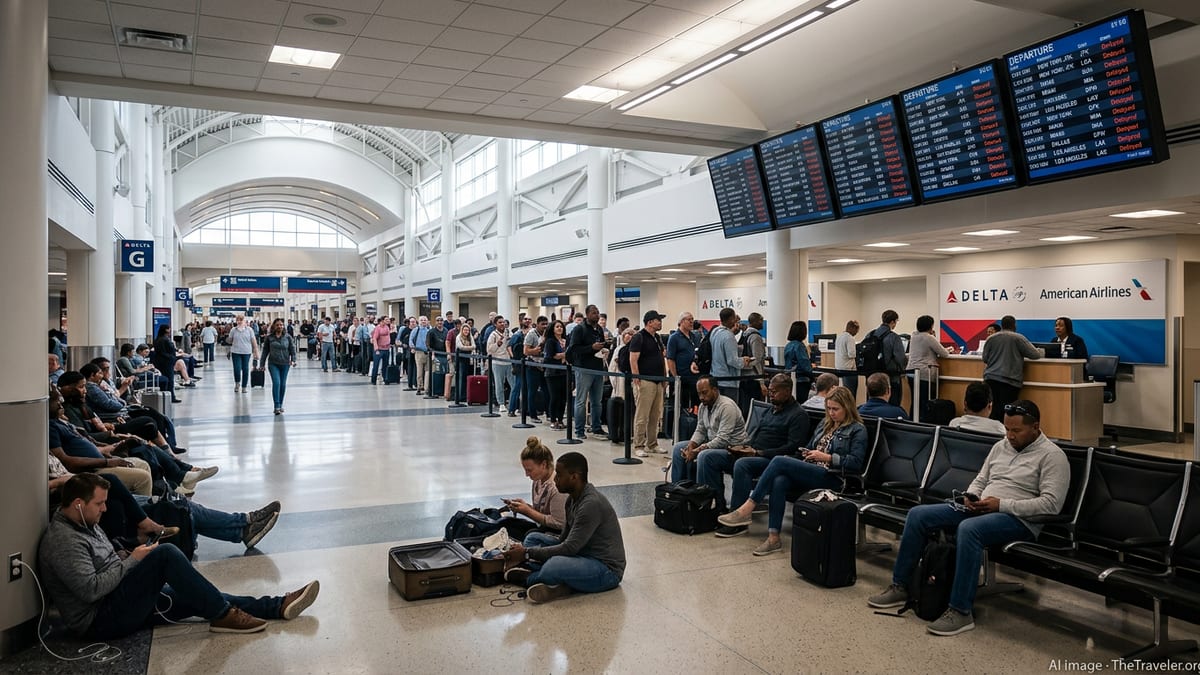
Travelers moving through Atlanta in June 2026 have faced a bruising stretch of disruptions, with 624 flight delays and 17 cancellations reported at the busy hub as major U.S. airlines contend with rolling weather issues, congested airspace and lingering operational strains that have rippled across domestic and international networks.
Get the latest news straight to your inbox!
Atlanta Hub Struggles Under Heavy Summer Demand
The disruption has centered on Hartsfield-Jackson Atlanta International Airport, one of the world’s busiest hubs and a critical transfer point for Delta Air Lines and several competing carriers. Publicly available flight-status data tracked through mid-June indicate that the 624 delayed departures and arrivals, coupled with 17 outright cancellations, have affected a mix of short-haul domestic hops and long-haul international services.
The pattern has been especially visible on trunk routes that connect Atlanta with Denver, New York and Washington-area airports, where schedule data show dense daily frequencies operated by Delta, United and Frontier. When delays build early on those routes, aircraft and crew rotations quickly fall behind, feeding later disruptions on connecting services.
Passengers connecting through Atlanta toward European gateways have also felt the impact. Community posts tracking transatlantic schedules in early June describe waves of delayed departure times on overnight flights from Atlanta to major hubs such as London, Paris and Amsterdam, before some schedules were partially restored as airlines worked through system and turnaround issues.
For many travelers, the result has been missed connections, extended waits in crowded concourses and last-minute rebookings onto alternative routings through other hubs when available seats allow.
Delta, Southwest, Frontier, American and United All Affected
While Delta remains the dominant carrier at Atlanta, the current wave of disruptions has not been confined to a single airline. Schedule and historical performance data from aviation-tracking services and federal consumer reports show that Southwest, Frontier, American and United have also experienced elevated levels of delay and limited cancellations on routes touching the Atlanta region.
Delta’s extensive banked hub structure means that a single period of irregular operations can affect dozens of departures within a short window, particularly on regional services feeding the Southeast and Midwest. Real-time data compiled in mid-June list multiple Delta-operated departures to cities such as Denver and Fayetteville running behind schedule, reflecting both local conditions and the knock-on effects of late-arriving inbound aircraft.
Southwest and Frontier, which operate high-utilization point-to-point networks, are vulnerable when aircraft arriving from other parts of the United States reach Atlanta late. When those inbound flights are delayed by earlier weather or air-traffic constraints, subsequent legs on to other cities often inherit the delay. For ultra-low-cost carriers, where schedules are tightly packed, even modest disruption can cascade across multiple rotations in a single day.
American and United, though smaller players at Atlanta, rely on the airport as a spoke feeding their own hubs. When operations tighten in Atlanta, the reverberations can be felt at airports such as Dallas–Fort Worth, Charlotte, Chicago O’Hare, Houston and Washington Dulles, where missed connections and misaligned arrival banks complicate recovery.
Weather, Airspace Congestion and IT Issues Combine
Weather has been a significant backdrop to the June difficulties. Historical climate records for Atlanta in mid-June show a pattern of hot, humid afternoons, with scattered thunderstorms regularly rolling across the metropolitan area. Even short-lived storms can trigger ground stops, runway configuration changes and tighter spacing between arrivals, reducing the rate at which aircraft can safely land and depart.
These local constraints sit atop broader congestion within the U.S. National Airspace System. Federal consumer data for peak summer periods in previous years highlight that air-carrier causes, extreme weather and national airspace delays routinely account for the majority of late arrivals across major airlines. When multiple hubs along the East Coast and in the central United States are affected on the same day, routings through Atlanta have little room to absorb additional disruption.
Technology has also played a role. In early June, passengers and aviation watchers reported that a system issue temporarily flagged a large number of Atlanta-originating transatlantic flights as delayed, even as some departure times were later restored. While some of these changes appeared to be schedule adjustments rather than outright cancellations, the shifting information contributed to uncertainty for long-haul travelers and forced many to monitor status updates closely in the hours before departure.
Together, operational complexity, intense summer demand, volatile weather and the heavy reliance on tightly coordinated hub-and-spoke banks have created a fragile environment in which relatively small shocks can spark widespread timetable disruption.
Impact on Domestic and International Travelers
The 624 delays and 17 cancellations recorded through June have translated into concrete consequences for travelers across the United States and abroad. On domestic routes, passengers connecting in Atlanta toward medium-size cities have reported extended ground time as crews awaited connecting passengers, baggage and catering that arrived late from other flights caught up in the rolling disruptions.
On international services, even moderate delays at Atlanta can have outsized effects. Flights departing late for Europe may still arrive in time for morning connections, but tight margins at busy airports such as London Heathrow, Paris Charles de Gaulle and Amsterdam can leave little flexibility for onward travelers. In some cases, missed connections have meant overnight stays or rebookings through alternative hubs, especially on peak travel days when seats are scarce.
The disruptions have also burdened customer-service channels. Travelers have turned to digital rebooking tools, airline apps and airport kiosks to search for open seats as schedules shifted throughout the day. In many cases, same-day alternatives required detours through secondary hubs or involved red-eye departures, prompting some passengers to delay trips or seek refunds where policies allowed.
Business travelers and families on early-summer vacations have faced particular uncertainty, with irregular operations affecting not only flights but also carefully timed cruise departures, tours and event attendance. The operational strain has highlighted how tightly many travel itineraries are calibrated around what is ordinarily a highly reliable Atlanta hub.
What Travelers Can Expect for the Remainder of June
With the peak of the summer travel season building, there are indications that Atlanta and its major carriers will continue to face pressure through the rest of June. Schedule data show that airlines plan to operate dense frequencies on popular domestic routes and maintain an aggressive slate of transatlantic and leisure-oriented services, leaving limited slack to absorb further weather or airspace disruptions.
Past federal consumer reports on summer performance suggest that, during busy months, overall completion rates for major U.S. carriers typically remain high, but the share of flights arriving late can climb when thunderstorms and congestion intensify. That pattern implies that most flights to and from Atlanta are still likely to operate, yet with a higher-than-usual risk of delay compared with off-peak periods.
Travelers with itineraries involving Atlanta in late June are using a variety of strategies to manage the risk. These include targeting early-morning departures, building longer connection times, monitoring flight-status tools frequently on the day of travel and considering alternate routings through secondary hubs when available.
As airlines move deeper into the summer schedule, the experience of 624 delays and 17 cancellations at Atlanta in June 2026 underscores how quickly stress can accumulate across a tightly wound U.S. air network, and how central this single hub remains to both domestic and international travel flows.