

More news on this day
Vancouver International Airport is facing a fresh wave of disruption as at least eight flights operated by Air Canada Rouge, Jazz and WestJet were cancelled, with knock-on delays rippling across North America and into key Asian gateways, according to live flight-tracking data and local media reports.
Get the latest news straight to your inbox!
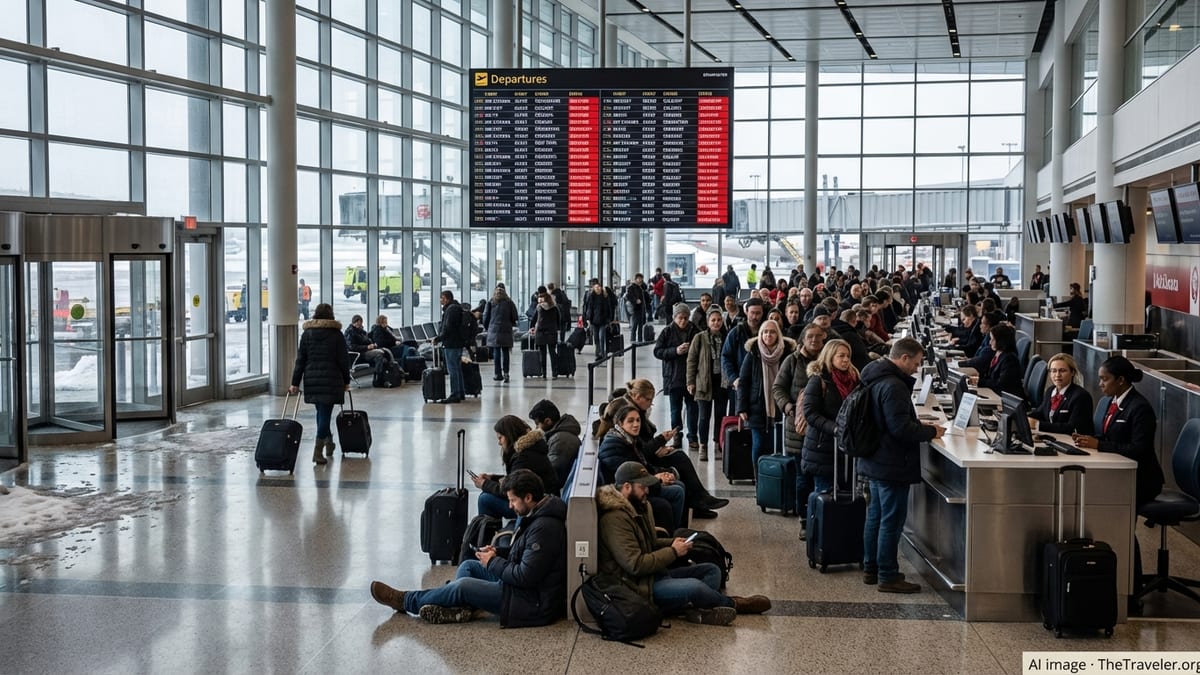
Cluster of cancellations hits major Canadian carriers
Publicly available flight-status boards for Vancouver International Airport on June 19 indicate that a small but concentrated set of cancellations affected services operated under the Air Canada Rouge leisure brand, regional affiliate Jazz, and Calgary based carrier WestJet. The affected flights were primarily short and medium haul services linking Vancouver with other Canadian hubs and U.S. west coast cities that act as onward connection points to Asia.
Although eight cancellations represent a fraction of total daily movements at Vancouver, the disruption has been amplified by tight summer schedules and high load factors. Several of the grounded flights were scheduled to feed long haul departures to Japan, South Korea and Southeast Asia, leaving passengers with missed connections and complex rebooking scenarios.
Tracking services show that the cancellations occurred in clusters over a few hours, rather than being spread evenly throughout the day. Travel analysts note that this pattern often reflects upstream aircraft and crew imbalances rather than a single local operational issue at Vancouver itself.
Social media posts from travelers at Vancouver and connecting airports in the United States report last minute gate changes, rolling departure times and overnight misconnects as airlines attempted to rethread aircraft and crews back into position.
Ripple effects across North America and Asia
The immediate impact was felt on domestic and transborder routes, but the consequences extended much further afield. Vancouver is a major western gateway for itineraries linking Canadian and U.S. origin cities with Asian destinations, and any break in the chain of feeder flights can quickly cascade into long haul disruption.
Passenger accounts from airports including Calgary, Toronto and several west coast U.S. hubs describe missed departures to Tokyo, Seoul and Hong Kong after inbound services from Vancouver failed to operate. In some cases, travelers were rebooked onto later flights that were already close to capacity, resulting in extended layovers and involuntary overnight stays.
Reports from Asia bound passengers point to uncertainty around baggage handling and re-routing, with some travelers advised that their checked luggage might follow on later flights. Travel forums also highlight challenges securing updated onward connections once an initial segment from Vancouver was cancelled.
Operational data from other North American airports show a noticeable uptick in late evening arrivals from alternative routings, as airlines attempted to protect long haul schedules by rerouting passengers through different hubs when Vancouver based connections were no longer viable.
Weather, staffing and scheduling pressures converge
While no single root cause has been formally detailed, the pattern at Vancouver reflects broader pressures on Canadian carriers this summer. Recent coverage of WestJet operations across western Canada has pointed to a combination of aircraft availability constraints, crew scheduling challenges and localized weather events that can quickly trigger a chain reaction of delays and cancellations.
Air Canada Rouge and Jazz, which provide a mix of leisure oriented and regional feeder services, are tightly integrated into Air Canada’s mainline network. When disruption emerges on one part of the system, particularly in western Canada, it can quickly propagate through shared aircraft rotations and crew rosters, leading to preemptive cancellations of shorter segments to preserve longer haul flights.
Industry analysis of Canadian flight performance in 2026 notes that carriers are operating with relatively little slack in their schedules. High demand, limited spare aircraft and ongoing training pipelines for pilots and ground staff mean that even routine operational issues, such as minor technical checks or weather related flow restrictions, can push a day’s operation off balance.
Air travel advocacy groups in Canada have also highlighted how infrastructure projects and air traffic control staffing constraints at certain western airports can magnify the impact of storms or high winds, contributing to capacity reductions that reverberate throughout the network.
Passenger rights and compensation options
For travelers caught in the Vancouver disruption, Canada’s Air Passenger Protection Regulations set out varying levels of assistance and potential compensation depending on the size of the airline, the length of delay and whether the cause is considered within the carrier’s control. Publicly available guidance from consumer agencies stresses that documentation is critical, including boarding passes, written notices of cancellation and receipts for out of pocket expenses.
In practice, passengers report a mixed experience when seeking remedies. Some travelers affected by the Vancouver cancellations state that they were proactively offered hotel vouchers, meal credits and automatic rebooking on the next available flights. Others describe lengthy waits at customer service counters and difficulty reaching call centers during peak disruption windows.
Travel experts recommend that affected passengers monitor both airline apps and airport departure boards in real time, as rebooking options can appear and disappear quickly when seats are scarce. They also advise keeping records of all communications with carriers and, where applicable, filing formal complaints with the Canadian Transportation Agency if compensation claims are disputed.
Given that some itineraries involved onward travel to Asia, additional considerations such as missed tours, non refundable hotel nights and visa time limits may come into play. In these cases, independent travel insurance policies, if purchased, can offer a secondary avenue for reimbursement beyond what the airline provides.
What travelers through Vancouver should expect next
Operational data from past disruption events at Vancouver suggests that the immediate wave of cancellations and delays may take at least one to two days to fully resolve, as aircraft and crews return to their normal rotations. Travelers with departures scheduled within the next 24 to 48 hours are being advised by travel advisers to build in extra time at the airport and to verify their flight status repeatedly in the hours leading up to departure.
Given ongoing capacity discipline by Canadian airlines and recent network adjustments to U.S. and Asian routes, even a limited number of cancellations can leave few same day alternatives on heavily booked flights. This is particularly true for overnight transpacific sectors, which typically operate once daily on many city pairs.
For those yet to book travel through Vancouver this season, industry observers suggest favoring itineraries with longer connection windows and, where possible, booking all segments on a single ticket to ensure that airlines carry responsibility for missed connections. Travelers with critical time sensitive trips are also being encouraged to consider early morning departures, which are statistically less exposed to knock on delays from earlier disruptions in the day.
As peak summer travel continues, Vancouver’s latest bout of cancellations involving Air Canada Rouge, Jazz and WestJet underscores the fragility of tightly wound schedules across North America and Asia. For passengers, close monitoring, flexible planning and a clear understanding of their rights remain essential tools for navigating an unpredictable travel landscape.