


More news on this day
A powerful late June storm that swept across Northwest Indiana contributed to a freight train derailment on the South Shore Line’s Grand Calumet River Bridge near East Chicago, triggering a cascading disruption that continues to affect commuter rail passengers between Indiana and Chicago.
Get the latest news straight to your inbox!
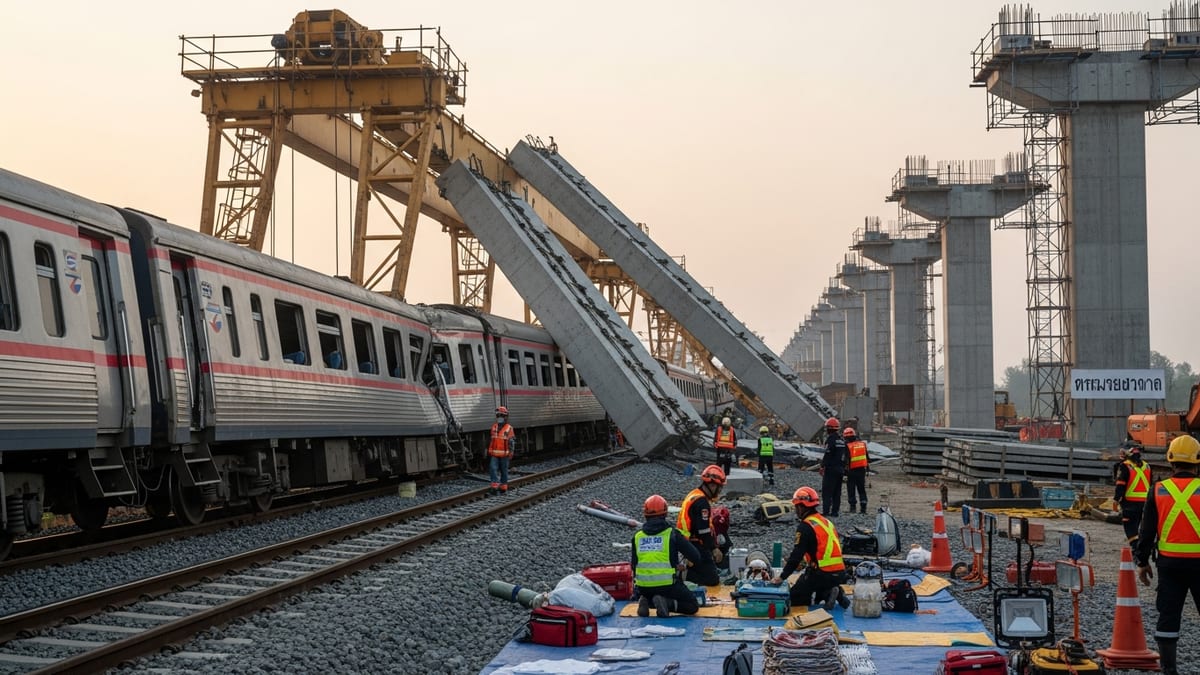
Derailment on Grand Calumet River Bridge Severed Power
Publicly available information from the Northern Indiana Commuter Transportation District indicates that the incident occurred on the evening of June 24, 2026, when an empty freight train derailed on the Grand Calumet River Bridge between the East Chicago and Hammond Gateway stations. Thirteen freight cars left the tracks, damaging the bridge area and key elements of the South Shore Line’s electrical infrastructure.
Reports indicate that the derailed cars struck support structures for the overhead catenary system, which supplies electricity to South Shore Line trains. The resulting damage led to an immediate power loss along a critical stretch of the corridor, forcing an abrupt suspension of all train movements through the affected zone.
Local and regional news coverage described how the derailment followed a line of intense thunderstorms moving across the Chicago and Northwest Indiana region earlier in the day. While full investigative findings on the precise sequence of events are still pending, early reporting has consistently linked the derailment and power outage to the severe weather system that moved through the area.
No serious injuries were reported in connection with the derailment, but the location and extent of the damage created a bottleneck on one of the region’s most important commuter rail links, setting the stage for days and then weeks of constrained passenger service.
South Shore Line Forced Into Emergency Shutdown
Shortly after the derailment, South Shore Line service was halted across much of the route between Chicago and northern Indiana communities. Public service alerts and news bulletins show that on June 25, 2026, all remaining trains were suspended while crews assessed damage near East Chicago and Gary and began clear-up operations.
With power lines down on the bridge and adjacent infrastructure compromised, there was no safe way to move electric multiple-unit trains through the area. Operators therefore turned to buses to maintain at least limited connectivity, substituting motor coaches for rail service through the affected segment and directing riders toward remaining operational sections of the network.
Commuters traveling between Chicago and cities such as Hammond, Gary, Michigan City, and South Bend quickly felt the effects. Morning and evening rush-hour patterns were upended as riders were told to expect lengthy delays, revised schedules, and extended travel times while trains ended short of the damaged area and bus shuttles bridged the gap.
Media coverage from Indiana and Chicago highlighted scenes of crowded platforms, confusion over revised operations, and long lines for substitute buses. For many regular riders, the derailment compounded existing frustrations tied to ongoing construction, corridor modernization, and schedule changes along the South Shore Line.
Limited Rail Service Returns but Disruptions Persist
Within days, the railroad began restoring partial operations. Service updates show that by the end of June the South Shore Line was running a reduced schedule, relying on a weekend or holiday timetable for core routes while retaining bus shuttles between Miller and Hegewisch and other key stations near the damaged segment.
This hybrid operation allowed some trains to resume running over intact portions of the Lakeshore Corridor and the new Monon Corridor, but normal weekday frequency remained out of reach. The bridge area and surrounding electrical infrastructure required complex repairs, including replacement of catenary support structures, tensioning of new wire, and testing of signaling and power systems.
Reports indicate that disruptions continued into July, with riders urged to plan for longer journeys and to check schedules frequently. Some railcars were staged away from the damaged area to maintain limited capacity, while contractors and railroad crews worked extended shifts on the bridge and along the approaches.
Despite the challenges, publicly available updates emphasized that the line’s broader capital improvements, including recently opened extension projects, remained in service where possible. This approach sought to preserve access for communities farther east, even as the bottleneck near East Chicago restricted direct, one-seat trips to downtown Chicago.
Riders Offered Ticket Relief as Recovery Timeline Extends
As it became clear that the derailment damage would not be resolved within a few days, the South Shore Line moved to provide some financial relief to affected passengers. According to published coverage, the railroad extended the validity of June monthly passes through the end of July, giving frequent riders additional time to use tickets purchased before the derailment.
The extension acknowledged the cumulative impact of reduced train frequencies, substitute busing, and unpredictable travel times. For commuters who depend on the South Shore Line for daily access to jobs and schools in Chicago, the combination of weather, infrastructure damage, and ongoing repairs translated into missed connections and the need to adjust work schedules or seek alternate routes.
Regional media reports and rider commentary have underscored how vulnerable commuter rail systems can be to single points of failure, particularly on bridges and electrified segments where power infrastructure is concentrated. The June derailment created an outage precisely at such a chokepoint, amplifying its effects across the wider network.
At the same time, the episode has drawn attention to contingency plans, including bus substitutions, cross-honoring of tickets on other modes where available, and communication strategies during fast-moving emergencies. How these measures performed during the June storm and derailment is likely to factor into planning for future extreme weather events in the region.
Extreme Weather Highlights Rail Vulnerabilities
The June storm and subsequent freight derailment fit into a broader pattern in which intense weather has increasingly affected rail operations across the Midwest. Heavy rain, high winds, and localized flooding can soften track beds, damage signal systems, and topple structures that carry overhead power, all of which heighten the risk of service interruptions.
Transportation analysts note that mixed-use corridors, where commuter and freight trains share infrastructure, can be especially exposed. An incident involving a freight consist can ripple outward to affect thousands of daily passenger trips, particularly when it occurs near a crucial junction or bridge such as the Grand Calumet River crossing on the South Shore Line.
In response, rail operators around the region have been investing in track reinforcement, upgraded drainage, and more resilient electrical infrastructure. The South Shore Line’s ongoing expansion and modernization efforts are part of this trend, though the June derailment illustrates that even recently improved infrastructure can be tested by severe storms and unexpected equipment failures.
For travelers, the June event serves as a reminder to monitor service alerts closely during storm season and to build extra time into itineraries when major weather systems pass through the Chicago and Northwest Indiana corridor. For planners and operators, the derailment reinforces the need to harden key assets and refine emergency playbooks to keep people moving when nature and infrastructure intersect in disruptive ways.