


Kahului Airport on Maui is where most visitors first step into island life, and for many, it is also where the practical questions begin. Should you rent a car right at the airport or look off-site for a better deal? How much should you expect to leave as a deposit, and what insurance do you actually need on Maui’s roads? This guide walks you through the Kahului Airport car rental experience from arrival to return, using real-world examples to help you decide whether a rental car is worth it for your trip.
Get the latest updates straight to your inbox!
How the Kahului Airport Rental Car Center Works
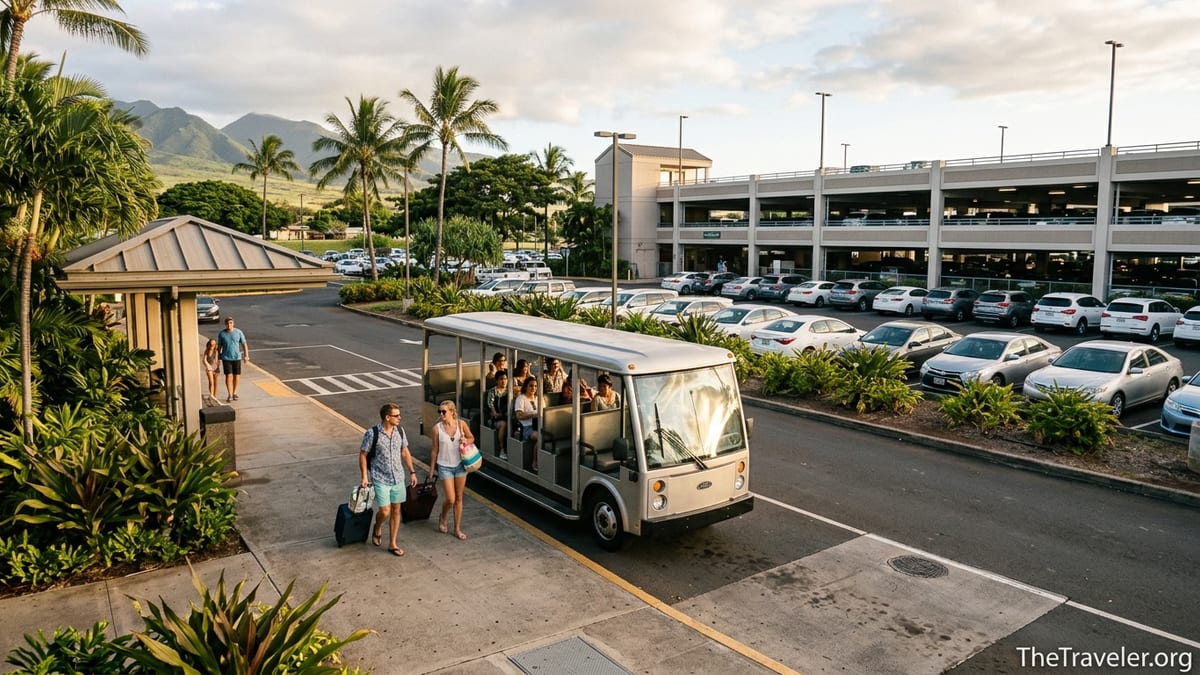
Kahului Airport (OGG) has a consolidated rental car center on airport property, which brings nearly all the major brands into one facility. Companies such as Alamo, Avis, Budget, Dollar, Enterprise, Hertz, National, Payless, Thrifty and several newer entrants operate out of this single building at 101 Airport Road. Instead of separate courtesy buses, a small electric tram runs between the terminal and the rental car center, so you follow signs for "Rental Cars" as you leave baggage claim and board the tram at the clearly marked station.
In practice, the transfer from the terminal to the rental car center usually takes about 5 minutes once you are on the tram, and the tram itself runs frequently throughout the day. For example, a morning arrival from Los Angeles might have you off the plane at 10:15 a.m., collecting bags by 10:40 a.m., and walking onto the tram by 10:45 a.m. Even when several flights arrive within a short window, the system is designed to move passengers continuously, so you are rarely waiting more than one or two tram cycles.
Once inside the rental car center, you will find all the counters arranged along the main concourse, with covered walkways leading directly to the parking decks where vehicles are staged. If you are enrolled in a loyalty program such as National Emerald Club or Hertz Gold Plus Rewards, you may be able to bypass the main counter and go straight to a designated aisle or self-service kiosk. This can cut your pickup time from 30 minutes in a busy period to around 10 minutes, which matters after a long trans-Pacific flight.
The facility is designed for straightforward returns as well. Highway signs for "Rental Car Return" will guide you back to the center, where you follow overhead signs for your company’s return lane. Many visitors appreciate that fuel stations sit within a short drive of the airport area, making it relatively easy to top off your tank before handing over the keys.
Airport vs Off-Airport Rentals: Where Is the Better Deal?
Most visitors find it simplest to rent directly at the Kahului Airport rental car center, but there are legitimate reasons to consider off-airport options. Off-airport agencies, including some local outfits and discount brands, often maintain locations a few minutes’ drive away in Kahului or along Dairy Road and Hana Highway. These companies may send small shuttles to pick you up at the curb, or they might ask you to take a short taxi or rideshare ride to their office.
Price is usually the main difference. In high season, a compact car at an on-airport brand might run in the region of 75 to 120 dollars per day before taxes and fees, while an off-airport company could advertise a similar vehicle for perhaps 20 to 30 percent less. For a week-long trip, that gap can easily translate to 150 to 250 dollars in savings. However, you will want to factor in the cost of a taxi or rideshare from the terminal, which could run around 15 to 25 dollars into central Kahului, plus any added time or hassle after a long flight.
Service differences also matter. On-airport rentals benefit from the dedicated tram, extended operating hours tied to flight schedules, and larger fleets. That means if your inbound flight is delayed until late at night, the major brands at the rental car center are more likely to stay open or accommodate late pickups. In contrast, an off-airport office might close at 7 or 8 p.m., and if a delay pushes your arrival past closing time, you could find yourself scrambling for a hotel shuttle or last-minute rideshare instead of driving away in your own vehicle.
A good rule of thumb is to consider on-airport rentals if your schedule is tight, you are arriving late, or you will be carrying a lot of luggage or traveling with young children. Off-airport rentals may make sense if your arrival time is flexible, you are comfortable with a short shuttle ride, and you place a higher priority on saving money than on maximum convenience.
What to Expect for Deposits, Payments and Insurance
Car rental companies at Kahului Airport typically place a hold on your credit card at pickup, which covers both the estimated rental cost and a security deposit. For a mid-size car booked for a week at around 600 dollars before taxes, it is common for the total hold to fall somewhere between 700 and 900 dollars, depending on the company and any added services. Luxury SUVs or convertibles can see significantly higher holds because of the higher replacement values and risk of damage.
If you use a debit card, expect more restrictions. Some companies will require you to show a return flight itinerary, undergo an additional ID check, or accept a lower car category. Others may decline debit cards entirely for certain vehicle classes. The deposit hold may also be larger with a debit card, sometimes a flat 200 to 500 dollars on top of the anticipated rental charges, and it can take several days after return for the hold to be fully released back to your account.
Insurance is one of the most confusing parts of renting a car in Maui. At the counter you will typically be offered collision damage waiver or loss damage waiver, liability coverage, personal accident insurance and sometimes roadside assistance packages. A four-door sedan might come with a quoted base rate of 65 dollars per day, but accepting the full suite of add-ons can push the daily total closer to 100 dollars or more. Before you travel, it is worth calling your personal auto insurer to confirm whether your policy extends to rental cars in Hawaii and at what coverage limits.
Many travelers also rely on credit card benefits. Some premium cards include secondary or even primary rental car coverage when you decline the rental company’s collision waiver and pay in full with the card. For example, a traveler paying with a widely used travel rewards card might gain protection for collision and theft up to a certain dollar amount, but not for liability to other drivers. Because the fine print varies, reviewing those benefits before arrival can help you decide whether to decline coverage confidently or budget for a limited damage waiver at the counter.
Driving Around Maui: Real-World Tips and Itineraries
Once you leave the rental car center, most visitors head either toward the resort areas of West Maui (Lahaina, Ka’anapali, Napili, Kapalua) or South Maui (Kihei, Wailea). In normal traffic, the drive from Kahului Airport to Ka’anapali can take about 45 to 60 minutes, while Kahului to Wailea is typically around 30 to 40 minutes. Afternoon congestion, especially on the approach to Lahaina, can add time, so it is wise to factor in an extra 15 to 20 minutes when planning sunset dinners or activities.
Maui’s main highways are relatively straightforward. From the airport, you pick up Highway 380 and then Highway 30 to reach West Maui, or head along the Pi’ilani Highway toward Kihei and Wailea. Speed limits are generally lower than on mainland freeways, often 35 to 45 miles per hour through built-up stretches. Law enforcement does monitor for speeding, especially near towns and school zones, so taking a relaxed, unhurried approach is both safer and more enjoyable.
Several popular scenic drives require extra caution. The Road to Hana, for instance, begins from Kahului and winds along the north shore with one-lane bridges, sharp curves and frequent rain showers. Many mainstream rental contracts technically allow you to drive to Hana, but they may restrict travel beyond certain points, especially on the unpaved back side of the route near the Pi’ilani Highway. Before setting out, ask your rental agent which sections are prohibited, since damage occurring on restricted roads may be excluded from coverage.
Parking and theft prevention are also important considerations. While Maui is generally welcoming, break-ins can happen in tourist areas such as beach parking lots or trailheads. Keeping valuables out of sight or, better yet, taking them with you reduces risk. As a practical example, if you plan to stop at Ho’okipa Beach on your way from the airport to Paia, avoid leaving suitcases or camera bags visible in the backseat, and instead arrange your schedule so that you can check into your accommodation before doing extended sightseeing.
Parking at the Airport and Around the Island
Kahului Airport offers on-site public parking near the terminal for those returning rentals early or using a private vehicle during inter-island hops. Short-term rates generally start with a grace period, then rise by a few dollars for each hour up to a daily maximum. As of mid-2026, daily maximums at many Hawaii airports typically fall in a range that is competitive with other mid-size U.S. airports, though specific rates can change, so it is wise to confirm just before travel. Overnight parking is permitted in designated lots, but there is no long-term monthly parking program for travelers.
On the island, resort areas vary widely in their parking policies. Many large hotels in Wailea and Ka’anapali charge overnight parking fees for guests, which can add 20 to 40 dollars per night or more to your overall trip cost. On the other hand, vacation rentals in neighborhoods such as Kihei, Napili or residential parts of Lahaina often include one free parking space per unit. When comparing accommodation prices, it is useful to add parking fees into your mental budget, particularly if you are choosing between a beachfront resort and a condominium a few blocks inland.
Daytime parking for activities can also impact your schedule. Popular beaches like Ka’anapali and Wailea Beach have a mix of resort garages and limited public beach access stalls. Arriving before mid-morning usually makes it easier to find a spot without circling for 20 minutes. At trailheads such as Waihee Ridge, unofficial roadside parking may be limited or discouraged, and cars can receive tickets or be towed if they block access. It pays to read signs closely, even when other cars appear to be improvising their own spaces.
When visiting Lahaina town or Paia, street parking often has time limits, and a few paid lots operate on a pay box or mobile app system. Bringing a credit card or a small amount of cash in the car makes it easy to pay for a couple of hours while you explore galleries, restaurants and waterfront promenades. Keep your payment receipts visible on the dashboard where required, and double-check closing times if the lot is associated with a business.
Is a Rental Car Worth It on Maui?
Whether a car is worth it depends on where you are staying and how you plan to spend your days. Travelers staying in Ka’anapali or Wailea who intend to explore multiple beaches, viewpoints and restaurants typically find a rental car invaluable. For example, a family of four staying in a Ka’anapali condo might drive into Lahaina for dinner, detour to Kapalua for a morning hike, and visit a snorkeling beach south of their base, all in the space of two days. Replicating that itinerary with taxis and rideshare services could quickly exceed the cost of a compact rental car, especially when surge pricing is in effect.
In contrast, if you plan to stay mostly within a single resort area, a car might be less essential. Some full-service properties in Wailea or Ka’anapali run local shuttles to nearby shopping centers or golf courses. If your idea of a perfect week is to relax at the pool, make occasional short walks to dinner and perhaps join one or two organized excursions that include transportation, you may find that a combination of airport transfers and occasional rideshares is sufficient. This can work particularly well for couples or solo travelers who are not trying to cover the whole island in a few days.
Another factor is your tolerance for fixed schedules. Group tours to Hana, Haleakalā sunrise and snorkel spots off Lahaina operate from major resort areas and often include hotel pick-ups. Relying on guided trips can remove the stress of navigating narrow roads or early-morning mountain drives. However, it can also mean sharing your experience with a busload of other visitors and spending extra time at stops that may not interest you. A rental car gives you the freedom to linger at lesser-known lookouts, return to a quiet beach for sunset, or pivot plans when clouds build over the mountains.
Budget-conscious travelers sometimes mix approaches. One common strategy is to rent a car only for the most driving-intensive days. For instance, you could book a three-day rental in the middle of a week-long stay, using those days for the Road to Hana, Haleakalā and a circuit of West Maui’s beaches, while relying on hotel shuttles and walking the rest of the time. This requires picking up and dropping off the car either at the airport or a neighborhood branch, but it can trim hundreds of dollars from a peak-season bill without sacrificing too much flexibility.
Practical Booking Strategies and Seasonal Considerations
On Maui, demand for rental cars can spike around holidays, school breaks and major events. Spring break weeks, late June to August, and the year-end festive period around Christmas and New Year commonly see higher prices and tighter availability. In those times it is not unusual for standard sedans at the airport to price similarly to small SUVs in shoulder season. Booking early gives you the best selection and a more predictable budget, especially if you need a minivan, premium SUV or vehicles with specific features such as child safety seats.
Flexible cancellation policies can be particularly useful. Many travelers reserve a mid-size car several months in advance at a rate they can live with, then periodically check prices as the trip approaches. If rates drop due to softer demand or additional fleet capacity, they cancel and rebook at the lower price. This approach essentially treats your first reservation as an insurance policy against sharp price increases while still allowing room to benefit from occasional discounts or promotions.
When comparing offers, pay attention to the full cost rather than just the base daily rate. Taxes, airport concession fees and surcharges can add a noticeable percentage on top of the headline number. For example, a one-week rental advertised at 70 dollars per day might initially look like 490 dollars, but after local taxes and airport fees, the final bill could land closer to 650 or 700 dollars. Some off-airport agencies might have slightly lower surcharges, but you will want to weigh those savings against transfer costs and any reduced hours.
Vehicle choice also shapes your experience. Convertibles and open-top Jeeps are popular on Maui, but they often command a premium and may offer less security for belongings. A standard mid-size sedan or small SUV is usually enough for most roads and luggage needs. If you expect to drive with surfboards or bulky beach gear, a larger SUV or minivan can be more comfortable, but double-check the rental company’s policy on roof racks and aftermarket attachments, as unauthorized modifications can violate the contract.
The Takeaway
Renting a car at Kahului Airport is usually the most convenient way to unlock Maui’s beaches, upcountry views and small towns on your own schedule. The on-airport rental car center, linked by a short tram ride from the terminal, brings all the major brands under one roof and makes both pickup and return relatively straightforward. For many visitors, the time saved after a long flight is worth the slight premium over off-airport agencies.
Costs on Maui can be substantial, so it pays to think strategically about deposits, insurance and parking. Confirming your personal auto coverage and credit card benefits before arrival can prevent surprise charges at the counter, while factoring hotel parking fees into your budget helps you compare accommodation options accurately. Whether you choose to rent for your entire stay or only for a few key days, understanding these practical details allows you to shape a trip that fits both your travel style and your finances.
Ultimately, a rental car is most worthwhile if you value freedom and plan to explore beyond a single resort. If your dream Maui vacation involves chasing sunrise above the clouds, snorkeling at different beaches, sampling food trucks in Kahului and pausing at lookouts along the Road to Hana, driving yourself will add flexibility that is hard to match. If you prefer a slower, more localized escape, you may be able to rely on shuttles, tours and rideshares instead. By weighing your itinerary, budget and comfort behind the wheel, you can decide how a Kahului Airport car rental fits into your ideal Maui adventure.
FAQ
Q1. How long does it take to get a rental car after landing at Kahului Airport?
In normal conditions, plan on about 30 to 60 minutes from exiting the plane to driving away. That includes walking to baggage claim, waiting for luggage, riding the tram to the rental car center and completing paperwork. At peak times when several flights arrive close together, pickup can take longer, especially if you do not have a loyalty or skip-the-counter option.
Q2. Are off-airport car rentals in Kahului significantly cheaper than renting at the airport?
Off-airport rentals can sometimes be 20 to 30 percent cheaper on the base rate, especially in slower seasons, but savings depend on dates and demand. You should also factor in the cost and time of getting from the terminal to the off-site office, and consider that smaller agencies may have shorter hours or stricter policies around delayed arrivals.
Q3. What kind of deposit should I expect when renting a car at Kahului Airport?
Most major companies place a credit card hold that includes the estimated rental charge plus an additional security amount, often bringing the total hold into the several-hundred-dollar range for a standard car. Higher-end vehicles or rentals paid with a debit card can see larger holds. The unused portion is released after you return the car, though it may take a few business days to fully clear.
Q4. Do I need extra insurance when renting a car on Maui?
Whether you need extra insurance depends on your existing coverage. Many mainland auto policies extend to rentals in Hawaii, and some credit cards provide collision coverage when you pay with the card and decline the rental company’s damage waiver. However, these benefits may not cover liability or all fees. Reviewing your personal policy and card benefits before your trip helps you decide at the counter with more confidence.
Q5. Is it safe to drive the Road to Hana in a rental car?
Most visitors drive the Road to Hana in standard rental cars without issues, as long as they drive cautiously and respect weather conditions. The road is narrow and winding with one-lane bridges, so slower speeds and patience are important. Some rental agreements restrict driving on unpaved or back-side sections of the route, so it is wise to confirm with the rental company which areas are allowed before you go.
Q6. How expensive is parking at Maui hotels and resorts?
Parking fees at major resort areas such as Wailea and Ka’anapali commonly range in the tens of dollars per night, with valet often costing more than self-parking. These fees can add up quickly over a week-long stay. Many condominium complexes and vacation rentals include one free space, so checking the parking policy before booking accommodation can help you avoid unexpected costs.
Q7. Can I rent a car at Kahului Airport if I only have a debit card?
Some companies at Kahului Airport allow rentals with a debit card, but they may require a return flight itinerary, a credit check or additional identification. Vehicle choices can be more limited, and the deposit hold is often higher than with a credit card. If you plan to use a debit card, it is best to confirm the company’s specific requirements in advance.
Q8. Do I need a four-wheel-drive vehicle to explore Maui?
For most common itineraries, including resort areas, popular beaches, Lahaina town, Wailea, and the main portion of the Road to Hana, a standard car or small SUV is sufficient. Many rental contracts restrict off-road driving and use on certain rough or unpaved sections, so a four-wheel-drive vehicle may not legally give you access to more areas. Choosing a comfortable, fuel-efficient car that fits your passengers and luggage is usually more important.
Q9. Are there alternatives to renting a car if I stay in a resort area?
Yes. Some resorts operate local shuttles to nearby shops, restaurants and beaches, and organized tours often include hotel pick-up for destinations like Hana or Haleakalā. Rideshare services and taxis are available in the main resort corridors, though they may be less frequent late at night or in quieter neighborhoods. This setup can work well for travelers who plan to stay mostly within one area and do not mind operating on fixed schedules.
Q10. When is the best time to book a car rental for Maui?
Booking a few months in advance is usually wise, especially for peak periods like summer holidays or late December. Reserving early secures a baseline rate and vehicle type, and flexible cancellation policies let you rebook if prices drop closer to your travel dates. Waiting until the last minute can leave you with limited choices or higher prices, particularly for larger vehicles and specialty models.