


More news on this day
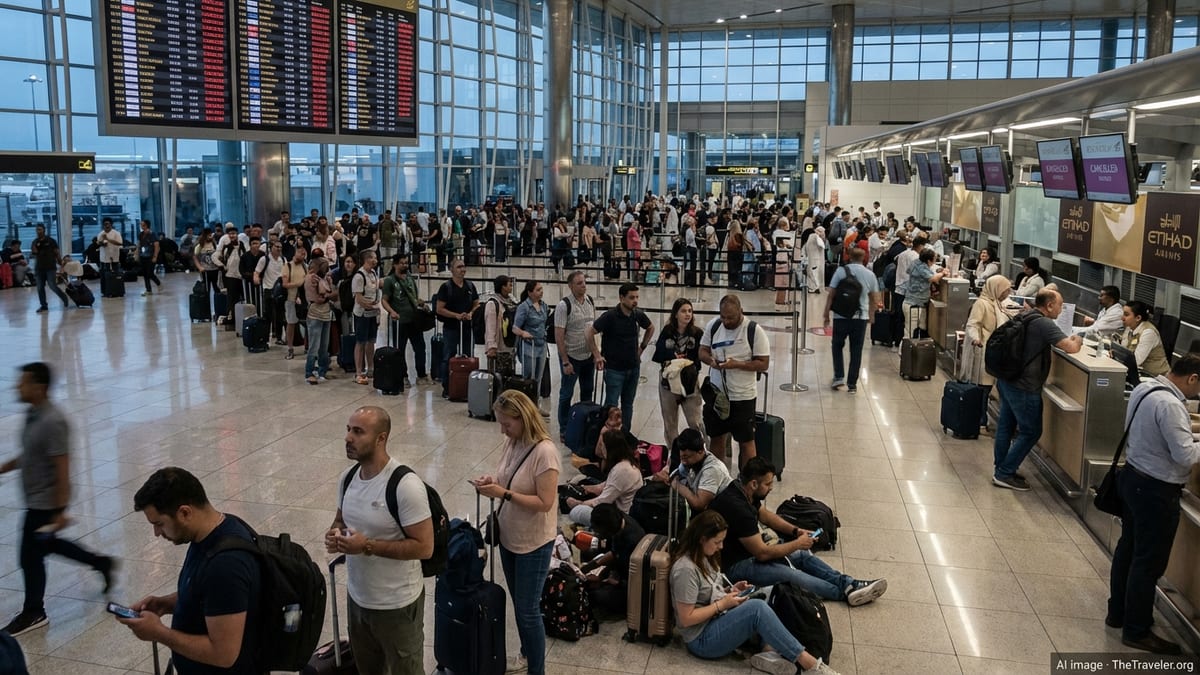
Emirates and Etihad Airways are urging passengers to monitor flight status closely and review flexible rebooking options as services to and from Dubai and Abu Dhabi remain under scrutiny due to a mix of regional security concerns, evolving government travel advice and weather-related risks.
Get the latest news straight to your inbox!
Heightened Regional Tensions Keep Gulf Airspace Under Watch
Recent regional tensions and advisories have kept Gulf airspace under close watch, prompting airlines and governments to warn travelers about the potential for sudden changes to flight schedules. Updated foreign travel advice for the United Arab Emirates notes that passengers across the Middle East should be prepared for possible flight cancellations, periodic airspace closures and wider travel disruption as the security situation evolves.
Travel advisories highlight the risk of further escalations and targeted activity around key infrastructure, which may include major airports and air corridors in and out of the Gulf. While Dubai and Abu Dhabi airports continue to operate, the guidance underscores that restrictions can be introduced at short notice, affecting both direct services and onward connections.
Alongside government notices, several international carriers have temporarily suspended or rerouted services to Dubai because of security concerns in the wider region, signaling ongoing caution within the aviation sector. These decisions contribute to a more complex operating environment for local hubs, even as Emirates and Etihad maintain scheduled operations on many of their core routes.
Emirates Advises Passengers to Check Flights and Use Flexible Options
Publicly available information on Emirates’ travel updates and disrupted travel pages shows that the airline is emphasizing flexibility and proactive communication as conditions remain fluid. The carrier is directing customers to check the status of their flights regularly before departure and again after check-in, as schedules may be adjusted in response to airspace restrictions, regional events or severe weather along the route.
Emirates outlines a range of options for travelers whose journeys are affected by disruption, including rebooking on the next available Emirates flight, changing travel dates within a set window or rerouting to nearby airports in the same country when feasible. In some cases, customers may also request refunds, depending on fare conditions and the nature of the disruption. The airline’s guidance indicates that it aims to rebook passengers on the first available connection when flights are delayed or canceled, while encouraging travelers to keep their contact details up to date so that notifications can be sent promptly.
Earlier this month, Emirates adjusted multiple services between Dubai and mainland China because of Typhoon Dolphin, rescheduling flights to Shanghai and Hangzhou and advising passengers that further delays were possible if weather conditions worsened. The move underlined how operational decisions in Dubai can be influenced not only by local factors but also by weather systems thousands of kilometers away along key long-haul corridors.
Etihad Outlines Waivers as Network Adapts to Changing Conditions
Etihad Airways has also updated guidance for customers as it adapts its network to a combination of regional and operational pressures. According to recent published coverage summarizing airline moves across the Middle East, Etihad has introduced more flexible rebooking policies for certain tickets, allowing affected passengers to change travel dates once without a rebooking fee when journeys fall within specified time frames.
The Abu Dhabi based carrier has been recalibrating parts of its schedule in response to airport closures and airspace issues in neighboring states. Reports indicate that services to Bahrain and Kuwait were suspended for several weeks earlier in the summer before being gradually restored as conditions allowed. Etihad’s advisories focus on asking passengers to check flight status before leaving for the airport and to review the latest route specific guidance on the airline’s website.
Industry data and flight tracking services show that core long haul connections from Abu Dhabi remain active, but remain subject to closer operational planning as airspace advisories evolve. Etihad’s messaging echoes that of Emirates in highlighting that schedules may be updated at short notice, and that travelers should remain prepared for longer journey times if rerouting around restricted areas is required.
Conflict Zone Advisories and Airline Suspensions Add to Uncertainty
The operating backdrop for carriers in the Gulf has been further complicated by updated conflict zone guidance. According to recent coverage from regional travel media, the European Union Aviation Safety Agency renewed an advisory on the Gulf region, urging European carriers to avoid airspace over several states, including the United Arab Emirates, until at least the end of August. While the notice is directed at operators rather than passengers, it can translate into route suspensions, diversions and longer flight paths for some airlines.
Several non Gulf carriers have responded by suspending services to Dubai or adjusting routings on security grounds. A recent statement from a major European airline based in Amsterdam confirmed that its flights to Dubai, Riyadh and Dammam would remain suspended through late October, following a series of earlier extensions. Other international airlines, including a Central Asian carrier, have temporarily halted Dubai services through the end of August, citing security concerns around key maritime and airspace chokepoints.
These moves amplify the sense of uncertainty for travelers planning trips into or through Dubai and Abu Dhabi, even when local carriers continue to operate many routes. For passengers, the patchwork of airline specific responses means that monitoring both airline and government advisories is becoming an essential part of trip planning, particularly for multi stop itineraries using different carriers.
Weather and Operational Planning Remain Critical for UAE Hubs
Alongside geopolitical tensions, operational planning at Dubai and Abu Dhabi airports is also shaped by seasonal weather and aviation meteorology. Data from the United Arab Emirates’ National Center of Meteorology and its aviation meteorology portal shows that forecasters continue to track significant weather systems that could affect visibility, wind conditions and turbulence over the UAE and surrounding region. The agency issues aerodrome and significant weather reports for major airports, supporting airlines and air traffic controllers in adjusting routes and departure sequences when necessary.
At Dubai International Airport, current meteorological reports indicate generally stable conditions, but with the potential for stronger winds and reduced visibility at times, particularly when dust and haze are present. Forecast products highlight scenarios where gusty crosswinds or blowing dust could temporarily affect operations, contributing to minor delays or the need for spacing adjustments between arrivals and departures on busy runways.
Abu Dhabi’s main airport follows similar procedures, using collaborative decision making frameworks to manage traffic flow when adverse conditions or capacity constraints appear. Guidance documents on airport operations emphasize the importance of timely flight plan updates, accurate target off block times and close coordination among airlines, ground handlers and air traffic control to minimize knock on disruption.
For travelers, these behind the scenes measures are largely invisible, but they help explain why flights can remain officially “under watch” even when airports are open. As regional tensions and seasonal weather risks continue to intersect, Emirates and Etihad are signaling that flexible booking policies, real time status checks and close adherence to published advisories will be key for anyone flying through Dubai and Abu Dhabi in the weeks ahead.
Condé Nast Traveller Middle East coverage of Gulf flight disruption
UK government foreign travel advice for the United Arab Emirates
UAE National Center of Meteorology aviation weather information