


More news on this day
Prediction market platform Kalshi has shelved plans to let users bet on U.S. flight cancellations, backing away from a controversial new product after days of social media criticism and a breakdown with a crucial aviation data provider.
Get the latest news straight to your inbox!
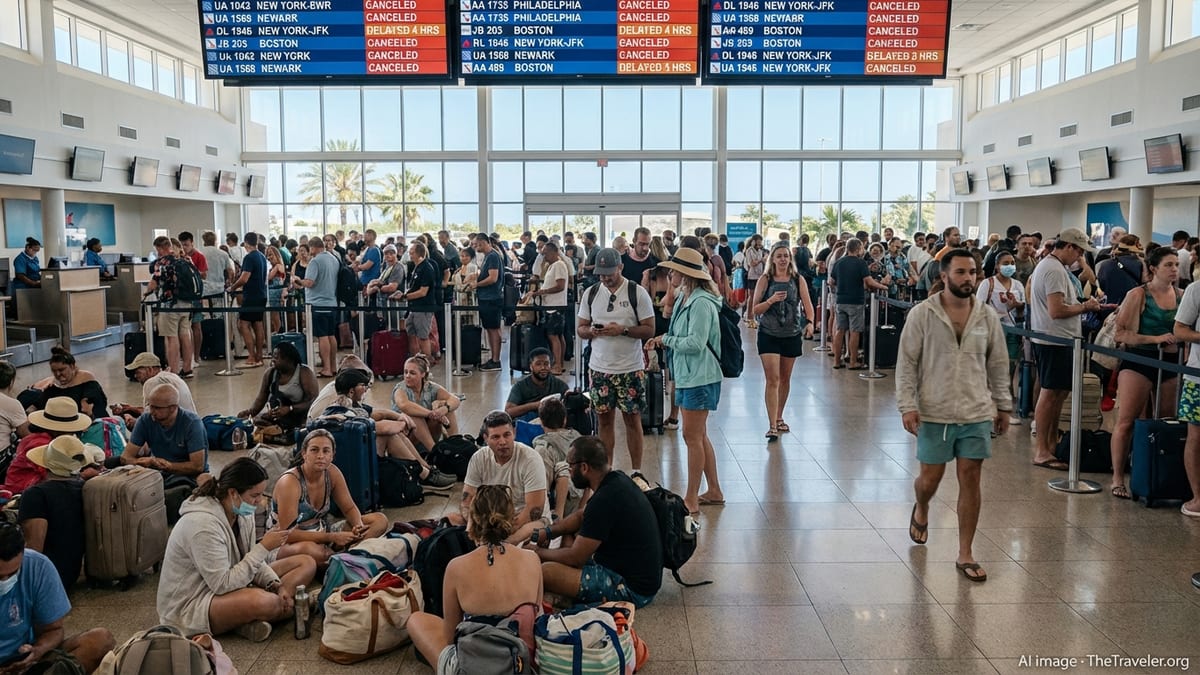
Flight disruption hedges spark safety and ethics concerns
Kalshi’s planned contracts would have allowed traders to speculate on the number of flight cancellations across U.S. airports over a given period, positioning the product as a hedge for airlines, travel firms and frequent flyers facing another season of operational uncertainty. According to published coverage, the contracts were structured around airport-wide disruption rather than individual flights, with settlement tied to official cancellation figures.
The idea dropped into an environment already sensitive to air travel disruptions, after recent seasons of storms, geopolitical shocks and airline failures that have upended itineraries for millions of passengers. Marketing materials highlighted the potential for businesses and sophisticated travelers to manage risk associated with mass cancellations, signalling an effort to frame the product less as a speculative bet and more as a financial hedge.
Yet as word of the new markets spread online, critics questioned whether turning large-scale cancellations into a tradable outcome might encourage perverse incentives. Commenters argued that even a small possibility of financial gain tied to disruption could undermine public trust in aviation operations, especially at a time when airport security and reliability remain highly scrutinized.
Some analysts noted that prediction markets routinely trade on adverse events, from natural disasters to geopolitical instability, but the direct link between human decision-making at airports and the outcome of these particular contracts appeared to heighten concerns about potential manipulation or perceived conflicts of interest.
Social media blowback and manipulation fears
The swift reversal followed a surge of criticism on social platforms once details of the flight cancellation contracts became widely shared. Posts circulated warning that airport or airline staff might collude to cancel flights for profit, or that bad actors could manufacture threats or disruptions to trigger large numbers of cancellations and cash in on positions.
Observers pointed out that such scenarios would face stiff legal penalties and would likely be difficult to coordinate in practice. Even so, the online reaction underscored how quickly a perception of moral hazard can form when financial products intersect with public safety and essential infrastructure. The optics of profiting from systemwide travel chaos became a lightning rod for debate.
Kalshi’s own rulebook for the product, as described in public filings, attempted to address these issues by banning trading by insiders including certain airport, airline, government, air traffic control and labor organization personnel, as well as data providers with access to nonpublic information. The rules also outlined fallback procedures for resolving markets if data became unavailable or if an extraordinary event disrupted normal operations.
Despite these guardrails, social media posts amplified worst-case hypotheticals and questioned whether enforcement of such restrictions could ever be airtight. For a consumer audience already wary of complex financial products, the notion that bets could be placed on widespread travel misery proved difficult to overcome in the court of public opinion.
Data dispute with FlightAware undercuts settlement plan
Alongside the backlash, Kalshi’s plans were undermined by a dispute with FlightAware, a widely used flight-tracking and aviation data service. Public reports indicate that the contracts were initially designed to settle using cancellation statistics sourced from FlightAware, which would have acted as an independent reference for determining final outcomes.
Shortly after attention focused on the new markets, FlightAware made clear it would not permit its data to be used to resolve the proposed contracts. That stance left a gap at the heart of Kalshi’s product design, since reliable, third-party cancellation data is essential to maintaining confidence in any settlement process for event-based contracts tied to operational metrics.
The loss of a key data provider raised practical and regulatory questions about how the contracts could be fairly and transparently resolved. Without a trusted benchmark, traders could be exposed to disputes over reported figures, and regulators could scrutinize whether settlement procedures met standards for clarity and integrity.
For travelers and industry stakeholders watching from the sidelines, the data dispute highlighted how modern travel markets increasingly rely on a small number of specialized data sources. When those providers decline to participate, even well-publicized financial products can become unviable almost overnight.
Regulatory backdrop and prediction market scrutiny
The episode arrives as prediction markets in the United States face rising regulatory and political attention. Kalshi operates as a designated contract market overseen by the Commodity Futures Trading Commission, and it has been engaged in a series of legal and policy skirmishes over which types of contracts should be permitted, from election outcomes to sports-related events.
Recent months have seen regulators, state authorities and courts debate the boundaries between legally sanctioned event contracts and activities that resemble traditional gambling. Travel-related markets, such as those linked to flight delays or cancellations, sit at the intersection of financial hedging and consumer-facing speculation, raising questions about how they should be categorized and supervised.
Publicly available documents show that Kalshi’s rulebook gives the platform discretion to halt or modify trading and to determine settlement procedures in exceptional circumstances, subject to its regulatory framework. Critics argue that such flexibility, while sometimes necessary, can create uncertainty for retail traders who may not fully grasp how contracts will behave under stress.
The controversy over flight cancellation contracts adds a travel-focused dimension to this broader policy debate. It illustrates how quickly new market designs can run into public resistance when they touch sectors seen as essential services, and how prediction platforms must balance innovation with a heightened sensitivity to reputational and legal risk.
Implications for travelers and future aviation-linked markets
For individual travelers, Kalshi’s decision means one less unconventional tool for managing the financial risk of disrupted trips. Some analysts had suggested that, in theory, frequent flyers or corporate travel departments could have used such contracts as a rough hedge against a wave of cancellations, potentially offsetting hotel losses or rebooking fees during periods of severe disruption.
In practice, most passengers are likely to continue relying on more familiar options, including flexible fares, travel insurance, and credit card protections when planning trips through busy hubs or during peak seasons. Traditional risk management tools, while often imperfect, do not carry the same ethical questions as markets explicitly tied to large-scale operational failures.
Industry observers note that the backlash does not necessarily foreclose all aviation-linked prediction markets. Contracts based on weather indices, aggregate delay metrics, or broader travel demand indicators may still attract interest from airlines, airports and financial institutions seeking ways to manage revenue volatility.
However, the fate of the flight cancellation product suggests that markets directly framed around mass disruptions to passenger journeys may face higher hurdles, both in public acceptance and in securing essential data partnerships. For prediction platforms, the episode provides a cautionary case study in how travel-related financial innovation can collide with consumer sentiment when the perceived stakes are planes, passengers and public safety.