


More news on this day
Israel’s National Security Council has issued its most severe travel warning for Israelis abroad, citing a heightened risk of attacks by Iran and allied groups against Israeli and Jewish targets worldwide ahead of the upcoming Jewish High Holidays.
Get the latest news straight to your inbox!
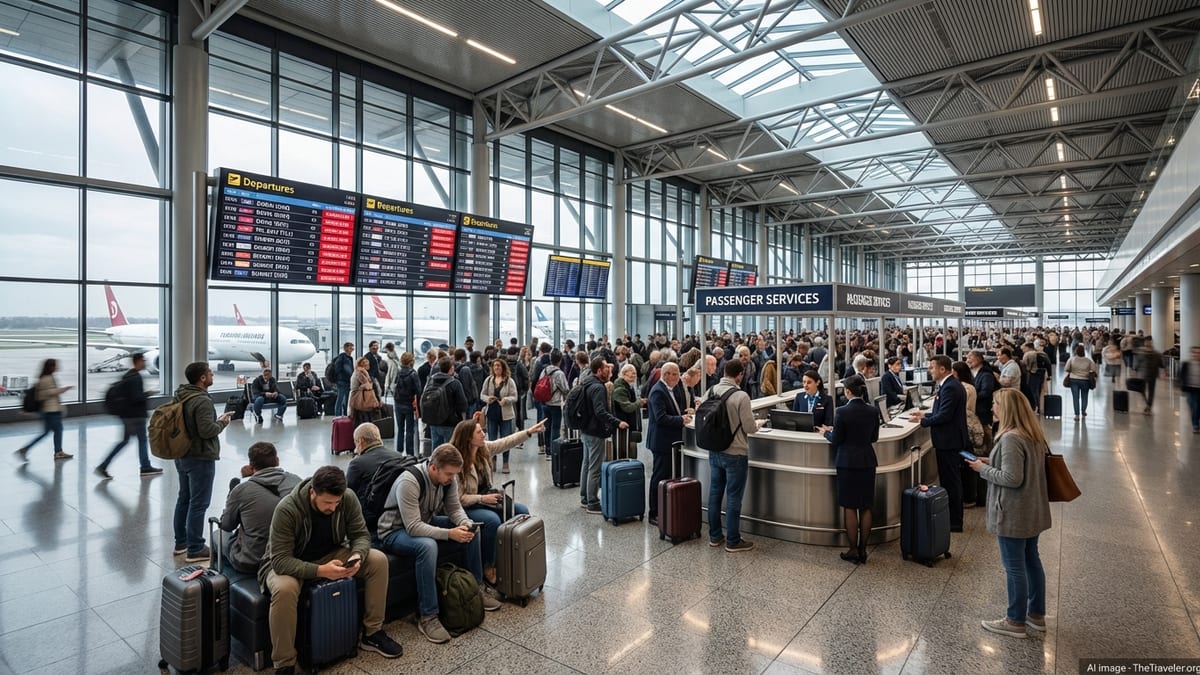
Escalating tensions with Iran reshape Israel’s travel risk map
According to publicly available security assessments published on September 6, 2026, Israel’s National Security Council (NSC) has updated its global travel warnings, pointing to Iran and its proxies as the primary source of threat to Israelis and Jews overseas. The latest assessment highlights a pattern of Iranian-linked plots and attempted attacks in recent years, as well as ongoing hostilities between Iran, Israel and Western partners across the Middle East.
Coverage of the NSC’s announcement indicates that the campaign against Iran, Hezbollah, Hamas and other armed groups has expanded the arena of risk beyond active conflict zones to include major urban centers, transportation hubs and sites associated with Jewish and Israeli life. Reports describe increased efforts to identify soft targets such as synagogues, community institutions, Chabad centers, Israeli restaurants and popular tourist areas frequented by Israeli travelers.
Travel and security bulletins from allied governments also reflect concern over the spillover from the Iran-Israel confrontation. Recent advisories from countries including the United Kingdom and Canada refer to Iranian strikes and retaliatory attacks across the region, as well as the potential for further escalation that could disrupt civilian air travel, affect regional airspace and raise the risk of terrorism targeting foreign nationals.
Analysts note that the latest Israeli warning follows months of rising tension involving missile and drone activity attributed to Iran and its partners, as well as retaliatory operations against Iranian infrastructure. This environment has reinforced the perception that Israelis and Jewish communities abroad may be viewed by hostile actors as accessible pressure points in a wider regional struggle.
High Holidays period flagged as especially sensitive for travelers
The NSC’s updated assessment singles out the upcoming Jewish High Holidays as a period of particular concern. Open-source coverage of the document notes that the approach of the Tishrei holidays and the third anniversary of the October 7 attacks have been identified as symbolic dates that may attract the attention of terrorist organizations and lone attackers seeking high-impact incidents.
Reports describe an expectation of increased crowds at synagogues, community centers and pilgrimage destinations, as well as larger numbers of Israelis traveling abroad for vacations during September and October. The combination of religious gatherings, seasonal tourism and heightened political tension is cited as a factor that could raise both the likelihood and potential impact of attempted attacks.
The NSC material, as summarized in Israeli and international media, focuses on raising awareness rather than restricting travel outright. It emphasizes individual vigilance, encouraging travelers and diaspora communities to stay informed about local conditions, comply with security measures and be alert in locations that are clearly identified with Israel or Judaism.
Previous notices from Israel’s National Security Headquarters earlier in 2026 had already urged Israelis residing abroad to increase precautions in any destination, citing an elevated likelihood that Iranian agencies or affiliated groups would seek to strike Jewish and Israeli targets. The latest assessment is described in regional coverage as the most severe formulation of those concerns to date, given the current pace of military exchanges and hostile rhetoric.
Regional hotspots and transit hubs under closer scrutiny
Within the wider global picture, the NSC’s newest review highlights countries surrounding Iran as carrying the highest levels of risk for Israelis. Reports on the advisory state that destinations such as Turkey, Azerbaijan and the United Arab Emirates remain at the center of concern, reflecting both past arrest and plot investigations and the strategic role of these locations as transit points and tourism hubs.
Media summaries of the travel warning note that Iranian security agencies and proxy organizations are assessed to be active in these environments, sometimes operating through intermediaries or criminal networks. In earlier public notices this year, Israeli authorities discouraged nonessential transit through certain regional airports, citing intelligence about Iranian efforts to identify and potentially target Israeli passengers.
International travel advisories from Western governments present a parallel picture of elevated risk in the broader Middle East. Updated guidance from the UK Foreign, Commonwealth and Development Office and Canada’s travel service point to Iranian strikes and counterstrikes across multiple countries, and caution that further escalation could rapidly alter security conditions, including the safety of airports and cross-border routes.
Specialist tourism intelligence briefings also describe airlines and airports in the region preparing contingency plans for rapid schedule adjustments or airspace reroutings if hostilities intensify. For travelers, this means that itineraries involving regional hubs may be subject not only to security concerns but also to sudden disruptions driven by military or diplomatic developments.
Practical guidance for Israelis and Jewish communities abroad
In light of the evolving threat picture, the NSC’s public-facing materials and related explanatory coverage place strong emphasis on practical personal security measures. These include maintaining a low profile in public spaces, exercising caution around sites that are visibly Israeli or Jewish, and avoiding predictable routines in areas where Iranian-linked activity has been reported.
Summaries of the guidance recommend that Israelis abroad stay updated through official travel-warning websites, local news and community channels, and verify the current risk level for specific destinations before booking or commencing trips. Where warnings reach the most severe tier, travelers are urged to reconsider the necessity of journeys and to weigh the availability of consular and community support in the event of an incident.
Communal organizations in various countries have in recent years worked with local partners to reinforce security at synagogues, schools and cultural centers, and the latest NSC assessment is expected to prompt further adjustments. Publicly available information suggests that measures such as access control, visible security presence and coordination with local law enforcement remain core elements of protective strategies.
For individual travelers, experts cited in open reporting highlight basic precautions such as avoiding conspicuous national symbols in unfamiliar environments, limiting public discussion of itineraries, and being mindful when using rideshare platforms, short-term rentals or social media check-ins that may inadvertently reveal patterns of movement.
Global aviation and tourism sector braces for uncertainty
The sharpening of Israel’s travel warning comes as the regional and global tourism sectors are already contending with volatility linked to the broader Iran-Israel confrontation. Aviation data and tourism-industry analysis indicate that passenger volumes to and from Israel have been recovering unevenly, with periods of renewed disruption following spikes in rocket fire, drone attacks or cross-border exchanges.
Briefings from tourism intelligence hubs report that Ben Gurion Airport expects millions of passengers during the September holiday period, supported by staffing agreements designed to maintain operations despite the security backdrop. At the same time, airlines remain alert to the possibility of altered flight paths, short-notice cancellations or airspace closures if attacks and counterattacks intensify around key corridors.
Outside the immediate conflict zone, major tourism destinations in Europe, North America and Asia are also monitoring how evolving perceptions of risk to Israelis and Jewish communities may affect travel patterns. Travel analysts point to a possible shift toward destinations perceived as offering stronger security coordination with Israeli agencies, as well as increased interest in package arrangements that include security briefings and contingency planning.
While the NSC’s latest advisory does not ban travel outright, its characterization of the Iranian threat as the most significant external danger to Israelis abroad underscores the extent to which geopolitical tensions are shaping individual travel decisions. For Israelis, Jewish diaspora communities and the tourism industry that serves them, the coming holiday season is likely to be defined as much by security calculations as by traditional considerations of cost and convenience.
Israel’s National Security Council issues travel warnings ahead of Jewish High Holidays – JNS
Notice to Israelis residing abroad – National Security Headquarters
Israel travel advice – UK Foreign, Commonwealth & Development Office
Travel advice and advisories for Israel and Palestine – Government of Canada