


More news on this day
Madrid is quietly transforming from a convenient European transfer point into a destination in its own right for aviation enthusiasts, pairing rapid expansion at its global hub with new immersive flight experiences in the city.
Get the latest news straight to your inbox!
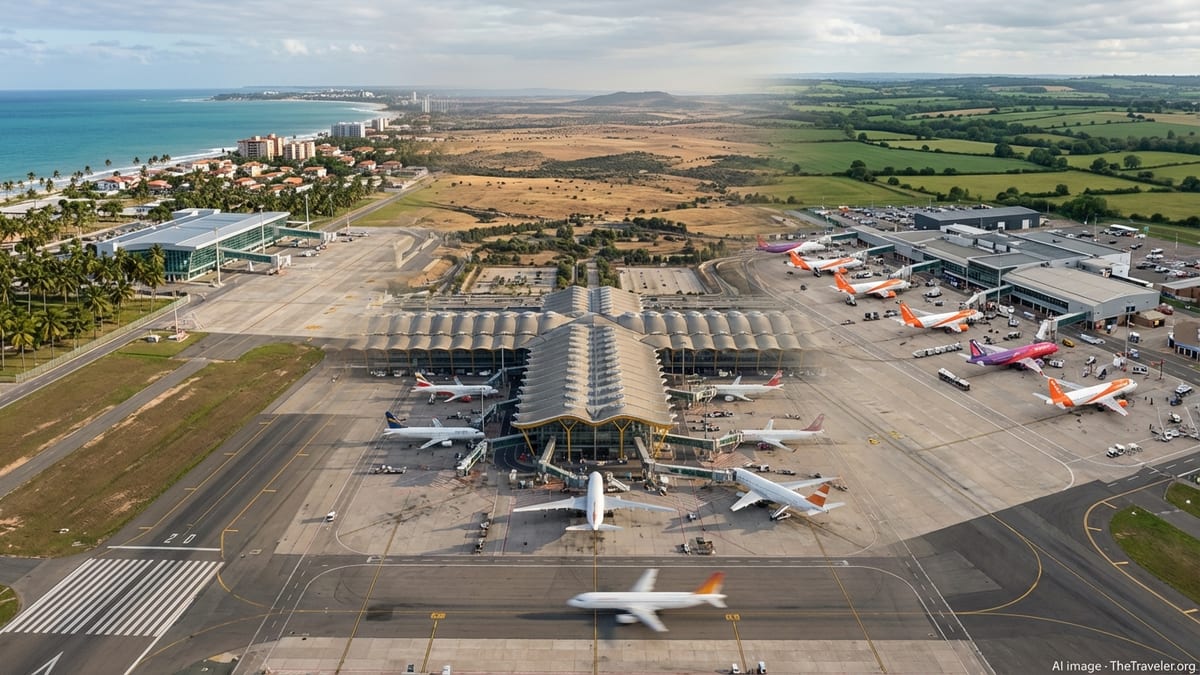
Madrid grows its long-haul network from Adolfo Suárez Madrid-Barajas
Madrid’s Adolfo Suárez Madrid-Barajas Airport is consolidating its role as a long-haul gateway as Iberia adds new capacity and destinations from its home hub. The airline’s published summer 2025 programme shows around 140 weekly flights between Spain and the United States and more than 1.1 million seats on offer, underscoring Madrid’s importance for transatlantic travel.
Among the latest developments, a new daily service between Madrid and New York’s Newark Liberty International Airport is scheduled to begin on 29 March 2026, complementing existing flights to John F. Kennedy International Airport and lifting total New York capacity by more than 40 percent compared with the previous summer season. Reports indicate that Orlando, introduced in late 2025, is also set to see its first full summer of operations with three weekly flights, giving leisure travelers direct access to central Florida from the Spanish capital.
Published schedules and planning documents show that Madrid is also being used to deepen connectivity across Latin America and the Caribbean. Iberia highlights capacity growth on routes such as San Juan, Puerto Rico, where frequencies have been progressively increased beyond a daily flight, supported by a renewed tourism partnership and growing use of Madrid as a stopover point.
The airline’s 2030 strategic roadmap positions Madrid as the center of a wider hub strategy, including a refreshed long-haul fleet, upgraded cabins and the deployment of long-range narrowbody aircraft to open thinner routes. Investor materials describe a focus on “premium leisure” markets, indicating that many of these new flights are being configured as experiences in themselves, with upgraded onboard products and expanded premium seating.
Stopover and lounge upgrades turn transfers into city stays
As Madrid’s route map grows, airlines and airport operators are positioning the city as more than a place to change planes. Iberia’s Hola Madrid stopover program is being promoted as a key element of that strategy, allowing international passengers to extend their layover for up to nine nights while accessing discounts on accommodation, dining, cultural attractions and local transport. Publicly available information shows that travelers on routes such as Puerto Rico to Europe are increasingly using the scheme to spend time in the Spanish capital instead of simply connecting onward.
At the airport itself, enhancements are being rolled out to support this stopover-based model. Official documentation points to extended operating hours for transit service points at Madrid-Barajas and plans linked to Iberia’s 2030 investment programme for a new premium lounge at Terminal 4, designed to handle a larger volume of long-haul and connecting passengers. Aena’s service descriptions also highlight 24-hour information and assistance facilities across the terminals, which can help smooth complex itineraries and missed connections.
These changes fit into a broader push to recast the hub as a more comfortable environment for longer stays between flights. Recent passenger accounts describe faster arrival processing from long-haul destinations such as Los Angeles following the rollout of new border systems, reducing the friction of using Madrid as an interim stop and creating more time for city visits between flights.
For airlines, the combination of expanded lounge capacity, stopover incentives and enhanced ground services is intended to encourage travelers to choose Madrid even when a non-stop alternative might exist elsewhere in Europe. For visitors, it means the airport becomes a gateway to a curated short stay, with access to the city’s neighborhoods, museums and culinary scene built into the ticket.
Historic aviation heritage at Cuatro Vientos and the Air Museum
Beyond its large international hub, Madrid is home to one of Europe’s more distinctive aviation heritage sites at Cuatro Vientos, the country’s oldest airport and a major base for general aviation and flight schools. Located roughly eight kilometers from the city center, the airfield hosts a mix of private flying, state operators and training organizations, giving visitors an insight into the day-to-day fabric of Spanish aviation.
Sharing the site is the Museum of Aeronautics and Astronautics, widely known as the Air Museum, which is dedicated to preserving the history of Spain’s Air and Space Force. Tourism guides and official museum information describe a collection that spans early twentieth-century aircraft, historic transport types and military aviation, distributed across indoor hangars and outdoor displays. The site’s origins date back to the early 1980s, and it serves both as a cultural institution and as an open-air gallery of aviation technology.
The location offers a contrast to the highly commercial environment of Madrid-Barajas. Visitors can observe light aircraft movements and training flights around Cuatro Vientos while exploring historic airframes nearby. The presence of both the active aerodrome and the museum in the same district has made the area a focal point for aviation enthusiasts visiting the capital, particularly those looking to pair a long-haul trip with a deeper dive into aeronautical history.
Although access requires planning due to roads and local public-transport links, travel platforms increasingly highlight Cuatro Vientos and the museum as a worthwhile excursion during a Madrid stay. For international passengers using the city as a hub, these venues add an additional layer of aviation-focused activity that goes beyond the usual urban sightseeing list.
Novel aviation-themed stays and simulators in the city
Madrid’s aviation offer is also moving into the hospitality sector. In May 2026, Spanish travel media reported that the Novotel Madrid Center had installed a high-fidelity flight simulator on its premises, describing it as the first hotel in Europe to provide a professional-grade pilot experience as part of its services. Operated by trained pilots, the simulator is marketed as an immersive attraction for both hotel guests and external visitors.
The installation reflects a broader trend of hotels using specialized experiences to distinguish themselves in a competitive market, with Madrid leaning on its aviation identity as a growing hub. For travelers transiting through the city, a one-night stay can now include a session at the simulator, effectively turning a layover into a themed mini-break without having to venture far from central accommodation.
This type of offering complements more traditional aviation attractions such as spotting areas near the runways of Madrid-Barajas and guided visits advertised by local operators to maintenance facilities and training centers. While some of these experiences are seasonal or subject to security restrictions, they collectively contribute to the perception of Madrid as an accessible place to encounter different facets of air travel, from heritage to cutting-edge technology.
For global travelers, the combination of a major intercontinental hub, an active general aviation airfield with a substantial museum and hotel-based simulators provides a spectrum of aviation-related activities in a single metropolitan area. That mix is positioning Madrid as a niche destination for enthusiasts who want more than a simple flight connection.
Premiumisation and future expansion plans strengthen Madrid’s hub role
Looking ahead, strategic plans published by Iberia and its parent group set out ambitions to further expand Madrid’s long-haul reach while upgrading the onboard and ground experience. The airline’s 2030 Flight Plan outlines multi-billion-euro investment earmarked for fleet renewal, cabin refurbishments and the introduction of long-range single-aisle aircraft such as the Airbus A321XLR, intended to open new point-to-point routes while feeding the hub.
The same plan references a focus on higher-yield traffic segments, particularly premium leisure and corporate travelers, with Madrid positioned as a convenient connecting point between North America, Europe and Latin America. Investor presentations highlight consistently strong demand in business and premium economy cabins on transatlantic sectors, and describe Madrid as a platform for further growth into secondary cities in the United States and beyond.
Market reports and aviation analysis suggest that the hub is being benchmarked against larger European competitors, with Madrid’s geographic position and growing network into Latin America seen as competitive strengths. Over time, the addition of new US gateways, enhanced lounge infrastructure and further development of stopover products could reinforce the city’s status as both an efficient connecting node and an appealing destination for travelers with an interest in aviation.
For visitors planning trips over the next few years, the result is a steadily expanding menu of ways to engage with air travel in and around Madrid, whether through new long-haul links, curated stopovers, historic aircraft collections or hands-on simulator sessions.
https://iberiaclubmagazine.iberia.com/en/articles/2025/3/summer-season-2025/
https://iberiaclubmagazine.iberia.com/en/articles/2025/7/2030-flight-plan/
https://www.esmadrid.com/en/tourist-information/museo-del-aire