


Istanbul’s Karaköy waterfront and the hilltop streets around Galata Tower sit barely ten minutes apart on foot, yet the experience of staying in each feels surprisingly different. Both are popular bases for first-time visitors who want easy access to ferries, trams, cafés and nightlife without being stuck in the most touristy parts of the city. Choosing the right one comes down to what you want outside your hotel door: sea views and flat strolls, or atmospheric lanes, rooftops and that postcard Galata skyline.
Get the latest updates straight to your inbox!
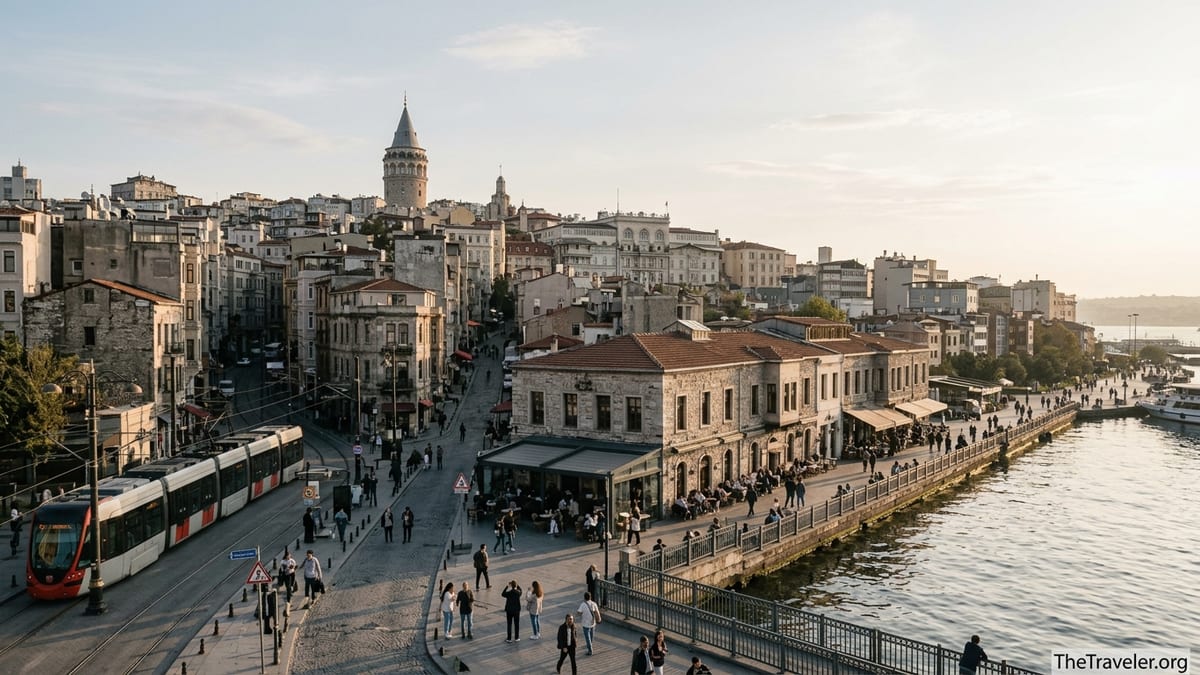
Karaköy vs Galata at a Glance
Karaköy hugs the waterfront on the northern side of the Golden Horn, a short walk across the bridge from the Spice Bazaar and the ferry piers of Eminönü. It has transformed from a gritty port into one of Istanbul’s trendiest quarters, with renovated warehouses, boutique hotels and some of the city’s densest clusters of cafés and casual restaurants. You are on the flat here, close to the T1 tram line and major ferry routes, which makes Karaköy feel very practical as a base.
Galata rises directly above Karaköy. Centered around the 14th‑century Galata Tower, it is a compact hilltop neighborhood of cobbled streets, steeper lanes and older apartment buildings. Compared with Karaköy’s busy main roads and cruise port, Galata feels more like a small town within the city: quieter at night once you step off the main drags, with vintage shops, small bars and rooftop terraces wedged between historic facades.
For most visitors, the trade-off looks like this: Karaköy is better for flat walking, quick transport and an immediate waterfront vibe. Galata is better if you care more about views, historic atmosphere and being slightly removed from traffic. Both sit inside the larger Beyoğlu district, so it is easy to walk between them and explore the same broader area, including nearby İstiklal Avenue and Taksim Square.
If you only have three or four nights in Istanbul and want a single base, you are not making a “wrong” choice with either. Instead, think about mobility, noise tolerance and how much you enjoy climbing hills. Those details will matter more day to day than abstract labels like “hip” or “authentic.”
Hotel Scenes and Typical Budgets
Karaköy has seen some of the fastest hotel development in the city, particularly since the opening of the Galataport complex along the waterfront. At the luxury end, travelers often look at The Peninsula Istanbul or the adjacent high-end properties that cater to cruise passengers and business travelers, where a waterfront room can easily run to the higher hundreds of dollars per night in peak summer. A notch down the price ladder, smart design-focused boutiques like Bank Hotel Istanbul, The House Hotel Karaköy and 10 Karaköy (a Curio Collection by Hilton) are popular with couples and business guests who want style without full five-star pricing.
In practice, a midrange traveler booking two to three months ahead will often see double rooms in good Karaköy boutiques in the ballpark of what many would call upper midrange pricing, especially from April to October. In low season, particularly in January and February, rates can drop significantly, and it is not unusual to find well-reviewed Karaköy hotels in a more moderate range. Budget travelers tend to choose simple guesthouses on side streets closer to the T1 tram or in the back lanes heading up toward Galata.
Galata’s hotel stock is smaller-scale and more vertical, often in restored 19th‑century buildings with four to six floors and maybe a rooftop terrace. Properties like Georges Hotel Galata, The Galata Istanbul Hotel – MGallery, and World House Boutique Hotel near the base of the tower are repeatedly mentioned by visitors for their combination of character and convenience. Many rooms here do not have large footprints, but what you gain instead are balconies over narrow streets or oblique views of the Golden Horn and the Old City skyline.
Because Galata sits slightly off the main traffic arteries, you can sometimes find better value for quieter rooms than right on the main roads in Karaköy. A compact boutique a few minutes’ walk from the tower can come in similar or slightly lower than a waterfront Karaköy address of equivalent quality. If you are sensitive to street noise, looking at guest reviews that mention “quiet side street” or “upper floors away from Istiklal” will matter more than the headline neighborhood name.
Views, Atmosphere and Everyday Vibe
Karaköy’s atmosphere is anchored by its position on the water. You are likely to start your day with the sight of ferries gliding across the Golden Horn, fishermen lined along Galata Bridge, and locals grabbing simit from street carts near the tram stop. The streets behind the main road have a relaxed, almost Mediterranean feel on weekends: tables spilling onto the pavement outside third‑wave coffee shops, bakeries with queues out the door, and street art on old warehouse walls. Walk a couple of blocks inland and you will quickly find artisan shops, design studios and small galleries.
Galata, by contrast, feels more enclosed and vertical. The landmark Galata Tower looms above a small plaza ringed by cafés and souvenir shops, but step into the side streets and the pace slows. You will find vintage stores, independent bookshops and quiet tea houses tucked into cul-de-sacs. Washing lines occasionally stretch between apartment windows, and you still see older residents leaning on railings, watching the street. In the evening, many visitors climb to a rooftop bar or restaurant to watch the Old City light up across the water, which gives Galata a more romantic, cinematic edge than everyday Karaköy.
In terms of crowd profile, Karaköy’s main arteries draw more cruise passengers and day-tripping sightseers, especially around the Galataport development and Istanbul Modern art museum. Galata draws a mix of visitors and longer-stay foreigners, plus Istanbul locals heading out for dinner around the tower before walking up toward İstiklal Avenue for the night. Neither neighborhood is “off the beaten path,” but Galata’s residential backstreets can feel more like a lived-in quarter once you step away from the tower square.
If you want to feel plugged into local café culture, both work well. Karaköy leans a little more toward daylight energy, brunch places and after-work drinks. Galata leans toward late-afternoon golden light in the streets, followed by rooftop cocktails and live music a short walk uphill in Beyoğlu.
Food, Coffee and Nightlife
Food is a key reason many travelers pick Karaköy. Within a ten-minute walk of the tram stop you will find everything from classic baklava at long-established patisseries to contemporary bistros in converted bank buildings. Streets around Karaköy Güllüoğlu are busy with dessert seekers, while side streets closer to the old banking district and Salt Galata house modern Turkish and Mediterranean kitchens. Closer to the water, casual seafood spots and meyhanes serve grilled fish, meze and raki, especially in the evenings. Typical mains in these restaurants run from modest to midrange pricing, with seafood commanding a premium.
Karaköy is also one of Istanbul’s densest neighborhoods for specialty coffee. On a brief stroll you might pass at least half a dozen serious cafés, each with its own roasting style and interior design, along with brunch places serving everything from menemen and simit to avocado toast. For many visitors this feels closer to the café districts of European capitals than to the more traditional tea-and-simit culture of the Old City across the water.
Galata’s food scene is smaller but atmospheric. Around the tower and down the cobblestone lanes leading toward Şişhane metro station you will find wine bars, meze-focused restaurants, and compact cafés with only a handful of tables. The area’s rooftops are an attraction in themselves: several small hotels and restaurants open their terraces to non-guests for dinner and drinks, giving you that classic view across the Golden Horn without having to queue for the tower observation deck. Prices for meals and drinks are broadly similar to Karaköy, with rooftop locations naturally commanding a bit of a premium for the view.
For nightlife, both Karaköy and Galata serve more as gateways than final destinations. You can certainly find bars and a few clubs in each, but heavier nightlife energy sits slightly uphill along İstiklal Avenue, in nearby Cihangir, or across the water in Kadıköy. A common pattern is to have dinner and a first drink in Karaköy or Galata, then walk or take a short taxi ride up to livelier bar clusters later in the evening. If you like the option of quiet nights, Galata’s backstreets offer that more readily; if you like to step straight out of your hotel to find a busy scene until late evening, the streets immediately around Karaköy’s main intersection may suit you better.
Transport, Walking Difficulty and Accessibility
From a transport perspective, Karaköy is one of the most strategic spots in Istanbul. The T1 tram runs along the main road, putting you only a few stops from Sultanahmet and the historic peninsula in one direction, and Kabataş (for the funicular to Taksim and ferries toward Beşiktaş) in the other. Multiple ferry lines depart nearby for Üsküdar and Kadıköy on the Asian side, and long-distance Bosphorus tours often leave from piers within walking distance. For a first-timer who wants to avoid taxi dependency, staying within five minutes’ walk of Karaköy tram stop can make moving around feel straightforward.
Karaköy itself is largely flat between the waterfront and the first terrace of streets, which makes it easier if you have mobility issues, are traveling with a stroller or simply dislike hills. The main challenge is traffic and crossing busy roads near the tram line, particularly at rush hour. Side streets can be uneven and cobbled in places, so good walking shoes are still important, but you will not be repeatedly tackling steep climbs just to get back to your hotel.
Galata’s biggest downside for some visitors is its topography. Reaching most Galata hotels from Karaköy involves a steep walk uphill, including staircases and sloping cobbles. It is perfectly manageable for many travelers, but if you have knee problems, heavy luggage or young children, the daily climb can feel tiring. That said, Şişhane metro station on the M2 line sits at the upper edge of Galata near İstiklal Avenue, so if your hotel is on the higher side of the hill you can often use the metro or short taxi rides to avoid the steepest stretches.
For airport access, both neighborhoods are reasonably similar. Many visitors arriving at Istanbul Airport use the direct airport bus or metro toward Taksim or Şişhane, then take a short taxi ride down to Galata or Karaköy. Others pre-book private transfers that can drop them at the door. If you are arriving late at night with large suitcases, Karaköy’s flatter streets can be easier for rolling bags, whereas a Galata hotel tucked high on a hill may require you to negotiate cobbles or arrange for the hotel to assist with luggage.
Which Works Better for First-Time Istanbul Trips
For a first-time visitor with three or four full days who wants to see the big historic sites, take at least one Bosphorus ferry and still experience modern Istanbul’s café and nightlife culture, both Karaköy and Galata are strong choices. Karaköy tends to suit travelers who prioritize transport convenience and flatter walking. You can be on the tram to Sultanahmet in minutes, hop on ferries without planning complicated transfers, and still be a manageable walk from İstiklal Avenue for evening strolls.
Galata better suits visitors who place a premium on atmosphere and views. Waking up to a glimpse of the tower, watching the sunset from a rooftop terrace and wandering through narrow lanes in the evening can feel closer to the Istanbul many people imagine before they arrive. You will add more hill climbing to your days, but you also gain the sense of retreating to a slightly quieter pocket at night, particularly if you choose a hotel on a side street away from the main routes.
Families with young children or anyone with reduced mobility often find Karaköy more practical, especially if they want to use the tram frequently. Solo travelers and couples who are used to city walking may enjoy Galata’s elevations and the way they naturally divide the day into waterfront exploring below and hilltop evenings above. In both neighborhoods, it is worth reading recent guest reviews carefully to check for noise from nearby bars, mosque loudspeakers and traffic, as the soundscape can vary dramatically from one block to the next.
If your visit is very short, for example a two-night stopover focused heavily on Hagia Sophia, the Blue Mosque and the Grand Bazaar, staying in Sultanahmet remains the most time-efficient option, with Karaköy or Galata visited as part of a day exploring the Beyoğlu side. For a slightly longer stay, however, using Karaköy or Galata as your base lets you balance the historic peninsula with more modern, lived-in neighborhoods.
Example Itineraries Based on Your Choice
To make the trade-offs more concrete, imagine a four-night trip based in Karaköy. You might arrive in the afternoon, drop your bags at a hotel near the tram stop, then walk across Galata Bridge at sunset to see the mosques of the Old City light up. Dinner could be at a casual meyhane on the Karaköy side, followed by a relaxed drink in a nearby café-bar. On your first full day, you could be on the T1 tram early to visit Hagia Sophia, the Blue Mosque and the Basilica Cistern, returning mid-afternoon to rest before exploring Istanbul Modern or the Galataport promenade in the evening.
On day two, you could take a morning ferry from Karaköy to Kadıköy, sample street food in the market streets there, then ride back in time for coffee in one of Karaköy’s specialty cafés and a walk up the hill into Galata for dinner. Day three might be your “Beyoğlu day”: climbing to the tower area after breakfast, wandering through Galata’s boutiques, then continuing along İstiklal Avenue toward Taksim and perhaps finishing with live music in a bar off one of the side streets before heading back downhill to your base.
Now imagine the same four nights based in Galata. Your first evening might be all about settling into the hilltop vibe, finding a small restaurant with a terrace near the tower and walking down the illuminated streets afterward. The next morning, you could stroll downhill to Karaköy, catching the tram to Sultanahmet for your historic sites, then returning in the late afternoon and taking the historic funicular or a taxi back up the hill to avoid the steepest climb.
From a Galata base, you might dedicate one day to the neighborhoods immediately surrounding you: coffee near Şişhane, independent galleries and record shops off İstiklal, then a late-afternoon drink on your hotel rooftop with the city spread out below. Another day could be structured around ferries, using the short downhill walk to Karaköy pier to hop across to Asia and back. In this version, Karaköy becomes your daytime waterfront playground, while Galata remains your quieter, atmospheric retreat.
The Takeaway
Choosing between Karaköy and Galata is less about right or wrong and more about matching your base to how you like to move through a city. Karaköy is flat, ferry-filled and intensely practical, with excellent café culture and easy tram access to the Old City. Galata is compact, historic and hilly, with more of a neighborhood feel once you leave the tower square and some of the best everyday views in Istanbul from its rooftops.
If you value step-out-the-door transport connections, have mobility concerns or are traveling with kids and strollers, Karaköy generally makes life easier. If you are willing to climb hills for atmosphere and skyline views, and you like the idea of evenings in cobbled lanes and on rooftops, Galata may feel more rewarding. Many visitors happily split their time between the two on longer trips, starting in one and finishing in the other to sample both sides of the hill.
For most first-time travelers with four to six nights in the city, it is perfectly reasonable to book whichever neighborhood has the hotel that best matches your budget, noise tolerance and design preferences, then spend your days exploring both on foot. The two areas function as a single, richly layered slice of Istanbul life, connected by a short walk and the constant movement of ferries and people between the water and the hill.
FAQ
Q1. Which is better for first-time visitors, Karaköy or Galata?
For most first-time visitors, either works well. Choose Karaköy if you want flat streets and very easy tram and ferry access, or Galata if you prioritize atmospheric lanes and views and do not mind hills.
Q2. Is Karaköy or Galata more convenient for visiting Hagia Sophia and the Blue Mosque?
Both are a short tram ride away, but staying within a few minutes’ walk of the Karaköy tram stop is slightly more convenient, since you avoid uphill walks before or after sightseeing in the Old City.
Q3. Where will I find better views, Karaköy or Galata?
Galata generally wins for views, especially from rooftop terraces and higher-floor hotel rooms that look across the Golden Horn toward the Old City skyline and the Bosphorus.
Q4. Which area is easier to walk around if I have mobility issues?
Karaköy is easier, as it is mostly flat between the waterfront and the first few streets inland. Galata involves steep hills and cobbled lanes that can be challenging for some visitors.
Q5. Is one neighborhood cheaper than the other for accommodation?
Prices vary by season and hotel, but waterfront properties in Karaköy can be among the priciest in the area. Galata sometimes offers slightly better value on quieter side streets away from the tower.
Q6. Which is better for nightlife?
Both have bars and a few clubs, but heavier nightlife is usually found uphill along İstiklal Avenue or in nearby Cihangir and Kadıköy. Karaköy and Galata work well as bases with easier access to those areas.
Q7. Are Karaköy and Galata safe at night?
Both neighborhoods are generally considered safe by big-city standards, with plenty of people around in the evening. Normal precautions apply, such as avoiding very dark side streets and keeping an eye on your belongings.
Q8. How long does it take to walk between Karaköy and Galata Tower?
From the Karaköy tram stop to Galata Tower typically takes about 10 to 15 minutes on foot, mostly uphill. Allow a little more time if you prefer to walk slowly or stop in cafés along the way.
Q9. Which area is better for families with children?
Families often find Karaköy more practical because of its flatter streets, easier stroller use and quick access to trams and ferries. Galata can still work if children and adults are comfortable with hills.
Q10. If I have five or more nights, should I split my stay between Karaköy and Galata?
With five or more nights it can be enjoyable to spend a few nights in each, starting in one neighborhood and finishing in the other to experience both the waterfront energy of Karaköy and the hilltop charm of Galata.