


More news on this day
A luxury expedition cruise through the South Atlantic has turned into a medical and logistical emergency, with three passengers dead and at least seven others infected or suspected to be infected in a rare hantavirus outbreak that has left nearly 150 people stranded aboard a Dutch flagged vessel.
Get the latest news straight to your inbox!
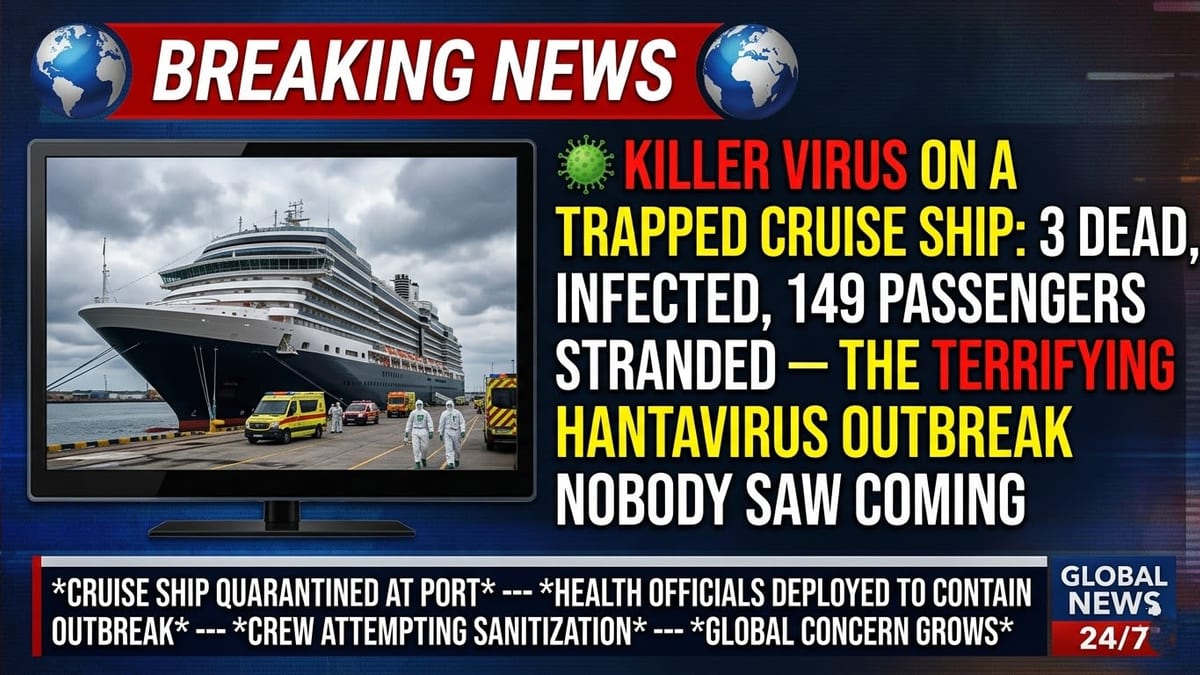
A Routine Antarctic Voyage Turns Into a Deadly Emergency
The outbreak centers on the MV Hondius, a polar expedition cruise ship that departed South America in early April for a voyage toward Antarctica and across the South Atlantic. Publicly available itineraries and tracking data show the ship sailing from Argentina toward remote islands and then on to Cape Verde, carrying around 150 passengers and crew.
Reports indicate that the first passenger, a man in his seventies, fell ill in mid April with severe respiratory symptoms. He later died in South Africa after being evacuated from the ship, with subsequent investigation linking his case to the emerging cluster of unexplained illness among fellow travelers. Another passenger, his spouse, died weeks later, and a third passenger, a German woman, died on board in early May after developing fever and breathing difficulties.
Only after test results began to return did investigators identify the likely cause as infection with an Andes hantavirus strain, a rare and often lethal pathogen more commonly associated with rodent exposures in parts of South America. By that time, multiple passengers had disembarked at various ports or on connecting flights, while others remained confined to the ship awaiting medical evacuation and further testing.
By the end of the first week of May, international updates described two to five laboratory confirmed infections and several additional suspected cases linked to the voyage, for a working tally of at least seven people on board or recently evacuated who were believed to be infected.
Passengers Trapped at Sea as Cases Mount
In the days following the third death, the MV Hondius was ordered to remain offshore near the Cape Verde islands while health authorities investigated the growing cluster. News photographs and satellite tracking suggest the vessel spent days anchored off Praia as officials weighed where and how to safely disembark those still on board.
Roughly 147 to 149 passengers and crew remained confined to the ship during this period, according to figures published by multiple outlets. Accounts compiled from passengers and operators describe a tense atmosphere: healthy travelers largely confined to cabins or limited common areas, crew implementing enhanced cleaning and masking, and a small onboard medical team stretched by the need to monitor anyone with even mild respiratory symptoms.
Medical evacuation flights were arranged for the most seriously ill passengers, including one person transferred to intensive care in South Africa and others routed to hospitals in Europe. Publicly available information from international health agencies indicates that the condition of at least one critically ill patient has since improved, though detailed clinical data have not been released.
Meanwhile, reports from maritime authorities and European agencies indicate that the ship has now been directed toward the Canary Islands. Plans outlined in official statements and media coverage suggest that remaining passengers will undergo assessment and, if symptom free, be repatriated from port, while the vessel undergoes extensive disinfection and environmental investigation.
A Rare and Terrifying Virus in an Unlikely Setting
Hantaviruses are typically linked to contact with infected rodents or their droppings, rather than person to person transmission. The species implicated in this outbreak, Andes virus, is known from previous events in Argentina to be one of the few hantaviruses capable of limited spread between people in situations involving prolonged close contact.
Health briefings from the World Health Organization, Africa CDC and European disease control agencies describe how the virus can cause severe respiratory illness, sometimes called hantavirus pulmonary syndrome, with symptoms that begin as fever and muscle aches before progressing to coughing, shortness of breath and shock. Fatality rates in documented Andes virus outbreaks have often been high, which helps explain the alarm surrounding three deaths linked to a single voyage.
What makes the Hondius incident particularly unsettling is that the cruise did not follow a route through regions widely considered endemic for the virus once it left South America, yet still experienced an apparent cluster of infections in a tightly controlled, highly sanitized environment. Investigators are examining whether early exposure may have occurred during the South American leg of the journey, and whether environmental contamination in ship spaces such as storage areas or ventilation could have helped the virus persist.
At the same time, international agencies emphasize that this is not behaving like a highly contagious respiratory virus such as COVID or influenza. Published risk assessments describe the overall threat to the broader public as low, noting that infections appear confined to a small group of travelers who shared cabins, mealtimes and excursions in very close quarters.
Global Contact Tracing and a Race to Contain the Cluster
As the ship remained offshore, public health agencies across multiple continents began tracing travelers who had left the vessel before the outbreak was recognized. Reports from European and African media, along with official disease updates, describe efforts to locate several dozen passengers who disembarked at earlier ports or took onward flights through hubs such as Johannesburg and European capitals.
Authorities in the Netherlands, United Kingdom, Spain, South Africa and Cabo Verde are among those coordinating investigations, with additional monitoring reported in North America and other regions where passengers reside. Airlines and airports linked to evacuated or recently disembarked travelers have been asked to assist in identifying possible close contacts, though widespread screening of the general flying public has not been instituted.
So far, publicly available information indicates that secondary cases outside the immediate group of cruise passengers remain limited or unconfirmed. One suspected case in a remote Atlantic island territory and other reports of symptomatic contacts have prompted testing and short term isolation measures, but health agencies repeatedly stress that there is no sign of sustained community transmission related to this cluster.
Even so, the episode has prompted renewed scrutiny of health protocols for expedition style cruises, which often visit remote regions far from advanced hospital care. Analysts note that delays in recognizing and confirming a rare pathogen like hantavirus can allow passengers to move through multiple countries before a diagnosis is made, complicating containment even when the underlying virus is not easily transmissible.
Low Global Risk, High Anxiety for the Cruise Industry
While health assessments consistently describe the overall global risk from this outbreak as low, the psychological impact on travelers and the cruise sector is substantial. Images of a virus stricken ship held offshore, and headlines invoking comparisons with early pandemic era cruise quarantines, have reignited public anxiety about the safety of cruising.
Industry observers point out that cruise ships have long been associated in the public imagination with outbreaks of gastrointestinal viruses and, more recently, COVID. The Hondius incident adds a new twist by involving a rare zoonotic virus not commonly seen in maritime settings, underscoring how modern travel can intersect with pathogens once considered confined to specific regions or wildlife exposures.
Travel experts expect near term questions about medical preparedness on smaller expedition vessels, including the availability of isolation cabins, onboard diagnostic capacity and clear protocols for engaging international health authorities when unusual illness patterns emerge. There is also likely to be closer scrutiny of pre voyage health questionnaires and passenger education about reporting early symptoms, particularly on itineraries that touch areas where rare zoonotic infections are known to occur.
For now, the focus remains on the passengers and crew of the Hondius, still living with uncertainty as testing continues and disembarkation plans unfold. Their ordeal serves as a stark reminder that even as the world moves beyond the acute phase of the COVID era, the combination of global travel and emerging infectious diseases continues to generate unpredictable and unsettling crises.