


More news on this day
Hundreds of passengers across Europe faced sudden cancellations and rolling delays this week as network disruption at KLM, British Airways and Finnair led to 27 flight suspensions and 46 significant service hold ups affecting nine countries, according to travel tracking data and media reports.
Get the latest news straight to your inbox!
Network Strains Hit Key European Hubs
The latest wave of disruption is centered on the big transfer hubs that feed Europe’s air traffic system. Amsterdam Schiphol, London Heathrow and Helsinki Airport all reported clusters of cancellations and extended delays, with effects spreading into regional airports in the Netherlands, Finland, Germany, Spain, Belgium, Switzerland, Portugal, Poland and the United Kingdom.
Operational data and published coverage indicate that KLM’s Amsterdam base has been under sustained pressure in recent months, with earlier disruption days in April involving well over a thousand delayed flights across Air France KLM’s network. Those backlogs highlighted how quickly issues at a single hub can cascade into neighboring markets as aircraft and crews fall out of position.
British Airways has simultaneously been contending with route disruptions linked to conflict-related airspace restrictions between Europe and the Middle East, as well as occasional scheduling adjustments at London airports. When combined with summer demand, even relatively small operational shocks can translate into cancellations or extended ground holds for short haul services touching Germany, Spain, Portugal and other nearby markets.
Finnair, whose Nordic hub at Helsinki acts as a bridge between Northern Europe, Asia and North America, has been recalibrating its network after successive shocks to eastbound traffic. Publicly available information shows that rerouted long haul operations and tighter fleet utilization have left less flexibility to absorb day to day irregularities, increasing the likelihood that localized technical or weather problems spill over into wider delay patterns.
Twenty Seven Suspensions and Dozens More Hold Ups
Within this already stretched environment, tracking services and news reports point to at least 27 outright suspensions of flights operated by KLM, British Airways and Finnair over a short operating window, alongside 46 significant service hold ups such as multi hour delays, equipment swaps and forced diversions. While the numbers are modest in the context of total daily European movements, their impact is magnified because many of the affected flights serve busy connecting markets.
Several of the suspended services involved routes linking the Netherlands and the United Kingdom with Spain, Portugal and Germany, where aircraft typically carry a mix of holiday travelers and business passengers. Disruptions on these corridors tend to trigger missed onward connections, overnight stays and complex rebookings, particularly when spare seat capacity is already tight.
Additional disruption was reported on Nordic and Central European sectors, including services involving Finland, Poland, Belgium and Switzerland. In these cases, relatively short hops play a crucial role feeding long haul departures. A cancelled or heavily delayed feeder flight can therefore strand passengers who had planned to connect on to intercontinental services operated later the same day.
Airline operations specialists note that such patterns are consistent with a network under strain, where a combination of weather, constrained staffing, aircraft availability and airspace limitations converges to push the system beyond its built in buffers. Once that threshold is crossed, cancellations and long delays become one of the few tools carriers have to reset rotations and regain schedule stability.
Knock On Effects for Passengers Across Nine Countries
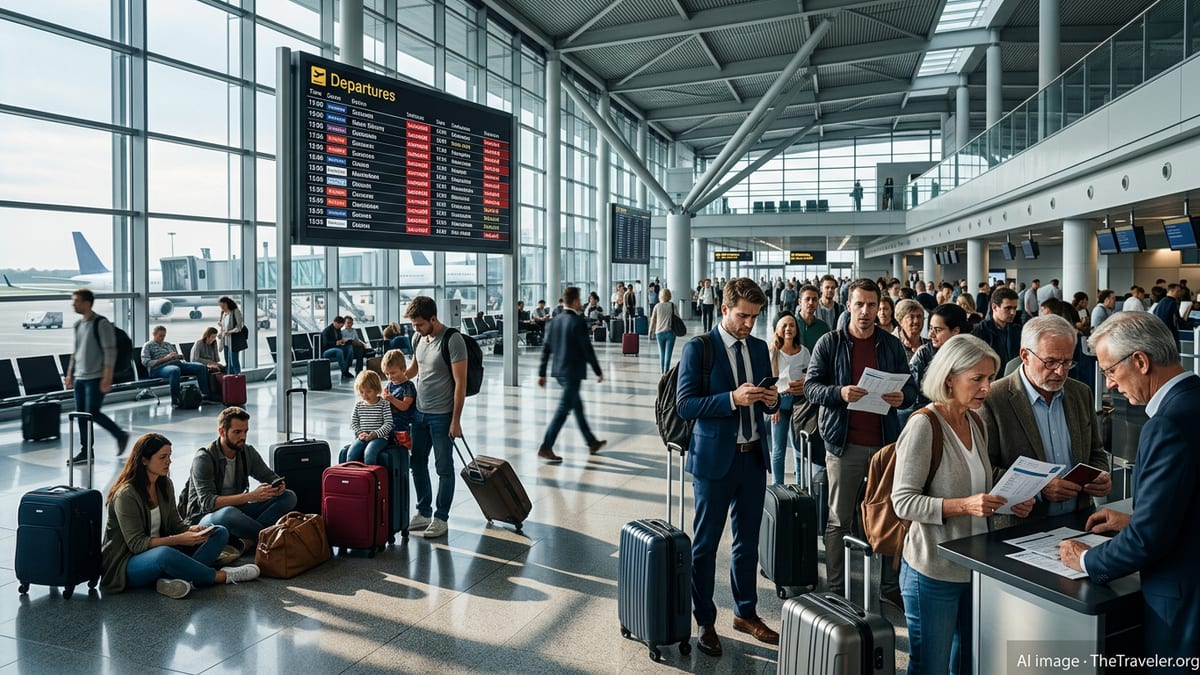
For travelers caught in the middle, the effect of even a few dozen disrupted flights is far reaching. Reports from major European airports describe long lines at rebooking counters, passengers sleeping in terminals and families attempting to piece together alternative routes via rail or low cost carriers when their original itineraries evaporate.
Because the disruptions span nine countries, passengers often find themselves dealing with unfamiliar airports and multiple sets of operating rules. Someone departing from Poland on Finnair to connect through Helsinki, for example, may ultimately be rerouted on a mixture of KLM or British Airways flights via Amsterdam or London if their original flight is suspended and later legs are already full.
Travel rights experts point out that this type of multi carrier complexity can make it harder for passengers to understand who is responsible for assistance at each stage of the journey. While European and United Kingdom regulations entitle travelers to care in cases of long delays or cancellations, the practical experience at crowded help desks and call centers frequently falls short of expectations, particularly during peak disruption days.
In several affected markets, consumer groups have renewed calls for clearer communication standards and faster digital rebooking tools so that passengers are not solely dependent on overwhelmed airport counters. Public commentary has stressed that, although safety and airspace considerations must come first, travelers need more predictable support when itineraries fall apart.
Weather, Airspace Restrictions and Fleet Challenges
The current episode follows a series of stress events that have exposed structural vulnerabilities in European aviation. Earlier in the year, bouts of winter weather around Amsterdam and other northern airports triggered waves of cancellations, especially for carriers with dense hub operations. Airlines with limited spare aircraft and crews found it difficult to recover quickly once snow and ice forced temporary schedule reductions.
More recently, the extension of conflict zone advisories covering parts of the Middle East has continued to complicate long haul routing for European airlines. Publicly available regulatory bulletins and news coverage describe how carriers including KLM and British Airways have diverted or suspended flights that would normally transit sensitive airspace, adding extra time and cost to remaining services and reducing operational flexibility.
Finnair has faced a related but distinct challenge as traditional Asian routes have been curtailed or lengthened due to geopolitical constraints. Analysts note that this has reshaped the airline’s long haul network and placed more pressure on profitable transatlantic and regional services, in turn tightening margins for disruption when aircraft require unscheduled maintenance or when airport handling bottlenecks occur.
Industry observers add that lingering staffing gaps in ground handling and technical support at major hubs have limited the ability to recover from irregular operations. As aircraft rotations slip, airlines may choose to cancel select flights in order to protect the rest of the schedule, resulting in the kind of targeted suspensions and lengthy hold ups now being reported across the nine affected countries.
What Travelers Can Do During Ongoing Disruptions
With network pressures likely to persist into the peak summer period, travel specialists advise passengers in Europe to build additional resilience into their plans. Public guidance commonly emphasizes checking flight status frequently in the 24 hours before departure, registering for airline notifications and keeping booking references and travel insurance details easily accessible.
On days when widespread disruption is reported, experts recommend arriving at the airport earlier than usual and preparing for potential re-routing. Travelers connecting through Amsterdam, London or Helsinki are encouraged to have a basic understanding of alternative routes to their final destination, including nearby hubs in Germany, Spain or other Schengen states that might offer last minute options.
Should a flight be among the 27 suspensions or 46 extended hold ups currently tracked, consumer advocates suggest documenting all expenses related to the disruption and retaining any written confirmation of the cause, as this information can be important when seeking refunds, vouchers or statutory compensation later on. Keeping digital copies of boarding passes and delay notifications can also streamline claims.
While the latest disruptions underline the fragility of airline networks in a period of heightened geopolitical and operational risk, analysts note that European regulators and industry bodies are monitoring performance metrics closely. How KLM, British Airways, Finnair and their peers adapt their schedules and customer support in the coming weeks is likely to determine whether the situation stabilizes or whether further waves of suspensions and hold ups spread across the continent’s key markets.