


More news on this day
A surge of more than 1,200 flight delays across major European hubs at the start of the peak season is triggering fresh travel disruption on routes into Spain’s biggest tourist gateways, affecting services to Barcelona, Madrid, Malaga, Alicante, Palma de Mallorca and the Canary Islands.
Get the latest news straight to your inbox!
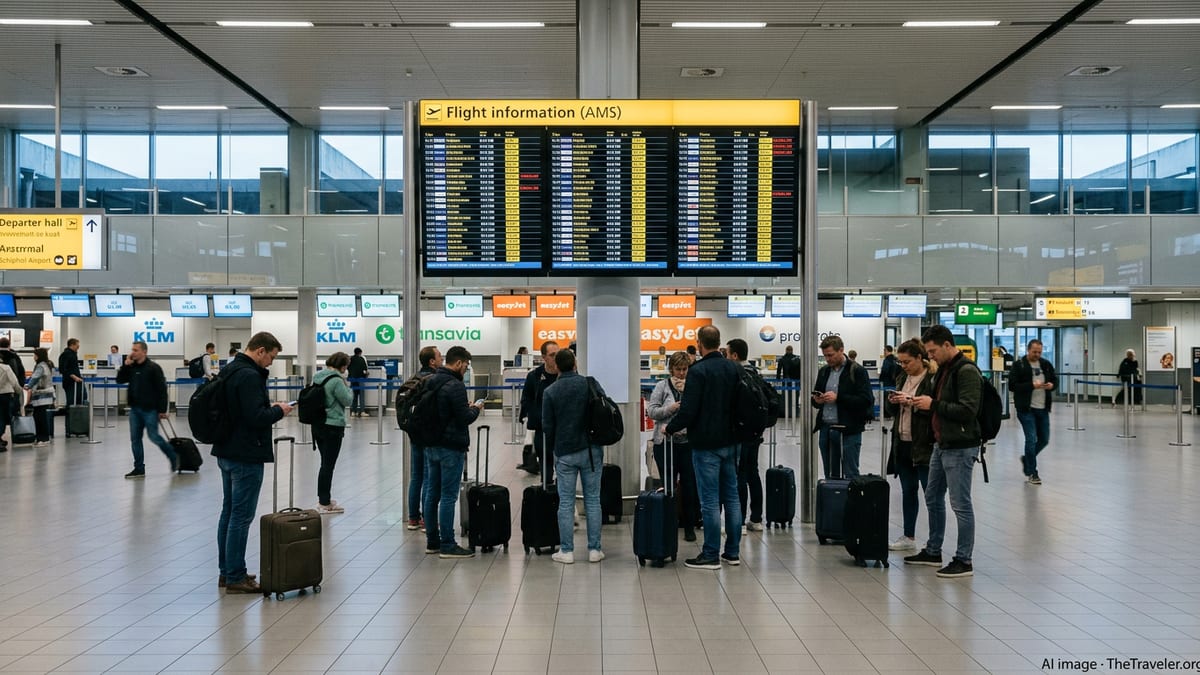
Chain reaction of delays hits Spain-bound routes
Recent data compiled from European flight-tracking platforms and regional media coverage indicates that more than 1,200 flights were delayed and over 70 services cancelled in a single day across major European airports, including key hubs for Spain-bound traffic. Reports highlight long knock-on delays rather than isolated cancellations, with aircraft and crews out of position as schedules come under early summer strain.
Many of the affected flights are part of dense weekend timetables linking northern Europe and the United Kingdom with Spanish destinations. Airlines frequently operate aircraft across multiple sectors in one day, meaning an early delay in a northern hub can cascade into evening services heading for Barcelona, Madrid, Malaga, Alicante, Palma and the Canary Islands.
Eurocontrol’s latest European Aviation Overview points to continued pressure on air traffic control capacity, with Spain listed among the countries where staffing and sector congestion are generating en route delays. Barcelona’s control area is cited among the busiest in Europe, with above average minutes of delay per flight, increasing the risk that minor schedule slips develop into significant disruption once airports reach peak volume.
While the overall average delay per flight across the continent remains moderate, the uneven distribution of pressure across hubs that feed Spain’s tourism market is creating localised flashpoints. Travellers transiting via large hubs in France, Germany and Italy report missed connections and extended waits when onward flights to Spanish resorts depart late or are rescheduled at short notice.
Barcelona and Madrid under pressure as traffic grows
Spain’s two largest gateways, Barcelona El Prat and Madrid Barajas, are entering the summer with traffic volumes already exceeding last year’s levels. Figures in Aena’s most recent strategic and traffic updates show double digit millions of passengers moving through both airports in the first quarter of 2026, with year on year growth above 4 percent at Madrid and slightly above 4 percent at Barcelona.
Publicly available information from air navigation provider ENAIRE and airport operator Aena indicates that Spain’s recovery in air traffic outpaced the wider European average through 2025 and into 2026. That growth is now converging with seasonal peaks, meaning that even modest operational issues abroad can quickly translate into overcrowded departure halls, longer security lines and departure boards filled with late-running services.
Earlier this year, weather related incidents at Barcelona demonstrated how quickly conditions can deteriorate. Local press reports documented days where strong winds led to dozens of diversions or cancellations, straining handling capacity and leaving passengers seeking alternative connections to reach Madrid, Palma or the Canary Islands. The current wave of Europe wide delays is different in cause but similar in its ripple effect, as minor timetable changes compound into network wide disruption.
Madrid, a critical hub for both domestic and long haul connections, is particularly exposed to these chain reactions. When flights from northern Europe arrive late, passengers continuing to secondary Spanish cities or island destinations often face missed connections, rebookings and overnight stays, with pressure intensifying on high demand routes to the Balearic and Canary archipelagos.
Coastal gateways and islands feel the strain
On Spain’s Mediterranean coast, Malaga and Alicante are entering what forecasts describe as another record breaking season. Coverage drawing on official statistics shows Malaga Airport handling more than 10 million passengers in the first five months of 2026 alone, with May among the busiest months in its history and international leisure traffic driving the increase.
These coastal airports function as end points in complex routings that often begin in regional UK and European airports and route via an intermediate hub. When initial sectors are delayed, evening holiday flights into Malaga, Alicante or Palma are among the most vulnerable to rolling disruption. Travellers have already reported extended queues, late night arrivals and missed transfers to resort areas as ground transport providers struggle to adjust to shifting arrival times.
The Balearic and Canary Islands face a particular challenge because alternative options are limited once flights are disrupted. Regional news from earlier in the year highlighted how even a small number of weather related diversions in the Balearics forced aircraft to reposition and schedules to be rewritten, illustrating how sensitive island operations are to disruption. With summer traffic now ramping up, any recurrence of weather or capacity issues elsewhere in Europe could quickly affect high frequency connections between Palma, Ibiza, the mainland and northern European cities.
In the Canary Islands, a recent high profile example of a delayed departure involving a visiting head of state underscored that even priority flights are not immune to technical issues and congestion. Publicly available accounts pointed to a combination of operational glitches and airspace constraints, reflecting the same structural pressures that regular holidaymakers may encounter through July and August.
Weather, heat and border controls add to disruption risk
Alongside infrastructure and scheduling pressures, weather and climate conditions are beginning to play a larger role in Spain’s summer travel picture. Recent meteorological briefings and coverage from pan European outlets describe an early return of intense heat across Spain, with “tropical nights” forecast for coastal cities such as Alicante and inland capitals including Madrid. High daytime temperatures are also set to climb toward typical July levels across much of the peninsula and islands.
Hot conditions can disrupt operations in several ways. Aircraft may face minor performance restrictions on takeoff at the hottest times of day, and thunderstorms triggered by heat can produce temporary airspace closures, diversions or ground stops. On the ground, extreme temperatures place additional strain on airport staff and passengers already coping with queues at check in, security and passport control.
For many international visitors, especially those arriving from the United Kingdom and outside the Schengen Area, bottlenecks at border control are an additional concern. Commentators following the roll out of the European Union’s new Entry Exit System have warned of the potential for extended waiting times at passport booths in busy holiday airports such as Alicante, Palma and island gateways. Combined with late arriving flights, this raises the possibility of long arrivals processes even when aircraft ultimately touch down close to schedule.
Warnings circulated in consumer travel coverage advise passengers to arrive earlier than usual at departure airports and to allow generous connection times on multi sector itineraries. Travellers heading for Spain’s coastal resorts and islands are being encouraged to factor in the likelihood of queues and temperature related discomfort when planning their journeys.
What travellers can do if delays hit Spanish holiday plans
Consumer information platforms and aviation analysts are stressing that the current pattern of disruption does not necessarily indicate a full scale meltdown, but rather a tight system in which relatively small issues can have outsized impacts on individual journeys. With Spain’s airports handling record or near record volumes, passengers on peak weekend services to Barcelona, Madrid, Malaga, Alicante, Palma or the Canary Islands are more exposed to these pressures.
Travel rights guidance reiterates that passengers flying to or from European airports are protected under EU air passenger regulations that set out compensation rules for long delays and cancellations, depending on the cause and length of disruption and the flight distance involved. However, these protections do not prevent queues or missed connections, so proactive planning remains essential.
Industry facing reports recommend several practical steps for those travelling to Spain this summer. Booking earlier flights in the day, leaving wider margins for connections, choosing direct services where possible and closely monitoring airline apps or airport information screens can all reduce the risk of severe inconvenience. Travel experts also point to the value of flexible accommodation and transport arrangements at destination in case of late arrivals.
With peak holiday season only just beginning, aviation data suggests that pressure on Europe’s air traffic network and Spain’s busiest tourist airports is likely to intensify in the coming weeks. For now, the picture is one of a stressed but functioning system, in which informed and flexible travellers stand the best chance of navigating delays and reaching Spain’s beaches and cities with only minor disruption.