


More news on this day
Korean Air is adding a new daily link between Seoul Incheon and Hiroshima in December, underscoring how rapidly air travel is expanding between South Korea and Japan as tourism flows hit historic highs in both directions.
Get the latest news straight to your inbox!
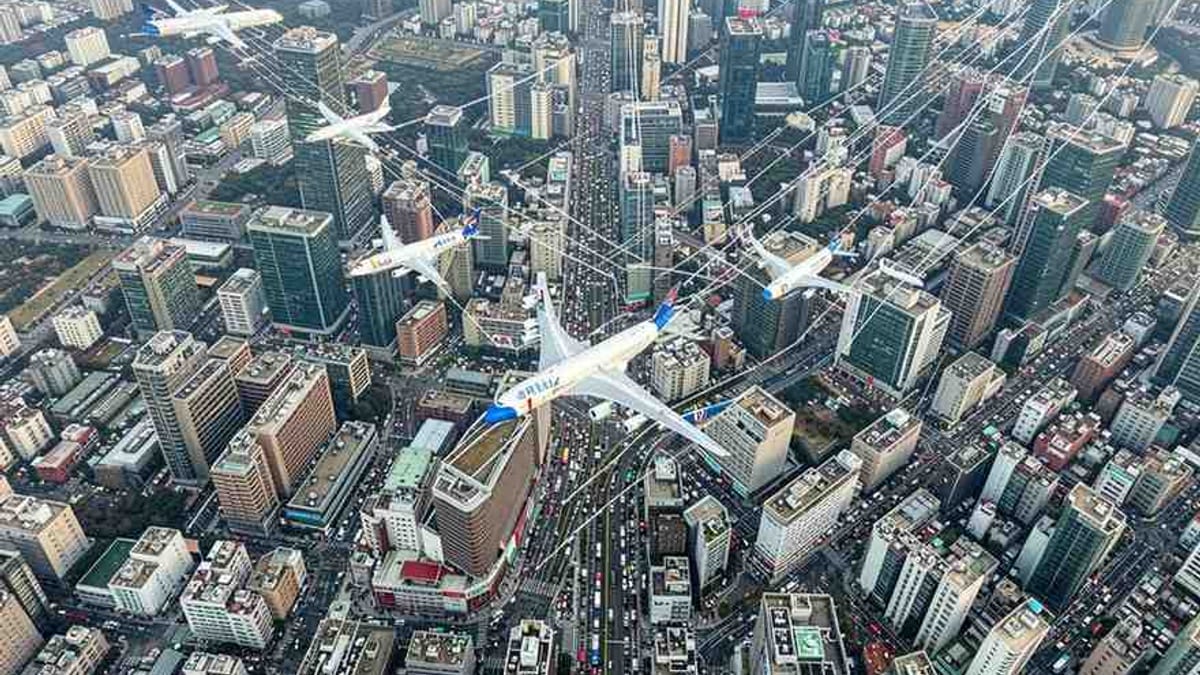
New Daily Incheon–Hiroshima Flights Set to Launch
According to Korean Air’s latest network update, the carrier will inaugurate a new nonstop route between Seoul Incheon and Hiroshima on December 23, operating one roundtrip flight per day. The service will use Boeing 737-8 aircraft and is being introduced as part of a broader expansion of Korean Air’s short-haul Asian network designed to capture rising regional demand.
The new flight is scheduled to depart Incheon in the morning and return from Hiroshima in the afternoon, giving both leisure and business travelers a full day at either end. The timetable is structured to connect into Korean Air’s wider international network at Incheon, creating one-stop itineraries from Hiroshima to long-haul destinations in North America, Europe, and Southeast Asia through Seoul.([news.koreanair.com](https://news.koreanair.com/%EB%8C%80%ED%95%9C%ED%95%AD%EA%B3%B5-%EC%9D%B8%EC%B2%9C%ED%9E%88%EB%A1%9C%EC%8B%9C%EB%A7%88-%EB%85%B8%EC%84%A0-%EC%8B%A0%EA%B7%9C-%EC%B7%A8%ED%95%AD-12%EC%9B%94-23%EC%9D%BC%EB%B6%80%ED%84%B0/?utm_source=openai))
Hiroshima Airport, already an important regional gateway within western Japan, has been working to strengthen its international portfolio as passenger numbers recover from the pandemic. Historically linked to Seoul by other carriers, Hiroshima will now regain a direct connection with Korean Air, bolstering access for travelers from the Chugoku region who are looking to reach South Korea or transfer onwards.([en.wikipedia.org](https://en.wikipedia.org/wiki/Hiroshima_Airport?utm_source=openai))
The move follows Korean Air’s recent resumption and growth of several Japan routes as demand returns, including the reopening of its Seoul–Nagasaki service in late 2024 after an extended suspension. Taken together, these additions point to renewed confidence in the Japan market and a strategy focused on reconnecting secondary Japanese cities to the carrier’s global network via Incheon.([en.wikipedia.org](https://en.wikipedia.org/wiki/Nagasaki_Airport?utm_source=openai))
Record South Korean Travel to Japan Underpins New Capacity
The Hiroshima launch comes as Japan experiences unprecedented inflows of South Korean visitors. Japan welcomed a record 36.9 million international arrivals in 2024, with South Korea ranking as the single largest source market at around 8.8 million visitors, a gain of more than 26 percent on the previous year.([nippon.com](https://www.nippon.com/en/japan-data/h02262/japan-sets-new-record-with-36-9-million-international-visitors-in-2024.html?utm_source=openai))
More recent estimates from the Japan National Tourism Organization indicate that South Koreans continue to top the visitor rankings in 2026. Preliminary July figures show nearly 895,000 arrivals from South Korea in a single month, up more than 30 percent year on year and ahead of every other market.([reddit.com](https://www.reddit.com/r/japan/comments/1vsklm5/foreign_visitors_to_japan_hit_344_mil_in_july_new/?utm_source=openai))
Industry analysis notes that the weak Japanese yen has significantly boosted purchasing power for South Korean travelers, making Japan’s cities, regional destinations, and shopping hubs comparatively more affordable. Short flight times, dense low-cost carrier competition on core routes, and visa-free travel have reinforced Japan’s position as the default short-haul getaway for many South Koreans.([yanolja-research.com](https://www.yanolja-research.com/brief/view/166?lang=en&utm_source=openai))
This robust demand has encouraged both full-service and low-cost airlines to redeploy capacity into Japan, especially from Seoul and Busan. Airports across western Japan have reported record or near-record schedules for international services, with operators citing additional links to South Korea as a key driver of growth.([kansai-airports.co.jp](https://www.kansai-airports.co.jp/en/news/2024/1142/E_20250328_PressRelease_S25.pdf?utm_source=openai))
Outbound Korean Travel Surges Back Beyond Pre‑Pandemic Levels
The daily Hiroshima flights also reflect a wider rebound in South Korea’s outbound travel market. Government and industry data show that South Korean departures overseas have largely surpassed pre-pandemic levels, with Japan at the forefront of the recovery. Research compiled by travel data providers indicates that around 8.8 million South Koreans visited Japan in 2024, which was already substantially higher than 2019 volumes.([yanolja-research.com](https://www.yanolja-research.com/brief/view/166?lang=en&utm_source=openai))
Trade and tourism reporting from the United States and other destinations highlights that South Korean travelers are spending strongly and traveling frequently, supported by a resilient labor market and an active online travel retail environment. Social commerce and mobile platforms have made it easier for consumers to book short-notice trips, packaged deals, and themed itineraries, often featuring regional Japanese cities accessible via secondary airports.([trade.gov](https://www.trade.gov/country-commercial-guides/south-korea-travel-and-tourism?utm_source=openai))
At the same time, South Korea’s own inbound tourism sector has rebounded, with more than 16.3 million foreign visitors recorded in 2024, close to pre-Covid levels. This two-way flow has strengthened aviation ties as carriers build schedules that cater both to Koreans holidaying abroad and to overseas visitors transiting through Incheon to reach South Korea and onward destinations.([en.wikipedia.org](https://en.wikipedia.org/wiki/Tourism_in_South_Korea?utm_source=openai))
For airlines such as Korean Air, the combination of strong outbound demand, growing inbound interest, and favorable currency dynamics across Northeast Asia has created an environment where additional regional capacity can be profitably deployed. The Hiroshima route is a clear example of how carriers are seeking to leverage this momentum in specific city pairs that previously struggled to sustain daily frequencies.
Hiroshima’s Strategic Role in Japan–Korea Connectivity
Hiroshima occupies a strategic position within western Japan’s transport network, with rail and road links that extend across the Chugoku and Shikoku regions. From an aviation perspective, Hiroshima Airport sits within reach of major population centers that do not all have large international hubs, giving a daily Incheon connection outsized relevance for local travelers seeking convenient access to global routes.([en.wikipedia.org](https://en.wikipedia.org/wiki/Hiroshima_Airport?utm_source=openai))
With Korean Air’s new service, passengers in Hiroshima and surrounding prefectures will gain same-day connections through Incheon to North America, Europe, Oceania, and Southeast Asia, as well as to South Korea’s own domestic network. This effectively expands Hiroshima’s long-haul reach without requiring direct intercontinental flights, a model that has become increasingly common for mid-sized regional airports in Asia.([news.koreanair.com](https://news.koreanair.com/%EB%8C%80%ED%95%9C%ED%95%AD%EA%B3%B5-%EC%9D%B8%EC%B2%9C%ED%9E%88%EB%A1%9C%EC%8B%9C%EB%A7%88-%EB%85%B8%EC%84%A0-%EC%8B%A0%EA%B7%9C-%EC%B7%A8%ED%95%AD-12%EC%9B%94-23%EC%9D%BC%EB%B6%80%ED%84%B0/?utm_source=openai))
For South Korean travelers, Hiroshima offers access to a mix of heritage sites, including the Hiroshima Peace Memorial and Itsukushima Shrine, alongside coastal landscapes and culinary tourism in nearby prefectures. Improved air access is expected to support both first-time visitors and repeat travelers exploring beyond Japan’s largest cities.
Regional tourism organizations in Japan have been working to disperse visitor flows away from highly concentrated hotspots, particularly as inbound volumes reach or surpass pre-pandemic records. Direct links to Seoul align with that strategy by making it more attractive for Korean travelers to base themselves in cities such as Hiroshima while still connecting easily to other parts of Japan by rail.([jtbcorp.jp](https://www.jtbcorp.jp/en/newsroom/asset/20250109_14/250109_2025_January-December_Travel_Trend_Outlook.pdf?utm_source=openai))
What the New Route Signals for Northeast Asian Aviation
Korean Air’s Hiroshima move is part of a broader trend of carriers refining regional networks in Northeast Asia as demand patterns evolve. While major hubs like Tokyo, Osaka, and Seoul continue to dominate traffic volumes, secondary city pairs are increasingly targeted when data show sustained demand and the potential for onward connectivity.
Sector-wide statistics from South Korea and Japan point to a long-term structural shift in travel behavior, with more frequent short-haul trips substituting for fewer, longer holidays. Industry research suggests that South Koreans in particular are traveling abroad more often than before the pandemic, with Japan accounting for a significant share of those incremental journeys.([statista.com](https://www.statista.com/topics/6835/outbound-travel-in-south-korea/?utm_source=openai))
For Hiroshima, the daily Incheon service represents a competitive step in a crowded regional market where neighboring airports, including Kansai and Fukuoka, are also courting carriers from South Korea. For Korean Air, it strengthens the airline’s positioning against low-cost rivals on Japan routes by emphasizing connectivity, schedule reliability, and integration into a global network.
If current trends in South Korea–Japan travel continue, additional frequency adjustments or new city pairings are likely across the region. The new daily Incheon–Hiroshima flights illustrate how even a single added route can subtly reshape the travel map, giving passengers more choices and helping distribute booming tourism flows more widely across both countries.