


More news on this day
Greece’s booming tourism sector is testing the limits of the country’s air traffic system, as record passenger volumes coincide with mounting disputes over controller capacity, staffing and pay across key airports and airspace centers.
Get the latest news straight to your inbox!
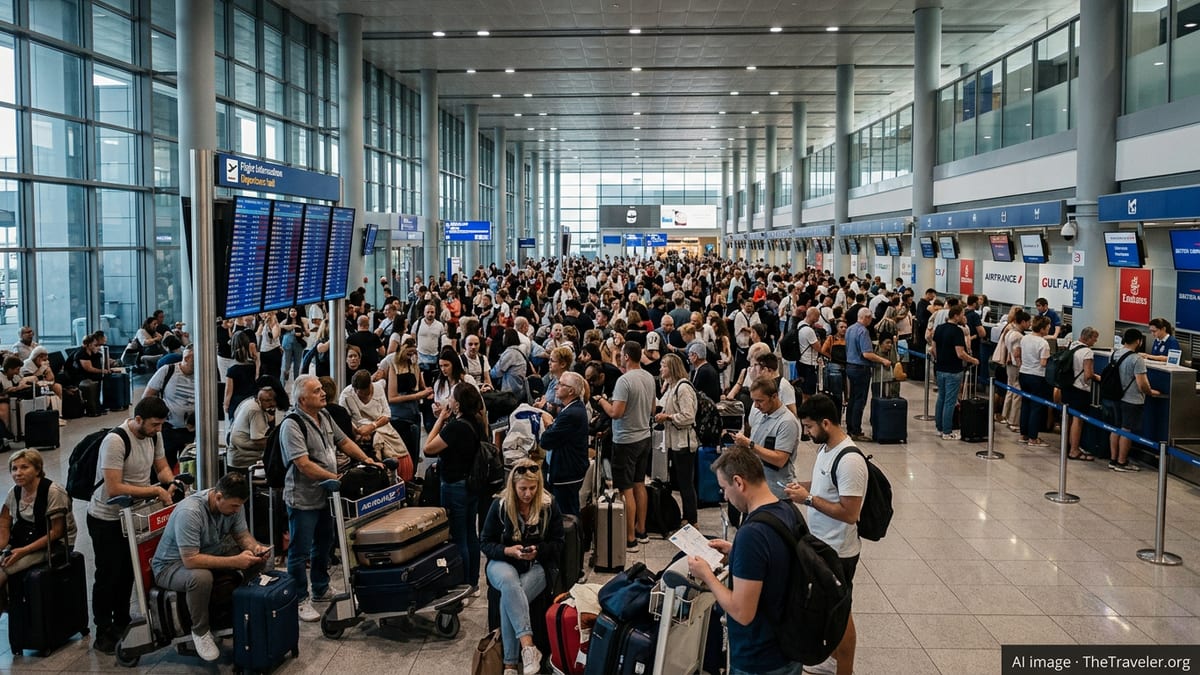
Record Arrivals Push Airport Capacity to the Edge
After several consecutive record seasons, Greece is entering another peak summer with passenger numbers still climbing. Data from tourism and aviation analysts indicate that international air arrivals continued to rise in both 2025 and the first half of 2026, with more than 10.7 million international arrivals recorded between January and June 2026 alone, an increase of nearly 4 percent year on year.
Athens International Airport remains the country’s primary gateway and continues to post all-time highs. Publicly available traffic reports show that the airport handled close to 34 million passengers in 2025 and more than 12.2 million passengers in the first five months of 2026, about 5 percent more than in the same period of 2025. The numbers confirm that post-pandemic growth has not slowed, despite wider economic concerns in key source markets.
Regional hubs are under similar pressure. Fraport Greece, which manages 14 regional airports including popular leisure gateways such as Rhodes, Chania and Mykonos, reported that its network served roughly 250 million passengers cumulatively between 2017 and 2025, with traffic still edging higher last year. Heraklion, Rhodes and Chania in particular are described in specialist aviation coverage as operating well beyond the design capacity of their older terminals.
The surge is being driven by a combination of expanded airline schedules, intensified competition on leisure routes and Greece’s strong brand as a relatively affordable Mediterranean destination. Yet the infrastructure built for far smaller volumes is now at the center of a growing confrontation between air traffic controllers, airport operators and policymakers over how to keep the system running safely and on time.
En‑route Delays Mount in Greek Airspace
Network performance data from Eurocontrol highlight how Greece has become a critical pressure point in the wider European system. Recent summer briefings from the agency show that Greek airspace has accounted for a disproportionately high share of en‑route delays in 2026, with around 14 percent of total network en‑route delay attributed to Greece and average delay minutes significantly higher than in 2025.
Much of this disruption is linked to the Athens and Makedonia area control centers, which manage dense flows of overflights and holiday traffic to the Aegean islands and eastern Mediterranean. Eurocontrol’s planning documents for the 2026–2030 period cite recurring capacity and staffing constraints in Greek air traffic management as key contributors to delays, alongside weather and geopolitical reroutings that are diverting additional flights through the region.
Greek aviation authorities have responded by emphasizing that not all delay statistics reflect shortcomings within local operations, arguing in public statements that a significant portion is tied to network‑wide flow management decisions. Nevertheless, the persistent gap between rising demand and limited controller capacity has sharpened internal disputes over staffing levels, overtime and the pace of planned modernization projects.
This tension is surfacing just as airlines attempt to operate denser summer schedules to capture strong leisure demand. Industry observers warn that even modest strikes or work‑to‑rule actions in Greek air traffic control can reverberate across Europe, amplifying knock‑on delays from London and Frankfurt to smaller regional airports that depend on tight turnaround times.
Controllers Press for Staffing and Technology Upgrades
Greek air traffic controllers have repeatedly raised concerns about workload, system resilience and investment in new technology. Union communications and local media coverage describe a workforce that has struggled to keep pace with rapid growth in tourism and overflight traffic, citing aging equipment and staffing numbers that they argue are not aligned with today’s traffic peaks.
According to published summaries of social‑partner negotiations, disputes typically center on workload distribution between control centers, the use of overtime to cover peak periods, and the speed at which the state and airport operators implement modernization programs pledged in national aviation plans. Eurocontrol’s long‑term network outlook also stresses the need for Greece to deliver planned sectorization changes, additional controller positions and new tools if it is to handle forecast demand safely.
These technical debates have increasingly visible consequences for travelers. Targeted work stoppages in previous seasons have forced airlines to trim schedules or apply lengthy ground holds, while the risk of short‑notice industrial action now forms part of summer contingency planning for tour operators across Europe. Even without formal strikes, tighter staffing margins can prompt flow restrictions on busy days, resulting in creeping departure delays at island airports and missed connections at major hubs.
At the same time, the government faces pressure to balance fiscal constraints with the demands of a sector that is central to the national economy. Tourism accounted for more than 22 billion euros in travel receipts in 2025, according to the Bank of Greece, making reliable air connectivity a strategic priority even as public finances remain closely scrutinized.
Island Gateways Feel the Strain of Mass Tourism
Beyond the en‑route system, the physical limits of many island airports have become a flashpoint for local communities and the tourism industry. Analysis of 2025 traffic data shows Heraklion in Crete emerging as the busiest regional airport after Athens, with more than 10 million passengers moving through a terminal widely described by aviation commentators as operating well beyond its intended capacity.
Other leisure airports tell similar stories. Fraport Greece’s latest traffic bulletins underline continued growth at Rhodes and Chania, while separate tourism surveys note that the broader Southern Aegean region, which includes Mykonos and Santorini, captures the largest share of Greece’s tourism receipts. Yet physical expansion is constrained by land availability, environmental regulation and community opposition to unchecked growth.
The summer congestion is not limited to the skies. Local support services, from baggage handling to ground transport and accommodation, are stretched as island populations multiply several times over in July and August. When air traffic controllers impose flow restrictions to manage safety, the resulting bottlenecks at terminals can quickly cascade into long queues, missed ferry connections and overbooked hotels.
Plans for new infrastructure are slowly advancing. The long‑discussed Kastelli airport project in Crete, designed to replace Heraklion with an initial capacity of about 11 million passengers and potential expansion to up to 18 million, is cited in aviation industry reports as the flagship response to chronic overcrowding. However, construction timelines mean that current terminals must still absorb several more peak seasons under heavy pressure.
Economic Stakes Rise as Spending Patterns Shift
The battle over air traffic capacity is unfolding against a backdrop of changing visitor behavior. Recent figures released by the Bank of Greece and analyzed by European media show that total arrivals and aggregate travel revenues both increased in the first half of 2026, yet per‑visitor spending from some key markets is weakening. For example, receipts from German travelers reportedly fell in June 2026 even as arrivals from Germany rose, highlighting a growing volume‑versus‑value dilemma.
Regional analyses point to similar trends in specific destinations. Crete, for instance, recorded about 5.6 million international air arrivals in 2025, but local tourism researchers note that overall revenues on the island declined compared with the previous year. At the same time, average length of stay has shortened, suggesting a shift toward shorter, potentially lower‑yield trips enabled by cheap flights and dense airline schedules.
For Greek policymakers and industry stakeholders, these dynamics complicate decisions about how much to expand capacity. On one hand, maintaining smooth air traffic flows is vital to protecting the country’s reputation as an accessible, reliable holiday destination. On the other, rising volumes without commensurate spending growth could strain infrastructure, communities and the environment for diminishing marginal returns.
As another high‑pressure summer unfolds, the contest between booming demand and finite air traffic resources is likely to intensify. The outcome of ongoing negotiations over staffing, investment and operating rules in Greek airspace will help determine whether the country can sustain its role as one of Europe’s busiest holiday gateways without prolonged disruption for millions of visitors.
Eurocontrol: Air traffic in the European network in summer 2026
Fraport Greece: Passenger traffic growth figures