


For many cruise passengers, Kusadasi is a quick gateway to ancient Ephesus and a whirlwind of shopping in the hours before or after a tour. The old town bazaar, streets around the Kaleiçi walls and the cruise-port complex have become a dense shopping maze of leather, textiles, ceramics, spices and “genuine fake” designer goods. Navigating it all can be great fun, but only if you understand how pricing, bargaining and tourist traps really work here in 2026. This guide focuses on what is worth buying, where to find it and how to avoid coming back to the ship with regrets instead of good souvenirs.
Get the latest updates straight to your inbox!
Understanding Kusadasi’s Bazaar Layout and Atmosphere
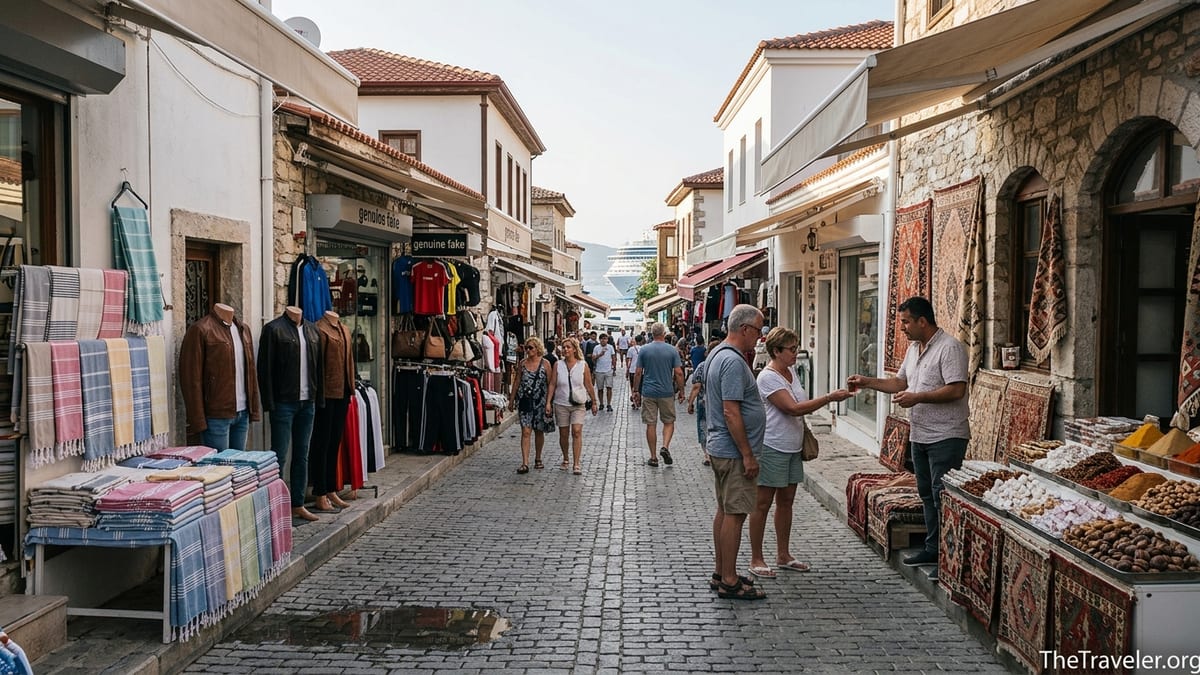
The main shopping area of Kusadasi is compact, which is good news for cruise passengers with limited time. Step out of the Ege Port cruise terminal and within a few minutes you are inside an enclosed port-side bazaar with more than a hundred small shops selling leather jackets, carpets, gold and silver jewelry, T-shirts and magnets. From there, the streets slope gently up into the old town and the Kaleiçi bazaar, a warren of pedestrian lanes wrapped around remnants of historic walls. Most visitors never need a taxi to shop; the core is within roughly a 5 to 10 minute walk from the ship.
The feel of the bazaar changes noticeably as you move away from the pier. Near the port entrance, shopkeepers are highly focused on cruise traffic and may call out in English, German or French, sometimes stepping into your path to get attention. Deeper in Kaleiçi, the pace is a little slower. You are more likely to find small, family-run textile or ceramic shops where the owner has time to chat over a glass of tea and explain the story behind certain designs or local products.
Opening hours vary slightly by season, but most bazaar shops tend to open by late morning and stay open into the night, especially when ships are in port. In summer, many shopkeepers take an afternoon lull and are more active again after 6 pm when the heat drops. If your ship stays late, browsing in the evening can be more pleasant, with slightly fewer day-trippers and sometimes more flexibility on prices once the initial rush has passed.
The overall atmosphere is energetic, sometimes intense. The streets are narrow, with awnings and hanging goods creating partial shade. You will see displays of leather jackets in front of shops, stacks of Turkish towels in rainbow pastels, and windows crammed with glittering gold jewelry or “genuine fake” sportswear. The air often smells of leather polish, roasted nuts, Turkish coffee and occasionally hookah smoke from nearby cafes.
Kaleiçi Bazaar vs Port-Side Shops: Where to Focus Your Time
Most cruise passengers encounter the port-side complex first: a modernized, semi-enclosed bazaar directly outside the security gate. It offers the classic selection of Kusadasi staples: leather coats, handbags, suitcase sets, “genuine fake” designer sneakers, carpet galleries, jewelry stores and rows of souvenir stands. The convenience is unbeatable, but this is also where prices are often at their highest, especially during the morning rush when several ships are docked.
Walk inland for five to ten minutes and you reach the old town bazaar around Kaleiçi. Here, prices are usually a little more flexible and the range of goods widens to include more everyday Turkish items: simple cotton clothing, local-brand towels and bedding, household textiles, pottery, spices and regional food products like dried figs and pistachios. Many repeat visitors to Kusadasi prefer to buy here because the atmosphere feels slightly less like an organized port mall and more like a traditional town center that also happens to cater heavily to tourists.
In practical terms, if your main interest is a quick look and a couple of basic souvenirs before heading back to the ship, the port bazaar may be enough. If you are serious about buying leather, a carpet or higher-quality textiles, or if you simply dislike aggressive sales tactics, it is often worth walking deeper into Kaleiçi. Even moving just two or three streets away from the cruise terminal can change the tone of interactions and the starting prices you hear.
For travelers with a full day, one good strategy is to treat the port shops as a reference point. Note a price for a leather jacket or a set of peshtemal towels near the terminal, then compare what you see farther up in Kaleiçi. You will quickly get a sense of realistic bargaining ranges and whether that “today only” offer at the port is really special or just standard sales theatrics.
What Is Actually Worth Buying in Kusadasi?
Kusadasi has built its shopping reputation around several categories: leather, textiles, jewelry, ceramics, food products and small souvenirs. Choosing wisely means distinguishing between items that really showcase Turkish craft or regional flavor and items that could have been produced anywhere. For most visitors, the most satisfying purchases are quality leather goods, Turkish towels and bedding, some forms of jewelry, and edible products such as Turkish delight, nuts and olive oil.
Leather goods are a major draw. Many shops display men’s and women’s jackets in supple lambskin or cowhide, along with handbags and belts. While the “original price” tags are usually inflated, you can find well-finished jackets that would cost far more in Western Europe or North America. A mid-range leather jacket that might be tagged at 450 to 600 euros at the first offer can often be bargained down to closer to 250 to 350 euros, depending on the season, style and how serious you appear about walking away. The key is to focus on stitching, lining quality and fit, not just brand names printed on the label.
Textiles are another strong category. Turkish cotton is justly famous, and Kusadasi shops are full of peshtemal towels, bathrobes, bedding and table linens. A decent quality peshtemal suitable for the beach or bathroom may be quoted at 15 to 20 euros near the port, but in less aggressive shops in Kaleiçi or at weekly street markets you can often agree on around 8 to 12 euros, especially if you buy several. Towels marked as “100 percent Turkish cotton” vary widely; feel the weight and weave, and avoid anything that feels too thin or scratchy for the claimed quality.
For smaller gifts, genuine Turkish delight, local nuts, dried fruits and spices are generally a better bet than most trinkets. Kusadasi is close to Aegean agricultural regions around Selçuk and the Meander Valley, known for figs, grapes and olives. Pre-packed boxes of lokum are sold everywhere; look for shops where the sweets appear fresh and slightly soft rather than rock-hard, and where staff are willing to let you taste before you buy. A medium box of better-quality Turkish delight might cost around 6 to 10 euros, with bulk purchases dropping the price per box.
Bargaining in Kusadasi: How It Really Works
Bargaining is not just allowed in Kusadasi’s bazaars; it is expected for most non-food items. Many shops, especially those marketing leather, carpets or designer-style clothing, quote an initial price that assumes you will negotiate and possibly walk away at least once. As a broad rule of thumb in the bazaar, the first price for a non-branded item might be 30 to 50 percent higher than what the seller is genuinely willing to accept. Serious bargaining often ends with a discount in the range of 20 to 35 percent, sometimes more if business is slow or you are buying several items.
One real-world scenario: you see a leather jacket at the port bazaar with a quoted price of 500 euros. After admiring it, you could respond with something like “It is nice, but too much for me. I was thinking more like 250.” The seller may react theatrically, counter around 420, then 380. If you stay friendly but firm, signaling that 250 to 280 is your limit and being prepared to leave, you may eventually settle somewhere around 300 to 330 euros. If the shop is busy or you seem hesitant, they may hold the line higher; in that case, do not be afraid to walk to another shop and compare offers.
Different categories call for different attitudes. For mass-produced souvenirs such as magnets, T-shirts or basic scarves, bargaining is typically quicker. If a stall quotes 10 euros for a magnet or cap, offering 5 and agreeing at 6 to 7 for several pieces is common. For higher-ticket items like carpets and gold jewelry, negotiations can stretch over tea and a detailed discussion of quality. Some carpet sellers will perform demonstrations, rolling out pieces and explaining knot counts or natural dyes. The longer you stay seated, the harder it can feel to decline, so only sit for a full presentation if you are open to buying or very comfortable saying no.
Culturally, bargaining works best when you remain polite and good-humored. Insulting offers, raised voices or accusations of “tourist pricing” tend to poison the interaction. Instead, smile, state your budget clearly, and use body language such as putting the item down and stepping back if the price is too high. If you truly dislike bargaining or find the pressure uncomfortable, consider focusing on shops with clearly marked fixed prices, such as some textile boutiques or international-brand outlets at the marina complex.
Fake Goods, “Genuine Fakes” and Cruise-Port Traps
Kusadasi bazaar culture is famous for its “genuine fake” goods. It is common to see large signs openly advertising “Genuine Fake Watches” or “Genuine Fake Bags” just a few minutes’ walk from the cruise terminal. These shops stock sneakers, tracksuits, handbags and T-shirts with logos of major luxury and sports brands at prices that are obviously too low to be authentic. A pair of “designer” sneakers that might retail for 200 to 300 euros in a European capital could be offered here for 60 to 80 euros, with room for bargaining. Quality ranges from convincing to clearly flimsy; in any case, the logos are unlicensed and would be considered counterfeit in many jurisdictions.
Jewelry and watches require particular caution. While some established jewelers in Kusadasi sell genuine gold and silver pieces with certificates, the smaller bazaar shops near the port sometimes mix lower-grade or plated items with claims of high purity. If you are offered a “solid gold” bracelet or a high-end Swiss watch at a fraction of normal retail price, assume it is not what the seller says. As a rough indicator, if a “Rolex” is priced at under 200 euros and displayed in a stall with no official branding or proper documentation, it is almost certainly fake regardless of how smooth the second hand seems.
Carpet and leather “factory” visits attached to cruise excursions are another classic cruise-port trap. Many tours from the ship to Ephesus or the House of the Virgin Mary end with a stop at a carpet workshop or leather fashion show, usually advertised as an educational demonstration. The weaving or catwalk segment may be interesting, but the commercial part can be extremely high pressure. Prices presented inside these venues are frequently higher than what you might pay for similar quality carpets or jackets in independent shops back in town, partly because the operator is paying commission to guides and tour companies.
Other common traps include “ancient coins” or “archaeological artifacts” sold near the port or on the road to Ephesus. Any item claimed to be a genuine Roman or Greek coin found locally and offered on a sidewalk or in the bazaar is almost certainly fake or at least of extremely dubious origin. Exporting real antiquities is illegal in Turkey, and legitimate dealers work under strict regulation, not out of back pockets or improvised tables. Treat such items as curiosities at best and avoid them altogether if you care about authenticity or legal issues at your home border.
Leather, Textiles and Carpets: Buying Big-Ticket Items Wisely
If you intend to make a significant purchase in Kusadasi, such as a leather jacket, a full set of Turkish cotton bedding or a hand-knotted carpet, it helps to arrive with a strategy. For leather, focus on cut, comfort and construction rather than logos. Try on several sizes, zip and unzip all pockets and check lining seams. Ask directly whether the leather is lamb, cowhide or goat and whether the shop offers alterations. Many reputable leather shops near Kaleiçi or along the streets leading up from the harbor can shorten sleeves or adjust waistlines within a day, sometimes within a few hours.
Textiles such as towels and linens are best judged by touch. High-quality peshtemal towels feel soft yet tightly woven, with a good weight for their size. Bed linens sold as “Egyptian” or “Turkish” cotton with extremely high thread counts at low prices should be treated skeptically; labels are easily printed. If you want a durable set of sheets or a duvet cover, choose something that feels solid and breathable, and ask if you can remove it from packaging to check size and stitching. Sellers who refuse any inspection may be protecting flimsy quality.
Carpets are the most complex purchase. In and around Kusadasi you will be offered everything from inexpensive machine-made rugs to expensive hand-knotted wool or silk carpets claimed to come from specific regions. A typical small hand-knotted wool rug presented during a “carpet demonstration” might be offered initially at 1,000 to 1,500 euros, often with promises of worldwide shipping and certificates. Discounts of 30 to 40 percent are sometimes achievable if you negotiate firmly, but judging true value without prior carpet knowledge is difficult. If you have not researched Turkish carpets before arriving, consider buying a smaller piece that you love aesthetically rather than attempting to invest in a collector item on the spot.
When considering shipping, check all details carefully. Many carpet and leather shops offer “free shipping” to Europe or North America. Ask clearly about transit time, insurance and what happens if the package is lost or the item arrives damaged. Make sure the exact item you chose is labeled, photographed and described on your invoice. Use a credit card rather than cash for larger purchases to retain some protection if something goes wrong later.
Currency, Payment and Practical Tips for Cruise Passengers
Kusadasi’s bazaar economy is based around foreign visitors, so most shops are comfortable taking euros and US dollars as well as Turkish lira. For higher-value items like leather and carpets, sellers often quote prices directly in euros, sometimes in dollars or pounds depending on the ship’s main clientele that day. Credit and debit cards are widely accepted in established shops, particularly in leather stores, carpet galleries and jewelry outlets; smaller stalls may still prefer cash for low-value souvenirs and snacks.
From a budgeting perspective, it can be helpful to decide ahead of time in which currency you prefer to think and pay. If you carry euros, ask the price in euros rather than allowing the seller to convert from lira at a rounded rate that may be less favorable. When paying by card, check whether the terminal is offering to charge you in your home currency under “dynamic currency conversion.” In most cases, choosing to pay in the local currency of Turkey and letting your bank handle the conversion yields a better rate.
Time management is crucial for cruise passengers. The main bazaar sits within roughly 500 meters of the port gate, so it is physically easy to shop right up to your all-aboard time, but the psychological pull of “just one more look” can be strong. Leave a comfortable margin to navigate back through the maze of shops, especially if you have walked farther into Kaleiçi or stopped for tea. If you are returning from a private Ephesus tour that drops you near the port, expect to be funneled through a line of shops that may try hard for one last sale before you re-enter the harbor.
Finally, consider your luggage reality. Many travelers have regretted buying heavy, bulky items such as large ceramic vases or multiple thick carpets that are awkward to carry or store in cabin closets. Lighter, packable goods like towels, pillowcases, scarves and boxed sweets are usually easier to live with after the trip. If you do invest in a big piece, such as a rug or leather coat, confirm shipping or packing options rather than assuming you can improvise at the last minute.
The Takeaway
Kusadasi’s bazaar scene is energetic, commercial and unapologetically aimed at separating visitors from their money, particularly in the cruise-port zone. Yet within this hustle there are genuine opportunities: soft Turkish cotton towels that will last for years, a well-cut leather jacket at a price below what you would pay at home, a small hand-knotted rug that becomes a favorite reminder of the Aegean, or tins of olive oil and boxes of Turkish delight that make excellent gifts.
The key is to approach shopping here with clear eyes and realistic expectations. Assume that the first price is negotiable, that anything branded at an implausibly low cost is not authentic and that organized “demonstrations” attached to tours are designed first and foremost to sell. Balance the thrill of bargaining with the discipline to walk away if a deal does not feel right. Focus on items that showcase local materials and skills rather than chasing global brand names.
If you do that, Kusadasi’s chaotic bazaar streets can become less of a tourist trap and more of a lively cultural encounter. Between calls of “my friend, where are you from,” offers of apple tea and the clink of tea glasses in tiny cafes, you can come away not only with shopping bags but with a vivid memory of a particular corner of Turkey and the way it does business with the world.
FAQ
Q1. Is it safe to buy leather goods in Kusadasi’s bazaar?
Yes, as long as you buy from established shops, inspect stitching and lining, and pay by credit card for higher-value items. Avoid making a rushed purchase at the first store you see and compare at least two or three shops before deciding.
Q2. How much should I expect to bargain down from the first price?
In many Kusadasi bazaar shops, initial prices are roughly 30 to 50 percent above what sellers will accept. Ending around 20 to 35 percent below the starting quote is common if you negotiate politely and are willing to walk away.
Q3. Are the “genuine fake” watches and bags legal to bring home?
Many countries technically prohibit importing counterfeit branded goods, even for personal use. While small quantities for personal wear are rarely checked in detail, there is always a risk of confiscation at customs, so you should consider that before buying obvious fakes.
Q4. Can I find fixed-price shops if I do not like bargaining?
Yes. Some textile boutiques, ceramics stores and international-brand outlets, particularly around the marina and in certain streets off the main bazaar, use fixed prices. You will pay a bit more than the lowest possible bargained price, but you avoid the negotiation ritual.
Q5. What are the best small souvenirs to bring back from Kusadasi?
Popular and practical choices include Turkish cotton peshtemal towels, good-quality Turkish delight, local nuts and dried figs, small ceramics like bowls and mugs, and simple silver jewelry without heavy branding.
Q6. How can I spot low-quality or fake carpets?
Machine-made carpets often have very regular, perfect backs and patterns, and the pile may feel synthetic. If a rug claimed to be hand-knotted wool or silk is extremely cheap compared to similar pieces elsewhere, or if the seller pushes you hard without letting you inspect the back, treat it as a red flag.
Q7. Do Kusadasi bazaar shops accept credit cards?
Most established shops selling leather, carpets, gold and higher-end textiles accept major credit and debit cards. Smaller stalls selling low-cost souvenirs may prefer cash. For big purchases, using a card gives you additional documentation and some consumer protection.
Q8. What currency should I use in the bazaar?
Euros, US dollars and Turkish lira are all commonly accepted. For clarity, ask for prices in a single currency and, if paying by card, choose to be charged in the local currency rather than your home currency when given the option.
Q9. Are port-side shops more expensive than those in Kaleiçi?
Often they are. Shops directly outside the cruise terminal pay higher rents and rely heavily on short-stay visitors, so starting prices tend to be higher. Walking a few streets into Kaleiçi usually brings more flexible pricing and sometimes better value.
Q10. Is it worth attending carpet or leather “factory” demonstrations from cruise excursions?
They can be interesting if you want to see how carpets are woven or leather is presented, but they are primarily sales events. Expect strong pressure to buy and prices that may be higher than in independent shops, so attend only if you are comfortable firmly saying no.