


More news on this day
Fresh Iranian drone and missile attacks on Kuwait are rippling through Middle East aviation, prompting renewed airspace restrictions, diversions and schedule cuts for travelers using Dubai and wider Gulf hubs.
Get the latest news straight to your inbox!
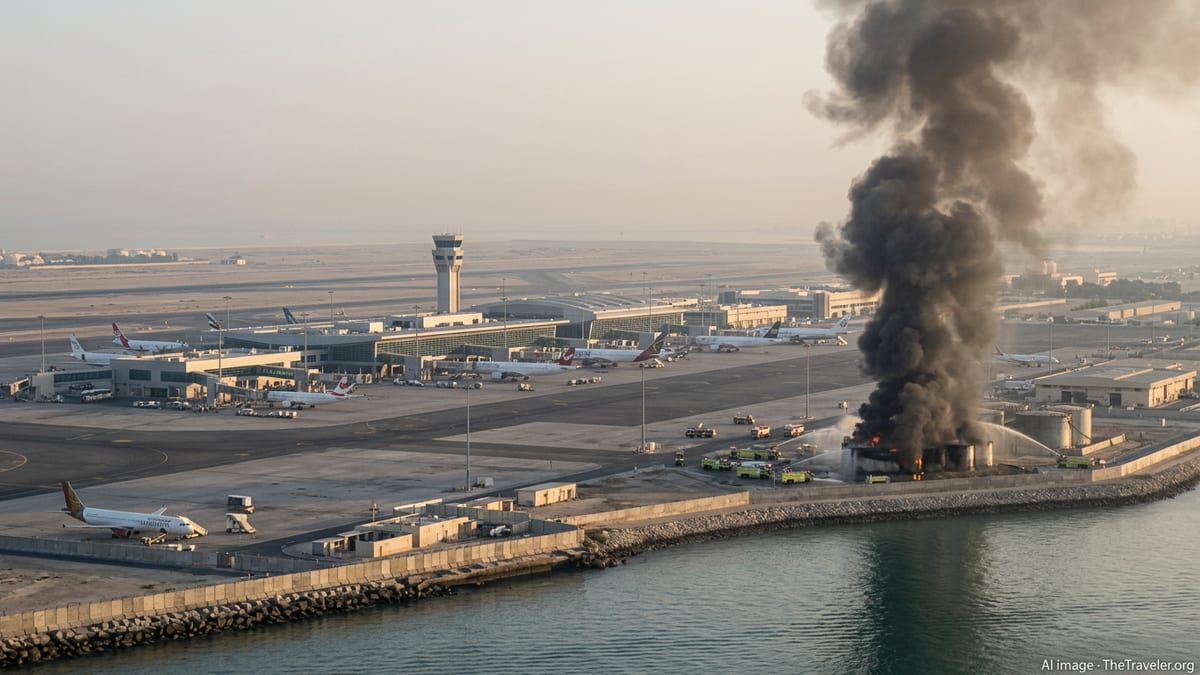
Repeated strikes deepen regional security concerns
Publicly available information shows that Kuwait has faced a new wave of missile and drone attacks in recent days, part of a broader confrontation between Iran and the United States and its regional partners. Reports from regional outlets describe overnight barrages in early September, with Kuwait’s air defenses intercepting multiple incoming projectiles over successive nights.
The Gulf Cooperation Council has described the latest incidents as heinous attacks that violate Kuwaiti sovereignty and threaten wider regional security, after missiles and drones were launched towards Bahrain, Kuwait and Jordan. The characterization reflects concern that the strikes mark an escalation in a conflict that has already affected civilian infrastructure and critical transport links across the Gulf.
Coverage of earlier phases of the campaign noted that Kuwait International Airport and surrounding areas have previously been hit during similar strikes, with casualties and damage to facilities. The renewed attacks have revived fears about the vulnerability of aviation hubs situated close to military targets and strategic shipping lanes in the northern Gulf.
Analysts cited in recent briefings on the Gulf security environment highlight that the small size of national airspaces and the density of civil and military traffic leave little margin for error when cross-border missile and drone activity increases, making short-notice restrictions more likely.
Kuwait airspace volatility and airport operations
Safe airspace monitoring resources and travel advisories indicate that Kuwait’s flight information region has opened and closed multiple times since the broader Iran conflict intensified earlier in 2026. Operators have repeatedly been advised to exercise caution or avoid parts of the northern Gulf, especially over waters where military activity can flare with limited warning.
Following earlier Iranian strikes this year, Kuwait’s civil aviation authority temporarily halted operations at Kuwait International Airport to assess damage and security risks, before allowing a gradual resumption of flights. In June, publicly available statements confirmed that traffic had been partially restored through specific terminals while other facilities remained closed due to previous damage.
The UK’s foreign travel advice, updated in early September, notes that Kuwait International Airport is currently operating via selected terminals serving national and foreign carriers, while at least one main terminal remains out of service. The guidance underscores that airports and airspace in the country could shut at short notice, urging passengers to monitor airline updates and local media for changes to flight status.
With new barrages reported this week, industry risk trackers warn that further short-term closures, runway inspections and diversions are possible if missile or drone debris is detected in or near flight paths. Even when attacks are intercepted, authorities may need to pause operations to check for shrapnel or unexploded fragments that could endanger aircraft movements.
Dubai and Gulf hubs feel the knock-on effects
Although the latest strikes have directly targeted Kuwait and neighboring states rather than the United Arab Emirates, Gulf-wide air traffic patterns mean disruption in one airspace quickly compounds elsewhere. Major hubs such as Dubai, Doha and Abu Dhabi rely on overflight corridors across Kuwait, Iraq and Iran for efficient connections between Europe, Asia and Africa.
After heavy exchanges of fire earlier in the year, several airline groups temporarily suspended services to key Gulf cities or rerouted flights to skirt higher-risk airspace. Some Gulf carriers have since rebuilt much of their schedules, but European and Asian airlines remain more cautious, with many continuing to bypass core Middle East routes or delaying full resumptions.
Recent airline bulletins show that some European carriers have paused services to Dubai and other Gulf destinations well into October, citing the security situation and airspace restrictions linked to the Iran conflict. Low-cost and network airlines have advised passengers that flights may be diverted around Iranian and Iraqi airspace, adding time and fuel cost to long-haul journeys, or in some cases cancelled altogether.
Travel industry analysis suggests that Dubai and other Gulf hubs are still handling fewer connecting passengers than before the current round of hostilities, as travelers and corporate clients factor in the risk of last-minute changes. That leaves the region’s flagship airports exposed to shifting routes that favor alternative hubs in Europe, Central Asia and the Indian Ocean when tensions spike.
Airlines adjust routes and schedules to manage risk
In response to continued volatility, multiple airlines have updated their operational guidance for flights into and through the Gulf. KLM’s travel alerts for customers booked between late February and mid-September state that the carrier is not flying through Iranian or Iraqi airspace and that flights to and from Dubai are currently suspended until late October, with rebooking and refund options offered to affected passengers.
A factbox published in late August on international airline schedules into the Middle East highlights that several European low-cost carriers have also suspended or reduced services to Dubai, Abu Dhabi, Amman and other regional destinations into the autumn season. These decisions reflect ongoing risk assessments based on government bulletins and aviation safety recommendations that urge caution over Bahrain, Kuwait, Qatar and parts of the wider Gulf.
For Kuwait specifically, earlier reports documented how Kuwait Airways had to reschedule or consolidate flights after drone attacks triggered temporary airspace closures, leading to clusters of delayed and stranded passengers. Even after operations resumed, the carrier encouraged travelers to check flight status closely, acknowledging that timetables could change with little notice while the threat of further strikes persisted.
Network planners note that each additional closure or reroute has a knock-on effect on fleet utilization and crew rotations, complicating recovery when demand is otherwise strong. As a result, some airlines prefer to reduce frequencies or pause routes rather than operate with high uncertainty over whether key corridors will remain open.
What travelers through Dubai and Kuwait should expect
Government advisories for Kuwait emphasize that the security environment remains fluid, with a risk of further missile and drone activity that could affect civilian infrastructure. Travelers are advised to allow extra time for journeys, maintain flexible plans and stay in close contact with airlines, especially when connecting through Gulf hubs that depend on overflight rights across contested airspace.
Industry observers expect that route structures into Dubai and neighboring airports will continue to evolve as airlines refine their risk assessments and as negotiations over the wider conflict proceed. Even if strikes subside, regulatory guidance from aviation safety bodies and national authorities may keep certain air routes constrained for an extended period.
For now, passengers flying to, from or across the Middle East face an environment where sudden diversions, extended flight times and last-minute cancellations remain possible. According to published coverage, carriers are prioritizing route safety and operational predictability, but the latest Iranian drone and missile barrages against Kuwait underline how quickly aviation in the region can be disrupted when geopolitical tensions intensify.
Travelers with imminent plans involving Kuwait, Dubai or other Gulf gateways are therefore encouraged to monitor advisory pages from their airlines and national foreign ministries, and to consider booking options that allow for changes without heavy penalties while the situation continues to evolve.
Kuwait condemns repeated Iranian attacks