


More news on this day
Kuwait has introduced a temporary visa extension framework allowing stranded visitors and residents to regularize their stay for up to three months with a KD 10 overstay fine, as cross border tensions and partial airspace shutdowns across the Middle East continue to disrupt travel and prompt coordinated emergency responses from countries including Germany, Spain, Canada, Switzerland, Italy, Turkey and the United Arab Emirates.
Get the latest news straight to your inbox!
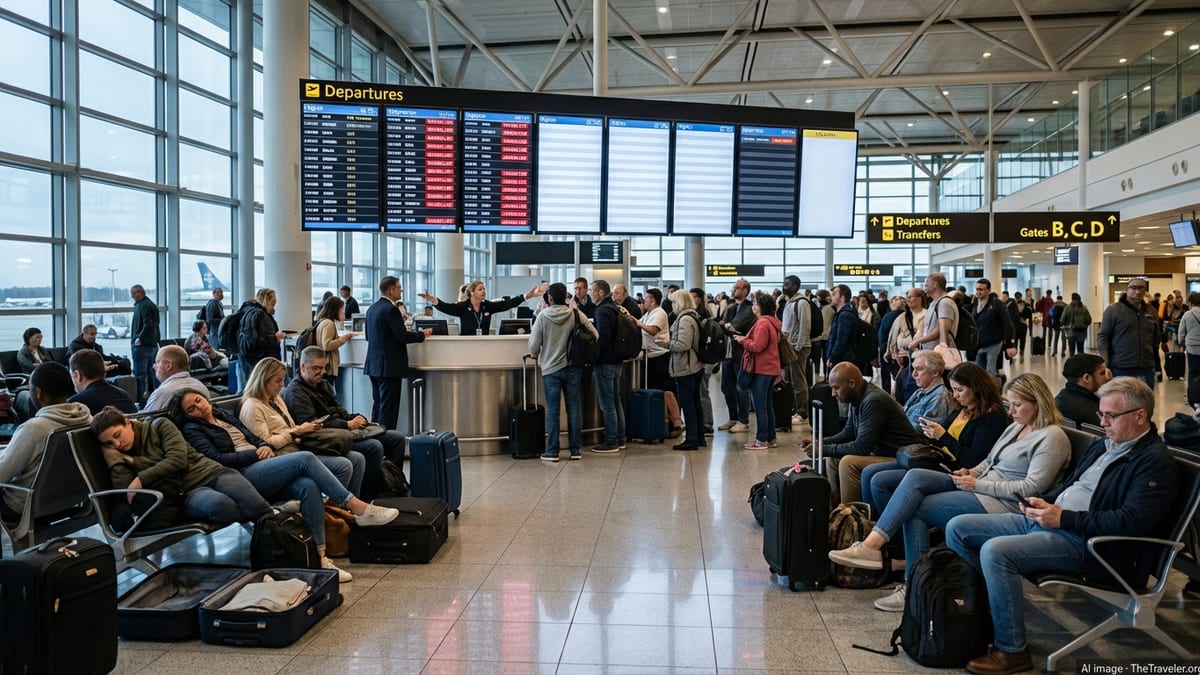
New Kuwait Visa Extension Window Targets Stranded Visitors
Publicly available immigration updates indicate that Kuwait has moved to formalize a new three month window for visit and residency visa extensions, giving travelers caught by flight cancellations and airspace closures a route to remain legally in the country. The framework builds on recent revisions to Kuwait’s residency law, which already caps standard visit stays at around 90 days and tightens reporting obligations for foreign residents and their families.
Under the emergency measures being reported by regional visa services and legal briefings, individuals who overstay during this period can reconcile their status by paying a modest KD 10 administrative fine linked to the extension, in contrast with significantly higher penalties that have historically been associated with unlawful stays. The approach appears designed to discourage long term irregular residence while recognizing that some travelers have had little control over their departure options.
Advisory notes from immigration specialists describe the new policy as time limited and closely tied to the broader regional security situation. The focus remains on travelers whose visas lapsed after commercial services were curtailed, with officials aiming to avoid a wave of forced departures and last minute airport congestion once skies fully reopen for overflight traffic.
The scheme also dovetails with an ongoing modernization of Kuwait’s entry systems, including greater use of digital records to track movements and ensure that future overstays are recorded accurately. Observers suggest that the current leniency on fines is unlikely to become a permanent feature and that normal enforcement will probably resume once cross border aviation patterns stabilize.
Airspace Restrictions Keep Gulf Corridors Only Partially Open
The move by Kuwait comes shortly after it reopened its airspace to commercial arrivals and departures, following a closure that lasted almost two months in the wake of missile exchanges between regional actors. Industry data shows that as of late April, Kuwait’s skies are open to its own inbound and outbound flights, but overflight permissions remain curbed, limiting the country’s role as a through route for long haul services.
These constraints are part of a wider patchwork of airspace advisories stretching from the eastern Mediterranean across the Gulf. Aviation intelligence platforms have documented repeated drone and missile incidents affecting hubs in the United Arab Emirates, prompting renewed risk assessments by international carriers and temporary suspensions of some cargo operations into the region.
Schedules compiled by airline groups and flight tracking services illustrate the operational impact, with rerouted flights adding several hours to typical Europe to Gulf sectors and pushing up fuel costs. For travelers, the practical consequences include missed connections, rolling delays and, in some cases, prolonged stays in countries whose visa rules were not designed to accommodate unexpected multi week stopovers.
Analysts in the aviation and insurance sectors note that such disruptions tend to cascade quickly through global networks, amplifying the risk of travelers breaching their visa conditions without intent. Kuwait’s decision to offer a low cost overstay reconciliation mechanism is therefore being watched closely as a possible template for how other frontline states might address similar backlogs.
Germany, Spain, Canada and Others Escalate Emergency Consular Measures
Across Europe and North America, governments have continued to refine their own responses to the evolving security and mobility picture in the Gulf. Updated travel notices from Germany in mid May shifted earlier hard warnings on travel to the United Arab Emirates toward a more nuanced stance that still urges caution, particularly around major aviation hubs, while emphasizing the need for contingency planning by travelers and companies.
Spain, Italy and Switzerland, all with large outbound tourism markets and significant business links to the Gulf, have likewise refreshed their advisories and consular messaging. Public statements and coverage in national media stress both the importance of monitoring airline communications and the possibility of sudden route suspensions if tensions spike again, including along popular winter sun and pilgrimage corridors.
Canada has taken one of the more concrete steps recorded so far, announcing in early April a temporary halt to removals to several Gulf countries, including Kuwait and the UAE, due to what officials described in public documents as volatile and unpredictable conditions. Legal summaries of the policy indicate that individuals with pending removal orders to the region may benefit from a form of automatic deferral, reducing the risk of people being sent into unstable environments or becoming stranded mid transit.
Turkey, positioned at the intersection of European and Middle Eastern air routes, is also recalibrating its approach as it manages its own visa overstay framework and works to keep key airports operating efficiently despite fluctuating traffic levels. Regional observers point out that Ankara’s decisions on entry bans and overstay enforcement can have an outsized impact on travelers seeking alternative paths around restricted airspace.
Schengen Tightens Digital Border Controls As Gulf Crisis Continues
At the same time, Europe is pressing ahead with long planned upgrades to its external border systems that could reshape how overstays are detected in the wake of the current disruption. Switzerland recently confirmed that it has completed roll out of the European Union’s biometric Entry Exit System at all land, air and rail crossings, even though it is not an EU member, reinforcing its integration into Schengen wide controls.
Reports from Brussels note that the Entry Exit System is now fully operational across the Schengen area, with a flexible transition period running into late summer to help states manage queues. The platform records each arrival and departure using fingerprints and facial images, replacing manual passport stamps and allowing border authorities to spot, in near real time, when a traveler has remained in the zone beyond the 90 day in 180 day limit.
For nationals of countries such as Germany, Spain, Italy, Switzerland and Canada, who form a substantial share of Kuwait bound leisure and business visitors, the combination of stricter Schengen exit tracking and more lenient Gulf overstay remedies presents a complex compliance landscape. Mobility specialists caution that travelers who stay longer than planned in Kuwait under the KD 10 extension might still need to adjust future itineraries to avoid inadvertently breaching Schengen stay limits later in the year.
Legal reforms advancing through the European Parliament also aim to streamline returns for individuals found to be in the bloc without status, including via new forms of cooperation with third countries seen as potential “return hubs.” Analysts argue that, together with real time overstay data from the Entry Exit System, these measures could make it harder to rely on informal grace periods or administrative backlog to resolve status issues.
Growing Focus on Fair Treatment and Clear Communication for Travelers
As the crisis evolves, a central concern for advocacy groups and travel industry organizations is how to balance security driven restrictions with the rights and welfare of travelers who suddenly find themselves unable to leave a country on time. Accounts shared through public forums and advisory channels over recent months depict visitors stranded in Gulf states, including Kuwait and the UAE, or facing mounting overstay fines after airlines canceled flights or rerouted services through still open corridors.
In the UAE, for example, a series of temporary fine waivers and special extensions were introduced earlier in the year for visitors whose visas expired after late February but who could not depart because of war related airspace closures. These steps, widely discussed in local media and online communities, were generally welcomed as a pragmatic response, though commentators observed that patchy communication sometimes left travelers unsure of their exact status.
Comparisons are now being drawn between that experience and Kuwait’s KD 10 overstay policy, with travel law specialists urging clearer and more proactive information campaigns so people understand both the opportunities to regularize their stay and the limits of any amnesty. There is particular emphasis on the need to set transparent end dates, beyond which standard fines and potential entry bans would resume.
For residents and long term expatriates in Kuwait caught by regional airspace limitations, the three month extension window offers breathing room to rebook flights, arrange alternative routing through less affected hubs and coordinate with employers or schools abroad. Yet mobility experts underline that conditions remain fluid, and that travelers should continue to check airline schedules, national travel advisories and immigration guidance closely before making firm plans.