


More news on this day
Akasa Air is preparing to launch non stop flights from the upcoming Noida International Airport at Jewar to Mumbai and Ahmedabad, moves that would give India’s newest major airport early links to two of the country’s most important business hubs.
Get the latest news straight to your inbox!
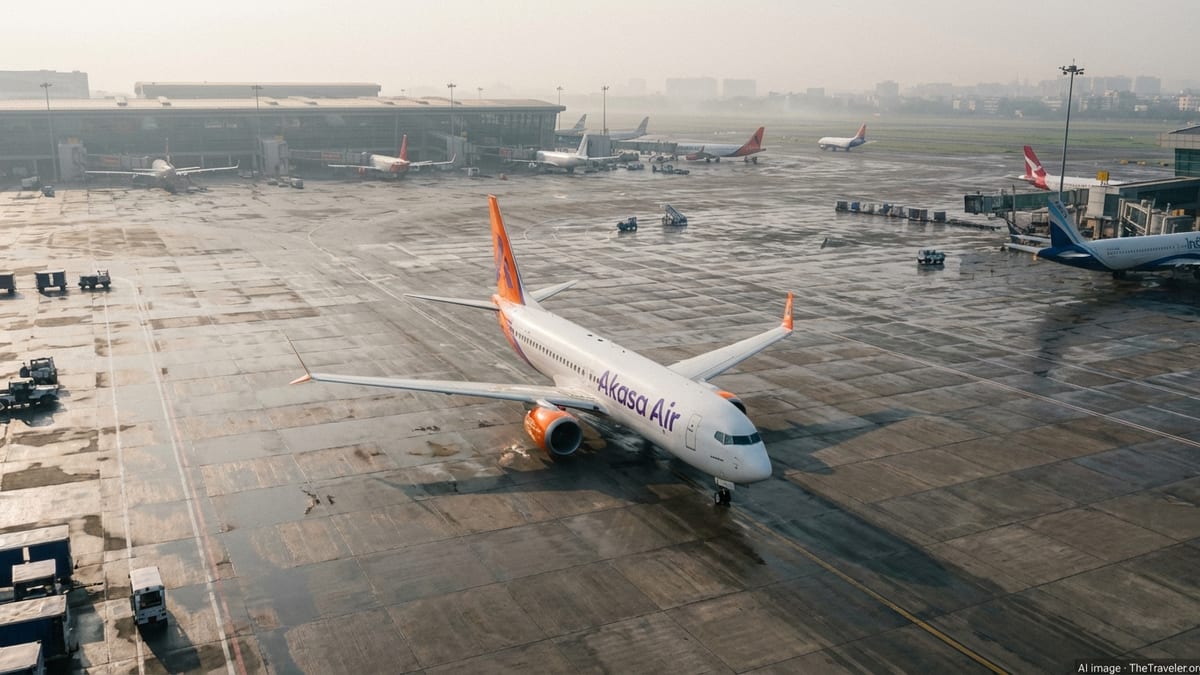
Early route map taking shape at Jewar
Noida International Airport at Jewar, designated to serve the Delhi National Capital Region as a second major gateway, is scheduled to begin commercial operations on 15 June 2026 with IndiGo operating the inaugural services. Publicly available information indicates that Akasa Air and Air India Express are expected to follow soon after IndiGo’s launch, adding capacity and competition on key domestic routes.
While detailed schedules from Akasa Air have not yet been formally published through official timetable channels, industry reports and aviation sector coverage suggest that the carrier’s initial focus from Jewar will be high demand trunk routes. Direct connectivity to Mumbai, India’s financial capital, and Ahmedabad, a fast growing industrial and commercial centre, is seen by analysts as a logical first step in building a viable domestic network from the greenfield airport.
Akasa Air already operates extensive services from Mumbai and has historically used the Mumbai Ahmedabad corridor as a cornerstone of its network. The airline’s early marketing positioned this western India trunk route among its first sectors, and the same pairing is now viewed as a natural candidate for service to and from the new Jewar facility.
Sector observers note that airlines typically prioritise routes linking new airports to major metropolitan centres that can sustain both business and leisure demand. In this context, non stop flights from Jewar to Mumbai and Ahmedabad would mirror the pattern seen at other Indian greenfield airports, where carriers first connect large commercial cities before expanding toward tier two and tier three destinations.
Strategic fit with Akasa Air’s expansion plans
Akasa Air has signalled ambitious growth plans across India’s domestic market, supported by a rapidly expanding Boeing 737 MAX fleet. Fleet database figures and company statements compiled by aviation intelligence providers show the airline operating dozens of aircraft with a substantial order book that will allow it to deepen frequencies on core routes while entering new markets over the next several years.
Industry coverage of the Noida International Airport project highlights Akasa Air as one of the carriers that has entered into an early partnership with the airport operator. The relationship extends beyond simple slot allocation, with the airline also selecting Jewar as the site for its first dedicated maintenance, repair and overhaul facility, a move that underlines its long term commitment to the new airport and the wider northern India region.
Analysts point out that basing aircraft and maintenance infrastructure at Jewar can reduce positioning time and support a dense wave of departures in the morning and evening peaks, particularly toward major markets such as Mumbai and Ahmedabad. This strategy aligns with Akasa Air’s broader network approach, which emphasises point to point connectivity between large cities rather than routing traffic primarily through a single hub.
Sector commentary suggests that the combination of a growing fleet, a strategic MRO base at Jewar and strong projected demand on western India routes positions Akasa Air to quickly establish itself as a significant operator at the new airport. Direct flights to Mumbai and Ahmedabad would likely form the backbone of that presence in the early stages of operations.
Jewar’s growing role in the Delhi region aviation network
The opening of Noida International Airport is expected to reshape air travel patterns across the Delhi National Capital Region. Existing traffic today flows through Delhi’s Indira Gandhi International Airport, one of India’s busiest hubs. As Jewar ramps up, government and industry forecasts anticipate a gradual redistribution of passengers, particularly from Noida, Greater Noida and parts of western Uttar Pradesh, toward the new facility.
Consultants and planning documents associated with the project indicate that Jewar’s first phase has been designed to handle millions of passengers annually, with future expansion intended to create one of India’s largest airports by area. Connectivity to the broader region, including road links and eventual integration with metro and rapid rail networks, is seen as critical to unlocking demand on routes such as Mumbai and Ahmedabad that cater heavily to time sensitive business travellers.
Direct services by Akasa Air on these sectors would add an additional alternative to existing flights operating from Delhi’s primary airport, potentially easing some pressure on congested slots there. For travellers based closer to Noida and the eastern flank of the capital region, Jewar services could translate into shorter surface travel times, even if total airside capacity initially remains more modest than at Delhi’s long established hub.
Industry analysts also argue that competition between airports in the same metropolitan area can stimulate more aggressive pricing and product differentiation by airlines. As Akasa Air and other carriers roll out services from Jewar, passengers flying between the Delhi region, Mumbai and Ahmedabad may benefit from a wider range of schedules and fare options compared with the pre Jewar era.
Economic and connectivity implications for Mumbai and Ahmedabad
For Mumbai, enhanced links with the Delhi region through Jewar are expected to reinforce its role as India’s primary financial and corporate centre. Business travel between the two regions is among the country’s busiest air corridors, and additional flights from a second Delhi area airport could help absorb growing demand from banking, technology, media and services industries located on both ends of the route.
Ahmedabad and the wider Gujarat region stand to gain from improved access to the emerging industrial and logistics cluster around Jewar. The Noida International Airport project forms part of a broader development push along the Yamuna Expressway corridor, with logistics parks, manufacturing zones and warehousing facilities planned in the vicinity. Direct flights from Ahmedabad would provide exporters and investors with a faster link to these new hubs while also serving a sizeable pool of visiting friends and relatives traffic.
Tourism stakeholders note that both Mumbai and Ahmedabad also serve as gateways to leisure destinations along India’s western coast and in Gujarat’s cultural circuits. As Akasa Air builds out its domestic network, feed traffic from Jewar could eventually connect through Mumbai and Ahmedabad to other cities, extending the reach of the new airport well beyond its initial nonstop destinations.
Observers caution that the full impact of Akasa Air’s planned routes will depend on final schedules, pricing and coordination with surface transport links to and from Jewar. However, early indicators from network planning discussions suggest that consistent non stop service to Mumbai and Ahmedabad will be central to the airline’s strategy for the new airport.
Timelines, expectations and next steps
With IndiGo set to operate the first commercial services from Noida International Airport on 15 June 2026, attention is now turning to the precise timing of Akasa Air’s entry. Public reporting points to launch plans within weeks of the opening date, although exact start days and frequencies for Jewar to Mumbai and Jewar to Ahmedabad flights have not yet been formally released through standard industry channels.
Travel trade circles anticipate that once slots are finalised and regulatory clearances are confirmed, Akasa Air will begin publishing timetables and opening sales for its Jewar routes. This process typically involves coordination with distribution systems, travel agents and online platforms to ensure that new services are visible to potential passengers well ahead of their first departure.
Aviation analysts expect that initial frequencies on the Mumbai and Ahmedabad routes may be modest, with gradual increases as passenger awareness builds and supporting infrastructure at Jewar settles into regular operations. Load factors on comparable launch routes at other new Indian airports have generally ramped up over several months as travellers adjust habits and gain confidence in surface access and on time performance.
For now, the prospect of Akasa Air operating direct flights from Jewar to Mumbai and Ahmedabad underscores the strategic importance of the new airport within India’s rapidly evolving aviation landscape. As final route details emerge in the coming months, the Delhi region, western India’s commercial centres and the country’s domestic air network as a whole are poised to feel the effects.