


More news on this day
Japan’s ZIPAIR has completed the rollout of Starlink satellite Wi-Fi across its Boeing 787 Dreamliner fleet, marking a turning point for always-connected long-haul travel between Japan, the United States and other key international markets.
Get the latest news straight to your inbox!
A Milestone for Japan’s Long-Haul Low-Cost Market
ZIPAIR, the Japan Airlines subsidiary focused on medium and long-haul routes, has reached a notable connectivity milestone by equipping all eight of its Boeing 787-8 aircraft with SpaceX’s Starlink system. Publicly available company information and recent aviation industry coverage indicate that installation across the fleet was completed in early May 2026, following initial Starlink-equipped services launched in February on regional routes from Tokyo Narita.
The carrier is described in industry reports as the first airline in Asia to operate a fully Starlink-enabled fleet, with coverage on every scheduled passenger service. ZIPAIR’s network currently spans key leisure and business markets including Honolulu, Los Angeles, San Francisco and San José in the United States, alongside destinations in Canada and Asia, positioning the Starlink rollout as a direct upgrade for Japan–North America travelers.
For the broader Japanese aviation market, the move underscores how a low-cost carrier is helping set the pace on in-flight technology, at a time when many full-service airlines globally are still in the process of evaluating or beginning Starlink installations. Analysts note that the decision places ZIPAIR among a small but growing group of airlines betting on low Earth orbit satellite networks to redefine long-haul passenger expectations.
What Starlink Means Onboard a ZIPAIR 787
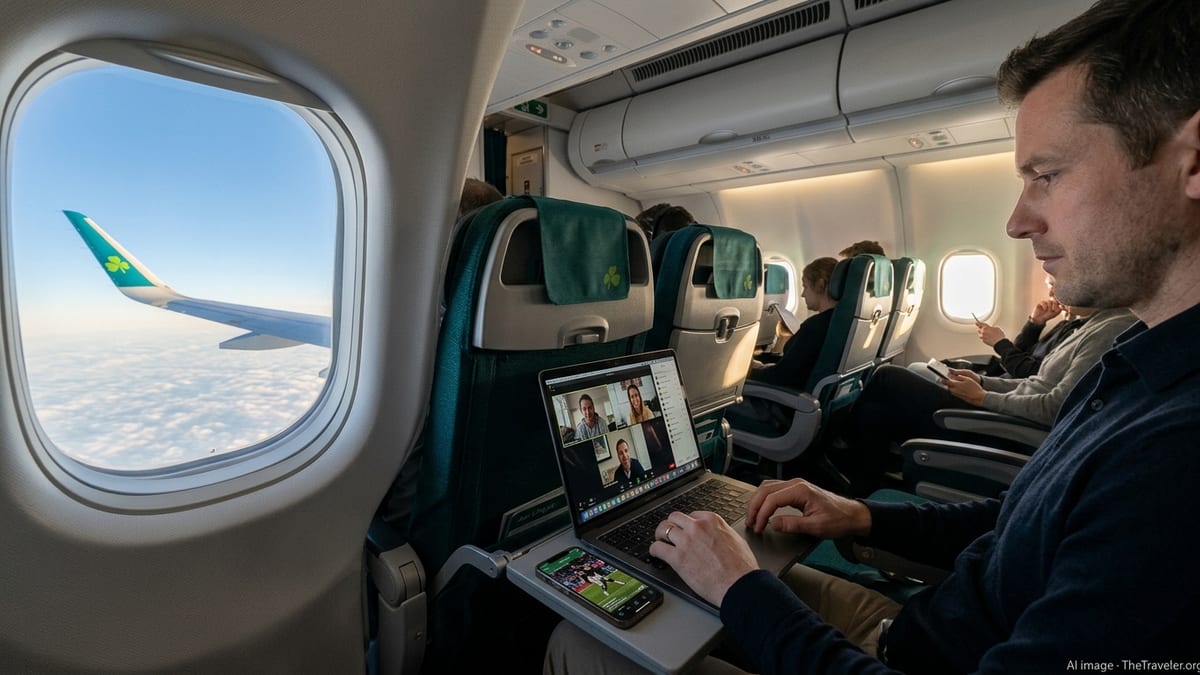
Starlink is a low Earth orbit satellite constellation designed to deliver high-speed, low-latency internet connectivity. Onboard ZIPAIR’s 787-8 aircraft, reports indicate that the system is configured to support streaming, video calls, cloud-based work and other data-heavy tasks that have often been difficult or unreliable on traditional geostationary satellite systems, particularly over long oceanic sectors.
ZIPAIR has promoted the service as complimentary for all passengers regardless of cabin, which is a notable contrast with many legacy carriers that still charge for higher-speed tiers or impose data caps. Passengers connect via the standard onboard Wi-Fi portal using personal devices, with no dedicated app required according to publicly available guidance. Early user reports from flights between Japan and the United States describe relatively seamless access once at cruising altitude, with speeds closer to home broadband than earlier generations of inflight Wi-Fi.
Behind the scenes, Starlink is also being integrated into ZIPAIR’s inflight service platform. Industry briefings describe a single onboard network that links passenger devices, payment processing and crew service tools. This architecture is designed to enable real-time card authorization for onboard purchases and potentially more dynamic ancillary services, a significant consideration for a low-cost airline that relies on non-ticket revenue.
Implications for Japan–United States Long-Haul Travelers
For passengers crossing the Pacific between Japan and the United States, ZIPAIR’s completed Starlink rollout substantially changes the inflight connectivity equation. Routes such as Tokyo Narita to Los Angeles, San Francisco and Honolulu can now offer continuous broadband-style access over some of the world’s longest stretches of ocean, historically a weak spot for inflight internet performance.
This improvement arrives as United States carriers accelerate their own Starlink deployments on domestic and regional fleets, laying the groundwork for a transpacific market where free, fast Wi-Fi becomes an increasingly common expectation. Travel analysts point out that ZIPAIR’s move may put competitive pressure on both Japanese full-service airlines and US majors operating similar city pairs, especially among younger and budget-conscious travelers who place a premium on being online throughout the journey.
Corporate travel managers and remote workers are also likely to take note. The combination of lie-flat business-style seating on some ZIPAIR services and broadband connectivity can make the airline’s flights appealing as mobile workspaces. While performance on any satellite system can fluctuate with network load and atmospheric conditions, the early data suggests that tasks like large file transfer and video conferencing are more realistic options at 35,000 feet than they were with previous-generation systems.
How to Use ZIPAIR’s Starlink Wi-Fi and What to Expect
For travelers, the connectivity process is intentionally straightforward. Once the aircraft reaches cruising altitude and the system is active, passengers enable Wi-Fi on their phone, tablet or laptop, select the ZIPAIR network, and follow the prompts on the captive portal page. Reports indicate that the login flow is typically limited to a few basic steps, reflecting Starlink’s preference for minimal friction in accessing the service.
Because the service is currently offered free of charge, there is no separate purchase step and no need to enter payment details for basic use. Travelers should nonetheless be prepared for potential soft limits, such as fair-use policies that may prioritize general browsing and messaging over high-volume activities if network congestion arises on peak flights.
Device compatibility is broad, as the service uses standard Wi-Fi protocols, but passengers are advised to complete large software updates or cloud backups before travel to avoid unnecessary strain on the shared bandwidth. Streaming platforms, social media and VPN services generally function, although individual services may behave differently depending on encryption, regional content rules and any filters applied by the airline.
A Glimpse of the Next Phase in Transpacific Connectivity
ZIPAIR’s fleetwide Starlink deployment is being watched closely by both Japanese and US carriers as a live test case for what fully broadband-enabled long-haul operations can look like. Industry commentary suggests that performance on Pacific routes, where traditional satellite solutions have often struggled, will be particularly instructive for airlines planning widebody retrofits in the coming years.
The rollout also aligns with a broader trend in US and international aviation in which airlines are moving toward free, gate-to-gate connectivity across entire fleets. Several large North American and European groups have announced Starlink plans on both narrowbody and widebody aircraft, but in many cases installations are still in progress or focused on shorter-haul segments. By completing its 787 installations early in this cycle, ZIPAIR has effectively used connectivity as a strategic differentiator in the Japan–US market.
For international travelers, the practical message is clear: long-haul flights between Japan and the United States are entering a new era in which being offline for ten or more hours is no longer a given. As more carriers on both sides of the Pacific follow ZIPAIR’s lead, expectations for inflight connectivity are likely to shift from “nice-to-have” perk to standard part of the ticket, with Wi-Fi quality becoming as central to airline choice as seat comfort and onboard service.