


More news on this day
Flight disruptions rippled across LaGuardia Airport on June 8 as publicly available tracking data showed at least 112 delays and seven cancellations, tangling schedules for Endeavor Air, Delta, Southwest, American, Jazz, United, Air Canada and other carriers serving major U.S. cities and Canadian hubs.
Get the latest news straight to your inbox!
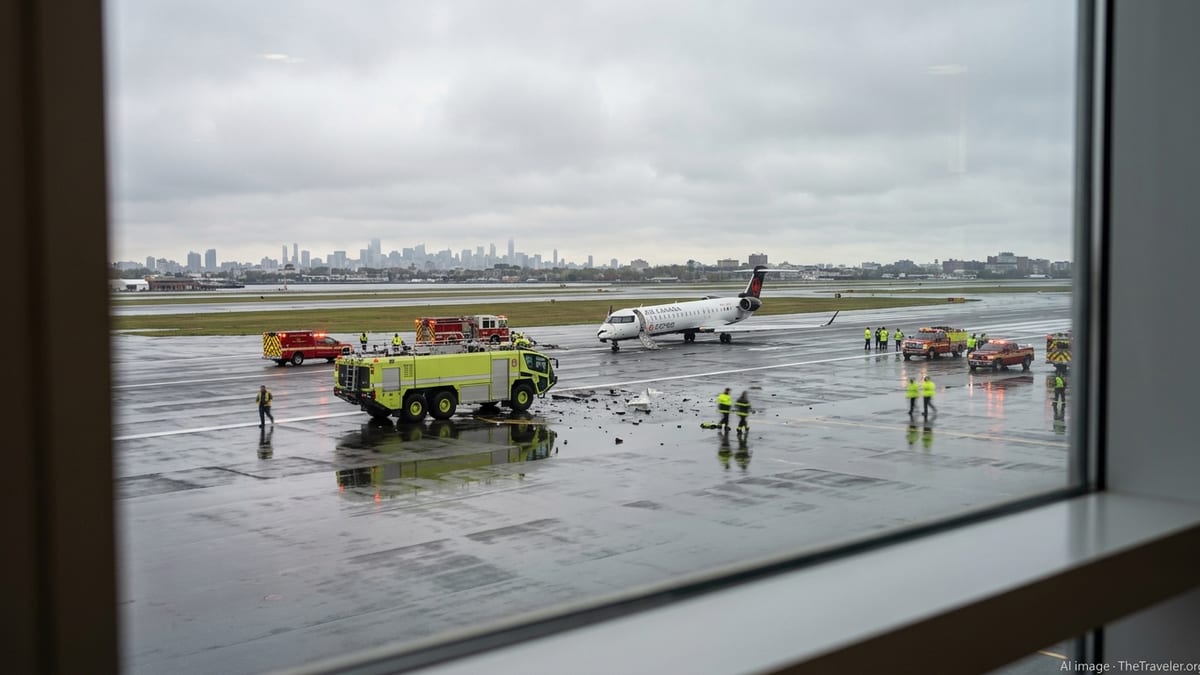
Widespread Disruptions Hit Key Domestic and Cross-Border Routes
Tracking services for New York’s LaGuardia Airport on June 8 indicated more than one hundred delayed departures and arrivals, alongside a smaller number of outright cancellations. The disruptions were concentrated on high-frequency corridors linking New York to Dallas, Chicago, Boston and Miami, as well as Canadian hubs such as Toronto and Montreal.
Regional operator Endeavor Air, which flies many Delta-branded services, appeared among the most affected, alongside flights marketed by Delta itself. Publicly available schedules also showed delays and schedule changes involving American, Southwest, United, Jazz and Air Canada on routes into and out of LaGuardia.
The knock-on effects extended beyond New York. Delayed aircraft and crews radiated the impact into downline airports, leaving some flights from Dallas, Chicago and other cities departing late or operating with altered timings as airlines worked to rebalance fleets.
While the precise breakdown of responsibility varied by carrier and route, the aggregate picture at LaGuardia resembled a system under strain, with disruption levels that significantly exceeded a typical weekday pattern for early summer.
Operational Strain Across Endeavor, Delta, American and Southwest
Data from recent days at LaGuardia show that regional affiliates such as Endeavor Air often bear a disproportionate share of delays and cancellations when conditions tighten. These operators fly many short-haul routes under major airline brands, so a single disrupted rotation can cascade quickly across multiple city pairs.
On June 8, Endeavor-operated flights under the Delta banner were prominent among the delayed services, particularly on business-heavy routes to cities including Boston and Chicago. Published coverage in recent weeks has highlighted how a cluster of delays on these high-frequency shuttles can rapidly clog departure banks and arrival queues at LaGuardia.
American and Southwest also contended with late operations from the New York hub, affecting links to Chicago, Dallas and several Florida destinations. According to flight-status platforms, some services departed more than an hour behind schedule, compressing turn times at intermediate airports and adding pressure to already busy evening peaks.
For carriers with dense LaGuardia schedules, the day’s tally of 112 delays and seven cancellations translated into tight connections for passengers and complicated crew logistics, reinforcing how sensitive the airport’s finely tuned operation is to any spike in irregular activity.
Transborder Traffic to Toronto and Montreal Feels the Impact
The turbulence at LaGuardia was not confined to U.S. domestic traffic. Cross-border routes to Toronto and Montreal, primarily operated by Air Canada and Jazz, also experienced disruption, according to publicly accessible flight-tracking summaries. These services are critical business and leisure links between the northeastern United States and Canada’s largest metropolitan areas.
Several Canada-bound departures showed pushed-back times or extended arrival estimates, reflecting congestion within LaGuardia’s operating environment. Even where flights were not cancelled, extended delays complicated itineraries for passengers relying on onward connections within Canadian networks.
Published reports in recent weeks have underscored how disruptions on U.S. side gateways, particularly at slot-controlled airports such as LaGuardia, can ripple into Canadian schedules. When aircraft and crews are out of position, airlines on both sides of the border often require multiple rotations to restore regular timing.
The June 8 pattern fit that broader dynamic, with scattered delays across Toronto and Montreal routes hinting at wider transborder impacts that may persist into subsequent operating days as carriers gradually realign resources.
Passenger Experience: Missed Connections and Crowded Terminals
For travelers, the numerical tally of delays and cancellations translated into longer queues, crowded departure lounges and a higher risk of missed connections. LaGuardia serves as both an origin and a connecting point for many itineraries, so schedule disruptions can quickly strand passengers mid-journey.
Social media posts and traveler forums on June 8 described extended waits at gates, frequent gate changes and rolling departure estimates. Some passengers reported missing onward flights in cities such as Dallas, Chicago and Miami after delayed arrivals from New York cut minimum connection times too close.
Standard playbooks for irregular operations appeared to be in effect, with airlines offering same-day rebooking where seats were available, along with hotel and meal arrangements in select scenarios. However, limited spare capacity on popular evening departures constrained options for some travelers seeking to continue to their destinations the same day.
Given the mix of affected carriers, expert commentary in prior disruptions at LaGuardia suggests that passengers benefit from monitoring both the operating carrier and any regional affiliate, as branding on tickets can differ from the company actually flying the aircraft, which may influence rebooking channels and available alternatives.
LaGuardia’s Persistent Vulnerability to Irregular Operations
LaGuardia’s dense schedule, slot controls and tightly packed runway layout leave relatively little margin when operations deviate from plan. Aviation analysts have long noted that even a modest uptick in delays can quickly manifest as widespread disruption for this airport compared with less constrained facilities.
Recent weeks have seen multiple episodes of elevated delays at LaGuardia, according to compilations by travel and aviation outlets that track same-day performance. Weather, volume surges and air traffic flow programs have each played a role at different times, amplifying the operational challenges for airlines and ground handlers.
While the airport’s extensive redevelopment program has improved terminal space and passenger amenities, the underlying runway and airspace constraints remain. Industry observers frequently point out that these structural limits make LaGuardia particularly susceptible to ripple effects whenever traffic, staffing or weather conditions tighten.
The June 8 wave of 112 delays and seven cancellations adds to a recent pattern of volatile operating days at one of the busiest gateways in the United States, underscoring the continuing importance for travelers of real-time monitoring and flexible planning when routing through New York’s close-in airport.