


More news on this day
Passengers across the Middle East are facing renewed disruption as flydubai, Emirates, Air Arabia, Kuwait Airways, EgyptAir and other carriers suspend at least twenty-six flights and register more than one hundred delays, snarling major routes through the United Arab Emirates, Kuwait and Egypt just as regional airspace was beginning to reopen.
Get the latest news straight to your inbox!
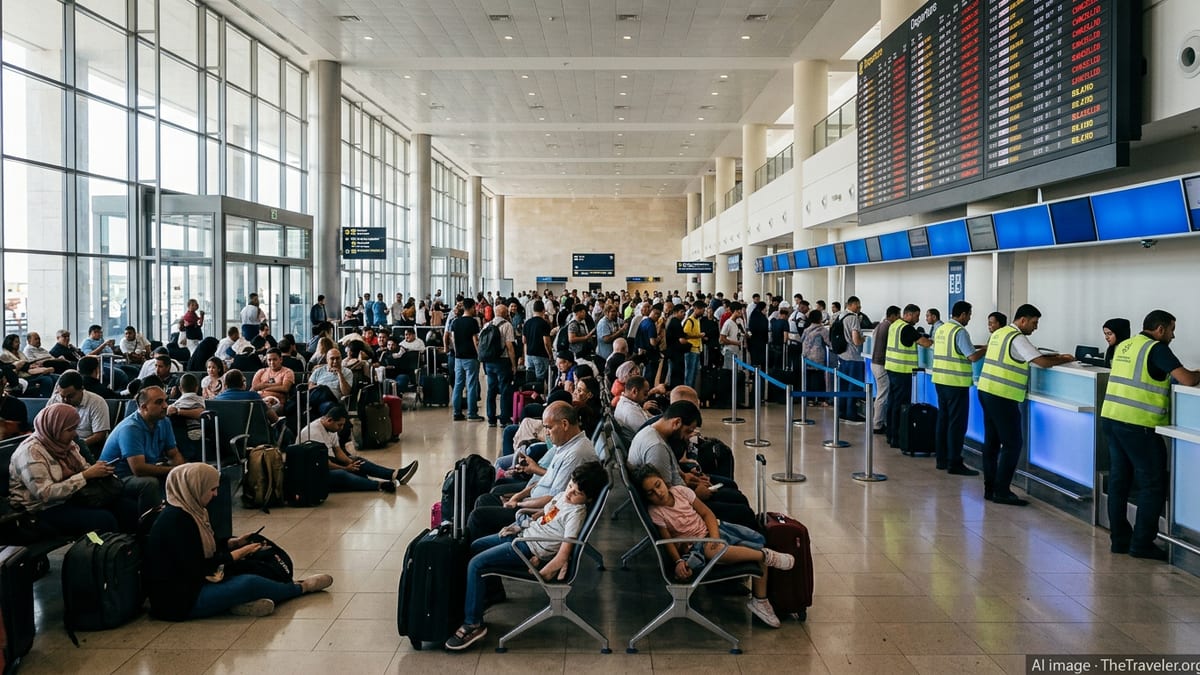
Fresh Disruptions Hit Reopening Skies
The latest wave of schedule changes comes amid a fragile recovery in Gulf and Eastern Mediterranean airspace. Publicly available aviation data and recent operational notices show that, while authorities in the United Arab Emirates and neighboring states have moved to ease earlier airspace restrictions, carriers are still navigating capacity caps, altered routings and intermittent safety concerns that continue to trigger cancellations and extended delays.
In the UAE, Dubai International and other airports have been gradually ramping up movements after a prolonged period of limited operations, with airport operators indicating that traffic has returned to a large share of pre-disruption levels. However, recovery has been uneven, and short-notice changes to runway availability and flow management measures have meant that flight schedules remain vulnerable, particularly on high-density trunk routes from Dubai and Sharjah into Kuwait City and Cairo.
Industry summaries of the ongoing disruption describe a patchwork of suspensions across the region, with some airlines restoring near-normal networks while others still operate on trimmed timetables or with ad hoc cancellations. The result for travelers is a landscape in which published schedules can shift within hours, leaving passengers stranded at transit hubs or forced into lengthy rebooking queues.
Key Gulf Carriers Scale Back on Crucial Routes
Emirates and flydubai, the two largest operators at Dubai International, have been central to the latest disruptions. Available schedule advisories show that both airlines have periodically reduced or halted services on selected Middle East routes in recent weeks, citing airspace constraints and operational challenges. Even as Emirates public information highlights the restoration of most of its global network, the carrier continues to adjust frequencies on some regional links, contributing to the current wave of cancellations.
Flydubai, which focuses heavily on short and medium-haul services around the Gulf, Levant and North Africa, has faced particular pressure on Kuwait and Egypt operations. Route-by-route updates indicate that certain Dubai to Kuwait and Dubai to Egyptian city pairs have seen temporary suspensions or sharply reduced frequencies, forcing passengers to consolidate onto fewer flights and raising the risk of rolling knock-on delays when a single departure encounters a disruption.
Air Arabia, based in Sharjah, has also been drawn into the turbulence. Passenger reports and recent advisories reference cancellations and rescheduling on longer-haul links from Sharjah into Asia and the Middle East, and those ripple effects have further constrained options for travelers attempting to reroute around Dubai or Abu Dhabi congestion. With multiple UAE-based low-cost carriers trimming or shuffling capacity on similar corridors, bottlenecks have quickly formed for travelers bound to or from Kuwait and Egypt.
Kuwait and Egypt Grapple With Capacity Constraints
Kuwait Airways and EgyptAir are dealing with their own constraints as they manage incoming and outgoing traffic in a region still affected by security sensitivities and airspace rerouting. Publicly available information on Kuwait International Airport points to an operational environment shaped by recent conflict-related incidents and airspace closures, which have limited the number of flights that can safely be handled and contributed to delays and selective route suspensions.
For Kuwait Airways, these conditions have translated into intermittent cancellations on regional services and extended block times on flights that must divert around sensitive airspace. Travelers connecting via Kuwait City have reported missed onward connections and unplanned overnight stays as a result of schedule compression and last-minute timetable revisions, especially on links into the UAE and Egypt.
EgyptAir, meanwhile, has been working to rebuild its Gulf network from Cairo while reacting to shifting airspace corridors and demand patterns. Regional news coverage and airline updates describe a gradual resumption of flights from Egypt to hubs such as Dubai, Sharjah and Riyadh earlier this spring, but with continuing warnings of possible disruption. The latest tally of suspended and heavily delayed services indicates that EgyptAir’s Cairo connections into the Gulf remain vulnerable to sudden changes in regional risk assessments.
Travelers Face Long Delays, Patchy Alternatives
The practical impact for passengers has been significant. With at least twenty-six flights suspended across major Middle East carriers and more than one hundred additional services delayed, many travelers have found themselves stranded in transit hubs or facing multi-day rebookings. Social media posts and passenger forums describe crowded customer service desks at Dubai, Sharjah and Cairo, as well as confusion over changing eligibility rules for hotel accommodation and meal vouchers during extended disruptions.
According to published customer advisories, some airlines are offering fee-free rebooking within a limited window, while others are allowing refunds or credit vouchers for flights directly affected by cancellations. However, reduced capacity on core routes between the UAE, Kuwait and Egypt has limited the number of available seats for reaccommodation, particularly for economy-class passengers on peak travel days.
Travel agents and corporate travel managers are also contending with the volatility. Industry bulletins circulated over the past several weeks have encouraged clients to build in longer connection times when routing through the Gulf and to consider alternative corridors where feasible, such as itineraries that bypass the most affected airspace. Nevertheless, the dominance of carriers based in Dubai, Abu Dhabi and Doha on many Europe to Middle East and Asia to Middle East flows means that viable substitutes can be scarce.
What Passengers Can Do As Disruptions Continue
With operational conditions in the region still evolving, aviation analysts suggest that travelers treat all journeys through the Middle East as potentially subject to change. Public guidance from airlines and airports consistently urges passengers to check flight status repeatedly in the 24 hours before departure, to monitor official apps and notification channels, and to avoid heading to the airport until a departure is clearly confirmed.
For those already stranded, published policy summaries indicate that options typically include accepting the next available flight on the same carrier, rerouting via an alternate hub where space permits, or requesting a refund if the cancellation is substantial and the ticket rules allow. In practice, limited spare capacity on high-demand routes means that travelers may need to be flexible about dates, routings and even destination airports in order to secure a timely way out.
As the wider airspace across the UAE and neighboring countries continues to normalize, there are signs that schedules may stabilize in the coming weeks. Yet the current episode, marked by scores of delays and a patchwork of suspensions at some of the region’s busiest hubs, underlines how quickly conditions can change for travelers across the Middle East and how reliant global connectivity remains on a relatively small number of gateway airports and carriers.