


More news on this day
Asia’s air travel network has been hit by a fresh wave of disruption, with regional data indicating 451 flight cancellations and 1,831 delays in a single 24-hour period across major hubs in Malaysia, India, Indonesia, Russia and China, disrupting schedules for carriers including China Eastern, IndiGo, Citilink and AirAsia.
Get the latest news straight to your inbox!
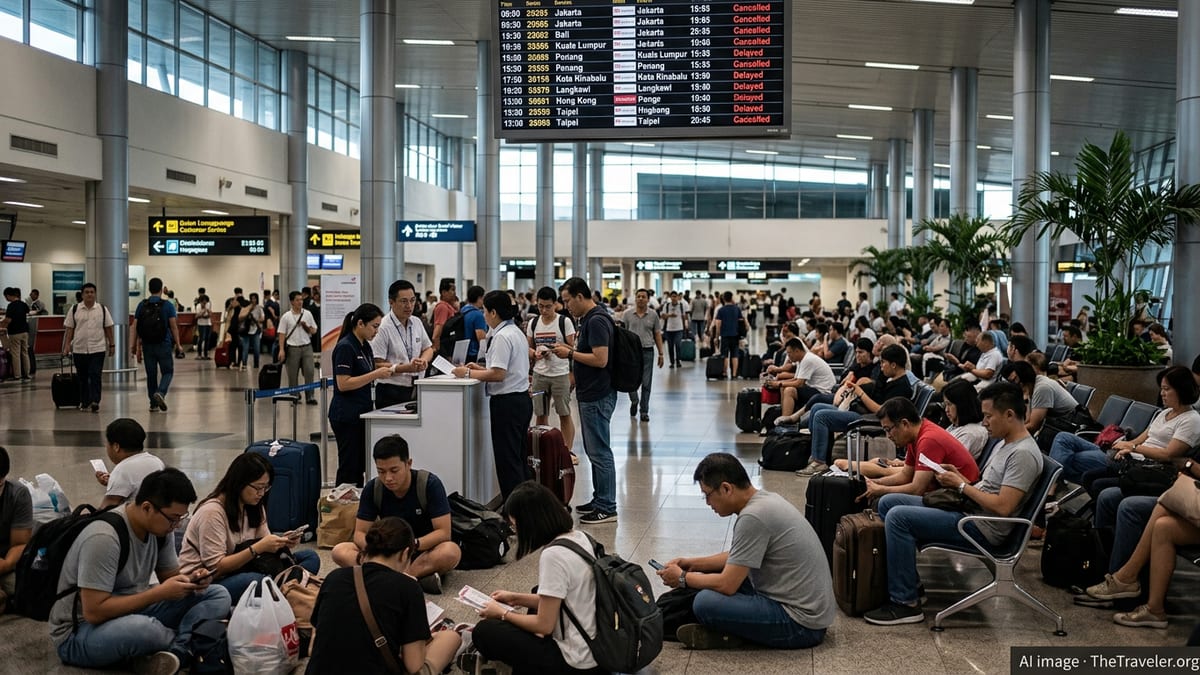
Major Asian Hubs Face Another Day of Turbulence
Publicly available departure and arrival boards for 11 May 2026 point to broad operational stress across the region. Airports in Kuala Lumpur, Delhi, Jakarta, Yakutsk and Beijing recorded clusters of cancellations and rolling delays across domestic and international routes, with knock-on effects seen at secondary airports as aircraft and crews fell out of position.
Aggregated figures compiled from aviation data providers and airport displays indicate that 451 flights were cancelled and 1,831 delayed in Asia during the peak of the disruption. While those totals are below the worst days of recent fuel-related and weather-driven turmoil reported earlier in May, they still represent a significant squeeze on capacity at the start of a busy travel week.
Low-cost and full-service airlines were both affected. China Eastern, AirAsia affiliates, IndiGo and Citilink featured prominently in delay and cancellation tallies, alongside national and regional carriers handling connections into and out of these hubs. The pattern aligns with a broader trend of fragile recovery in Asian aviation, where tight schedules and limited spare capacity leave networks vulnerable to even modest shocks.
Passengers on multi-leg itineraries connecting through Kuala Lumpur, Delhi, Beijing and Jakarta were especially exposed. When an early-morning sector was cancelled or heavily delayed, subsequent rotations on the same aircraft often departed late or were withdrawn entirely, forcing rebookings across already busy flights.
Kuala Lumpur, Jakarta and Delhi See Network Ripple Effects
Kuala Lumpur International Airport continues to sit at the center of regional disruption narratives. Data from recent days shows recurrent delays affecting AirAsia’s dense web of short-haul services, as well as select Malaysia-based and foreign carriers. On 11 May, additional cancellations on key trunk routes tightened seat availability, leaving some travelers in the region’s low-cost hub searching for last-minute alternatives.
Jakarta’s Soekarno Hatta International Airport also reported a mix of late departures and targeted cancellations, including services to Kuala Lumpur and other Southeast Asian cities. Flight-status boards show certain departures being marked cancelled close to departure time, a pattern that increases crowding at service desks as passengers seek rerouting and accommodation options.
In India, Delhi’s Indira Gandhi International Airport has been grappling with periodic schedule volatility since late March, when Indian carriers began reshaping networks in response to airspace constraints and cost pressures. IndiGo, with its large domestic and international footprint, again featured in lists of disrupted flights, particularly on routes feeding major Gulf and Southeast Asian hubs.
Aviation analysts note that these three airports function as critical transfer points in the Asia travel ecosystem. When all are simultaneously managing cancellations and extended delays, even a modest percentage of affected flights can multiply into thousands of disrupted passenger journeys across the day.
Beijing, Shanghai and Interior China Add To The Slowdown
China’s main gateways contributed substantially to the regional disruption count. Operational snapshots for 11 May show cancellations and delays at Beijing Capital, Shanghai Pudong, Chengdu Tianfu, Xi’an Xianyang and several inland airports, including Guiyang and Kashgar. The slowdown in mainland China coincided with already elevated disruption elsewhere in Asia, compounding pressure on carriers managing cross-border traffic.
China Eastern, one of the country’s largest airlines, recorded a high volume of delayed departures from Shanghai and other hubs, illustrating how congestion at a single mega-airport can radiate outward through an airline’s entire network. Smaller Chinese and regional operators likewise posted significant cancellation ratios at select airports, intensifying capacity constraints on secondary domestic routes.
Published coverage of China’s aviation sector notes that airlines there are operating near pre-pandemic volumes with lean buffers, leaving limited room to recover from equipment or crew shortages once delays begin to accumulate. As late-arriving aircraft miss their next departure slots, minor timetable slippage early in the day can evolve into widespread evening disruption, particularly during busy weekend and Monday peaks.
For travelers, the combined impact of China-focused disruption and issues at Southeast Asian hubs has been longer total journey times and increased risk of missed connections, especially on itineraries stitched together across multiple low-cost and full-service carriers.
Yakutsk and Russia’s Far East Highlight Weather and Infrastructure Strains
While attention often centers on Southeast and East Asian mega-hubs, data from Russia’s Far East illustrates how smaller airports can add to regional volatility. Yakutsk, serving a vast and often weather-challenged territory, reported its own share of cancellations and extended delays within the same 24-hour window, affecting flights onward to larger Russian and Northeast Asian cities.
Operators in this region routinely contend with challenging meteorological conditions, limited ground infrastructure and tight crew rostering, any of which can quickly lead to schedule disruption. When flights from Yakutsk and similar outstations to major nodes are cancelled, passengers can lose access to downstream connections that may only operate a few times a week.
Recent analyses of Far East Russian aviation conditions describe a network where redundancy is limited and alternative routings are scarce. In practice, this means that a cancellation in Yakutsk can strand travelers not only locally but also on connecting itineraries reaching as far as Beijing, Seoul or central Russian cities, subtly amplifying Asia’s broader disruption statistics.
These stress points underscore how Asia’s air travel reliability depends not only on headline hubs, but also on the resilience of peripheral airports feeding those networks.
Operational Pressures, Airspace Constraints and Passenger Fallout
Industry commentary in recent weeks has pointed to a combination of factors behind the ongoing pattern of cancellations and delays. Rising fuel costs, persistent airspace restrictions in parts of West Asia and Eastern Europe, and tight post-pandemic staffing are all cited as contributing forces. Many airlines are also operating dense summer-style timetables ahead of peak season, leaving fewer spare aircraft available to recover from disruptions.
Publicly available route and schedule data shows that some carriers, including AirAsia affiliates, Garuda Indonesia and several Malaysian and Taiwanese operators, have trimmed or merged frequencies on short-haul routes with limited advance notice. At the same time, Indian airlines such as IndiGo are adjusting long-haul and regional operations to navigate changing overflight permissions and competitive pressures, which can translate into rolling timetable changes.
For passengers, the practical impact remains similar regardless of the underlying cause: longer queues at check-in and rebooking desks, tighter seat availability on alternative flights, and higher out-of-pocket expenses for last-minute accommodation and meals. Consumer-rights advisories emphasize the importance of monitoring flight status closely, keeping receipts for any disruption-related expenses, and reviewing the protections offered by local regulations and airline contracts of carriage before travel.
With forecasts from travel analysts suggesting that schedule volatility in Asia could persist through the northern summer, corporate and leisure travelers alike may need to build longer connection windows and more flexible plans into itineraries touching Kuala Lumpur, Delhi, Jakarta, Yakutsk, Beijing and other busy regional nodes.