


More news on this day
Flights at New York’s LaGuardia Airport faced fresh disruption after an American Airlines jet aborted its takeoff following a reported bird strike, leading to temporary ground delays and renewed scrutiny of wildlife risks at one of the nation’s busiest urban airfields.
Get the latest news straight to your inbox!
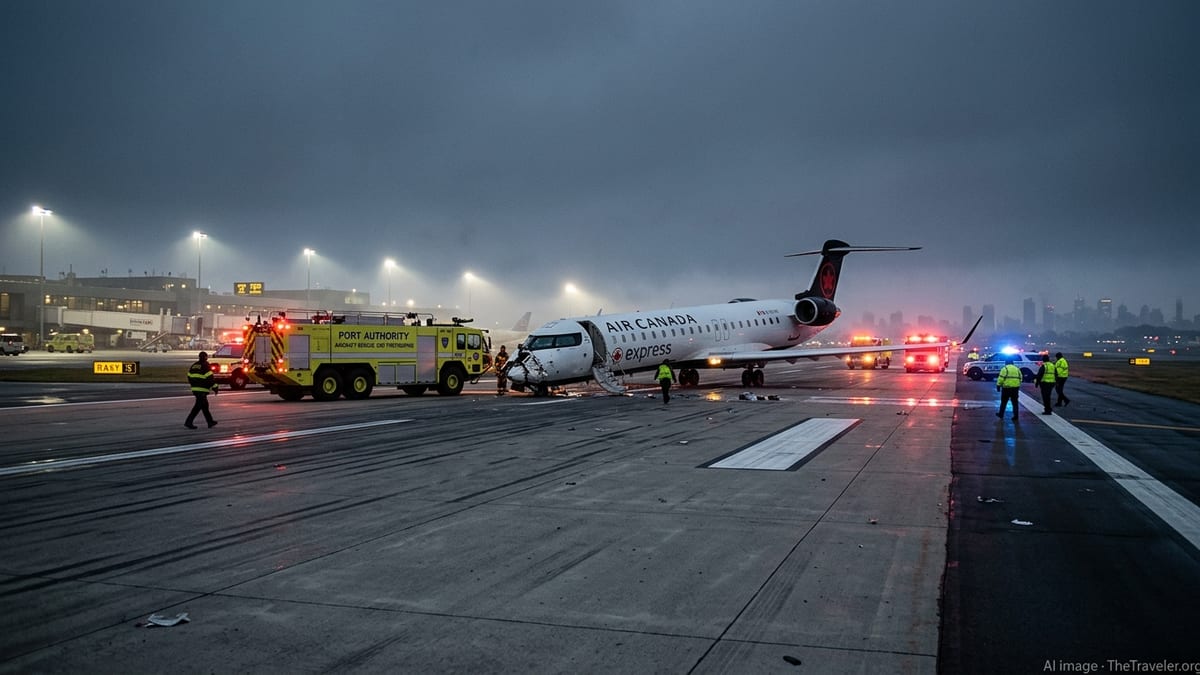
American Airlines Departure Halts Takeoff on Runway
Publicly available reports indicate the incident occurred on the morning of Thursday, September 3, when an American Airlines flight bound for Chicago accelerated for departure at LaGuardia and then came to an abrupt stop on the runway after the crew reported striking a bird during the takeoff roll. Federal aviation updates and local coverage describe the episode as a precautionary abort, with the aircraft returning to the gate for inspection rather than continuing the climb out of the densely built Queens airspace.
Video and eyewitness descriptions shared through national and local outlets show the aircraft slowing on the runway before taxiing clear, with emergency vehicles positioned nearby as a standard precaution. According to published coverage, the jet was carrying more than 100 passengers and crew, none of whom reported injuries during the sudden stop. Post-event information from the airline cited in local television reports later characterized the suspected strike as a false alarm after subsequent checks found no confirmed evidence of impact, but inspections were required before the aircraft could be released back into service.
The decision to abort takeoff reflects long standing safety protocols for wildlife encounters near the ground, where ingestion of birds into engines or impacts to control surfaces can cause damage at a critical phase of flight. The episode unfolded at an airport already known for its tight runway layout and congested airspace, heightening traveler concern when regular operations suddenly paused during a busy weekday morning schedule.
Ground Stops and Cascading Delays Across LaGuardia
Shortly after the aborted takeoff, traffic management data and flight tracking boards showed a ripple effect across LaGuardia’s departure banks. Real time status pages operated by federal air traffic authorities flagged potential delays and advised passengers to confirm flight status with carriers, noting that runway operations were briefly constrained as the aircraft was inspected and the runway area checked for debris or wildlife remains.
New York regional outlets reported that a short ground stop halted some departures while the runway was cleared and safety checks were completed. Even a limited pause can quickly translate into a queue of aircraft waiting to depart, particularly at LaGuardia, where federal slot controls already limit movements because of runway and airspace constraints. Within hours, departure boards showed a mix of delayed flights and restructured departure times as airlines attempted to re-sequence operations and reposition aircraft.
While the restrictions were temporary, the disruptions highlighted how even a single wildlife incident can trigger a chain reaction at a tightly scheduled hub. For travelers, the practical impact included missed connections at downline airports and extended waits in crowded terminals, an increasingly familiar pattern at major Northeast facilities during weather or safety related slowdowns.
Wildlife Strikes a Persistent Risk at Urban Airports
The LaGuardia episode draws attention to a broader national issue. Federal wildlife strike data compiled over several decades show tens of thousands of reported bird and other wildlife encounters with civil aircraft across the United States each year, with a concentration at busy metropolitan airports surrounded by open water, wetlands, or parkland. LaGuardia’s position along Flushing Bay and the East River, near parkland and known migratory routes, places it among airports that devote significant resources to managing birds and other wildlife near the airfield.
According to federal reports, LaGuardia employs a dedicated wildlife supervisor and a program that includes habitat management, deterrent devices, monitoring of standing water, and coordination with nearby landowners and municipal agencies to reduce attractants such as open trash and feeding sites. Historical accident investigations, including the widely known 2009 ditching of a US Airways Airbus into the Hudson River after a goose strike shortly after departure from LaGuardia, are frequently cited in safety literature as examples of the potential severity of bird strikes even within well managed environments.
Industry studies note that most wildlife strikes occur during takeoff, initial climb, approach, or landing, when aircraft operate at lower altitudes where birds are more prevalent. Jet engines in particular are tested to withstand some level of bird ingestion, but regulators and airport operators stress that prevention and rapid reporting remain critical because repeated low level encounters can increase risk over time. The latest LaGuardia incident, even if ultimately categorized as a false alarm, underscores the sensitivity of crews and controllers to any indication of wildlife contact during high workload phases of flight.
How LaGuardia’s Infrastructure and Airspace Exacerbate Disruptions
LaGuardia’s physical configuration and regional role amplify the operational impact of even short lived safety events. The airport operates with two intersecting runways built on a constrained waterfront site, which limits opportunities to divert traffic to alternate surfaces when an incident occurs on a primary runway. Federal capacity orders and slot rules have long capped the number of operations per hour to reduce chronic delays, reflecting both airfield geometry and the complexity of the broader New York terminal area airspace.
Recent regulatory notices extend temporary relief from strict slot usage requirements for carriers at LaGuardia and nearby John F. Kennedy International Airport, citing staffing challenges at regional air traffic facilities and persistent congestion in the shared airspace. These measures are intended to give airlines flexibility to trim schedules without losing valuable slots, in theory easing pressure on controllers and infrastructure. Yet the bird strike episode illustrates that when a runway event occurs, the margin for absorbing disruptions remains thin, particularly during peak morning and evening banks.
Because LaGuardia primarily serves short haul domestic routes, many of its passengers are connecting through other hubs or traveling for business on tight itineraries. When operations slow, missed connections and same day cancellations can compound quickly across airline networks. The airport’s limited gate space, ongoing construction work in some areas, and curbside congestion further complicate recovery as carriers attempt to rebook travelers and move aircraft back into position.
Traveler Guidance and Ongoing Safety Focus
In the wake of the incident, public guidance from aviation agencies and airlines continues to emphasize standard advice: passengers are encouraged to monitor airline apps and websites closely for gate changes, rolling delays, or equipment swaps, rather than relying solely on terminal displays. Federal status dashboards for LaGuardia show near real time information on arrival and departure rates and note when ground delay programs or ground stops are in effect, offering an additional window into how quickly operations are recovering after an event.
Aviation safety literature underscores that while wildlife strikes garner significant public attention, serious injuries remain rare relative to the overall volume of commercial flights. Modern reporting systems encourage flight crews, maintenance teams, and airport wildlife personnel to log even minor encounters so that risk patterns can be analyzed and mitigation strategies refined. Data from these programs influences everything from grass species planted near runways to procedures for waste handling and construction staging.
For LaGuardia, the reported bird strike and ensuing delays are likely to feed into ongoing reviews of wildlife management and emergency response coordination, alongside broader efforts to modernize infrastructure and streamline air traffic flows in the New York region. As peak fall and holiday travel periods approach, the episode serves as a reminder that, in a constrained and heavily trafficked environment, even a brief safety precaution can reverberate across an already stretched system.
ABC7 New York coverage of the LaGuardia bird strike incident
1010 WINS report on the American Airlines aborted takeoff
National coverage of the LaGuardia bird strike and runway abort