


More news on this day
Flights at New York’s LaGuardia Airport faced mounting delays and cancellations on May 20 and 21 after a sinkhole discovered near a primary runway forced the airport onto reduced-capacity operations and set off a wave of disruptions across the domestic network.
Get the latest news straight to your inbox!
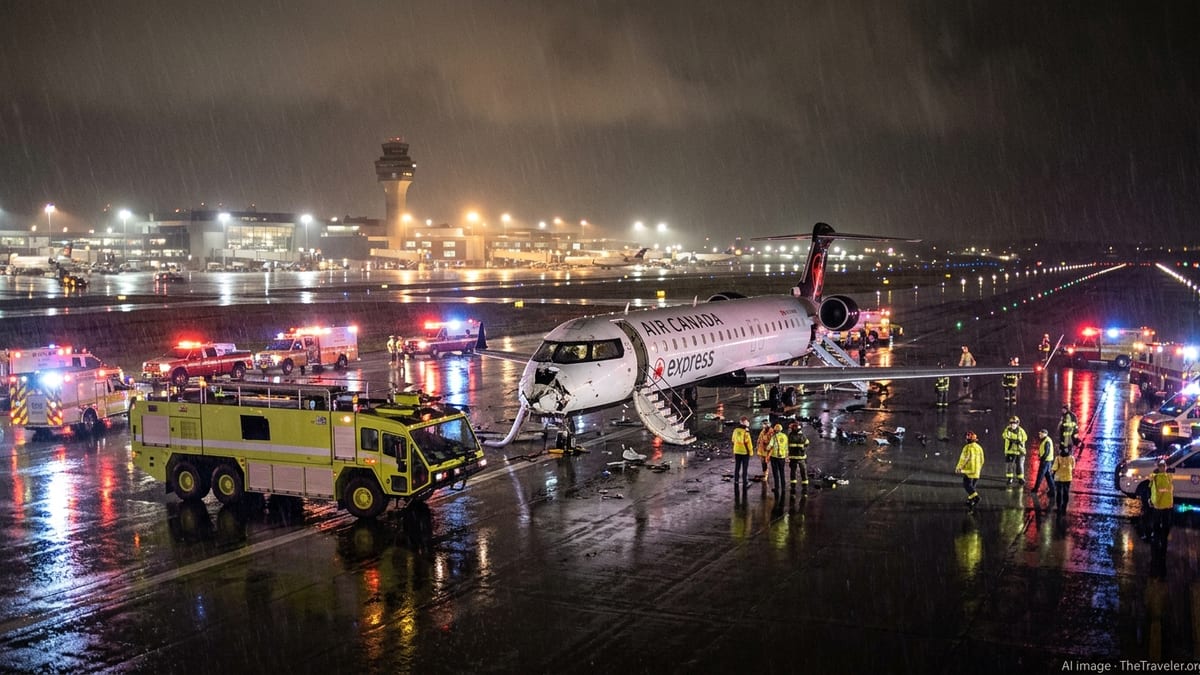
Runway 4/22 closure compounds an already congested airport
Publicly available information from airport and aviation sources indicates that the sinkhole was detected late Wednesday morning during a routine airfield inspection near Runway 4/22, one of LaGuardia’s two main runways. The affected strip was taken out of service immediately so crews could assess the damage and begin emergency repairs.
Runway 4/22 is a critical piece of infrastructure for LaGuardia, which regularly operates near its capacity limits even under normal conditions. With that runway closed, arrivals and departures have been funneled onto a single remaining runway, dramatically reducing the number of flights the airport can safely handle per hour.
Flight-tracking dashboards and Federal Aviation Administration advisories on Thursday showed LaGuardia under a formal ground delay program, with average departure delays of around an hour and a half and some flights waiting significantly longer. Data from tracking sites also pointed to a sharp rise in same-day cancellations as airlines trimmed schedules to cope with the restricted operations.
While early reports suggested the depression was confined to an area adjacent to the runway surface, the proximity to active pavement and critical taxiways left little margin for error, prompting a conservative shutdown of the affected strip while engineers evaluated soil stability and pavement integrity.
Delays and cancellations ripple across major U.S. hubs
Because LaGuardia is one of the country’s busiest domestic airports and a key slot-controlled hub for several major carriers, the loss of Runway 4/22 quickly produced knock-on effects far beyond New York City. Flight-status data on Thursday morning showed clusters of cancellations and rolling delays on routes linking LaGuardia with Chicago, Atlanta, Dallas and other high-volume connecting hubs.
Airlines have been combining flights, rebooking customers onto later departures and in some cases shifting passengers to nearby airports such as John F. Kennedy International or Newark Liberty International to ease the strain on LaGuardia’s limited runway capacity. Travelers connecting through New York have reported missed connections and extended layovers as disrupted inbound flights fail to arrive in time for scheduled onward legs.
Published coverage from national and local outlets indicates that the total number of impacted flights reached into the hundreds on Wednesday and Thursday, with delays continuing to accumulate as thunderstorms in the Northeast layered weather-related slowdowns on top of the infrastructure issue. Ground stop and ground delay advisories have been lifted and reimposed at various times as conditions evolved, contributing to a stop-start pattern of operations that has made planning difficult for both airlines and passengers.
Some carriers have responded by introducing limited change-fee waivers for affected routes, allowing customers to shift travel dates or reroute through alternative airports without standard penalties, although the specifics vary by airline and fare type.
What travelers heading to LaGuardia should expect today
For travelers scheduled to fly into or out of LaGuardia on May 21, aviation dashboards suggest a challenging day ahead. With one runway still closed and summer-style thunderstorms in the forecast, airlines are likely to keep schedules trimmed and pad turn times in an effort to prevent minor delays from cascading into multi-hour disruptions.
Publicly available guidance emphasizes that travelers should monitor their airline’s mobile app or email notifications closely, as estimated departure and arrival times are likely to shift throughout the day. Same-day cancellations remain possible, particularly on high-frequency business routes where carriers can consolidate passengers onto fewer flights.
Airport operations data indicates that early-morning departures may have slightly better odds of leaving close to schedule, as aircraft and crews are already in place from overnight positioning. As the day progresses and the effects of any additional weather systems or air traffic control flow restrictions accumulate, the risk of extended tarmac waits and last-minute gate changes increases.
Travel experts also note that passengers with flexible plans may benefit from voluntarily rebooking to later dates or to flights into nearby airports, especially if traveling for leisure rather than on fixed business schedules. Those who must travel are being encouraged, in publicly shared advisories, to allow extra time for security, be prepared for crowded gate areas and have contingency plans in case of extended delays.
Airport infrastructure and the challenge of aging airfields
The appearance of a sinkhole on or near an active runway has renewed scrutiny of the underlying infrastructure at LaGuardia, a coastal airport built on a combination of landfill and marshland that has long posed engineering challenges. Recent redevelopment projects have significantly upgraded terminals and passenger facilities, but the complex geology beneath the airfield remains a focus of ongoing maintenance and monitoring.
Technical reports and aviation analyses note that differential settlement, drainage issues and the long-term effects of freeze-thaw cycles can all contribute to pavement failures on airfields, especially at older airports constructed on reclaimed land. While dramatic failures like sinkholes are rare, even small subsurface voids can become serious safety concerns on high-speed surfaces used for takeoffs and landings.
Regulatory filings and construction impact reports for LaGuardia show that runway and taxiway rehabilitation has been a recurring feature of the airport’s long-term capital program, including planned closures for resurfacing and structural work. The sudden emergence of a sinkhole outside those scheduled windows underlines how unplanned incidents can still occur despite routine inspections and ongoing investments.
Industry observers suggest that the LaGuardia incident may prompt fresh assessments of subsurface conditions at other high-traffic airports built on similarly challenging terrain, particularly as climate impacts such as heavier rainfall and rising groundwater levels put additional stress on aging infrastructure.
Path to repair and a gradual return to normal operations
Emergency repair efforts have been underway since the sinkhole was first identified, with engineering teams working to excavate the affected area, stabilize the subgrade and rebuild the pavement layers to aviation standards. Publicly available statements indicate that safety margins will dictate the timeline for reopening, and no firm target has yet been widely reported.
Based on comparable runway repair projects at major airports, aviation analysts expect that LaGuardia will likely move through a phased recovery. Initial steps could include partial reopening of the runway with weight or length restrictions, followed by a full return to normal operations once structural testing and inspections are complete.
Until that point, airlines and passengers should anticipate continued constraints on capacity, with LaGuardia operating below its typical daily movement levels. Even after the runway reopens, residual delays may linger as carriers reposition aircraft, rebalance schedules and work through the backlog of displaced travelers.
For now, the sinkhole near Runway 4/22 has become another reminder of how a relatively small defect in a critical piece of infrastructure can reverberate throughout the aviation system, turning a localized maintenance emergency into a nationwide travel headache at the height of a busy spring travel week.