


More news on this day
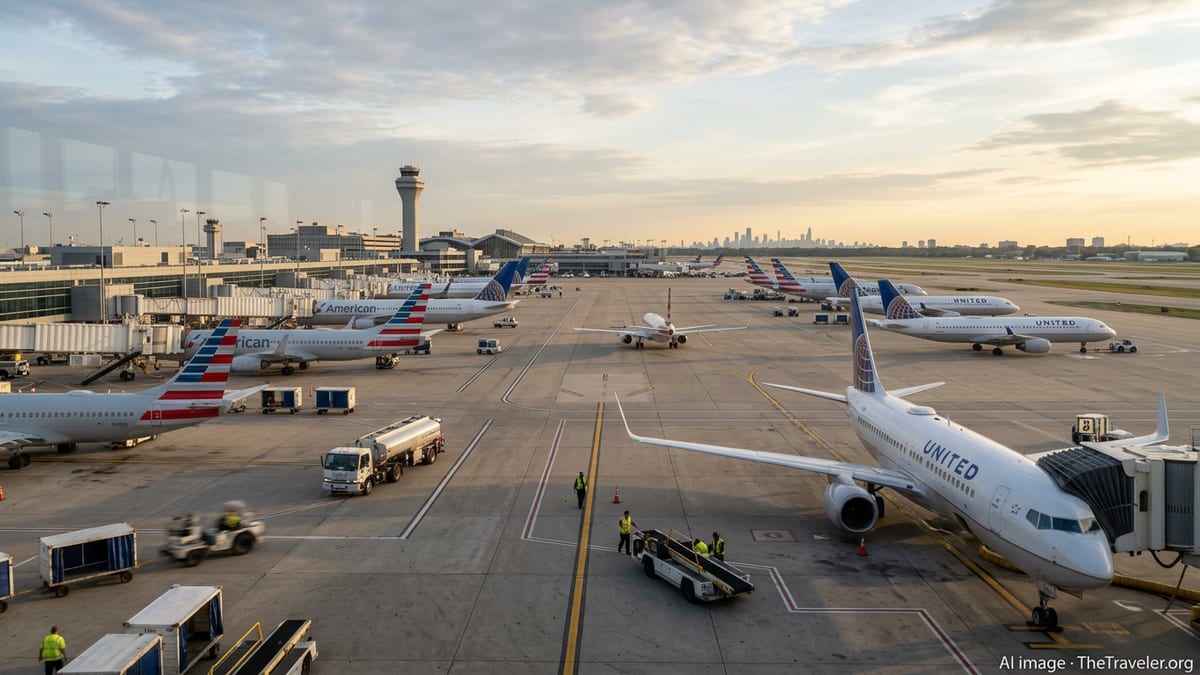
Chicago O’Hare International Airport is not included in the latest round of enhanced Ebola screening, with federal travel restrictions instead routing high-risk passengers through Washington Dulles International Airport, according to newly released documents and recent coverage.
Get the latest news straight to your inbox!
New Federal Order Focuses Ebola Checks on Dulles
A new federal public health order issued this week introduces tighter controls on travelers who may have been exposed to the latest Ebola outbreak in Central and East Africa. The order directs most non-U.S. travelers who have recently been in the Democratic Republic of the Congo, Uganda or South Sudan to enter the United States through Washington Dulles International Airport, where temperature checks and health questionnaires are being conducted in a dedicated screening process.
Publicly available summaries of the order and related advisories indicate that the routing requirement is designed to concentrate specialized medical and public health resources in one primary hub. By funnelling potentially exposed travelers through a single airport, health agencies can centralize staffing, isolation facilities and follow up procedures instead of dispersing them across multiple ports of entry.
The decision reflects concerns about a growing outbreak in northeastern Democratic Republic of the Congo involving the Bundibugyo strain of Ebola, a variant for which no approved vaccines or therapeutics are currently available. International health organizations have described the situation as a public health emergency, although case numbers remain low outside the affected region.
Under the latest rules, most foreign nationals who have been in the designated countries within the previous 21 days are subject to enhanced entry screening at Dulles, as well as potential movement monitoring after arrival. Separate guidance covers U.S. citizens and permanent residents, who may face additional health checks but are not subject to the same categorical entry restrictions.
O’Hare Maintains Routine Surveillance Without Added Checks
While earlier federal planning documents listed Chicago O’Hare among several major airports that could be used for enhanced Ebola checks, city-level health updates and recent reporting indicate that no such intensified screening has been activated there in response to the current outbreak. Instead, O’Hare continues to operate under standard infectious disease surveillance protocols maintained by the Centers for Disease Control and Prevention’s local port health station.
These baseline measures typically include visual illness assessments, targeted temperature checks in specific circumstances and established procedures for isolating and evaluating sick passengers identified in flight or on arrival. However, they stop short of the systematic, outbreak-specific screening program now being applied to select arrivals at Dulles.
City health officials have emphasized in public materials that O’Hare’s existing systems are designed to respond rapidly if a suspected case is identified, and that hospitals in the Chicago region maintain protocols for managing high-consequence infectious diseases. For the moment, though, there is no additional layer of Ebola-specific entry screening at O’Hare comparable to what is now in place at Washington Dulles.
That distinction means travelers arriving at O’Hare from Europe or other hubs are not subject to automatic Ebola-focused checks solely based on recent presence in the affected African countries, provided they are not captured by the routing rules that divert many higher-risk itineraries to Virginia.
Flight Rerouting Alters Transatlantic Travel Patterns
Travel advisories from airlines and immigration-focused briefings describe a significant reshaping of U.S.-bound routes for passengers with recent travel in the outbreak zone. Carriers have been instructed that flights carrying non-U.S. travelers who have been in the Democratic Republic of the Congo, Uganda or South Sudan within the previous three weeks must schedule their U.S. arrival into Washington Dulles rather than other large gateways such as O’Hare, Atlanta or New York.
This has already led to high-profile disruptions. One widely reported case involved a transatlantic flight originally bound for Detroit that was diverted away from U.S. airspace after officials determined that a passenger had recently been in the Congo and the aircraft was not scheduled to land at Dulles. The incident highlighted how strictly the new routing rules are being interpreted and enforced.
For Chicago-bound travelers, the practical effect is that certain itineraries originating in or transiting the affected African countries may now require an initial arrival at Dulles, followed by a domestic connection to O’Hare. This can add time and complexity to trips but ensures that enhanced screening occurs before passengers disperse throughout the U.S. domestic network.
Aviation analysts note in trade publications that such routing constraints are not new in the context of serious disease outbreaks. Earlier Ebola responses and other communicable disease events have similarly concentrated high-risk arrivals into a small set of airports with specialized infrastructure and trained staff on site.
Health Risk to Chicago Travelers Seen as Low
Despite the heightened attention surrounding the new outbreak and the federal order, current assessments in open public health reports describe the overall risk of Ebola transmission in the United States as low. The virus spreads through direct contact with the bodily fluids of a symptomatic person or contaminated materials, a mode of transmission that differs markedly from respiratory infections that spread through casual contact.
According to recent analyses, the choice to centralize screening at Dulles is aimed at reducing even a small probability of importation by intercepting potentially exposed travelers early, not a response to widespread risk in U.S. airports. O’Hare’s absence from the list of hubs with enhanced Ebola screening therefore reflects a strategic decision about resource allocation rather than a downgrade of its importance within the national aviation network.
International health agencies and national authorities continue to stress the importance of controlling Ebola at its source through rapid diagnosis, isolation, contact tracing and support for frontline health systems in the affected African regions. Travel measures, including the Dulles routing requirement, are framed in official documentation as an added layer of protection while those on-the-ground efforts proceed.
For passengers using Chicago O’Hare, the immediate impact is more likely to involve itinerary changes for a relatively small group of travelers than any visible expansion of health checks at the terminal itself. General advice in travel health guidance remains focused on routine precautions, awareness of symptoms after high-risk travel and seeking prompt medical evaluation if illness develops.
What Passengers Through O’Hare Should Expect
Airlines and government agencies are encouraging travelers with upcoming trips involving the Democratic Republic of the Congo, Uganda or South Sudan to review updated notices before departure. Booking patterns may need to shift to accommodate the requirement that many higher-risk travelers arrive first at Dulles, even if their final U.S. destination is Chicago.
At O’Hare, most passengers are unlikely to notice significant changes from a typical travel day. Announcements about the Ebola situation may appear on airport information screens or airline channels, and cabin crews remain trained to report any traveler who becomes visibly ill during a flight. Behind the scenes, local health departments and federal partners keep protocols in place for rapid isolation and transfer if necessary.
Travel industry observers suggest that additional changes are possible if the outbreak worsens or spreads to new countries, including the potential expansion of enhanced screening to other U.S. airports. For now, however, Chicago O’Hare’s role in the Ebola response is centered on routine surveillance and preparedness, while Washington Dulles serves as the primary frontline for intensified passenger screening tied to the current crisis.