


More news on this day
Travel plans across the United States were disrupted on Wednesday after a sinkhole discovered beside a main runway at New York’s LaGuardia Airport forced a shutdown and triggered hours of delays and cancellations.
Get the latest news straight to your inbox!
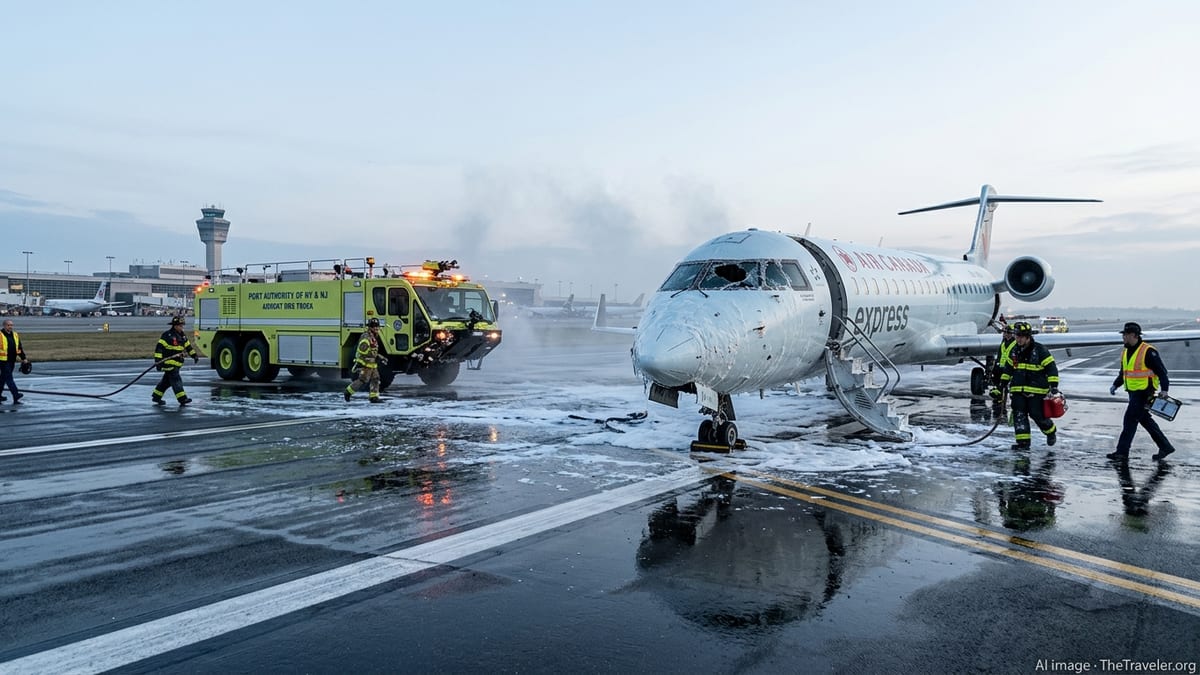
Runway 4/22 Closed After Routine Inspection Finds Sinkhole
Publicly available information indicates that airfield crews at LaGuardia identified the problem late Wednesday morning, May 20, during a daily inspection of the airfield. The sinkhole was reported adjacent to Runway 4/22, one of only two runways serving the busy Queens airport, prompting the immediate closure of the strip for safety reasons.
Reports from outlets including ABC News and Reuters describe the affected area as close to, but not directly on, the runway surface. The location raised concerns about potential undermining of the pavement structure, leading airport operators to keep the runway out of service while engineering teams assess the extent of the damage and stabilize the ground.
According to published coverage, the Federal Aviation Administration responded by slowing traffic into LaGuardia and implementing ground delays, effectively metering the flow of arriving flights to match the reduced runway capacity. With only one runway available, normal operations quickly became impossible during peak periods.
The discovery came at the start of the late spring travel surge, a period when New York’s airports already face heavy demand. The timing heightened the operational impact, with carriers forced to adjust schedules and reposition aircraft at short notice.
Hundreds of Flights Disrupted and Delays Near Two Hours
Flight tracking data cited across multiple news reports showed extensive disruption by late Wednesday. Reuters and other outlets reported that roughly 200 flights, or about 17 percent of all departures and arrivals at LaGuardia, were canceled, while close to 190 flights experienced delays.
ABC-linked coverage indicated that LaGuardia was placed under a formal ground delay program, with average departure delays approaching 100 minutes at one point. Travelers heading to New York or connecting through LaGuardia were advised in public statements and airline alerts to check their flight status before leaving for the airport.
The disruption extended beyond New York City. Reports from aviation-focused publications describe a ripple effect reaching major hubs such as Chicago, Atlanta, and Dallas as airlines struggled to absorb the loss of runway capacity at one of their key Northeast gateways. Aircraft and crews scheduled to operate multiple legs through LaGuardia faced knock-on delays throughout the day.
Travelers on social platforms described lengthy waits on tarmacs, multiple rebookings, and late-notice cancellations as airlines worked through the operational backlog. With the runway closure layered on top of forecast thunderstorms in the region, the combined impact created one of the more significant single-day disruptions at LaGuardia so far in 2026.
Emergency Repairs Underway, Timeline for Reopening Unclear
Publicly available information from airport and aviation reports indicates that construction and engineering crews were dispatched to the site soon after the sinkhole was discovered. Initial efforts have focused on determining the size and depth of the void, stabilizing the immediate area, and preventing additional erosion beneath the pavement.
Coverage from national and local outlets notes that authorities have not provided a firm timeline for when Runway 4/22 might safely reopen. The duration of the closure will depend on the complexity of the underlying ground issue, potential damage to drainage or utility lines, and the need to rebuild and test sections of pavement before resuming full operations.
Experts cited in prior analyses of LaGuardia’s infrastructure have pointed to the airport’s location on reclaimed shoreline and filled land as a factor that can complicate maintenance and long-term resilience. While the exact cause of the current sinkhole has not yet been detailed in public reporting, the incident underscores the ongoing challenge of maintaining heavily used runways on constrained and geologically sensitive sites.
Until a clearer repair schedule emerges, airlines are expected to continue trimming schedules, rerouting some flights to other New York-area airports, and consolidating services to make the best use of the remaining runway capacity at LaGuardia.
Strained Infrastructure at a Congested Urban Airport
The sinkhole comes at a time when LaGuardia’s infrastructure remains under close scrutiny following years of redevelopment and a series of operational incidents. Earlier this year, a collision involving an aircraft and a ground vehicle led to a temporary airport-wide closure, highlighting how limited redundancy on runways and taxiways can translate quickly into major disruptions.
LaGuardia’s compact footprint and limited runway options make it particularly vulnerable when a critical asset such as Runway 4/22 is taken out of service. Studies of the airport’s operations, including government and academic reviews, have frequently noted that even routine maintenance or weather-related constraints can cause substantial delays because there is little spare capacity to absorb unexpected events.
According to aviation analysts cited in recent coverage, the latest incident is likely to renew debate over how to prioritize infrastructure spending at capacity-constrained hubs. Issues such as aging drainage systems, subsurface stability, and the effects of increasingly intense rainfall on older airfield structures have been highlighted in broader discussions of airport resilience.
For travelers, the sinkhole serves as a visible reminder of how quickly a localized infrastructure issue at a major gateway can spread across the national air transportation system, affecting flights and connections far away from New York City.
What Travelers Can Expect in the Coming Days
As of Thursday, May 21, publicly available information suggests that LaGuardia remains open but operating with reduced capacity while repair work continues beside Runway 4/22. Airlines are adjusting schedules daily, with some carriers offering waivers that allow passengers to change travel dates or reroute trips without standard change fees.
Travel reporting and airline advisories indicate that travelers bound for LaGuardia over the next several days should plan for potential schedule changes, longer connection windows, and crowded rebooking lines if weather or continued runway restrictions further constrain operations. Those with flexible itineraries may benefit from considering flights into or out of nearby airports such as John F. Kennedy International or Newark Liberty, where available.
Although conditions may gradually improve as crews stabilize the affected area and air traffic managers refine schedules, industry observers note that residual delays can persist even after a runway returns to service, as aircraft and crew rotations take time to recover. Travelers are widely being encouraged through public-facing channels to monitor airline apps and notifications closely on the day of travel.
With the cause of the sinkhole still under review, the episode is likely to feature in ongoing conversations about infrastructure risk management at major U.S. airports. For now, the focus remains on safely restoring full runway capacity at one of New York’s busiest air gateways and easing the disruption for passengers across the country.