


More news on this day
A sinkhole discovered on the airfield at New York’s LaGuardia Airport has shut down one of the hub’s two runways, triggering significant delays and cancellations just days before the Memorial Day travel rush.
Get the latest news straight to your inbox!
Runway 4/22 closure compounds pre-holiday pressure
Publicly available information shows that airfield crews identified the sinkhole late Wednesday morning, May 20, during a routine inspection near Runway 4/22, one of LaGuardia’s two primary runways. The affected strip was taken out of service immediately while construction and engineering teams moved in to stabilize the area.
Reports from aviation tracking services indicate that the loss of Runway 4/22 effectively cut LaGuardia’s runway capacity in half at a time when airlines were already ramping up schedules for the Memorial Day weekend. With only a single runway available for both arrivals and departures, air traffic managers began spacing flights further apart, quickly creating a backlog on the ground and in the air.
Federal airspace updates show that a ground delay program was implemented for LaGuardia, with arriving aircraft facing extended holding times and some flights diverted to other airports in the region. Departures from other major hubs bound for New York, including Chicago, Atlanta and Dallas, also experienced knock-on delays as carriers adjusted rotations.
According to data compiled from FlightAware and other tracking platforms, close to 200 flights into and out of LaGuardia were canceled on Wednesday, with a similar number delayed. Average delays for affected services approached 90 minutes, although some evening flights reportedly faced far longer waits as weather moved through the area.
Memorial Day demand heightens impact on travelers
The incident comes at the start of what is typically one of the busiest travel periods of the year in the United States. Industry forecasts from airlines and federal transportation agencies had already predicted record passenger volumes for the long Memorial Day weekend, driven by strong leisure demand and robust corporate travel.
With that backdrop, the sudden loss of runway capacity at LaGuardia is expected to have an outsized impact on travelers over the coming days. Network carriers rely heavily on the Queens airport for high-frequency shuttle routes along the Northeast Corridor as well as connections from major hubs across the country, leaving limited slack in schedules when disruptions occur.
Airline advisories reviewed on Thursday morning encourage passengers with upcoming LaGuardia itineraries to monitor flight status closely and allow extra time at the airport, particularly if thunderstorms persist in the New York region. Several carriers have posted flexible travel policies for customers booked to, from or through LaGuardia, allowing changes without standard penalties on select dates.
Travel industry analysts note that even if the physical repairs to the sinkhole proceed quickly, displaced aircraft and crews, combined with constrained runway access, could continue to ripple through operations into the early part of the holiday period. Travelers connecting through LaGuardia or relying on tight connections elsewhere may feel the effects even after the runway is restored.
Ongoing repairs and questions about airfield resilience
Images shared by local broadcasters and published coverage from outlets including ABC News, CBS New York and other regional media show heavy equipment and work crews clustered around a visible depression near the edge of Runway 4/22. The sinkhole appears to have formed along an adjacent taxiway on the approach side of the runway, prompting a conservative closure while the extent of the subsurface issue is assessed.
As of Thursday morning, there was no publicly announced timeline for when the runway might reopen to traffic. Statements cited in multiple reports emphasize that repairs will be completed as quickly as possible while maintaining safety standards, with the Port Authority coordinating with airlines and federal aviation agencies on operational adjustments.
LaGuardia’s airfield has long been considered challenging from an infrastructure perspective, built on historic landfill and marshland along the Flushing Bay shoreline. Recent coverage has highlighted that a separate sinkhole was reported on a nearby highway on Long Island earlier in May, adding to public discussion about soil stability and drainage in the broader region.
Transportation planners and aviation experts quoted in prior analyses have pointed out that aging airfield pavement, intensive use, and climate-related stressors such as heavier rain events can all contribute to localized ground failures. The LaGuardia sinkhole is likely to renew scrutiny of maintenance cycles, subsurface monitoring and long-term resilience planning at legacy airports situated on reclaimed land.
Recent safety incidents frame public concern
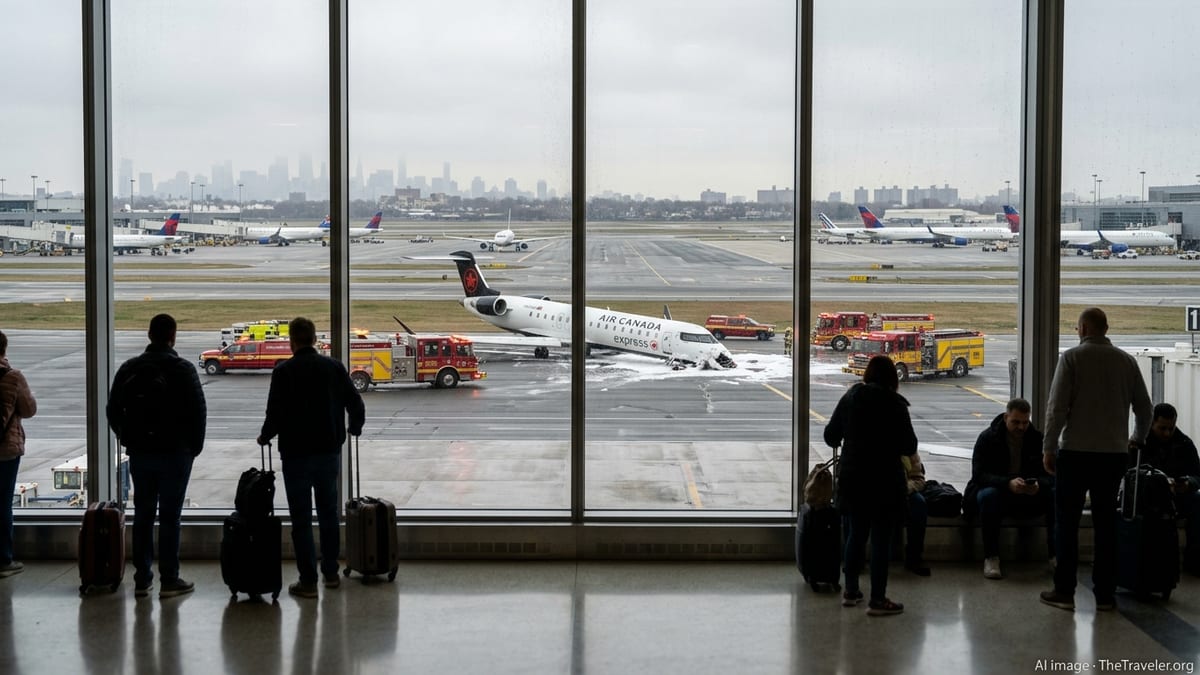
The disruption at LaGuardia comes only about two months after a high-profile accident involving an Air Canada Express regional jet and an airport fire truck on the same runway complex. That March collision, which resulted in fatalities among the flight crew and injured dozens, led to a temporary closure and fresh examination of runway safety and airfield procedures.
While there is no indication at this stage that the newly discovered sinkhole is linked to that earlier event, the proximity in time and location is shaping public perception of conditions at the airport. Social media posts and local commentary collected over the past 24 hours show frustration among travelers who view the sinkhole as another sign of strain on New York’s crowded aviation infrastructure.
LaGuardia has undergone a multibillion dollar terminal redevelopment in recent years, delivering modern concourses and upgraded passenger facilities. However, advocacy groups and aviation specialists have frequently argued that airfield layout, limited runway options and constrained space on the waterfront site remain structural challenges that cannot be fully resolved through terminal upgrades alone.
The sinkhole, and the precautionary shutdown of Runway 4/22, is likely to be cited in upcoming policy debates over funding priorities for infrastructure, as lawmakers consider how best to balance investment between terminals, air traffic systems and airfield surfaces that quietly bear the brunt of day-to-day operations.
What travelers can expect in the coming days
As repair efforts continue, publicly available airport and airline updates suggest that LaGuardia will operate on a reduced schedule, with carriers proactively trimming frequencies and upgauging some flights to larger aircraft where possible. Passengers booked on high-frequency shuttle routes may see flights consolidated, while some regional services could be temporarily rerouted to Newark or John F. Kennedy airports.
Travel advisors recommend that passengers heading into the New York area for Memorial Day weekend remain flexible with timing and, where feasible, consider alternative airports within the region. Those with nonrefundable tickets are encouraged to review carrier waiver policies closely, as eligibility can vary by travel date and point of sale.
Even after runway repairs are complete, airlines may need additional time to reposition aircraft and crews and to unwind residual delays that have built up across their networks. Industry observers caution that schedules might not fully normalize until after the peak holiday period, particularly if further weather disruptions occur along the busy Eastern Seaboard.
For now, LaGuardia’s sinkhole has become an unexpected stress test of New York’s aviation system at the very outset of the summer travel season, underscoring how a relatively small patch of damaged pavement can trigger outsized consequences for passengers across the country.