


More news on this day
A key runway at New York’s LaGuardia Airport remains out of service after a sinkhole was discovered during a routine inspection, disrupting hundreds of flights and straining air traffic along the U.S. East Coast.
Get the latest news straight to your inbox!
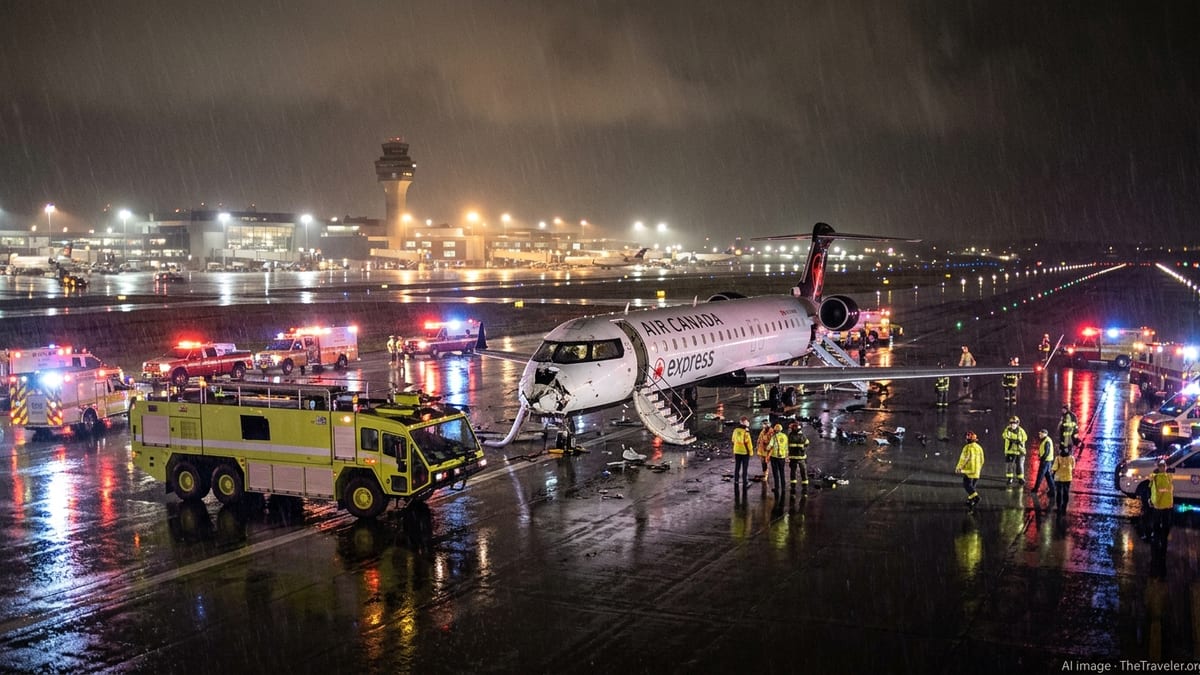
Runway 4/22 shut as emergency repairs continue
Publicly available information indicates that airfield crews at LaGuardia identified the sinkhole late Wednesday morning, May 20, during a standard daily inspection of the airfield. The depression was found near Runway 4/22, one of the airport’s two primary runways, prompting an immediate shutdown of the strip while engineers assessed the damage.
Reports from multiple outlets describe the affected area as being adjacent to or near the runway surface, close enough that airport managers opted to halt operations on 4/22 rather than risk aircraft movements in the vicinity of unstable pavement. Emergency construction teams were deployed to stabilize the ground and begin repairs, but as of Thursday the runway had not yet reopened.
Runway 4/22 is a critical piece of LaGuardia’s infrastructure, handling a substantial share of arrivals and departures. With the strip closed, the airport is operating with significantly reduced capacity, increasing pressure on the remaining runway and lengthening queues for takeoffs and landings.
Information shared by local broadcasters notes that engineering crews have been working around the clock, but there is no firm public timeline for when full operations on Runway 4/22 will resume. The pace of repairs depends on the size of the void, subsoil stability and the need to prevent further erosion beneath the airfield surface.
Hundreds of cancellations and delays ripple across the network
Flight-tracking data cited in published coverage shows that by late Wednesday and into Thursday, roughly 200 flights into and out of LaGuardia had been canceled, with a similar number delayed. Average delays for inbound flights stretched toward or beyond an hour as air traffic managers slowed the rate of arrivals to match the reduced runway capacity.
The Federal Aviation Administration placed a ground delay program on LaGuardia, meaning many departures bound for the airport were held at their origin until a landing slot became available. This approach limited airborne holding around New York but prolonged gate and taxi delays at airports across the country.
Reports from aviation outlets and travel blogs describe a knock-on effect to major hubs including Chicago, Atlanta and Dallas, where aircraft and crews scheduled to route through LaGuardia were unable to follow their planned rotations. As a result, some flights with no direct link to New York also experienced disruption as airlines rebalanced aircraft and reassigned crews.
Publicly available information from airline operations teams suggests carriers prioritized mainline trunk routes and peak business travel periods, with some regional and off-peak services more likely to be canceled or consolidated. Travelers connecting through LaGuardia were particularly vulnerable to missed connections when inbound legs arrived late and onward flights departed on compressed schedules.
Weather compounds disruption for Memorial Day travelers
The sinkhole emerged just as forecasters were calling for thunderstorms in the New York region, a combination that has further complicated recovery efforts. According to published coverage, the Federal Aviation Administration cited both weather and the airfield damage in explaining the slower flow rates into LaGuardia.
Convective storms can force controllers to increase spacing between aircraft and temporarily close arrival or departure corridors, reducing throughput even at full-capacity airports. With one of LaGuardia’s two main runways offline, any weather-related restrictions have an outsized effect on schedules.
The timing is especially challenging as airlines prepare for the busy late May and early summer travel period. Industry analysts quoted in recent reports have warned that even brief infrastructure issues at highly constrained airports can take days to fully unwind, particularly when they coincide with regional weather systems.
Travelers heading into the Memorial Day corridor face the prospect of longer-than-usual queues, tighter connections and an elevated risk of rebooking, especially on already full flights. Public advisories from the Port Authority of New York and New Jersey urge passengers to check flight status frequently and arrive early at the airport to navigate potential bottlenecks at check-in and security.
Infrastructure vulnerabilities under renewed scrutiny
The incident has drawn fresh attention to LaGuardia’s geography and long history of infrastructure challenges. The airport sits on former shoreline and landfill in Queens, a setting that some aviation commentators note can be more susceptible to settlement and water-related erosion beneath paved surfaces.
In recent years, LaGuardia has undergone a multibillion-dollar terminal and airfield modernization intended to upgrade aging facilities and improve operational resilience. Nonetheless, the emergence of a sinkhole near a primary runway underlines the complexity of maintaining heavy-use infrastructure on reclaimed land in a coastal environment.
Engineering experts cited in previous Federal Aviation Administration and Port Authority planning documents have highlighted the need for constant monitoring of subgrade conditions, especially where past layers of fill, buried structures or older drainage systems intersect with modern pavement. Routine inspections such as the one that uncovered the sinkhole are a key safeguard, but they can still reveal abrupt failures that require immediate shutdowns.
Observers of New York’s broader transportation network suggest the LaGuardia disruption may feed into ongoing debates about long term investment in resilient infrastructure, including stormwater management, subsurface monitoring and rapid-response repair capabilities at major airports.
What travelers can do as LaGuardia backlog grows
With one runway still closed and no publicly available estimate for a full return to normal operations, travel experts recommend treating itineraries involving LaGuardia as high risk in the short term. Published guidance from airlines and travel advisors emphasizes that passengers should monitor their bookings closely and use airline apps or text alerts for real-time updates.
Same day rebooking options may be limited on heavily booked routes, so some travelers may find better odds by searching nearby airports such as John F. Kennedy International or Newark Liberty International, then using ground transport into New York City. However, such changes can introduce their own costs and logistical complications.
For those who must fly through LaGuardia while the runway remains closed, practical steps include avoiding tight connections, traveling with carry-on baggage when possible and preparing for extended waits in terminal areas. Travel insurance policies that cover trip interruption may also help offset hotel and rebooking expenses for passengers who experience significant delays or cancellations.
Airline operations teams typically move quickly to restore normal patterns once critical infrastructure is repaired. Until Runway 4/22 is fully back in service, however, LaGuardia is expected to remain a pinch point in the national air network, with delays and disruptions potentially persisting even after the sinkhole itself is filled and the pavement restored.