


Where Las Olas Boulevard meets A1A, Fort Lauderdale Beach condenses into one of its liveliest, most convenient stretches. This is Las Olas Beach: a compact but high-energy hub of sand, promenade, hotels and dining that works as many visitors’ first taste of the city’s Atlantic shoreline. If you are deciding whether to base yourself here, or simply planning a day at the beach, it helps to understand how this intersection fits into the wider coastline, what it actually feels like on the ground, and what type of traveler will enjoy it most.
Get the latest updates straight to your inbox!
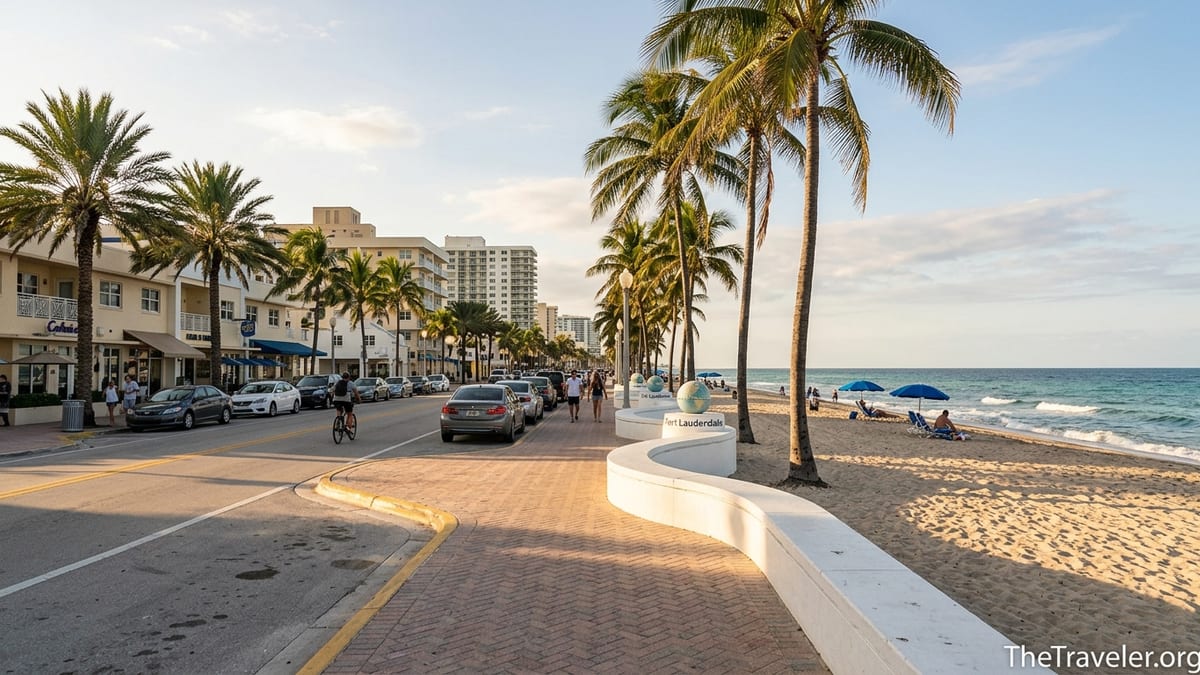
Las Olas Beach and A1A in the Context of Fort Lauderdale Beach
Las Olas Boulevard runs directly from downtown Fort Lauderdale to the ocean, ending where it meets A1A at a wide curve of sand commonly referred to as Las Olas Beach. This junction sits roughly in the middle of the main Fort Lauderdale Beach corridor, with the beachfront promenade extending north toward Sunrise Boulevard and south toward Harbor Beach and the cruise port. The area functions as a central gateway: if you follow the Water Taxi or drive east from the restaurants and galleries downtown, this is where you spill out onto the sand.
The beachfront here is framed by the city’s signature low white wave wall and a brick-paved promenade that runs along the east side of A1A. Across the street on the west side, mid-rise hotels, bars and casual restaurants line the road in a mostly continuous strip for about half a mile north and south. Visitors often compare the feel to a smaller, calmer version of Miami Beach: plenty of traffic and people-watching, but more compact and easier to navigate, with most things within a 10 to 15 minute walk.
In practical terms, staying near Las Olas and A1A puts you about a 10 minute drive from the airport and Port Everglades cruise terminals in light traffic, and similar distance from downtown cultural spots like the Riverwalk and museums. Ride-hail trips from the airport to the beachfront hotels near Las Olas often come in around a moderate fare range depending on time of day, which makes this junction a popular pre-cruise base or quick weekend escape for domestic travelers.
Compared with quieter sections of the barrier island, this node is less about seclusion and more about access. From here you can walk to beachfront resorts like Marriott Harbor Beach to the south or Conrad Fort Lauderdale Beach to the north, but you are in the thick of the public beach scene. That mix of beach park, promenade and street life defines what most people think of as “Fort Lauderdale Beach.”
What the Beach Itself Is Like
On the sand side of A1A, Las Olas Beach delivers a classic South Florida look: a wide, mostly flat strip of golden sand leading to warm, turquoise-tinged Atlantic water. The city maintains the shoreline as part of the larger Fort Lauderdale Beach system, with lifeguard towers spaced along the sand and regular grooming. Typical ocean conditions range from gentle to choppy depending on wind and season, and water temperatures often feel swimmable much of the year, especially from late spring into fall.
During the day, you can expect a mix of families, couples and groups of friends spreading out on beach towels and rental loungers. On peak weekends in winter and spring, cruise passengers in for the day and domestic visitors from around the United States fill out the crowd. You will see beach volleyball nets in use, kids playing at the water’s edge and plenty of people simply walking the surf line with takeaway coffees from the cafes across A1A.
The public beach here is free to access, though standard rules apply: no glass, no smoking, and restrictions on tents and large structures. The city’s posted beach regulations cover things like hours for certain activities and where water sports operators can launch, but an average visitor will mostly notice simple signage about keeping off the dunes and using designated crossings. You will typically find beach chair and umbrella concession stands along this stretch charging per day for a pair of loungers and shade, which can be worth it in the strong midday sun.
Evenings often see a second wave of activity. As the sun drops behind the city skyline to the west, the sky over the ocean can turn soft pink and orange, with locals and visitors alike out strolling the promenade. Artificial lighting and traffic along A1A keep the area bright after dark; many people are comfortable walking between hotels and restaurants here at night, though as always in any busy tourist area it is sensible to keep normal city awareness of your belongings.
Las Olas Oceanside Park, Promenade and Atmosphere
Anchoring the northwest corner of the intersection is Las Olas Oceanside Park, a newer, landscaped public space that blends directly into the beachfront promenade. The park incorporates a lawn, shaded seating, a splash pad and sculptural elements, and it often hosts weekend farmers markets, fitness classes and seasonal events. For a visitor, this means that on many Saturdays and Sundays you might wander into a line of local vendors selling baked goods, crafts and fresh produce just steps from the sand.
The promenade along A1A between Las Olas and Sunrise Boulevards is one of Fort Lauderdale’s most recognizable features, and Las Olas Beach sits in its heart. Expect a steady stream of joggers, cyclists, parents pushing strollers and couples strolling with ice cream. Several crosswalks with signals make it relatively straightforward to move between the sand and the west side of A1A, though traffic can be heavy during peak periods and you should plan extra time to cross if you have kids in tow or beach gear to juggle.
Noise levels vary through the day. Mornings tend to be quieter, with the soundtrack mostly waves and the occasional cyclist’s bell. By late morning and afternoon, vehicle noise on A1A combines with music drifting from cafe patios and occasionally from hotel pool decks. During big event weekends or spring break periods, the atmosphere can shift toward a more party-forward feel, with amplified music from temporary stages or bars spilling onto the sidewalk, and larger groups in beachwear filling the promenade.
Lighting, benches and the openness of the promenade give this area a relatively safe, high-visibility feel compared with more isolated stretches of coastline. Solo travelers often report feeling comfortable walking here in early evening or just after dinner. That said, any oceanfront strip that mixes alcohol, traffic and visitors demands some caution at night: stick to main routes, avoid unlit side streets behind the hotels, and use marked crosswalks when heading back to your accommodation.
Where to Stay Near Las Olas and A1A
The immediate blocks surrounding Las Olas Beach are lined mostly with mid to upper-midscale hotels and a few luxury properties. Many sit directly on the west side of A1A facing the ocean, while others are set one short block back with partial views. Typical examples include large branded resorts that offer pools, on-site restaurants and beach services, appealing to travelers who want an easy, self-contained experience with the option to cross the street to the public beach.
Rates in this zone tend to track seasonality. In winter high season and around holidays, standard rooms at oceanfront properties can price significantly higher than in late summer or early fall, when you may find more competitive deals and promotional offers that include daily resort credits or discounted parking. Travelers who are budget-conscious but still want proximity to Las Olas Beach sometimes split the difference by staying inland near downtown Las Olas Boulevard or along US 1 and using ride-hail or the Water Taxi to reach the beach.
If you prefer a quieter base, you might look slightly north or south along A1A. For instance, heading north toward the Sunrise Boulevard area introduces more condo-style hotels and slightly more residential stretches. Going south brings you closer to the convention center and Port Everglades, with larger resort complexes that sit directly on broader sections of sand. From either direction, Las Olas Beach is usually a short ride away, making it feasible to enjoy the energy of this hub without sleeping right in the middle of it.
Parking is a key consideration. The city-operated Las Olas Garage and surrounding metered spaces can fill up on sunny weekends or during special events, and hourly rates are comparable to other popular Florida beach towns. If you plan to drive daily, choosing a hotel that includes discounted or bundled parking can sometimes offset a slightly higher nightly room price. Visitors arriving without a car often find it easier simply to rely on ride-hail for airport transfers and occasional trips beyond walking distance.
Eating, Drinking and Things To Do
Across A1A from the sand and along nearby side streets, you will find a mix of open-air bars, casual seafood spots, coffee shops and hotel restaurants. Menus often lean toward beach-friendly staples: fish tacos, burgers, salads and frozen cocktails. Prices are generally in line with what you would expect in a busy beachfront district, with simple lunch plates in the moderate range and sit-down dinners with drinks easily reaching higher totals for two people. Some long-running bars near the Las Olas corner keep a loyal following of locals and returning visitors, especially in the late afternoon and early evening.
For a broader dining scene, many visitors pair days at Las Olas Beach with evenings along downtown Las Olas Boulevard, a 5 to 10 minute drive inland. There, tree-lined blocks hold everything from independent wine bars and higher-end steakhouses to casual pizza joints and dessert cafes. You can have a relaxed tapas-style dinner, sit in a waterfront restaurant overlooking canal-side yachts, or simply graze your way between gelato and coffee spots before heading back to your beachfront hotel.
On the activity side, A1A at Las Olas is dense with vendors offering water sports and rentals. You will see kiosks or small stands advertising jet ski rides, parasailing, banana boat rides and stand-up paddleboard rentals, either directly on the sand or through concierge desks at nearby hotels. Prices vary by season and demand, but visitors should expect to pay per half-hour or per hour for equipment like jet skis, with short parasail flights typically priced per person. Booking in advance through your hotel can sometimes secure small discounts or at least clearer cancellation terms.
Beyond the water, simple pleasures dominate. Early risers jog or walk the promenade in the cooler morning hours. Families use the splash pad and shaded seating in Las Olas Oceanside Park before the midday sun peaks. In the evening, live music from hotel lounges and bars forms a soft soundtrack as visitors wander A1A with ice cream or stop for a sunset drink on a second-floor terrace overlooking the beach.
Getting Around, Parking and Practical Tips
Reaching Las Olas Beach is straightforward by car, rideshare or water. From Fort Lauderdale-Hollywood International Airport, the drive is usually under 20 minutes in typical traffic conditions: head north on US 1 and then east on Las Olas Boulevard until it dead-ends at the ocean. From downtown, you simply follow Las Olas east over the Intracoastal bridges until you reach A1A. The popular Water Taxi route includes stops near both downtown Las Olas and the Intracoastal side of the beach area, making it an enjoyable if slower scenic way to arrive.
Parking concentrates around the Las Olas Garage, surface lots and metered street spaces along and near A1A. The city periodically adjusts parking rates for the beach area and may add special event pricing during holidays or large festivals. Expect to pay hourly rates that are typical for a busy Florida beach city, with higher flat fees possible during large-scale events such as air shows or music festivals. If you plan a full beach day, using the garage can make sense compared with feeding a meter, and apps accepted by the city can simplify payment and reminders.
On foot, the area is compact and walkable, but crossings require attention. Use signalized crosswalks at the main intersection and mid-block crossings to move between the park, promenade and the west side of A1A. Cyclists share the road and, in places, painted lanes, but traffic can be impatient at peak times. Renting a bike or electric scooter is an option, though many visitors find that simply walking covers most needs within the core beachfront zone.
For day trippers, a simple pattern works well: arrive by mid-morning to secure easier parking, spend late morning and early afternoon on the sand and in the water, take a shaded break in Las Olas Oceanside Park, and then move across A1A for a late lunch or early dinner. Keep cashless payment methods handy, wear reef-safe sunscreen that can withstand repeated dips in the ocean, and consider a small foldable beach cart if you are carrying coolers and chairs from a distant parking spot.
Who Should Stay Near Las Olas Beach
The Las Olas and A1A area best suits travelers who value convenience and energy over seclusion. If your ideal beach trip involves being able to wake up, cross one street and be on the sand; choose a different restaurant every night without needing a car; and have quick access to both the ocean and downtown, this junction is a strong candidate. Couples on short breaks, cruise passengers with one or two nights on land and groups of friends often find the balance here exactly right.
Families with school-age children also do well, especially if they pick a hotel that balances beachfront access with a decent pool and some shade. The presence of lifeguards along Fort Lauderdale Beach, the promenade for stroller-friendly walks and the nearby park amenities all help make day-to-day logistics easier. Parents should, however, be prepared for crowding on peak weekends and plan extra time for elevator waits and restaurant queues.
Travelers seeking a very quiet, residential-feeling beach may be less satisfied. The combination of vehicle noise, nightlife and year-round foot traffic means that even higher-floor hotel rooms can pick up some ambient sound, especially on weekends. If you prioritize tranquil early nights or long, empty stretches of sand, you might prefer staying farther north along A1A toward Galt Ocean Mile or in another Broward County beach community, visiting Las Olas Beach as a daytime outing instead.
Business travelers and remote workers sometimes choose Las Olas Beach for the same reasons leisure guests do: quick airport access and walkable dining. Many hotels in this area have upgraded Wi-Fi and communal spaces suitable for laptop work. Still, if you need absolute quiet for calls or prefer a more corporate environment, a downtown hotel along the inland section of Las Olas Boulevard or near the financial district may be a better fit, with the beach an easy add-on rather than your base.
The Takeaway
Las Olas Beach at the junction with A1A is not the longest or most secluded stretch of Fort Lauderdale’s shoreline, but it is arguably its most emblematic. Here, the city’s downtown energy meets the Atlantic in a walkable square of sand, promenade, park and hotels that defines the classic Fort Lauderdale Beach image. For visitors who want to step easily between beach chair, cafe table and city lights without ever getting into a car, this intersection delivers.
Choosing to stay near Las Olas and A1A is ultimately about accepting some bustle in exchange for immediacy. You trade the possibility of a quiet, empty dawn shoreline for the reality of convenient dining, easy transport links, frequent events and people-watching from a shaded bench in Las Olas Oceanside Park. If that balance matches how you like to travel, Las Olas Beach makes an excellent anchor for a long weekend, cruise add-on or even a week-long stay on one of South Florida’s most recognizable urban beaches.
FAQ
Q1. Is Las Olas Beach the same as Fort Lauderdale Beach?
Las Olas Beach is a central section of Fort Lauderdale Beach located where Las Olas Boulevard meets A1A. It is part of the wider Fort Lauderdale Beach shoreline rather than a separate beach.
Q2. How crowded does Las Olas Beach get?
Las Olas Beach can be relatively calm on weekday mornings but becomes busy on sunny weekends, winter high season days and during events, when parking and space on the sand can feel tight.
Q3. Is the area around Las Olas and A1A walkable?
Yes, the immediate area is highly walkable, with a continuous beachfront promenade, crosswalks and many restaurants, bars and hotels within a 5 to 15 minute walk.
Q4. Do I need a car if I stay near Las Olas Beach?
You can comfortably stay here without a car, relying on ride-hail for airport and cruise port transfers and walking or using the Water Taxi for most local trips.
Q5. Are there lifeguards at Las Olas Beach?
Fort Lauderdale Beach, including the Las Olas section, is typically staffed with lifeguards during posted daytime hours, though specific tower coverage and schedules can vary by season and conditions.
Q6. What is parking like near Las Olas Beach?
Parking is available in the Las Olas Garage, nearby lots and metered street spaces. Rates are comparable to other busy Florida beach towns and can rise during special events.
Q7. Is Las Olas Beach family-friendly?
Yes. Families appreciate the lifeguard presence, relatively gentle shoreline, nearby park and splash pad, and the ability to walk to casual restaurants across A1A.
Q8. Can I find budget accommodations near Las Olas Beach?
Most properties directly on or very close to A1A near Las Olas skew midrange to upscale. Budget travelers often look a bit inland toward downtown or along US 1 and commute to the beach.
Q9. What is the nightlife like around Las Olas and A1A?
The immediate beachfront has a lively but not extreme nightlife scene, with bars, hotel lounges and late-opening restaurants. Downtown Las Olas Boulevard inland offers a denser cluster of evening venues.
Q10. When is the best time of year to stay near Las Olas Beach?
Winter and early spring offer pleasant temperatures and a lively atmosphere but higher prices. Late spring and early fall can bring better hotel deals, warmer water and fewer crowds, along with the possibility of hotter, more humid weather.