


More news on this day
Lebanon has moved into crisis-monitoring mode alongside Israel, Jordan, Egypt, Cyprus, the United Arab Emirates and Qatar, as an escalating regional conflict threatens to derail the Middle East’s fragile tourism rebound, disrupt airline operations and unsettle traveler confidence ahead of key 2026 booking periods.
Get the latest news straight to your inbox!
Coordinated Warnings and a New Phase of Risk Management
Publicly available travel advisories and regional reporting indicate that Lebanon is now firmly grouped with Israel and its neighbors in assessments that flag elevated security risks for visitors and air traffic. Western governments classify Lebanon as a high-risk destination, while similar warnings apply to parts of Israel and nearby border areas, underscoring how closely security perceptions in one country now spill across frontiers.
Coverage from regional aviation and tourism outlets shows that Lebanon’s move into intensified monitoring aligns with a broader pattern across the Eastern Mediterranean and Gulf. Israel, Jordan, Egypt, Cyprus, the United Arab Emirates and Qatar have all updated advisories, contingency plans or route assessments as the conflict involving Israel, Hezbollah and other actors widens. This clustering of countries within the same risk narrative is reshaping how tour operators, insurers and airlines price and plan Middle East itineraries through 2026.
Industry specialists cited in trade coverage describe a shift from isolated destination alerts to a networked risk view. Airspace constraints, missile and drone threats, cyber interference with navigation and sudden flare-ups along borders are now treated as interconnected variables. The result is that a localized escalation in southern Lebanon or northern Israel can quickly influence bookings for holidays in Cyprus, Nile cruises in Egypt or winter breaks in the Gulf.
According to recent assessments from global tourism bodies, the Middle East had been one of the world’s fastest-growing travel regions, surpassing pre-pandemic arrival levels in 2023. The new wave of conflict and travel warnings is testing whether that momentum can hold if security fears continue to dominate headlines.
Airlines Cut Capacity as Lebanese and Regional Skies Come Under Scrutiny
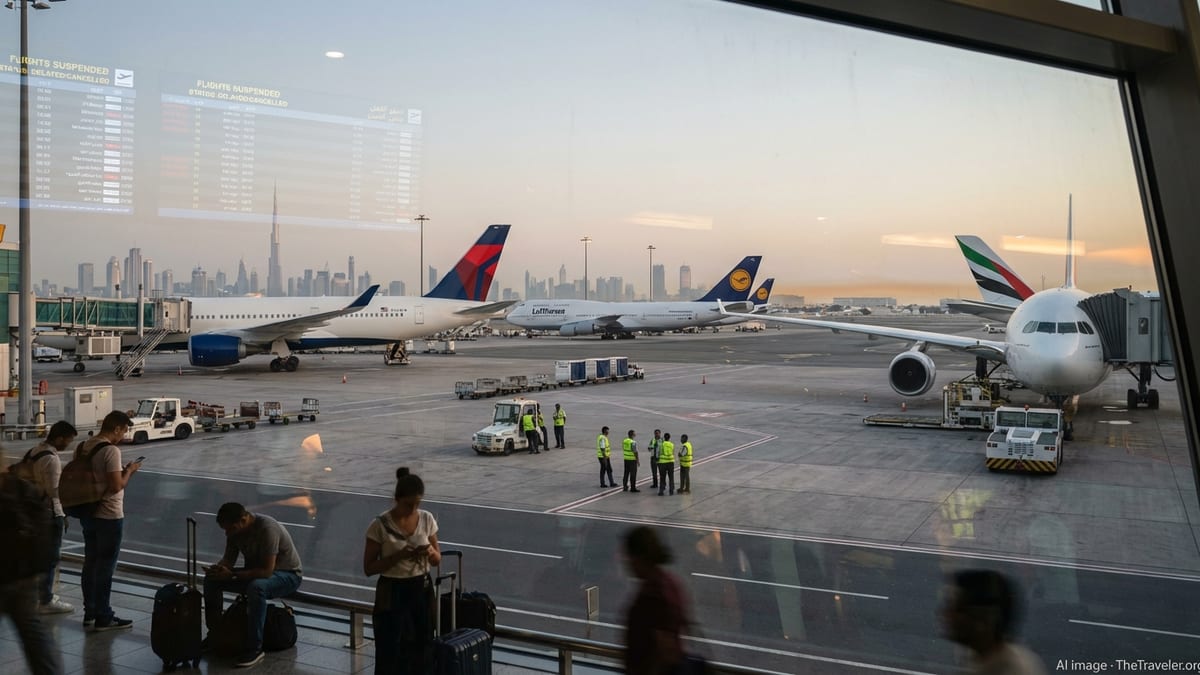
Reports tracking airline schedules and aviation safety bulletins show that carriers from Europe, North America and Asia have repeatedly suspended or reduced flights to both Lebanon and Israel as tensions spike. Several international airlines halted services into Beirut and Tel Aviv during recent escalations, citing security concerns and the need to protect crews and passengers amid uncertainty around potential strikes and overflights.
Specialist flight risk groups referenced in trade media have advised operators to avoid segments of Lebanese and eastern Mediterranean airspace, while also recommending alternative routings that skirt Iranian and Iraqi skies when tensions rise. Analysts note that these diversions increase flight times and operating costs, and can create congestion in safer corridors over Egypt or the eastern Mediterranean, indirectly affecting airports in Cairo, Larnaca and other hubs.
At the same time, publicly available information indicates that Lebanon’s flag carrier has sought to maintain a core schedule from Beirut by adjusting operations, such as flexible flight timings and parking some aircraft outside the country during higher-risk periods. Similar strategies have appeared elsewhere in the region, with airlines in the Gulf and Jordan repeatedly recalibrating capacity to Israel and Lebanon depending on security developments and demand.
For travelers, the practical impact is a more volatile booking environment. Flight suspensions and route changes can be announced at short notice, while insurance coverage for trips to Lebanon and parts of Israel is increasingly contingent on policy clauses linked to government advisories and airline decisions. This uncertainty is feeding into a wider caution that affects regional city breaks, religious tourism and connecting traffic between Europe, Africa and Asia.
Tourism Revenue at Risk Across Lebanon, Israel and Neighboring Markets
Economic assessments published by international institutions and regional think tanks highlight the tourism sector as one of the most exposed industries in the unfolding crisis. Studies on the fallout from the Gaza war and subsequent clashes along the Israel-Lebanon frontier point to steep declines in visitor arrivals to Israel after October 2023, with year-on-year drops in tourist numbers reportedly approaching 80 percent in some months.
Lebanon, which had been banking on a gradual tourism revival to ease a deep financial crisis, now confronts similarly stark projections. Interim damage and loss estimates cited in multilateral reports point to substantial revenue shortfalls for hotels, restaurants, tour operators and transport providers through at least 2025, amplified by sharp falls in summer arrivals and occupancy rates during 2024 as advisories multiplied.
Neighboring tourism economies are not immune. Analytical papers issued by United Nations bodies on the expected spillover from the Gaza conflict suggest that Egypt and Jordan could experience multi-year declines in tourism receipts compared with pre-conflict baselines, even if their main resorts and heritage sites remain physically untouched. Cyprus, heavily reliant on air links and cruise calls from the wider Eastern Mediterranean, is also being drawn into risk assessments due to its proximity to potential conflict zones and its role as a diversion point for airlines and ships.
Despite these pressures, long-term projections from global tourism organizations still expect the Middle East to outperform many regions once security stabilizes, citing the scale of investment in infrastructure, new attractions and visa liberalization. The challenge for Lebanon and its neighbors is bridging the gap until that stabilization occurs, without losing critical segments of the global travel market to rival destinations perceived as safer.
Cross-Border Mobility, Pilgrimage Routes and Diaspora Travel Under Strain
The current wave of conflict and heightened monitoring is also reshaping everyday mobility patterns that underpin the regional travel economy. According to regional analyses, tighter security, closures and sporadic attacks have disrupted road links between Lebanon and Syria, crossings between Israel, Jordan and the Palestinian territories, and ferry services and cruise itineraries across the Eastern Mediterranean.
These disruptions affect not only tourists but also diaspora communities, business travelers and religious pilgrims who typically move between Lebanon, Israel, Jordan, Egypt and Gulf states. Airlines and tour operators report weaker advance bookings for multi-country packages, in part because travelers worry that a sudden escalation in one territory could strand them or invalidate arrangements in another.
Pilgrimage travel faces particular pressures. Routes that combine visits to religious sites in Israel and the Palestinian territories with excursions in Jordan, Egypt or Lebanon are now subject to closer scrutiny from organizers and insurers. Some packages have been shortened to focus on single countries deemed less exposed at a given moment, while others have been postponed pending clearer signals from governments and carriers.
The cumulative effect is a fragmentation of what had been emerging as a more integrated Middle East travel corridor stretching from the Levant to the Gulf. For Lebanon, whose tourism offer often relies on combining Beirut city breaks with wider regional tours, this fracturing of cross-border mobility reduces both direct arrivals and high-value stopover traffic.
Industry Response: Scenario Planning, Flexible Bookings and Domestic Focus
In response to the deteriorating outlook, travel companies and tourism boards across Lebanon, Israel, Jordan, Egypt, Cyprus, the UAE and Qatar are placing greater emphasis on scenario planning and flexible product design. Trade press reports describe a growing use of dynamic itineraries that can be re-routed at short notice, alongside contracts that allow for rapid cancellation or modification if airspace closures or new advisories emerge.
Some destinations are intensifying marketing to domestic and regional residents, aiming to cushion the blow from reduced long-haul arrivals. Gulf states such as the UAE and Qatar, with strong local demand and deep-pocketed carriers, are highlighting city breaks, events and stopovers that can be adjusted quickly if external risks rise. Lebanon, while more constrained economically, is similarly looking to its diaspora and nearby source markets for resilient segments less deterred by headline risks.
Industry groups and analysts argue in recent commentary that transparent communication on safety protocols, clear information on airline and airport procedures, and coordinated messaging between neighboring states can help reduce uncertainty. The aim is not to downplay genuine dangers, but to give travelers and partners predictable frameworks for decision-making, even during periods of heightened alert.
Looking ahead to the 2026 holiday seasons, most published forecasts suggest that the depth and duration of the regional conflict will determine whether the Middle East’s tourism story returns to one of outperformance or settles into a prolonged slump. Lebanon’s inclusion in a growing circle of closely monitored destinations underlines how much the sector’s fortunes now depend on factors far beyond beaches, heritage sites and hospitality investments.